
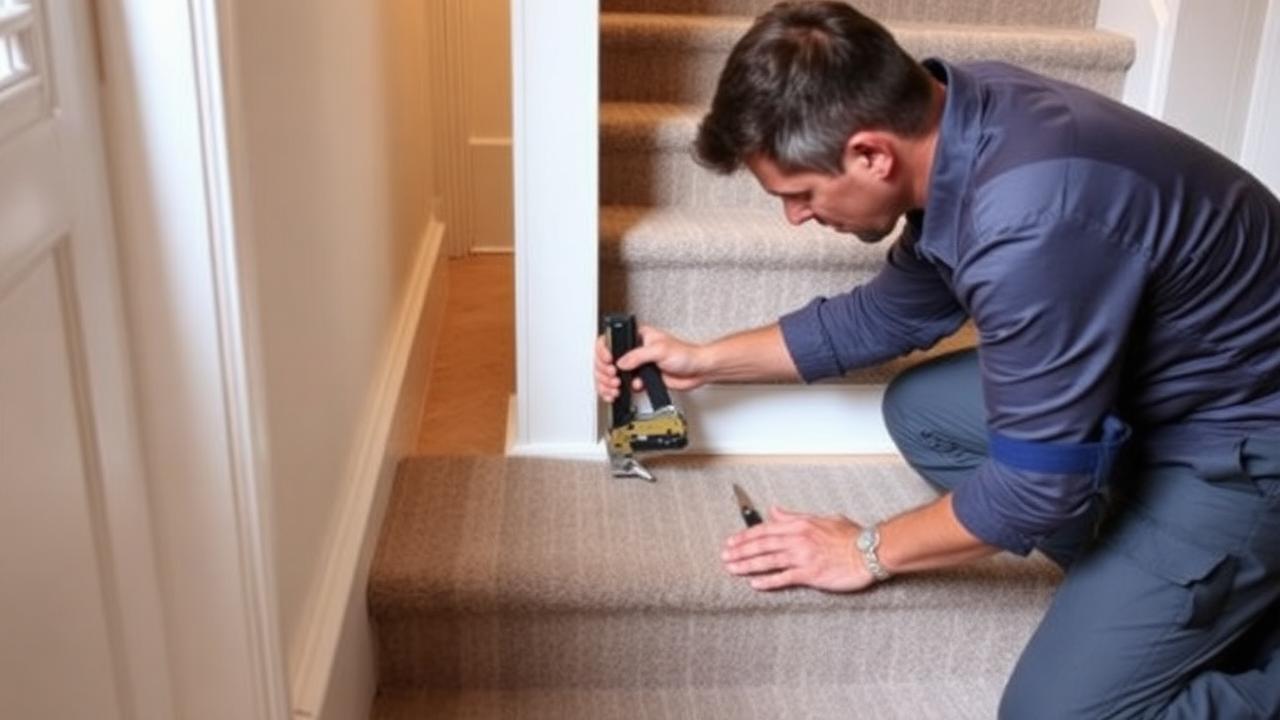
Route 1 — Cut a runner from broadloom carpet
Broadloom comes in 3.66m (12ft) and 4m widths. Cut lengthwise, a single 4m width yields four 68cm runner strips (allowing for binding) — enough for most houses with material left over.
- Calculate the total running length you need first, including nosing wrap, landings and waste.
- Roll the carpet out flat, face down, somewhere large and warm. Let it relax for 24 hours.
- Mark the cut line by counting rows of tufts on the backing — following tuft rows gives a far straighter cut than a chalk line.
- Cut from the back with a sharp hook blade against a long straightedge, changing blades often.
- Get the strips bound before they are handled much; raw cut edges shed quickly.
Pile direction is not optional
Every strip must run the same way, and the pile should lay down the staircase so it feels smooth when you walk down and looks richest from below. Mark an arrow on the back of each strip the moment you cut it.
Binding options compared
| Finish | Look | Typical cost | Notes |
|---|---|---|---|
| Machine cotton/linen binding | Neat, traditional | £4–£9 / $5–$12 per metre | Carpet shops and binding services do this |
| Wide fabric tape binding | Contemporary, contrast option | £6–£14 / $8–$18 per metre | Great for making a plain runner look bespoke |
| Serging (whipped edge) | Rug-like, soft | £8–£16 / $10–$20 per metre | Best on wool; slow to produce |
| Leather or faux-leather trim | High-end, statement | £15–£30 / $20–$38 per metre | Specialist workrooms only |
| DIY iron-on binding tape | Acceptable at a distance | £1–£3 / $1–$4 per metre | Least durable; will lift eventually on stairs |
Route 2 — Join runner rugs
Buying two or three long runner rugs and joining them is popular because rugs come pre-bound. It works, with two caveats: the joins must land somewhere hidden, and the rugs must be from the same production batch or the colour will differ.
- Place every join at the back of a tread, tucked into the crease where it is invisible and takes no direct footfall.
- Butt the two ends, never overlap — an overlap is a trip edge.
- Join with a strong carpet seaming tape on the underside plus staples into the crease through both layers.
- Never join on a nosing or in the middle of a tread.
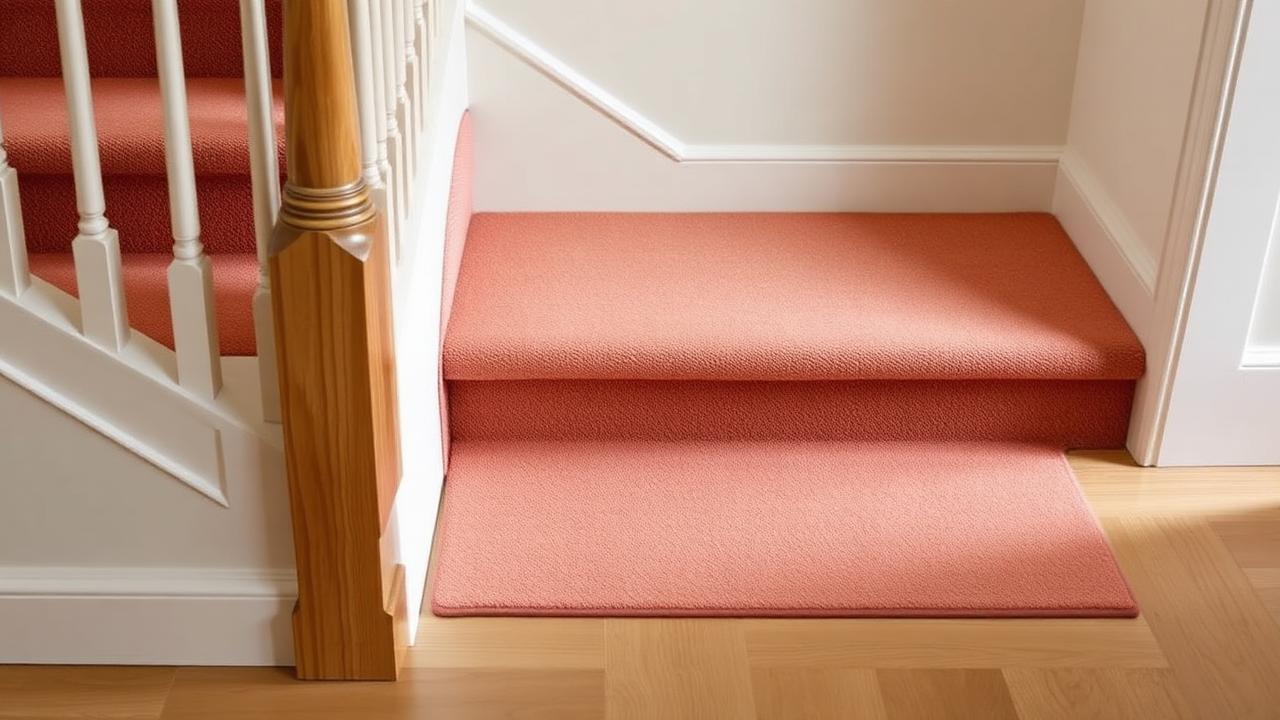
What it actually costs
A wool broadloom at £30/m² cut into 70cm strips works out around £21 per linear metre of runner before binding, versus £45–£90 per linear metre for a comparable pre-bound designer runner. Add £5–£10 per metre for binding and the saving is still substantial — the cost is your time and the risk of a wonky cut.
Know your numbers in 30 seconds
Enter your step count, tread depth and riser height — the stair runner calculator gives you the exact length to order, in metres and feet, with waste included.
Open the stair runner calculatorWhen not to DIY it
- Bold patterns needing precise matching — one bad cut wastes metres.
- Sisal and other natural fibres, which fray fast and are unforgiving to cut.
- Curved or spiral staircases requiring templated pieces.
- Any carpet where the manufacturer voids the warranty on site-cut goods.
Choosing the right carpet to cut down
| Carpet type | Good for DIY runner? | Notes |
|---|---|---|
| Wool twist or loop | Yes | Cuts cleanly, takes binding well, forgives a slightly imperfect line |
| Wool berber | Yes | Dense loop hides minor cutting imperfections |
| Synthetic saxony | With care | Can shed at a cut edge until bound; bind quickly |
| Sisal / seagrass | No, avoid for first attempts | Frays instantly and blunts blades fast |
| Patterned Axminster/Wilton | Only with a plan for repeats | Every strip must be cut from the same pattern position |
Buy 10% more than the maths says
Even careful cutters lose a strip to a wandering line at least once per project. A spare metre of the same batch costs far less than reordering later and hoping the dye lot matches.
Step-by-step: cutting a straight strip from broadloom
- Roll the carpet out face-down on a clean, flat floor and let it acclimatise for 24 hours.
- Find a tuft row near your target width and mark it every 50cm with chalk.
- Snap a chalk line along the marks as a backup guide, but cut by following the tuft row itself.
- Score along the backing with a sharp hook-blade utility knife against a steel straightedge.
- Fold back and check the cut edge is straight for the full length before cutting the second side.
- Repeat for each strip needed, keeping every strip's pile arrow marked on the back.
Tools and kit list
- Sharp hook-blade utility knife with plenty of spare blades — a dull blade is the top cause of a wandering cut.
- A 2m+ steel straightedge or aluminium level.
- Chalk line and tailor's chalk for marking.
- Carpet seaming tape and a household iron if joining rug lengths.
- A staple gun for fitting once strips are bound.
Realistic savings versus a pre-bound runner
For a typical 14-step flight needing about 6.5 linear metres of 70cm-wide runner, DIY from broadloom at £30/m² plus binding lands around £180–£230 / $230–$295 all-in. A comparable pre-bound designer runner of the same quality typically runs £310–£590 / $395–$750 for the same length. The saving funds better underlay or a nicer rod set with money left over — provided the cut comes out straight.
Common mistakes first-timers make
- Cutting before the carpet has relaxed flat, which leaves a slight curve along the strip's length.
- Changing blade angle partway through a cut, producing a visible kink at the join line.
- Forgetting to mark pile direction, then discovering strip three runs the wrong way once fitted.
- Binding too soon after cutting, before checking every strip against its neighbour for width consistency.
Keep the offcuts
Save leftover carpet offcuts from the same batch. They are the exact colour and dye lot you will need if a section ever needs an invisible repair years down the line, and matching a discontinued carpet is otherwise nearly impossible.
Whatever you decide, get the numbers first: the stair runner calculator doubles as a stair runner length calculator, adding nosing wrap, landings, winders, pattern repeat and waste so you order the right length the first time.
Still deciding on material, width or pattern? Our hub on stair runners compares weaves, widths, backings and fitting styles side by side, then hands the numbers straight to the calculator.
Frequently asked questions
Can you make a stair runner from a normal carpet roll?
Yes — cut lengthwise strips following the tuft rows on the backing, keep pile direction consistent, and have the edges professionally bound. It is the cheapest route to a custom width.
Do you have to bind the edges of a homemade stair runner?
Yes. An unbound cut edge sheds fibre and unravels within months on stairs. Machine binding is inexpensive and most carpet retailers offer it as a service.
Can you join two runner rugs to make a stair runner?
You can. Butt the ends at the back of a tread so the join sits in the crease, tape underneath and staple through, and buy both rugs from the same batch to avoid a colour shift.
How much carpet do I need to make a stair runner?
Work out the total running length from your step count, tread depth, riser height, landings and waste, then divide the carpet roll width by your runner width to see how many strips each roll length yields.
What tools do I need to cut a stair runner from a carpet roll?
A sharp hook-blade utility knife with spare blades, a long steel straightedge, chalk for marking, and access to a binding service once the strips are cut. A dull blade is the single biggest cause of a crooked cut.
Is it cheaper to make your own stair runner?
Usually, yes. A DIY runner cut from broadloom typically costs 40–60% less than a comparable pre-bound designer runner of similar quality, though the saving depends on getting the cut right first time and paying for professional binding.
Can I use a patterned carpet to make a stair runner?
You can, but every strip must be cut from the same position in the pattern repeat, which needs more material and a careful plan before the first cut. Plain or textured carpets are far more forgiving for a first attempt.
Know your numbers in 30 seconds
Enter your step count, tread depth and riser height — the stair runner calculator gives you the exact length to order, in metres and feet, with waste included.
Work out how much carpet to buyReady for real prices?
Get quotes from vetted stair runner suppliers and fitters near you. Free, no account, no obligation.
Every guide is written from hands-on measuring and fitting experience, checked against the calculator’s own maths, and re-reviewed whenever prices or methods change. Read our editorial standards.