

Why a spec sheet matters
Suppliers cutting to order cannot see your stairs, so anything you leave ambiguous gets filled in with a default assumption that may not match your flight. A written spec sheet removes guesswork on both sides and gives you a record to check the delivered runner against.
The core measurements to include
| Field | Example value | Why it matters |
|---|---|---|
| Number of steps | 13 | Base unit for length calculation |
| Tread depth | 10 in (25 cm) | Per-step length contribution |
| Riser height | 7.5 in (19 cm) | Per-step length contribution |
| Stair width | 36 in (91 cm) | Determines runner width choice |
| Landing or turn present? | Yes, half landing | Adds length and pattern-matching complexity |
| Top and bottom finish | Waterfall top, tucked bottom | Affects total length needed |
Know your numbers in 30 seconds
Enter your step count, tread depth and riser height — the stair runner calculator gives you the exact length to order, in metres and feet, with waste included.
Open the stair runner calculatorMaterial and pattern details
- Material and pile type (wool cut pile, sisal, flatweave, etc).
- Colour name and reference number from the supplier's range.
- Pattern repeat size if applicable, and which direction it should run.
- Border or edge binding colour if different from the main field.
Fixing method and hardware
| Fixing method | What to specify |
|---|---|
| Stair rods | Rod width, finish, quantity, bracket vs pole-and-socket |
| Staples/tackless strip | Whether the fitter supplies or you do |
| Hollywood vs waterfall | State your preferred method explicitly |
| Runner over existing carpet | Flag this so staple length can be advised |
Waste allowance and cut length
Ask the supplier to confirm the cut length including their standard waste allowance, typically 8-12% for a straight flight and more for a flight with a turn. Cross-check their figure with your own stair runner length calculator result before approving the order; a mismatch of more than 5% is worth querying before cutting begins.
| Scenario | Typical waste allowance |
|---|---|
| Straight flight, plain material | 8-10% |
| Straight flight, patterned repeat | 10-12% |
| Flight with landing or turn | 12-18% |
| Curved or winder stairs | 15-25% |
Get everything in writing
Confirm the final spec, price and delivery date by email even if the order was placed by phone or in a showroom. This is your reference if the delivered runner does not match what was discussed.
Sample order checklist
- Request or confirm a physical sample before ordering full length.
- Send step count, tread depth, riser height and stair width.
- Specify material, colour reference and pattern repeat direction.
- State fixing method and any hardware needed.
- Confirm cut length, waste allowance, price and delivery date in writing.
Common ordering mistakes
| Mistake | Consequence | Fix |
|---|---|---|
| Measuring only total flight height, not per step | Wrong length ordered | Measure tread depth and riser height per step |
| Not specifying pattern direction | Pattern runs the wrong way when unrolled | State direction explicitly with a diagram if needed |
| Forgetting the landing or turn | Runner falls short | Include a note and rough sketch of any turns |
| Assuming standard width fits | Runner too wide or narrow for the stair | Measure stair width and choose accordingly |
Ordering internationally or from a specialist mill
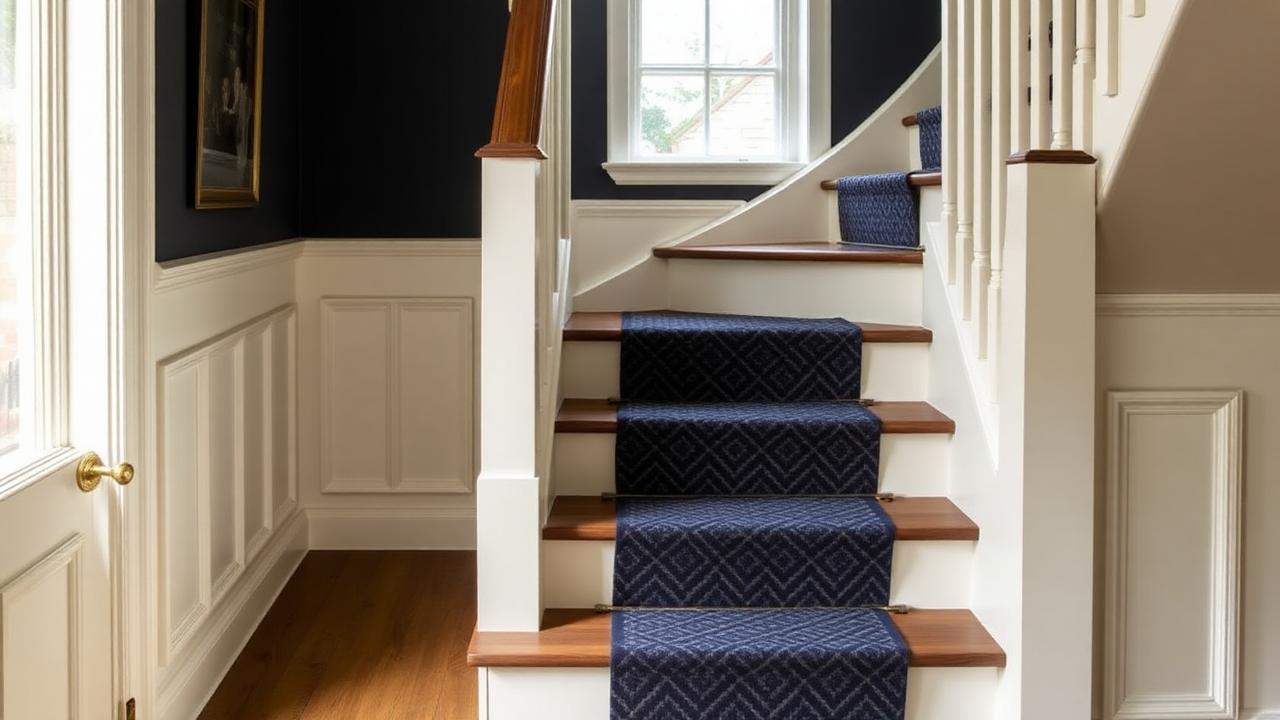
Many premium wool and natural fibre runners are woven to order by specialist UK mills and shipped internationally, which adds lead time of 4-10 weeks on top of standard delivery. Confirm the production lead time separately from the shipping time when ordering from overseas, and check whether duties or import taxes apply to your delivery address, since these are sometimes not included in the quoted price for cross-border orders.
Working with a showroom vs ordering online
A showroom order lets you see and touch the actual sample under real light and confirm measurements with staff before paying, which reduces the risk of a mismatch. An online order is faster and often cheaper, but relies entirely on your own measurements being correct and the photographed colour being accurate, so ordering a physical swatch first is even more important when buying online.
What to do if the delivered runner is wrong
- Check the delivery note and physical roll against your written spec sheet immediately, before cutting or fitting anything.
- Photograph any discrepancy in length, colour or material against your order confirmation.
- Contact the supplier promptly, since many have a short window (often 48-72 hours) to report delivery errors.
- Do not proceed with cutting or fitting a custom order that does not match your spec, since this can void your ability to return it.
Keep your spec sheet after delivery
File your written spec sheet and order confirmation alongside the invoice. If a repair or top-up piece is ever needed years later, having the exact colour reference and dye lot on hand saves significant time trying to match it again.
Ordering matching accessories at the same time
It is worth ordering stair rods, underlay and any binding tape in the same transaction as the runner itself, since matching a rod finish or underlay thickness later, once the original order reference has been archived, often takes longer than simply adding a line item now. Ask the supplier to itemise each component separately on the order confirmation so it is clear what was included if a query arises after delivery.
Ordering for a multi-flight staircase
If your home has more than one flight, such as a ground-to-first flight and a separate first-to-second flight, decide upfront whether you want one continuous-looking material across both or are happy for them to be ordered separately, since dye lots can vary between production runs even for the identical named colour. Ordering all flights in a single batch from the same dye lot avoids a subtle but noticeable colour mismatch between floors.
| Scenario | Recommendation |
|---|---|
| Two flights visible from the same viewpoint | Order together, same dye lot |
| Flights on separate, unconnected floors | Can be ordered separately if needed |
| Ordering months apart for budget reasons | Request the dye lot number be recorded for a closer future match |
Confirming lead times against your project schedule
Work backwards from your target fitting date, allowing for production or shipping lead time plus a buffer of at least a week for any delay, before booking a fitter. Booking a fitter's date before the runner has actually arrived and been checked against the spec sheet is a common scheduling mistake that leads to a rushed, unchecked installation.
Whatever you decide, get the numbers first: the stair runner calculator doubles as a stair runner length calculator, adding nosing wrap, landings, winders, pattern repeat and waste so you order the right length the first time.
Still deciding on material, width or pattern? Our hub on stair runners compares weaves, widths, backings and fitting styles side by side, then hands the numbers straight to the calculator.
Frequently asked questions
What is the minimum information a supplier needs to cut a runner?
Step count, tread depth, riser height, stair width, material and colour, plus whether the flight has a landing or turn. Missing any of these risks a poor fit.
Should I ask for extra length beyond the calculated total?
Yes, a waste allowance of 8-12% for a straight flight (more for turns) covers pattern matching, cutting errors and future re-tensioning.
Can I change my order after it has been cut?
Rarely without a fee, since custom-cut runners are usually non-returnable. Confirm every detail before approving the final cut.
Do I need to specify the fixing method when ordering the runner itself?
It is not essential for cutting the material, but flagging it helps the supplier or fitter advise on underlay, staple length or rod compatibility.
How do I check the delivered runner matches my order?
Compare the delivery note against your spec sheet for material, colour reference, width and length before installation begins.
How long does a custom stair runner order typically take?
Standard stock colours often ship within 1-2 weeks, while woven-to-order or specialist mill orders can take 4-10 weeks, so order well ahead of any fitting deadline.
What should I do if the runner arrives damaged?
Photograph the damage before unrolling further, keep all packaging, and contact the supplier immediately, since most carriers require damage claims within a short reporting window.
Know your numbers in 30 seconds
Enter your step count, tread depth and riser height — the stair runner calculator gives you the exact length to order, in metres and feet, with waste included.
Build my order specReady for real prices?
Get quotes from vetted stair runner suppliers and fitters near you. Free, no account, no obligation.
Every guide is written from hands-on measuring and fitting experience, checked against the calculator’s own maths, and re-reviewed whenever prices or methods change. Read our editorial standards.