
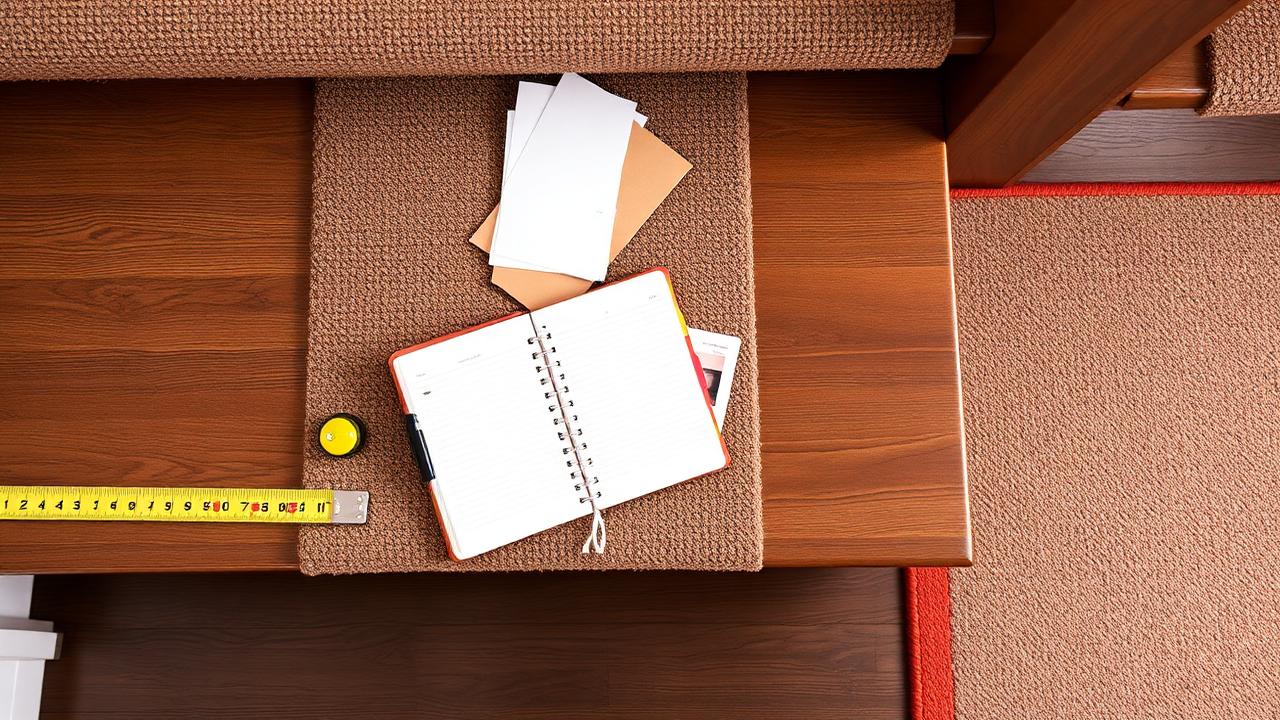
The particular quirks of converted staircases
A house converted into two or three flats usually keeps the original staircase for the ground and first floor, but a fire door, a stud partition, or a shortened flight partway up is common where a landing was split between units. If you're fitting a runner to an internal staircase that serves just your own flat, measure exactly as you would for any house, but if your flat's stairs are shared with another unit or lead to a communal front door, check your lease and any management company rules before ordering, since some conversions restrict what residents can fit in shared areas.
Converted staircases have sometimes had a step or two removed or added when floor levels were adjusted between units, so don't rely on an old estate agent's floor plan or the previous owner's description of the flight. Count and measure the actual steps in your particular flat, since even two nominally identical flats converted from the same house can end up with a different step count if the internal layout was split unevenly.
Internal vs shared staircases
An internal staircase entirely within your own flat, common in a maisonette-style conversion or a top-floor flat with its own private stairs, gives you full freedom over colour, pattern and fitting method, just like a house. A shared staircase serving multiple flats behind a communal front door is a different matter: fire regulations in many buildings require any covering on an escape route to meet a minimum fire rating, and freeholders or management companies often have specific rules about what can be fitted, sometimes requiring their approval before work starts.
Check fire rating requirements on shared stairs
If your staircase is a shared means of escape for more than one flat, ask your freeholder or managing agent whether any fitted floor covering needs to meet a specific fire rating before you order a runner, since not every domestic-grade stair carpet is suitable for shared escape routes.
How much runner do I need?
Take a 13-step converted flight with a standard 10 in tread run, 7.5 in riser height and 0.75 in nosing wrap, giving 18.25 in per step, or 237.25 in (19.77 ft) across the run. Add a 24 in finishing allowance for 261.25 in (21.77 ft). If the original staircase turn survived the conversion, add roughly 3 ft for the landing run, bringing the subtotal to about 24.8 ft, then apply an 8% waste margin for the extra cutting a turn involves, landing at approximately 26.8 ft.
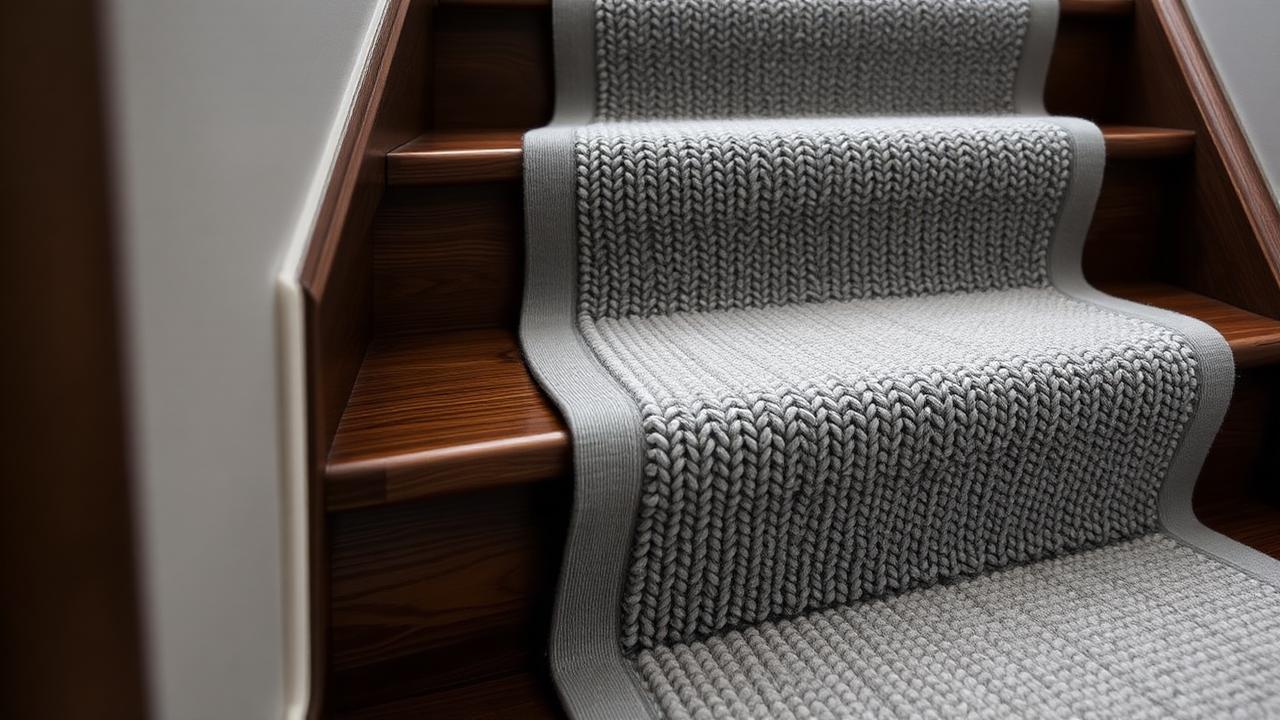
In UK measurements, that's 25 cm tread, 19 cm riser and 1.9 cm nosing wrap for 45.9 cm per step, or 596.7 cm across 13 steps. Add 60 cm finishing allowance for 656.7 cm, plus roughly 0.9 m for a retained landing turn, giving about 7.46 m, then an 8% waste margin brings the total to roughly 8.1 m. On a straight internal flight with no turn, drop back to the standard 7-7.3 m figure for a 13-step run.
| Staircase type | US length | UK length |
|---|---|---|
| Straight 13-step internal flight | 23.3 ft | 7.03 m |
| 13-step flight with retained landing turn | 26.8 ft | 8.1 m |
| Shortened 9-step flight (post-conversion) | 16.5 ft | 5.03 m |
Know your numbers in 30 seconds
Enter your step count, tread depth and riser height — the stair runner calculator gives you the exact length to order, in metres and feet, with waste included.
Open the stair runner calculatorChoosing a runner that suits a flat's proportions
Flats tend to have narrower halls and a smaller overall footprint than the house they were converted from, so a busy, high-contrast pattern that would work in a wide Victorian hallway can feel cramped in a converted flat's narrower stairwell. A tonal or subtly patterned runner in a mid-tone colour generally suits these spaces better, and because a lot of converted flats have lower ceiling heights on upper floors, a lighter colour on the stairs helps the whole stairwell feel less boxed-in.
- Confirm whether your staircase is shared or entirely internal to your flat before choosing a style or fitting method.
- Count your actual steps rather than relying on the original house's staircase details.
- Check any fire-rating or freeholder requirements if the stairs serve more than one flat.
- Add a landing allowance only if your flat retained the original half-landing turn.
- Choose a tonal or lighter colour to help a narrower converted stairwell feel more open.
Ordering with confidence in a shared building
Because converted properties vary so much building to building, I'd always encourage a leaseholder to get their own tape-measure numbers rather than assume their flat matches a similar-looking conversion next door. Running those figures through a stair runner length calculator gives you a reliable estimate before you contact a fitter or place an order, and it's a useful number to have on hand if you do need freeholder sign-off, since it shows you've measured properly rather than guessing at what you'll need.
Stair runners fitted in flat conversions also tend to need a slightly more secure fixing method than a house, particularly on shared stairs with heavier daily footfall from multiple households, so ask your fitter about a gripper-rod combination rather than adhesive alone if the staircase gets constant use. It's a small extra cost that pays off in how long the runner stays properly seated before it needs re-tensioning.
Whatever you decide, get the numbers first: the stair runner calculator doubles as a stair runner length calculator, adding nosing wrap, landings, winders, pattern repeat and waste so you order the right length the first time.
Frequently asked questions
Can I fit any stair runner on a shared flat staircase?
Not always. If the staircase is a shared means of escape for more than one flat, check with your freeholder or managing agent whether any floor covering needs to meet a specific fire rating before ordering, since not all domestic carpet is suitable there.
How do I know if my flat's staircase is shared or private?
If your stairs are entirely behind your own flat's front door, they're private and you have the same freedom as a house owner. If they're accessed from a communal entrance serving other flats, they're shared and may have additional rules.
Does a converted flat's staircase have a standard step count?
No, converted staircases often have a step added or removed compared with the original house, depending on how floor levels were split between units. Always count and measure your own flight rather than assuming it matches a similar building.
How much runner do I need for a 13-step converted staircase?
For a straight 13-step flight with 10 in (25 cm) treads and 7.5 in (19 cm) risers, budget around 23-24 ft (7-7.3 m). Add roughly 3 ft (0.9 m) more plus a higher waste margin if the original half-landing turn was retained.
Do I need permission to fit a stair runner in a converted flat?
Only if the staircase is shared with other flats or classed as a common escape route, in which case your lease or managing agent may require approval or a specific fire rating. A fully internal, private staircase within your own flat usually needs no permission.
What colour works best in a narrow converted stairwell?
A tonal, mid-tone colour with subtle rather than bold pattern tends to suit the narrower halls typical of converted flats better than a very busy or dark design, and lighter tones help a boxed-in stairwell feel more open.
Should I use adhesive or grippers on a shared staircase?
A gripper-rod combination is generally more secure than adhesive alone on shared stairs with heavier daily footfall from multiple households, and it holds its tension for longer between re-fits.
Can converted staircases have uneven treads?
Yes, particularly where floor levels were adjusted between units during conversion. Measure several treads individually rather than assuming they're uniform, since converted flights are more prone to slight irregularities than a purpose-built staircase.
Know your numbers in 30 seconds
Enter your step count, tread depth and riser height — the stair runner calculator gives you the exact length to order, in metres and feet, with waste included.
Work out your flat's staircase length with the stair runner calculatorReady for real prices?
Get quotes from vetted stair runner suppliers and fitters near you. Free, no account, no obligation.
Every guide is written from hands-on measuring and fitting experience, checked against the calculator’s own maths, and re-reviewed whenever prices or methods change. Read our editorial standards.