

Typical fitting rates
| Work | Typical cost |
|---|---|
| Straight step, waterfall fitting | $15–$25 per step |
| Straight step, wrapped / Hollywood | $20–$35 per step |
| Winder or pie step | $30–$60 per step |
| Landing panel | $60–$150 each |
| Stair rod fitting | $8–$20 per rod |
| Half-day minimum charge | $150–$350 |
Most staircases are a one-day job
A straight 13-step flight typically takes a fitter three to five hours. Winders, landings and pattern matching can push the same staircase to a full day or more.
Know your numbers in 30 seconds
Enter your step count, tread depth and riser height — the stair runner calculator gives you the exact length to order, in metres and feet, with waste included.
Open the stair runner calculatorWhat pushes installation cost up
- Winders and curved treads — each one is templated and cut individually.
- Pattern matching — the fitter has to align the repeat across every step and flight.
- Wrapped nosings — slower than waterfall, and unforgiving of a badly cut edge.
- Stair rods — extra drilling, alignment and bracket fitting per step.
- Removal and disposal of old carpet, gripper and staples.
- Repairs — loose treads, squeaks and damaged nosings fixed before fitting.
What a fitting quote should include
- Per-step or per-flight labour, stated separately from materials.
- Underlay supply and fitting, or a note that you are supplying it.
- Gripper / tackless strip and fixings.
- Removal and disposal of the existing floorcovering.
- Any preparation work identified on the survey.
- A named fitting date and how long the work will take.
Is DIY worth it?
On a straight flight with a plain runner and a waterfall fit, DIY is genuinely achievable and saves the entire labour line — often $250–$500. On winders, curves, landings or anything with a pattern repeat, the material at risk usually exceeds the labour saved. One badly cut winder on a premium wool runner costs more than the fitter would have.
Getting comparable quotes
Ask every fitter to quote against the same measurements and the same runner specification, and to state the waste margin they have allowed. Quotes that look wildly different usually differ on waste assumption or on whether preparation is included, not on skill.
How fitters actually price a job
Most independent fitters quote from a site survey rather than a phone description, because the price genuinely depends on things you cannot see from a photo — how square the treads are, whether the old gripper is reusable, how deep the nosings are, and whether the stairwell is wide enough to carry a roll without cutting it on the landing. A survey typically takes 15–20 minutes and should result in a written breakdown, not a single all-in figure.
Waterfall vs Hollywood: the fitting-cost difference
A waterfall fit runs the runner straight down over the nosing without following its curve, which is quicker to fit and the cheaper of the two methods. A wrapped or Hollywood fit follows the nosing profile, giving a neater, more tailored look, but it takes roughly 30–50% longer per step because every nosing has to be dressed by hand. On a 13-step flight that difference alone can add $65–$130 to the labour line.
Step-by-step: what happens on fitting day
- Old covering, gripper and staples are stripped back and the treads are vacuumed clean.
- Squeaks and loose treads are screwed down and any damaged nosings are repaired.
- New gripper is fixed at the top and bottom of each tread, set back from the nosing edge.
- Underlay is cut and fitted tread by tread, trimmed narrower than the finished runner.
- The runner is rolled out, tensioned from the top down, and fixed into the crease of each step.
- Stair rods, if specified, are fitted last so they do not get walked on during the rest of the job.
Cost comparison: hiring a fitter vs a full flooring contractor
| Route | Typical day rate | Best for |
|---|---|---|
| Independent carpet fitter | $250–$450 per day | Straight or lightly winding staircases, standard runners |
| Specialist stair runner fitter | $350–$650 per day | Bespoke, patterned or heritage staircases needing precise pattern matching |
| Full flooring contractor | $400–$800 per day | Whole-house projects where stairs are one part of a bigger job |
Ask what the minimum charge covers
A half-day minimum is standard even for a two-hour job, because travel, setup and van stock loading eat into the morning regardless of flight size. Ask whether that minimum includes disposal of the old carpet, since some fitters bill it separately.
Trade tips that keep the labour bill down
- Have the old covering already removed and treads swept if you are comfortable doing it yourself — many fitters will happily drop the price if they can skip strip-out.
- Choose a plain or small-repeat pattern; large repeats add pattern-matching time on every single step.
- Book straight flights and winding flights as separate visits only if you must — most fitters give a small discount for doing the whole staircase in one visit rather than two call-outs.
- Clear the stairwell and hallway of furniture and rugs before the fitter arrives; time spent moving your belongings is time billed at the day rate.
When to hire a specialist over a general fitter
A general carpet fitter is perfectly capable of a straight waterfall fit on a standard staircase. Reach for a specialist stair runner fitter when the staircase has winders, a curved or cantilevered flight, a large pattern repeat that must align across multiple flights, or when you are fitting a heritage stair rod system with fixed antique brackets. Specialists cost more per day but waste less material and finish faster on genuinely difficult staircases, which often makes them the cheaper option overall.
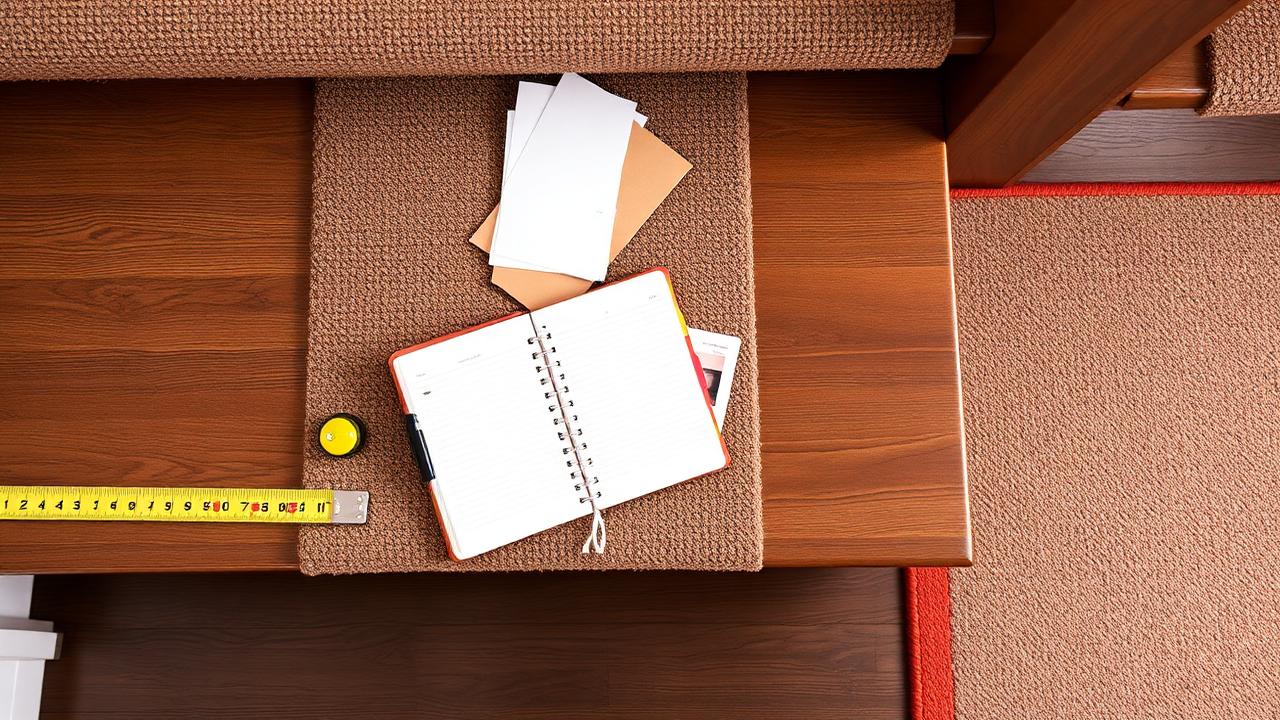
How installation cost scales with flight length
| Flight length | Straight waterfall fit | Wrapped/Hollywood fit |
|---|---|---|
| 8–10 steps | $120–$250 | $160–$350 |
| 12–14 steps | $180–$390 | $260–$490 |
| 16–18 steps | $240–$470 | $340–$630 |
| Two flights + landing | $350–$700 | $500–$900 |
These ranges assume no winders, no rods and no removal of old flooring. Add each of those as a separate line rather than assuming they average out — winders in particular scale with count, not with flight length, so a short staircase with four winders can cost more to fit than a long straight one with none.
Questions to ask before booking a fitter
- Is the quote per step, per flight, or a day rate, and what happens if the job runs over?
- Does the price include removal and disposal of the existing floorcovering?
- Is underlay supplied and fitted, or do I need to buy it separately?
- How is a winder or curved tread priced, and is that shown as a separate line?
- What is the minimum call-out charge, and does it apply even to a small top-up job?
- Is there a warranty on the fitting itself, separate from any manufacturer warranty on the runner?
Whatever you decide, get the numbers first: the stair runner calculator doubles as a stair runner length calculator, adding nosing wrap, landings, winders, pattern repeat and waste so you order the right length the first time.
Still deciding on material, width or pattern? Our hub on stair runners compares weaves, widths, backings and fitting styles side by side, then hands the numbers straight to the calculator.
Frequently asked questions
How much does it cost to install a stair runner?
Professional fitting commonly runs $15–$40 per step on a straight flight, so a 13-step staircase is roughly $195–$520 in labour. Winders, landings, rods and pattern matching push that higher, and most fitters apply a minimum charge.
Do fitters charge more for stair rods?
Yes, typically $8–$20 per rod for drilling, alignment and bracket fitting, because each rod has to line up with the one above and below.
Can I supply my own runner and just pay for fitting?
Most independent fitters are happy to fit customer-supplied material, though some decline responsibility for shortfalls if they did not measure. Get the measurement signed off in writing before you order.
Does removing old carpet cost extra on top of the fitting quote?
Usually yes, unless the fitter has explicitly rolled it into the day rate. Expect $50–$200 per flight for stripping, disposal and a basic sweep, more if the old covering is glued down.
How long should I allow for a stair runner to be fitted?
Budget half a day for a straight flight with no rods, a full day if there are winders, a landing, or a wrapped nosing fit, and up to two days for a large staircase with pattern matching across multiple flights.
What is a fair UK price for fitting a stair runner?
Expect £10–£28 per step for a straight waterfall fit, rising to £25–£45 for winders, with most fitters applying a half-day minimum of around £120–£280.
Know your numbers in 30 seconds
Enter your step count, tread depth and riser height — the stair runner calculator gives you the exact length to order, in metres and feet, with waste included.
Add fitting to my estimateReady for real prices?
Get quotes from vetted stair runner suppliers and fitters near you. Free, no account, no obligation.
Every guide is written from hands-on measuring and fitting experience, checked against the calculator’s own maths, and re-reviewed whenever prices or methods change. Read our editorial standards.