

Fourteen steps: what the maths actually looks like
Fourteen-step flights are common on houses with a slightly taller floor-to-floor height than the standard 13-step Victorian terrace, and on some split-level or dormer conversions where an extra step gets squeezed in to keep riser heights within building regulations. Whatever the reason your flight has 14 rather than 13 steps, the calculation method is identical, you're just multiplying by one more step, which on a standard rise and going adds around 1.5 ft (45 cm) to the order compared with a 13-step flight.
I always start a job like this by measuring three or four individual steps rather than one and assuming the rest match, because on older properties especially, the first and last steps of a flight are sometimes cut slightly differently to the ones in the middle, often to account for floor thickness changes at the top and bottom. If you find any variation, measure the largest going and the largest rise you find and use those figures, since it's far better to order a little extra than to come up short by an inch on the step where it matters.
How much runner do I need?
Working in US units: a 14-step flight, 10 in tread going, 7.5 in riser height, 0.75 in nosing wrap per step. Per-step total is 18.25 in, and across 14 steps that's 255.5 in, or 21.29 ft. Add a 24 in (12 in at each end) finishing allowance for tucking under landing carpet at the top and finishing cleanly at the base, bringing the subtotal to 279.5 in, or 23.29 ft. Apply a 7% waste margin for cutting and joins, and the order length comes to roughly 24.9 ft, so most people would order 25 ft, with 26 ft as a safer margin if the runner has any pattern to match.
In UK metric terms, the same 14-step flight is 25 cm going, 19 cm riser, 1.9 cm nosing wrap, giving 45.9 cm per step. Across 14 steps that's 642.6 cm, plus a 60 cm total finishing allowance for 702.6 cm, then a 7% waste margin brings the order to approximately 7.52 m. Round that up to 7.6-7.9 m depending on whether your runner has a pattern repeat or a plain weave, since a plain weave needs less margin for matching.
| Measurement | US (in/ft) | UK (cm/m) |
|---|---|---|
| Tread going | 10 in | 25 cm |
| Riser height | 7.5 in | 19 cm |
| Nosing wrap per step | 0.75 in | 1.9 cm |
| Per-step total | 18.25 in | 45.9 cm |
| 14 steps subtotal | 21.29 ft | 6.43 m |
| Plus finishing allowance | 23.29 ft | 7.03 m |
| With 7% waste margin | 24.9 ft | 7.52 m |
Know your numbers in 30 seconds
Enter your step count, tread depth and riser height — the stair runner calculator gives you the exact length to order, in metres and feet, with waste included.
Open the stair runner calculatorAdjusting the figures for your own risers and treads
The worked example above assumes 10 in/25 cm treads and 7.5 in/19 cm risers because those are common, comfortable dimensions on a domestic UK or US staircase, but plenty of houses run slightly different numbers. A steeper older staircase might have an 8.5 in (21.5 cm) going with a taller 8 in (20 cm) riser, which changes the per-step total to roughly 17.25 in (43.9 cm) rather than 18.25 in, meaning your total for 14 steps would actually come out shorter than the example above despite the taller rise, because the going is smaller. This is exactly why measuring your own flight, rather than borrowing a neighbour's numbers, matters.
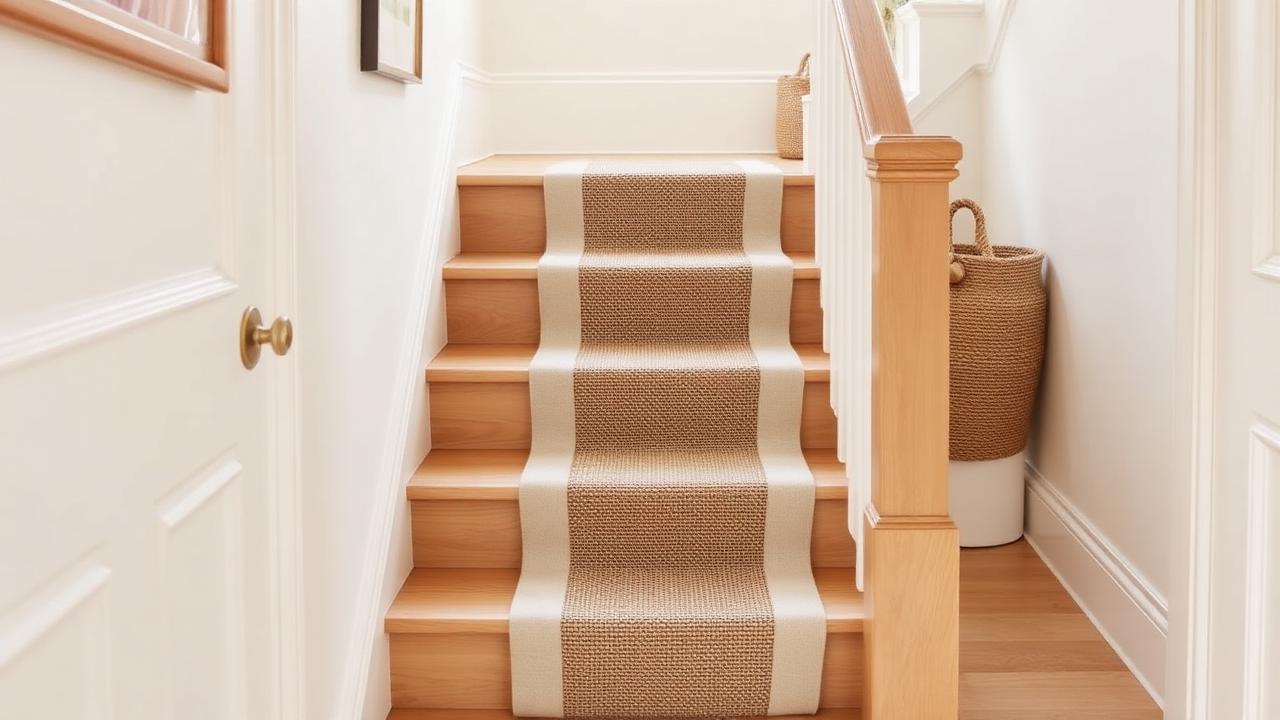
- Measure the going (horizontal tread depth) on at least three steps.
- Measure the riser height (vertical face) on at least three steps.
- Count every step in the flight including any winders or a bottom bullnose step.
- Choose a nosing wrap allowance based on your tread's nosing profile (usually 0.5-1 in / 1.3-2.5 cm).
- Add a top and bottom finishing allowance for tucking and binding.
- Apply a 5-10% waste margin depending on pattern complexity.
Bottom bullnose steps need special measuring
A curved bullnose step at the bottom of a flight often needs more runner width and length than a standard step, because the runner has to wrap around the curve. Measure this step on its own and add the extra separately rather than folding it into your per-step average.
Ordering with confidence
Once you've got your 14-step figure, whether that's 25 ft, 26 ft or something slightly different because your own treads and risers vary from the example, it's worth double-checking it against the stair runner calculator before you place an order, particularly if your flight includes any winders, a half landing, or a change in going partway up. Suppliers who sell stair runners typically won't accept returns on cut lengths, so a number you're confident in beats a number you've estimated from a chart designed for a different staircase. If your household also has stair runners fitted elsewhere in the house, keep a note of the exact fibre, colour and dye lot alongside your measurements so a future top-up order matches without any visible seam in shade.
Whatever you decide, get the numbers first: the stair runner calculator doubles as a stair runner length calculator, adding nosing wrap, landings, winders, pattern repeat and waste so you order the right length the first time.
Frequently asked questions
How much runner do I need for a 14-step staircase?
For a 14-step flight with 10 in (25 cm) treads and 7.5 in (19 cm) risers, expect to order roughly 25-26 ft (7.6-7.9 m) once nosing wrap, finishing allowance and a 7% waste margin are included.
How much more runner does 14 steps need compared with 13?
One extra step on a standard 10 in (25 cm) going and 7.5 in (19 cm) riser adds roughly 1.5 ft (45 cm) to the total order length, before accounting for waste margin, which adds a small amount more on top.
Does the nosing wrap allowance change the total much?
A 0.75 in (1.9 cm) nosing wrap per step across 14 steps adds around 10.5 in (27 cm) to the total, which isn't huge on its own, but skipping it entirely is a common reason people order slightly short.
Should I measure every step or just a few?
Measure at least three or four steps, including the first and last, since older staircases often have small variations in going or riser height between steps that a single measurement wouldn't catch.
What if my staircase has 14 steps plus a winder?
Measure the winder separately from the straight steps, since its going varies across the tread width, and add its length to your 14-step straight total rather than trying to average it into the per-step figure.
Is 7% waste enough for a patterned runner?
For a runner with a large pattern repeat, push the waste margin closer to 10% to allow for matching the pattern across any joins, whereas a plain weave is usually fine at 5-7%.
Can I reuse this figure for a 14-step flight with a different riser height?
No, this worked example is specific to 10 in (25 cm) treads and 7.5 in (19 cm) risers. If your risers or treads differ, recalculate using your own measurements or run them through the stair runner calculator.
How much finishing allowance should I add at top and bottom?
A common allowance is 12 in (30 cm) at each end, 24 in (60 cm) total, to allow for tucking under landing carpet at the top and binding or finishing cleanly at the base of the flight.
Know your numbers in 30 seconds
Enter your step count, tread depth and riser height — the stair runner calculator gives you the exact length to order, in metres and feet, with waste included.
Check your own 14-step flight with the stair runner calculatorReady for real prices?
Get quotes from vetted stair runner suppliers and fitters near you. Free, no account, no obligation.
Every guide is written from hands-on measuring and fitting experience, checked against the calculator’s own maths, and re-reviewed whenever prices or methods change. Read our editorial standards.