

The top step
You have three choices, and they change the length you need to order:
- Finish at the top nosing — the runner stops on the top riser, and the landing floor is bare or separately carpeted. Cleanest with a wood landing.
- Wrap over the top nosing onto the landing — the runner turns onto the landing floor by a few inches and is tucked or joined under the landing covering.
- Continue across the landing — the runner carries on as a landing runner. Add the full landing walking path to your measurement.
Decide this before you order
The three options differ by anything from a few inches to a full landing length. It is the single most common cause of a runner arriving short.
Know your numbers in 30 seconds
Enter your step count, tread depth and riser height — the stair runner calculator gives you the exact length to order, in metres and feet, with waste included.
Open the stair runner calculatorThe bottom step
The bottom step is usually the most visible one in the house, and often a different shape from the rest.
| Bottom step | Recommended finish |
|---|---|
| Standard square step | Runner runs down to the base of the last riser, folded and stapled |
| Bullnose (rounded one end) | Stop the runner on the tread above, or wrap and pleat carefully |
| Curtail / scroll step | Stop on the step above — wrapping a scroll almost never looks right |
| Double bullnose | Stop above; treat the bottom step as a feature in bare timber |
Edge finishes
- Fold the raw end under twice before stapling — a single fold frays.
- Match the binding tape or whipping yarn to the runner, not to the wall.
- On a wrapped bottom step, pleat the corners deliberately and evenly rather than trying to hide them.
- Keep the last two steps' staple spacing tighter, at about 2in.
Why the bottom step deserves the extra hour
It is the step people see from the hallway, photograph, and put their hand near on the newel post. If your fitter is going to spend extra time anywhere, this is where it pays.
Worked example: costing the top and bottom steps
On a typical 13-step US staircase, the choice of top and bottom finish can move the total order length by close to a full step's worth of material. Continuing across a 42in landing rather than stopping at the top nosing adds roughly 42in (1.07m) on its own; wrapping a bullnose bottom step rather than stopping above it adds a further 12–18in depending on the curve.
| Finish choice | Extra length | Extra approximate cost (US$) |
|---|---|---|
| Stop at top nosing (baseline) | 0in | $0 |
| Wrap top nosing onto landing | 4-8in | $10-25 |
| Continue across landing | 36-48in | $60-140 |
| Wrap a bullnose bottom step | 12-18in plus pleating labour | $40-90 |
Tools needed for a clean finish
- A sharp fabric or carpet knife for a crisp final cut at the fold.
- A staple gun with fine-gauge staples for the last two steps, where spacing tightens.
- Whipping yarn or binding tape matched to the runner for a raw edge.
- A stiff brush or carpet roller to seat the pleats evenly on a wrapped bottom step.
Common mistakes at the top and bottom step
- Deciding the top step treatment after the runner has already been ordered, rather than before.
- Wrapping a curtail or scroll step, which almost always looks worse than stopping above it.
- Using a single fold on the raw end instead of a double fold, which frays within a season.
- Spacing staples the same as the rest of the flight on the last two steps, instead of tightening them.
Caring for the most-used steps over time
The top and bottom steps take more direct impact than any mid-flight tread, since they absorb the push-off at the start of a descent and the full weight landing at the end of one. Check the fold and staple line on both at least twice a year, and consider keeping a matched offcut specifically for these two steps, since a repair here is the most visible one in the house if the dye lot does not match exactly.
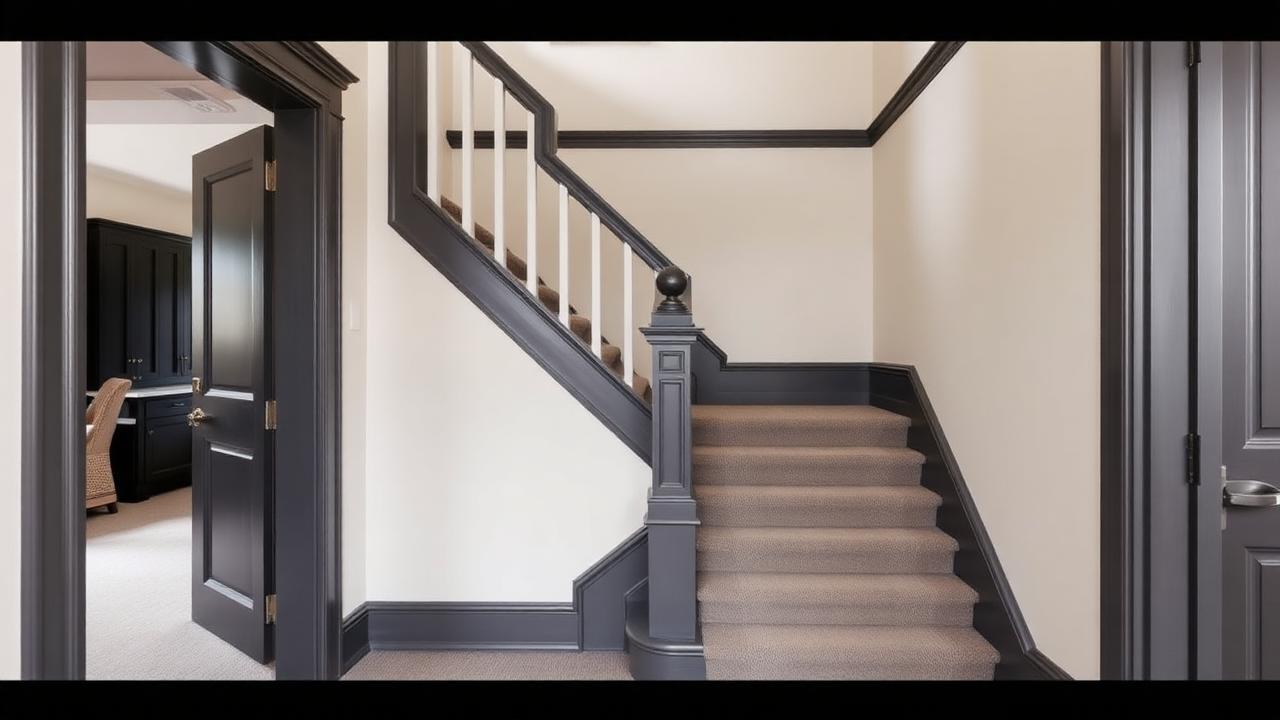
Choosing hardware to match the finish
If stair rods are used on the flight, decide whether one sits at the very top and bottom step or whether those steps are treated as feature steps without a rod, particularly on a bullnose or curtail bottom step where a rod can look crowded against the curve. Many period installations skip the rod on a shaped bottom step entirely and let the pleated wrap or bare timber speak for itself.
Getting the top step right when the landing is a different flooring
Where the landing is tile, laminate or hardwood rather than carpet, the transition needs a proper edge trim as well as a decision on the runner finish — a metal or timber transition strip stops the runner's raw or folded edge from being caught by a shoe. Order the trim at the same time as the runner so the colours and heights are chosen together rather than the trim being an afterthought once the flooring is already down.
Four ways to finish the top
The top of a runner has to resolve against a landing, and there are only four honest ways to do it. Wrap over the top nosing and finish under the landing carpet, which is the cleanest and most durable. Stop square on the top riser with a bound edge and a rod, which reads as a deliberate detail. Continue onto the landing as a landing runner, which suits narrow galleried landings. Or finish into a metal or timber transition bar, which is the pragmatic choice where two different floor finishes meet. The one option that always looks unresolved is a raw edge stopped mid-tread.
| Finish | Durability | Look | Extra material |
|---|---|---|---|
| Wrap under landing carpet | Highest | Invisible | 8-10in |
| Bound edge with rod | High | Deliberate, decorative | 2-3in |
| Continue as landing runner | High | Cohesive | Landing length |
| Transition bar | Medium | Functional | 1-2in |
The bottom step is the one people see
From the hall, the bottom two steps are the whole staircase visually, so the bottom finish deserves more care than the top. On a square bottom step, wrap the runner over the nosing and finish it tight under the front edge. On a bullnose or curtail step, the runner should either stop on the step above and let the shaped step read as timber, or be templated to the curve — a straight runner cut across a bullnose is the single most common stair runner mistake, and it is visible from every angle.
Allowances to add before ordering
Top and bottom finishes are where runner orders come up short. Add 8 to 10in for a wrap under landing carpet, 3in for a bound-and-rodded top, 4in for a bottom nosing wrap and a further 6in if the bottom step is bullnosed and templated. Those allowances are separate from the general waste margin — the stair runner calculator adds nosing wrap and waste for you, but it is worth checking the finish allowance line specifically against the finish you have actually chosen.
Whatever you decide, get the numbers first: the stair runner calculator doubles as a stair runner length calculator, adding nosing wrap, landings, winders, pattern repeat and waste so you order the right length the first time.
Still deciding on material, width or pattern? Our hub on stair runners compares weaves, widths, backings and fitting styles side by side, then hands the numbers straight to the calculator.
Frequently asked questions
Where should a stair runner stop at the bottom?
On a standard square step, run it down to the base of the last riser and fold the end under. On a bullnose or curtail step, stop the runner on the tread above and leave the shaped step in bare timber.
Does a stair runner cover the top step?
It depends on your landing. The runner can finish at the top nosing, wrap a few inches onto the landing, or continue across it. Choose before ordering because the three differ significantly in length.
Should I wrap a bullnose bottom step in the runner?
Only if you want the feature look and are prepared to pay for careful pleating. Most fitters recommend stopping the runner on the tread above a bullnose or curtail step, leaving the shaped step in bare timber, since it is more reliably neat.
How do I finish a runner on a bullnose bottom step?
Either stop the runner on the step above and let the shaped step read as timber, or template the runner to the curve. A straight runner cut across a bullnose is visible from every angle in the hall.
Know your numbers in 30 seconds
Enter your step count, tread depth and riser height — the stair runner calculator gives you the exact length to order, in metres and feet, with waste included.
Include the top step in my lengthReady for real prices?
Get quotes from vetted stair runner suppliers and fitters near you. Free, no account, no obligation.
Every guide is written from hands-on measuring and fitting experience, checked against the calculator’s own maths, and re-reviewed whenever prices or methods change. Read our editorial standards.