
Buying guide
Stair treads: types, sizes and costs
A stair tread is the flat part of a step you stand on. When people buy stair treads, they usually mean one of two things: structural treads (solid wood, or vinyl and laminate caps that form the step itself), or tread covers (carpet or rubber pads fixed on top for grip and comfort). On average, stair treads cost about $20–$100 per tread depending on material.
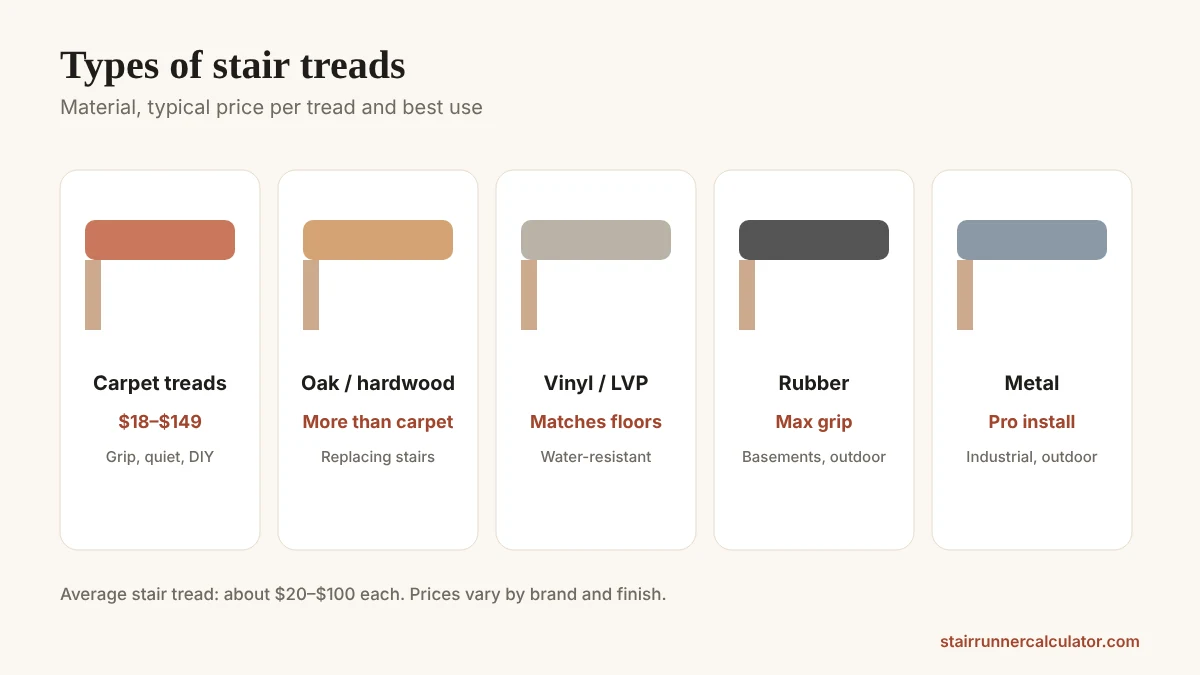
Types of stair treads
| Type | Best for | Notes |
|---|---|---|
| Carpet stair treads | Grip, quiet stairs, pets, renters | Individual carpet pads fixed to each tread. Typically about $18–$149 each, depending on the material (synthetic is cheaper than wool). |
| Wood treads (oak, maple, hickory, pine) | Replacing or upgrading stairs | Red oak and white oak are the most popular. Usually more expensive than carpet treads, and usually fitted by a professional. |
| Vinyl and LVP treads | Matching vinyl plank floors | Water-resistant, and usually sold with matching nosing. |
| Rubber and non-slip treads | Basements, outdoors, commercial | Maximum grip and easy to clean, with a utilitarian look. |
| Metal treads | Industrial, outdoor, fire stairs | Durable and best installed by a professional. |
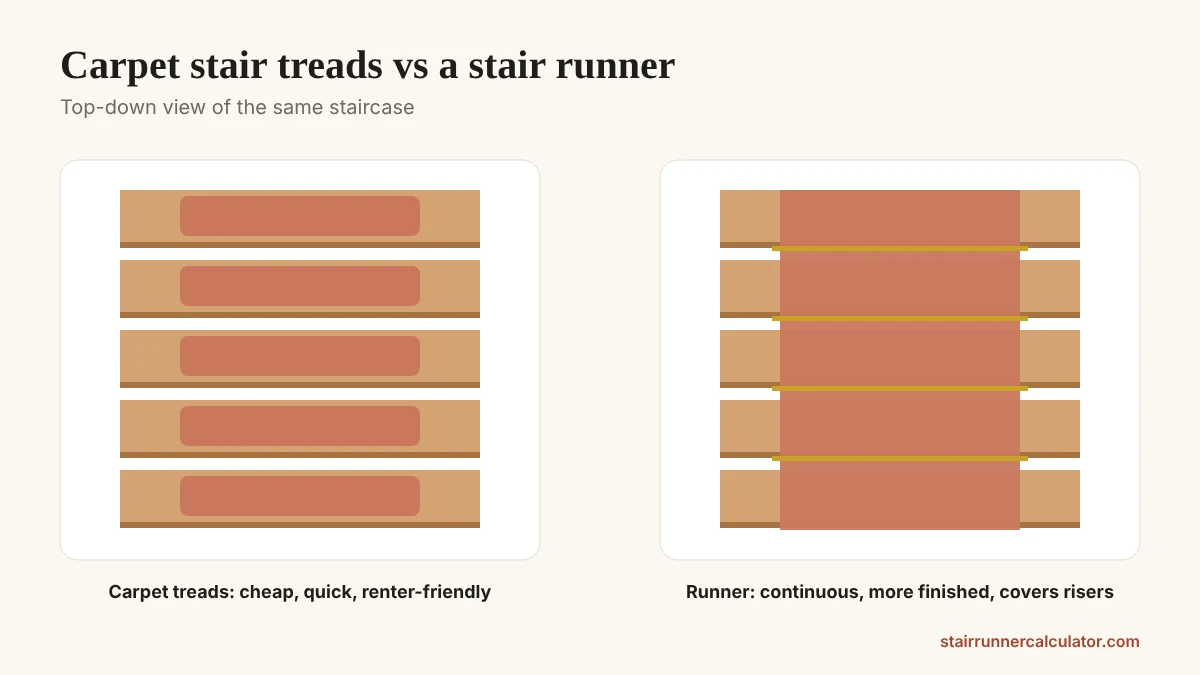
Carpet stair treads vs a stair runner
- Carpet treads cover only the flat part of each step. They're cheap, quick to fit and easy to replace, which makes them ideal for renters and pets. But the risers stay bare, and treads can shift if they aren't secured.
- A stair runner runs continuously over treads and risers. It looks more finished, protects the nosings and stays put, but it costs more and usually needs fitting. See stair runners: types and costs.
Compare the two for your stairs: work out runner length with the stair runner calculator and tread count with the stair tread calculator.
Standard stair tread sizes
Most residential treads are about 36 inches wide and 10–11 inches deep, plus a nosing of about 3/4–1 1/4 inches. Carpet treads are usually 8–9 inches deep and 26–30 inches wide, leaving wood visible at the sides. Always measure your own stairs. Check depth (including nosing), width and whether the nosing is rounded (bullnose) before you order.
Bullnose carpet stair treads
Bullnose treads wrap over the rounded front edge of each step. They grip better at the nosing, where most slips happen, and they hide wear on the edge. Choose them if your steps have a pronounced rounded nosing.
How to install carpet stair treads
- Clean each tread thoroughly so the backing or tape can grip.
- Mark the center of each step so the treads line up all the way up.
- Place each tread tight against the riser (or wrapped over the nosing for bullnose treads).
- Press firmly, or fix with double-sided carpet tape or the adhesive supplied.
- Check that every tread is secure before using the stairs.
Stair treads and safety
Most falls happen at the front edge of the step, so grip at the nosing matters most. Bullnose treads, non-slip backings and contrasting edge colors all help, especially for older people, children and pets.
How to choose
- Safety first: for children, older people or pets, choose a non-slip backing or a bullnose design.
- Match the look: wood or vinyl treads for a seamless floor, carpet treads or a runner for warmth and quiet.
- Budget: count your steps with the stair tread calculator and multiply by the price per tread.
- Installation: carpet and rubber treads are DIY-friendly. Wood and metal treads usually need a professional, so find a local fitter.
Frequently asked questions
How much do stair treads cost?
On average, stair treads cost about $20–$100 each. Carpet treads range from about $18 to $149 each depending on the material. Hardwood treads usually cost more and are typically professionally installed.
Are carpet stair treads or a runner better?
Carpet treads are cheaper, quicker to fit and better for renters. A runner looks more finished, covers the risers and stays in place better, but costs more and usually needs fitting.
How do you keep carpet stair treads from slipping?
Choose treads with a non-slip rubber or latex backing, and secure them with double-sided carpet tape or the adhesive strips supplied. Bullnose treads also grip the nosing better.
What size are stair treads?
Most residential stair treads are about 36 inches wide and 10–11 inches deep, plus the nosing. Carpet tread covers are usually 8–9 inches deep and 26–30 inches wide.
How many stair treads do I need?
One per step. A typical full flight has 12–16 treads. Count each step you stand on, including the top one if it's a full step, or use the stair tread calculator.