

Where 28 inches fits in the sizing ladder
Stair runner widths generally step up in roughly 2 inch increments through the popular range: 22, 24, 26, 28, 32 and 36 inches cover the vast majority of residential orders. 28 inches sits deliberately between the ubiquitous 26in 'standard' size and the wider 32in size used on grand or open-plan staircases, and it earns its place because a meaningful number of staircases are built slightly over the 36in code minimum — commonly 38 to 42in clear width — where a 26in runner would leave a slightly excessive reveal and a 32in runner would look proportionally heavy. On those wider-than-standard treads, 28in restores the classically balanced 5 to 7 inch reveal on each side.
28in is also the width most frequently recommended when a stair runner needs to continue, visually and physically, into an adjoining hall runner or landing carpet. Many hall and landing runner ranges are woven and stocked at 27in, 28in or 30in as their standard width, closer to typical rug and runner sizing conventions than to strict stair-tread proportions, so choosing a 28in stair runner makes it far easier to source a genuinely matching hall runner from the same range without a visible width mismatch at the transition.
28 inches in metric
28 inches converts to 71.12cm, rounded to 71cm by virtually every retailer. Because this falls close to, but still under, the common 72cm and 75cm UK stocked widths, some UK suppliers list a 71cm or 72cm runner as their nearest match to a US-style 28in order, while others will cut precisely to 71cm from 80cm or wider broadloom stock. US retailers, by contrast, generally list 28in directly since American broadloom in 12ft and 15ft rolls is cut lengthwise regardless of the finished runner width, making an exact 28.00in cut straightforward.
| Measurement | Value |
|---|---|
| Inches | 28in |
| Centimetres | 71cm (71.12cm exact) |
| Millimetres | 711mm |
| Nearest UK stocked alternative | 70cm or 72cm |
Reveal maths: 30-32 inch stairs are the sweet spot
The number most worth memorising for a 28 inch runner is its performance on 30-32 inch stairs, which is precisely where it delivers the tightest, cleanest reveal: on a 32in (81cm) tread, (32-28)/2 = 2in (5cm) per side, and on a 30in (76cm) tread, (30-28)/2 = 1in (2.5cm) per side. That second figure is genuinely tight — workable on a modern, minimal-margin look, but close to the lower comfort limit most fitters recommend. On wider stairs closer to 38-40in, the same 28in runner opens the reveal to 5-6in per side, which is where it performs best for a traditional, generously margined appearance.
- 30in tread: 1in reveal per side — tight, minimal-margin look, verify before committing.
- 32in tread: 2in reveal per side — snug and clean, popular on secondary or back staircases.
- 36in tread: 4in reveal per side — comfortable, versatile, close to the classic proportion.
- 40in tread: 6in reveal per side — generous, works well transitioning into a hallway.
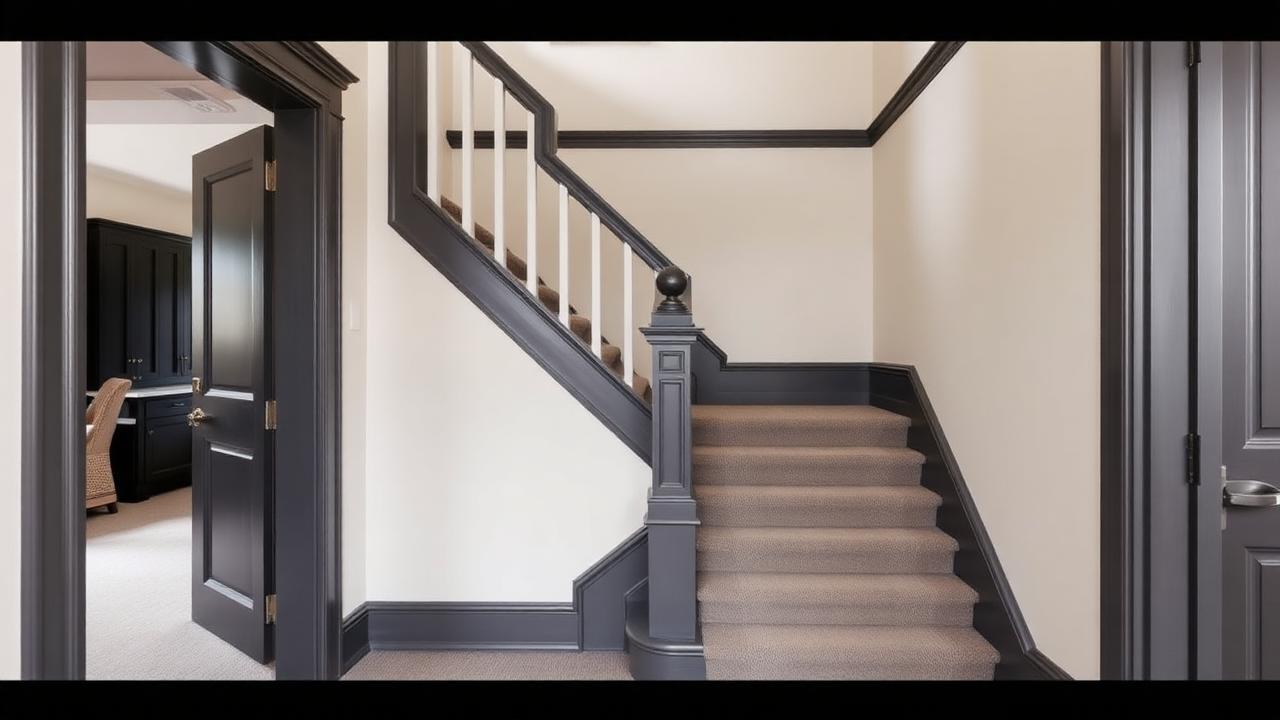
Converting a stair runner into a hall runner width
If your plan is to run the same product up the stairs and along an upstairs or downstairs hallway, width consistency at the transition point matters more than most homeowners expect: a runner that steps from 28in on the stairs to, say, 24in in the hall (or vice versa) creates a visible kink in the border line exactly where the eye is drawn, at the top newel post or landing threshold. Because hall and landing runners are frequently stocked at 27, 28 and 30in as standalone rug products (rather than only as continuations of stair carpet), choosing 28in for the stairs gives you the widest available choice of ready-made hall runners that will match without a custom order. When the hallway is noticeably wider than the stair flight, it is also acceptable design practice to step up one size for the hall section and use a wider bordered runner there, provided the stair-to-landing transition is planned deliberately with a clean butt join or a design frame, not left to chance.
Plan the landing transition before you order
If a 28in stair runner will meet a hallway runner at the top of the stairs, decide the transition detail (matching width butt join, mitred border, or step-up to a wider hall size) before ordering either piece, so the binding and pattern repeat line up rather than being cut and bound independently.
Ordering length and confirming the fit
Once 28in is confirmed as the right width, calculate total length with the stair runner length calculator by summing tread depth plus riser height across every step, adding a landing allowance for any turn, and building in waste for pattern matching. For a 15-step flight with a 10.5in going and 7.25in riser, that is (10.5+7.25) x 15 = 266.25in, or about 22.2ft (6.75m) before waste, plus whatever additional length the hall or landing section requires if you are ordering both pieces together. US fitted pricing for 28in runners in mid-range wool typically runs $24-42 per linear foot; UK pricing for the nearest 70/72cm equivalent runs roughly £32-58 per linear metre fitted, both broadly similar to 26in pricing since the width difference has only a small effect on material cost per linear foot.
28in against UK and US roll widths
28 inches (71cm) sits in an awkward middle zone for UK narrow broadloom, which is conventionally woven at 68cm and 70cm. A 71cm finished runner is 1-3cm wider than the standard narrow roll, meaning it cannot always be cut from 70cm stock with binding intact on both edges — some ranges instead offer 71cm from an 80cm wide roll, or round the order down to the nearest 70cm stocked size and call it a close match. US narrow broadloom, commonly supplied at 27in or 30in for stair use as well as the full 12ft/15ft wide-format rolls, generally accommodates a precise 28.00in cut more easily, since either narrow-stock option straddles 28in comfortably.
This roll-width sensitivity is worth raising directly with a supplier before ordering: ask whether your chosen 28in (71cm) product is cut from dedicated narrow stock or trimmed from a wider roll, since the latter typically carries a small premium per linear foot or metre because more raw material is discarded in the cut. It rarely affects the finished look, but it does affect price and, occasionally, lead time if the wider stock has to be specially sourced.
28in on a 42in (1070mm) staircase
Grander staircases built to a 42in (1070mm) clear width, common in larger new-build entrance halls on both sides of the Atlantic, are usually just beyond the comfortable range for a 28in runner: (42-28)/2 = 7in (18cm) per side, which starts to look like an undersized runner floating on a wide tread rather than a considered fit. On these wider flights, 32in or 36in is the more typical recommendation, bringing the reveal back down to 3-5in. 28in performs best on the 30-40in tread range covered earlier in this guide, and homeowners with a genuinely grand 42in+ staircase should treat 28in as a floor rather than a target width.
| Staircase width | 28in runner reveal per side | Verdict |
|---|---|---|
| 30in (762mm) | 1in (2.5cm) | Very tight — verify with samples |
| 36in (914mm) | 4in (10cm) | Comfortable, classic |
| 42in (1070mm) | 7in (18cm) | Too wide — consider 32in or 36in |
Fixing and finishing a 28in stair-to-hall runner
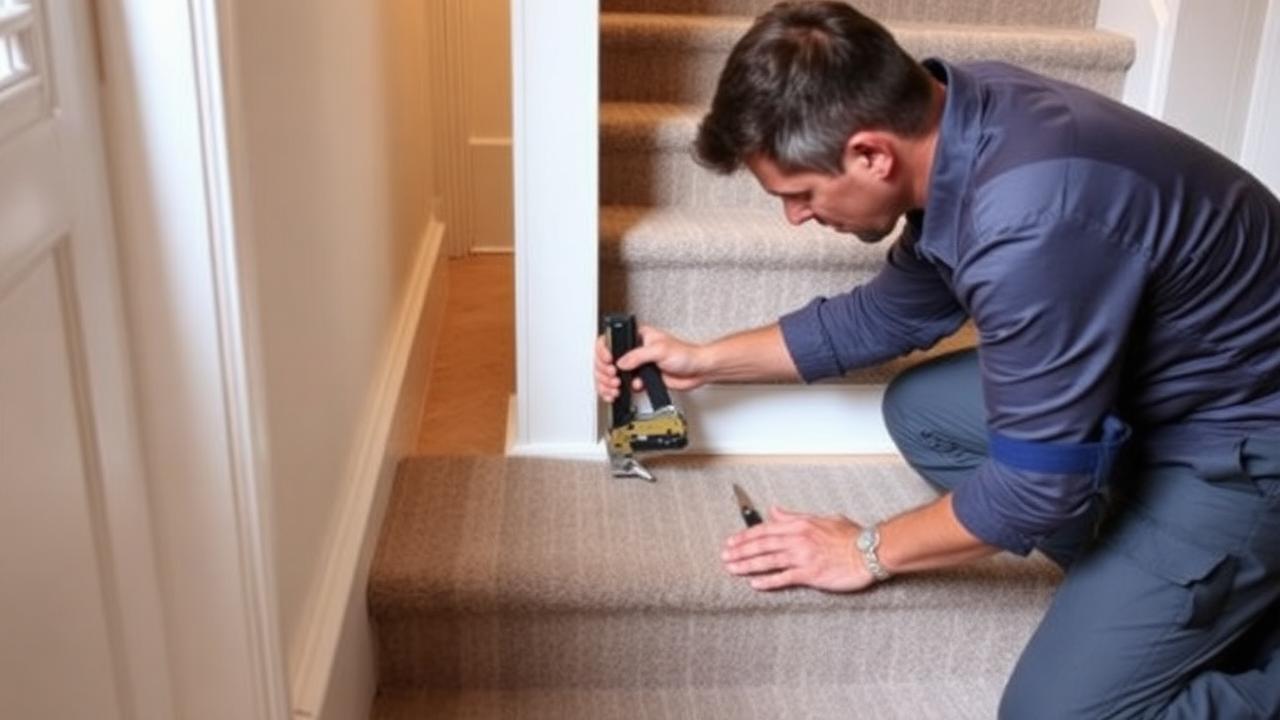
When a 28in stair runner continues into a hall or landing, the fixing method often needs to change partway along the run. Stairs typically take grippers or stair rods to hold the carpet firmly into each tread-riser angle, while a hall or landing section is more commonly direct-stuck or gripper-fixed flat with no rods needed, since there is no angle to secure against. Plan this transition with your fitter before the carpet arrives: the binding detail at the point where stair fixing changes to flat fixing, usually right at the top nosing or the landing threshold, is the single most visible seam in the whole installation, and it is far easier to specify a clean mitred or butted finish in advance than to improvise on the day.
Decide the stair-to-landing fixing method before fitting day
Stair rods or grippers used on the flight itself often need to hand off to a different flat-fixing method at the landing. Agree this detail, and the exact binding treatment at the transition, with your fitter before the runner is cut, not on installation day.
Care and longevity for a 28in runner through a busy hallway
A 28in runner that continues into a hallway typically sees more consistent foot traffic across its full width than a stair-only runner, since hallway walking lines are less concentrated to the centre of the tread than stair walking lines are. Rotate any loose stair rods or checks on gripper fixing annually, vacuum with a brush attachment rather than a beater bar on wool or wool-blend pile to avoid pulling loop fibres, and address spills on the hallway section immediately, since flat carpet in a hall dries more slowly than the more exposed, better-ventilated tread of a staircase. Professional cleaning every 12-18 months on a busy hall-and-stair run keeps both the 28in stair section and any matching hall runner wearing evenly, rather than the hallway section visibly ageing faster than the stairs.
Choosing pile height for a busy 28in stair-and-hall run
A 28in runner carrying traffic from a stair flight straight into an adjoining hallway typically sees more consistent, unbroken foot traffic across its width than a stair-only runner confined to the tread, since hallway walking patterns spread more evenly rather than concentrating toward the centre of each step. For this combined use case, a lower, denser pile, generally 6-9mm, wears more evenly and resists crushing and matting better than a deep, plush pile over the long, flat hallway run, even though a taller pile might look attractive in a showroom sample. Cut-pile wool and tightly woven Wilton constructions both perform well here, while a loose, high-loop pile is more prone to flattening permanently along a well-worn hallway path.
Textured or multi-level loop constructions, which mix loop heights to create a subtle pattern, are a practical middle ground for a 28in stair-and-hall installation because the texture itself helps disguise the gradual flattening and soiling that a busy hallway inevitably shows over a few years, without requiring the higher maintenance of a genuinely deep pile.
Colour continuity between the stair and hall sections
When a 28in runner and a matching 28in hall runner are ordered from the same range but in different production batches, months or years apart, subtle dye-lot variation between batches can leave a faint colour mismatch at the join, especially in strong natural light. Where possible, order both the stair and hall sections together in a single production run rather than adding the hall section later, and if a later addition is unavoidable, request a current sample swatch to check against the original stair runner before committing to the second order.
Know your numbers in 30 seconds
Enter your step count, tread depth and riser height — the stair runner calculator gives you the exact length to order, in metres and feet, with waste included.
Open the stair runner calculatorWhatever you decide, get the numbers first: the stair runner calculator doubles as a stair runner length calculator, adding nosing wrap, landings, winders, pattern repeat and waste so you order the right length the first time.
Still deciding on material, width or pattern? Our hub on stair runners compares weaves, widths, backings and fitting styles side by side, then hands the numbers straight to the calculator.
Frequently asked questions
What is 28 inches in cm for a stair runner?
28 inches converts to 71cm (71.12cm exact). UK retailers commonly list their nearest stocked equivalent as 70cm or 72cm, while US retailers usually cut precisely to 28in since American broadloom rolls are cut lengthwise regardless of finished width, making an exact 71cm cut straightforward to order.
What size stairs suit a 28 inch runner?
28in works best on treads between about 30 and 40 inches wide, giving reveals from 1 to 6 inches per side. It particularly suits staircases built a little wider than the standard 36in code minimum, commonly found in larger or older homes.
Can a 28 inch stair runner match a hallway runner?
Yes, and it is one of the easiest widths to match because 27, 28 and 30 inches are common standalone stocked widths for hall and landing runners, making it straightforward to source a genuinely matching piece without a custom order.
What reveal does a 28 inch runner give on a 30 inch tread?
(30-28)/2 = 1 inch per side, which is a tight, minimal-margin look. It is workable on modern staircases wanting a near-full-width runner, but check it in person or with samples before committing, since it is close to the lower comfort limit.
Is 28 inches wider or narrower than the US standard runner size?
It is 2 inches wider than the 26in size most commonly stocked for standard 36in US staircases. 28in suits staircases that are themselves slightly wider than the 36in code minimum, roughly 38-42in clear width, restoring a balanced reveal on that wider tread.
How much does a 28 inch wide stair runner cost?
US fitted pricing typically runs $24-42 per linear foot for mid-range wool or wool-blend including pad and installation. UK pricing for the nearest 70-72cm equivalent runs roughly £32-58 per linear metre fitted, similar to narrower widths since width has a modest effect on cost.
How do I work out how much runner I need at 28 inches wide?
Add the tread depth (going) plus the riser height for every step in the flight, add extra for any landing, and include a waste allowance for pattern matching, or use the stair runner length calculator to get an instant total from your step count and dimensions.
What is the nearest UK stocked width to a US 28 inch runner?
Most UK ranges list 70cm or 72cm as their closest catalogue size to a US 28in (71cm) order. Some suppliers will cut precisely to 71cm from wider broadloom stock for a small custom-cut surcharge and slightly longer lead time, so always confirm the exact figure before ordering.
Know your numbers in 30 seconds
Enter your step count, tread depth and riser height — the stair runner calculator gives you the exact length to order, in metres and feet, with waste included.
Check your stair runner widthReady for real prices?
Get quotes from vetted stair runner suppliers and fitters near you. Free, no account, no obligation.
Every guide is written from hands-on measuring and fitting experience, checked against the calculator’s own maths, and re-reviewed whenever prices or methods change. Read our editorial standards.