
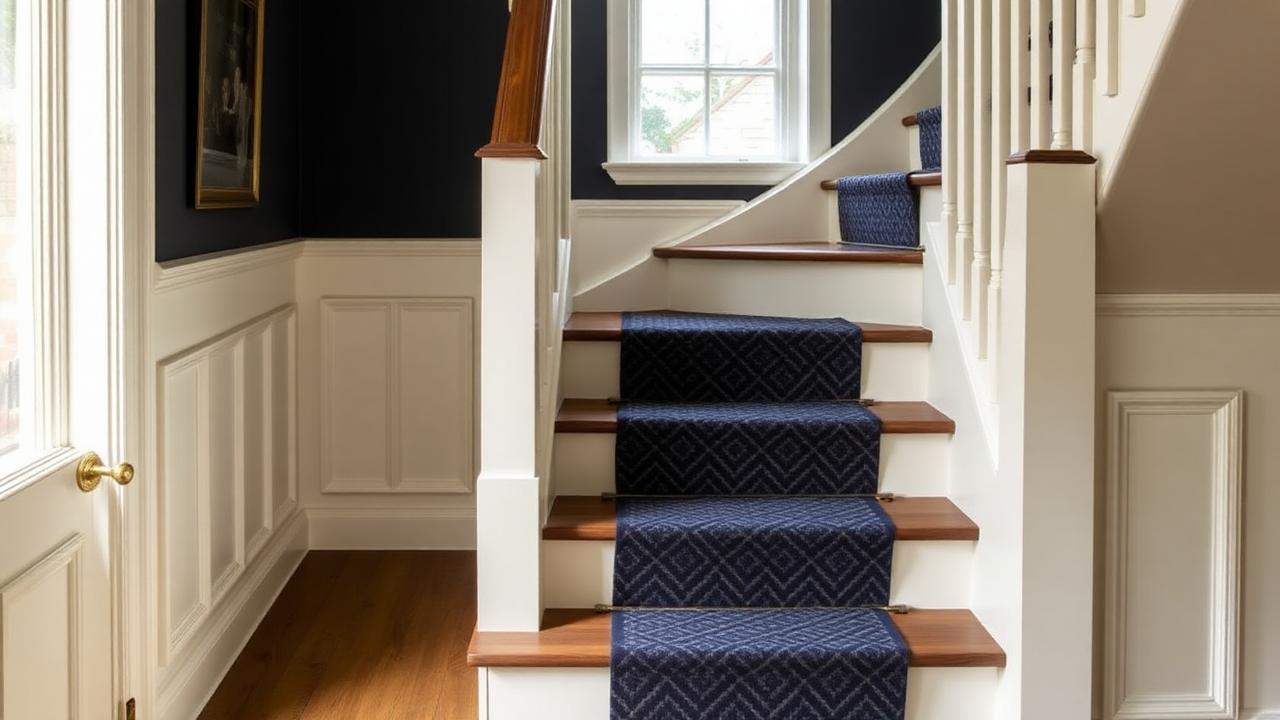
The most subtle animal print for stairs
Antelope print sits at the calm end of the animal-print spectrum: a fine, irregular speckling or mottling in tones of fawn, taupe, warm grey and soft brown, without the strong graphic contrast of a zebra stripe or the dense rosettes of a leopard print. From three or four steps away it can read almost as a heathered solid colour, only revealing its animal-print origin on close inspection — which makes it a good compromise for anyone drawn to the texture of an animal print but wary of a bold, high-contrast pattern dominating a hallway.
Pattern scale and how it reads on treads
| Scale | Character | Best use |
|---|---|---|
| Fine speckle (under 0.5in marks) | Near-solid from a distance, subtle texture up close | Most staircases, especially narrow ones |
| Medium mottle (0.5-1in marks) | Visible pattern at normal viewing distance | Wider stairs, feature hallways |
| Large blotch (1in+ marks) | Starts to read as an abstract pattern rather than hide-print | Bold, design-led schemes only |
Colourways
- Fawn/cream — the truest-to-nature antelope tone, warm and versatile.
- Taupe/grey — a cooler, more contemporary read that suits modern oak or grey-washed stairs.
- Camel/dark brown fleck — richer and warmer, suits traditional walnut staircases.
- Soft ivory/pale grey — the palest option, best for bright, light-filled stairwells.
Repeat matching and yardage
Antelope print's fine, all-over mottling makes it one of the most forgiving patterns to match tread-to-tread — there is no obvious motif that needs to land in exactly the same place, unlike a Persian medallion or a bold stripe. Waste margins are correspondingly lower: budget 6-9% extra yardage over the flat flight length, similar to a solid colour rather than the 10-15% typical of a bold repeat print. Run your exact numbers through the stair runner length calculator to confirm.
Fibre and cost
| Fibre | Notes | US cost/step | UK cost/step |
|---|---|---|---|
| Wool-blend mottled | Soft depth of colour, natural fleck | $26-48 | £21-39 |
| Wool loop/berber with fleck dye | Very durable, subtle texture | $22-40 | £18-32 |
| Solution-dyed nylon | Budget-friendly, fade-resistant | $14-26 | £11-21 |
A good middle ground for shared decisions
Antelope print is one of the easiest animal prints to agree on in a household split between wanting pattern and wanting something calm — it gives texture and visual interest without the boldness of zebra or tiger stripes.
Fitting
Either waterfall or Hollywood fitting suits antelope print equally well, since the fine, low-contrast pattern doesn't demand a particular fitting style the way a bold stripe does. A firm underlay pad is worth prioritising over hardware choices here, since the pattern's subtlety means the runner's overall silhouette and drape matter more to the finished look than visible rods or fittings.

| Item | US price range | UK price range |
|---|---|---|
| Wool-blend runner, 13 steps | $340-625 | £270-500 |
| Nylon runner, 13 steps | $180-340 | £145-275 |
| Professional fitting | $235-455 | £195-365 |
Layering antelope print with other neutrals in the hallway
Because antelope print reads as a textured neutral rather than a strong pattern, it layers more easily with other patterned or textured elements elsewhere in the hallway than any of the bolder animal prints. A taupe/grey antelope runner works comfortably alongside a striped console runner, a patterned wallpaper, or an existing Persian-style rug at the base of the stairs, none of which would sit easily alongside a bold zebra or tiger print in the same sightline.
Bedroom-landing and upstairs hallway use
Antelope print's calm, low-contrast character also makes it one of the few animal prints that works well continuing from the stairs into an upstairs landing or hallway as a fitted carpet rather than stopping at a bound runner edge, since the pattern doesn't demand the visual containment a bold print needs. If you're considering this continuous approach, specify the same dye lot and batch number for both the stair runner and the landing carpet, since even a subtle antelope print can show a visible seam line if the two pieces come from different production runs.
Comparing wool loop and wool-blend cut pile for antelope print
| Construction | Look | Wear characteristics |
|---|---|---|
| Wool loop/berber | Slightly flatter, more casual texture | Excellent durability, resists crushing, shows less footprint marking |
| Wool-blend cut pile | Softer, more plush underfoot | Slightly more prone to pile crush on nosings over 5+ years |
For a busy family staircase, the wool loop construction is usually the more practical of the two, since a looped pile shows footprints and vacuum marks less than a cut pile and holds up better on the leading nosing edge, which takes the most abrasion of any point on the stair.
Know your numbers in 30 seconds
Enter your step count, tread depth and riser height — the stair runner calculator gives you the exact length to order, in metres and feet, with waste included.
Open the stair runner calculatorStyling an antelope print with stair runners elsewhere in the house
Because antelope print reads as a textured neutral rather than a bold statement, it is one of the easier animal-print stair runners to coordinate with other stair runners or carpet already in the house. A taupe or fawn antelope runner on the main stairs can sit alongside a plainer solid-colour stair runner carpet on a secondary staircase without looking like two unrelated design decisions, since the shared neutral undertone ties them together even though one carries pattern and the other does not.
Pairing antelope print with wallpaper and wall colour
Antelope print's fine, all-over mottling gives it more flexibility against patterned wallpaper than almost any other animal print in this category, since there is no single bold motif to clash with a wallpaper's own repeat. A soft ivory or pale grey antelope runner against a botanical or geometric wallpaper generally reads as layered and considered rather than busy, provided the wallpaper's own colours pick up at least one tone already present in the runner's fleck pattern.
Pattern repeat maths for a fine mottled print
Antelope print's irregular, all-over speckling means the repeat maths is more forgiving than a bordered or motif-based pattern. On a 13-step flight with a 10in (25cm) going and 7.5in (19cm) rise, the flat measured length before waste comes to roughly 13ft 6in (4.1m); because the fine mottling does not need to land on an exact boundary tread to tread, a 6-9% waste allowance is enough, closer to a plain solid colour than the 10-15% typical of a bold repeat print like a stripe or a large motif.
Wear characteristics of a fine speckled pattern
A fine speckled pattern like antelope print disguises the earliest stages of wear better than almost any other animal print, since a slightly worn or flattened patch simply blends into the existing irregular texture rather than standing out as an obvious bald spot the way a bold spot or stripe pattern would. This makes it a particularly forgiving choice for a busy family stair runner carpet where visible wear patterns are a real concern over the first several years.
| Wall treatment | Best antelope colourway | Why it works |
|---|---|---|
| Plain painted wall | Any colourway, including bolder camel/dark brown | No competing pattern to manage |
| Botanical or geometric wallpaper | Soft ivory or pale grey | Fine texture layers without competing for attention |
| Existing patterned rug at stair base | Taupe/grey, tonal | Neutral undertone bridges both pieces |
Whatever you decide, get the numbers first: the stair runner calculator doubles as a stair runner length calculator, adding nosing wrap, landings, winders, pattern repeat and waste so you order the right length the first time.
Frequently asked questions
What does an antelope print stair runner look like?
A fine, irregular speckled or mottled hide pattern in neutral tones like fawn, taupe or grey, much subtler than bold zebra stripes or leopard rosettes.
How much extra carpet do I need for antelope print repeat matching?
Because the pattern is fine and all-over rather than a bold motif, budget only 6-9% extra yardage, similar to a solid colour rather than a bold repeat print.
Is antelope print stair runner good for a modern staircase?
Yes. A taupe or grey antelope print reads as textured neutral rather than overtly patterned, which suits contemporary interiors better than bolder animal prints.
How does antelope print compare with cheetah print on stairs?
Antelope print is finer, more irregular and lower-contrast than cheetah's distinct solid spots, making it a calmer, more understated option.
How much does an antelope stair runner cost?
For a 13-step, 36in staircase, wool-blend material typically runs $340-625 (£270-500); solution-dyed nylon runs $180-340 (£145-275).
Waterfall or Hollywood fit for antelope print?
Either works well since the pattern's subtlety doesn't favour one fitting style, though Hollywood with rods adds definition if you want more visual structure.
Know your numbers in 30 seconds
Enter your step count, tread depth and riser height — the stair runner calculator gives you the exact length to order, in metres and feet, with waste included.
Measure my stairsReady for real prices?
Get quotes from vetted stair runner suppliers and fitters near you. Free, no account, no obligation.
Every guide is written from hands-on measuring and fitting experience, checked against the calculator’s own maths, and re-reviewed whenever prices or methods change. Read our editorial standards.