

Motif placement is the design decision that matters most
Unlike a zebra, cheetah or tiger print, which is an all-over pattern with no single focal image, a deer print stair runner is usually a figurative design: a stag silhouette, a running deer, or a woodland scene repeated at set intervals down a plain or subtly textured ground, often within a decorative border. This changes the entire measuring approach, because the goal is not just matching a repeat but making sure a complete, uncropped motif appears on (or centred across) each visible tread, with no deer silhouette cut awkwardly in half at a riser join.
| Motif spacing | Effect | Best for |
|---|---|---|
| One motif per tread | Strong, rhythmic repetition, most common choice | Standard 9-10.5in deep treads |
| One motif per two treads | More restrained, motif reads as a periodic accent | Narrower or shallower treads |
| Single large motif at a landing only | Motif reserved as a focal moment rather than repeated | Half-landing or turned staircases |
Colourways and settings
- Cream ground, brown stag silhouette — classic lodge or farmhouse look, pairs with oak.
- Charcoal ground, ivory stag — higher contrast, suits darker or more contemporary interiors.
- Forest green ground, tan motif — richly traditional, suits period country homes.
- Tartan or plaid border with a central stag motif — a Scottish lodge-style combination, often paired with brass rods.
Repeat spacing and yardage
Figurative motif runners typically have a repeat of 12-18in between silhouettes, close to a single tread depth, which is deliberate — most are designed to place one clean motif per step. Because the motif must land intact on every visible tread rather than merely feel visually balanced, allow 12-18% extra yardage over your flat measured length so the installer has enough spare fabric to shift the cut point and land a full motif on the first and last visible treads.
- Measure exact tread depth and count with the stair runner length calculator.
- Confirm the supplier's motif repeat length before ordering.
- Decide whether you want one motif per tread or a more spaced-out placement.
- Ask the installer to start the layout from the most visible tread (usually the bottom) and work upward.
Fibre and cost
| Fibre | Notes | US cost/step | UK cost/step |
|---|---|---|---|
| Wool-blend woven motif | Crisp silhouette definition, premium feel | $32-60 | £26-48 |
| Wool axminster (woven-through) | Motif colour goes through the pile, most durable | $48-90 | £39-72 |
| Printed synthetic | Budget option, motif is a surface print | $16-30 | £13-24 |
Border patterns need a border-savvy installer
Many deer-motif runners include a decorative border along both edges. The border must run parallel and consistent all the way up the flight, including around any landing or turn, which takes more skill than fitting a plain runner — confirm your installer has experience with bordered patterns before booking.
Fitting notes
Hollywood fitting with brass or black stair rods is the traditional pairing for a deer or stag motif runner, particularly in lodge-style or period country homes, since the rod at each riser reinforces the rhythmic, one-motif-per-step layout. Waterfall fitting works too if you prefer a cleaner, less traditional line.
Deer print in period and heritage properties
Deer and stag motifs have a long association with Scottish and English country-house interiors, and in a period property, a deer print runner with a tartan or plaid border reads as historically appropriate in a way that a bold animal-hide print like zebra or tiger would not. If the staircase has original brass stair rods or eyelets already fitted from a previous runner, measure the existing rod spacing before ordering, since older properties sometimes used a non-standard rod spacing that a modern motif repeat needs to be planned around.
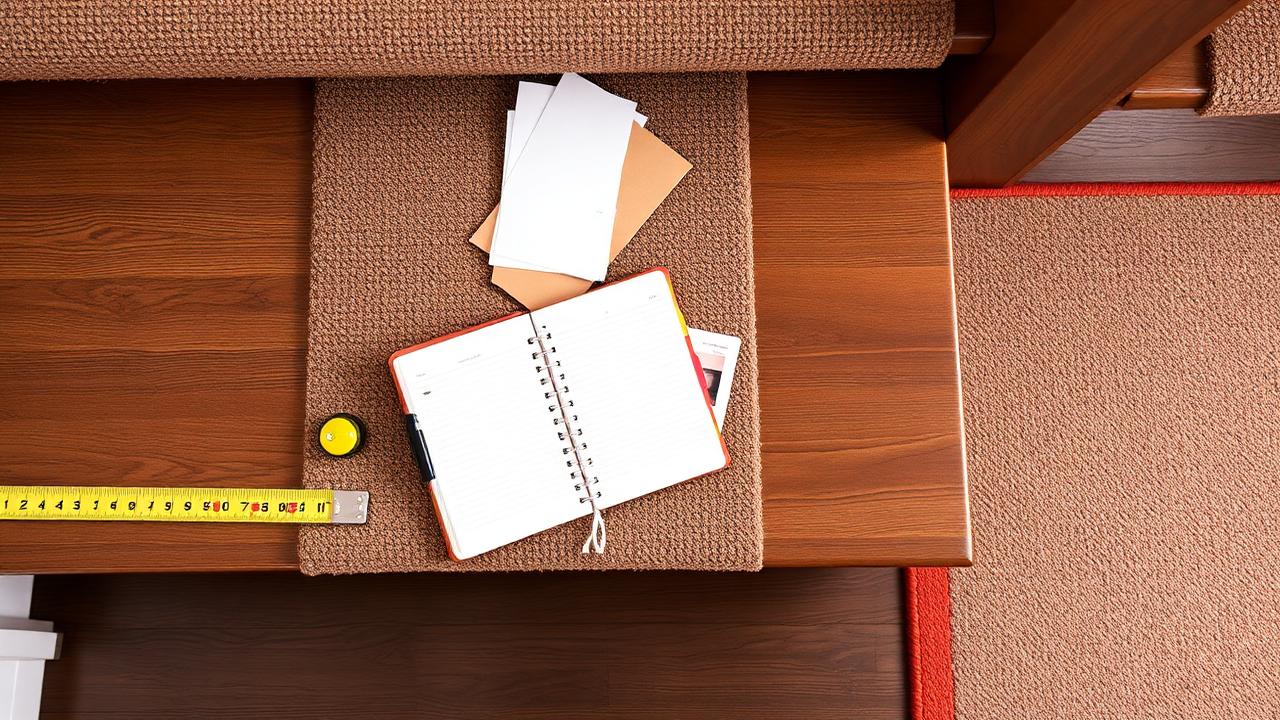
Sizing the motif to a half-width runner
Some staircases, particularly older properties, are fitted with a narrower runner than the full tread width, leaving 4-6in of exposed timber on each side. A deer motif design sized for a full-width 36in runner can look cramped or oddly cropped at 27in, so check the supplier's motif width — not just its length repeat — against your intended runner width before ordering, and ask whether a narrower version of the same design exists rather than simply cropping the standard width.
Comparing woven-through and printed motif runners over 10 years
- Year 1-3: both woven-through (Axminster) and printed motif runners look near-identical when new.
- Year 3-5: printed motifs on high-traffic nosings begin to show lighter patches where the surface print has worn thin, revealing the base colour beneath.
- Year 5-10: woven-through motifs retain visible silhouette definition even as the pile height reduces from wear, since the colour runs through the full pile depth.
- Year 10+: printed motif runners on busy stairs typically need replacing; woven Axminster motifs often still have useful life left, justifying their roughly 50-70% cost premium for long-term stair use.
Know your numbers in 30 seconds
Enter your step count, tread depth and riser height — the stair runner calculator gives you the exact length to order, in metres and feet, with waste included.
Open the stair runner calculatorStyling a deer print runner with the rest of a lodge-style hallway
A deer or stag motif runner earns its keep as part of a coordinated lodge or country scheme rather than as an isolated statement piece, since the motif itself signals a specific aesthetic that reads oddly dropped into an otherwise contemporary hallway. Pair it with natural materials already present – exposed stone, reclaimed timber, tartan or plaid soft furnishings – so the runner feels like one part of a considered scheme rather than the only nod to the theme in the whole space.
Pairing motif spacing with stair runners on a connecting landing
Where a deer print stair runner continues onto an upstairs landing as fitted carpet or a matching runner, the motif spacing needs to be planned across that join so a stag silhouette does not fall awkwardly split between the two pieces. Ask your supplier to calculate motif placement using the combined length of the stairs and the landing section together, not the stair flight alone, since treating them as separate orders is the most common cause of a poorly matched transition at the top of the stairs.
Pattern repeat maths for a figurative motif
Figurative motifs behave differently from an all-over print because a complete silhouette must land intact on the most visible treads. On a 13-step flight with a 10in (25cm) going and 7.5in (19cm) rise, the flat length before waste is roughly 13ft 6in (4.1m); with a typical motif repeat of 12-18in, close to a single tread depth, allow 12-18% extra yardage so the installer can shift the cut point and ensure a full, uncropped stag appears on the bottom step, the most visible tread from the hallway.
Wear at the nosing on a woven-through motif
A woven-through stag motif, most commonly seen in wool Axminster construction, keeps its silhouette crisp even as the pile height reduces over years of footfall, because the dark and light colours that make up the motif run through the full depth of the pile rather than sitting only on the surface. This is the main reason a woven motif runner justifies its 50-70% cost premium over a printed equivalent on a genuinely long-term stair runner carpet installation.
Checking flight length with the stair runner calculator before ordering a bordered design
Because many deer motif runners include a decorative border that must run parallel all the way up the flight, get your exact stair dimensions from the stair runner calculator before requesting a quote, and flag any turn or half-landing specifically, since a bordered pattern needs a more experienced installer and a more precise initial measurement than a plain or all-over print would.
| Interior element | Deer print pairing | Effect |
|---|---|---|
| Exposed stone or reclaimed timber | Cream ground, brown stag | Cohesive, classic lodge feel |
| Tartan or plaid soft furnishings | Tartan-bordered stag motif | Reinforces Scottish lodge styling |
| Contemporary neutral hallway | Charcoal ground, ivory stag | Modernises the motif without losing character |
Whatever you decide, get the numbers first: the stair runner calculator doubles as a stair runner length calculator, adding nosing wrap, landings, winders, pattern repeat and waste so you order the right length the first time.
Frequently asked questions
How do you space deer motifs on a stair runner?
Most designs place one complete motif per tread, spaced 12-18in apart to match typical tread depth. Confirm your tread depth against the supplier's repeat before ordering.
How much extra carpet do I need for a deer print motif runner?
Budget 12-18% extra yardage over your flat flight measurement, more than for an all-over print, since a complete motif must land intact on the most visible treads.
What colours work best for a deer print stair runner?
Cream with a brown stag suits classic lodge and farmhouse looks; charcoal with an ivory motif suits more contemporary interiors; forest green with tan suits traditional country homes.
Should a deer print runner have a border?
Many do, and a border reinforces the lodge or country aesthetic, but it requires an installer experienced with pattern-matched borders, especially around any landing or turn.
How much does a deer print stair runner cost?
Wool-blend woven-motif runners typically run $32-60 per step (£26-48); wool Axminster (woven-through) runs $48-90 per step (£39-72) for greater durability.
Hollywood or waterfall fit for a deer motif runner?
Hollywood fitting with stair rods is the traditional pairing that reinforces the one-motif-per-step rhythm; waterfall fitting gives a cleaner, more contemporary line.
Know your numbers in 30 seconds
Enter your step count, tread depth and riser height — the stair runner calculator gives you the exact length to order, in metres and feet, with waste included.
Measure my stairsReady for real prices?
Get quotes from vetted stair runner suppliers and fitters near you. Free, no account, no obligation.
Every guide is written from hands-on measuring and fitting experience, checked against the calculator’s own maths, and re-reviewed whenever prices or methods change. Read our editorial standards.