
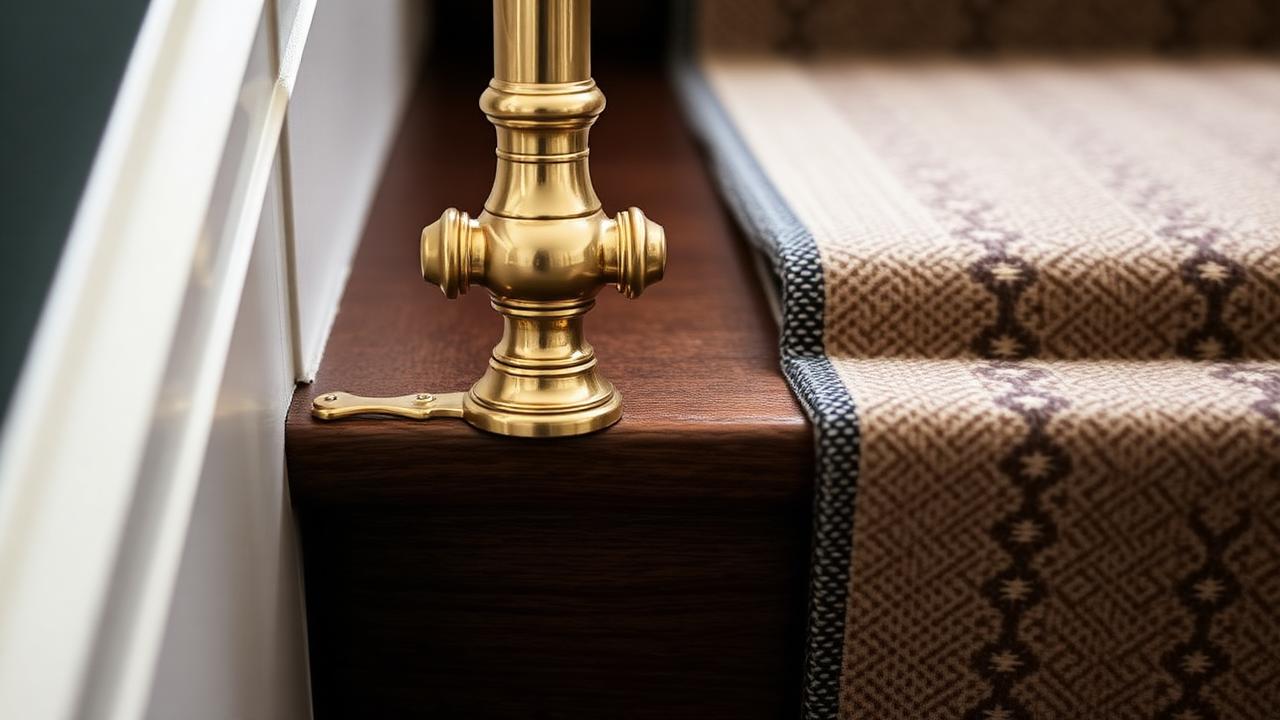
The appeal of solid brass
Solid brass rods offer a weight and presence that plated alternatives cannot quite match. Over time, solid brass develops a rich patina, though it can also be polished back to a high shine depending on the look you prefer. For Victorian or Edwardian homes, these are the authentic choice.
How much runner do I need?
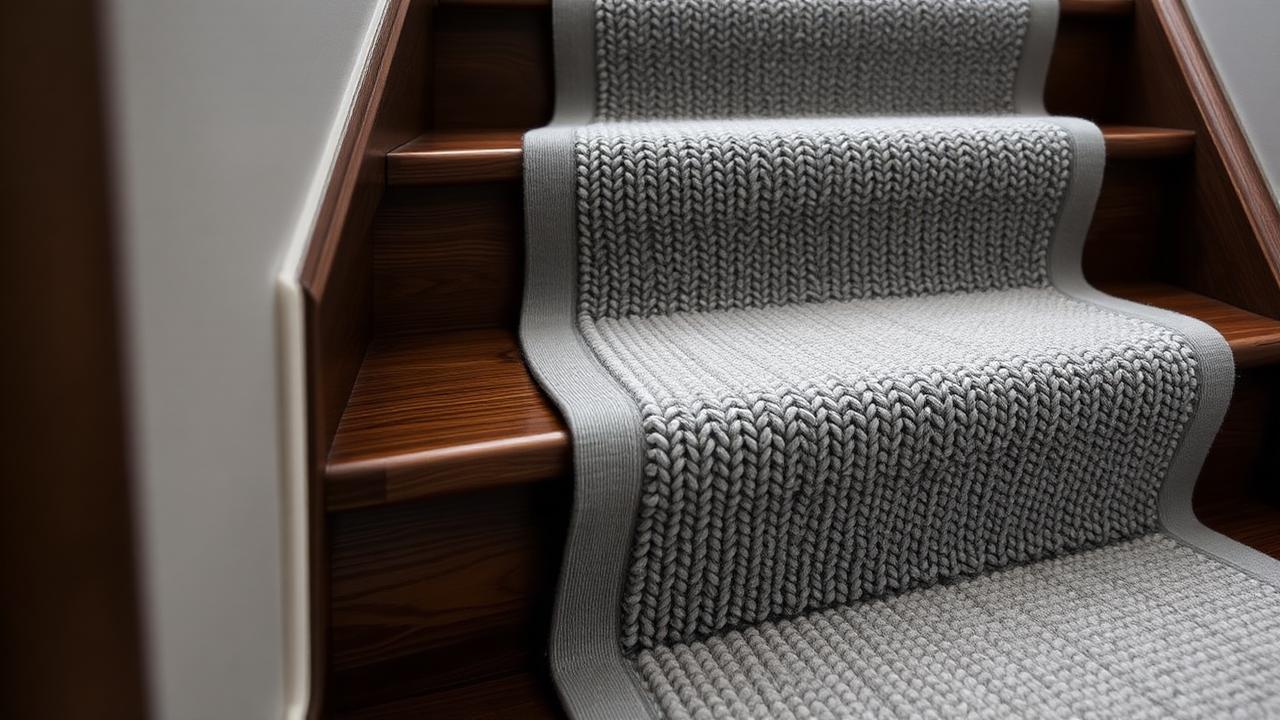
To calculate runner for a 13-step flight in US units: 10 in tread + 7.5 in riser + 0.75 in nosing wrap equals 18.25 in per step. Totaling 237.25 in (19.77 ft), plus 24 in for finishing, equals 21.77 ft. With an 8% waste margin, you need approximately 23.5 ft. In UK units, that is 25 cm + 19 cm + 1.9 cm = 45.9 cm per step, totaling roughly 7.09 m.
| Measurement | US (in/ft) | UK (cm/m) |
|---|---|---|
| Tread run | 10 in | 25 cm |
| Riser height | 7.5 in | 19 cm |
| Per-step total | 18.25 in | 45.9 cm |
| Total (13 steps) | 19.77 ft | 5.97 m |
| With 8% waste | 23.5 ft | 7.09 m |
Know your numbers in 30 seconds
Enter your step count, tread depth and riser height — the stair runner calculator gives you the exact length to order, in metres and feet, with waste included.
Open the stair runner calculatorMaintenance tip
Use a dedicated brass polish occasionally to prevent tarnish from becoming stubborn.
- Solid brass for longevity
- Polished or antique finishes
- Requires periodic cleaning
- Perfect for period properties
Whatever you decide, get the numbers first: the stair runner calculator doubles as a stair runner length calculator, adding nosing wrap, landings, winders, pattern repeat and waste so you order the right length the first time.
Still deciding on material, width or pattern? Our hub on stair runners compares weaves, widths, backings and fitting styles side by side, then hands the numbers straight to the calculator.
Frequently asked questions
Do brass stair rods tarnish?
Yes, solid brass naturally develops a patina over time. Regular cleaning with a brass polish will keep them bright if you prefer the shiny look.
Are brass stair rods hollow?
They can be either solid or hollow depending on the manufacturer. Solid brass is heavier and more durable, while hollow brass is a lighter, more cost-effective option.
How wide should brass stair rods be?
Typically, they should extend 2-3 inches beyond the width of the runner on either side to showcase the finials.
Can I use brass stair rods with a modern runner?
Absolutely. Polished brass can provide a sophisticated contrast to modern, minimalist runner designs.
Do brass stair rods require special fitting?
They are installed using brackets that are screwed into the stair tread, much like other rod materials.
Is brass heavy?
Solid brass has a significant weight, which adds to its sense of quality and stability on the stairs.
What are the common finial styles for brass rods?
Acorn, sphere, and pyramid finials are the most traditional choices for brass rods.
Can I get antique brass rods?
Yes, many manufacturers offer an antique brass finish which mimics the look of aged, darker metal.
Know your numbers in 30 seconds
Enter your step count, tread depth and riser height — the stair runner calculator gives you the exact length to order, in metres and feet, with waste included.
Size your runner and rods with the stair runner calculatorReady for real prices?
Get quotes from vetted stair runner suppliers and fitters near you. Free, no account, no obligation.
Every guide is written from hands-on measuring and fitting experience, checked against the calculator’s own maths, and re-reviewed whenever prices or methods change. Read our editorial standards.