
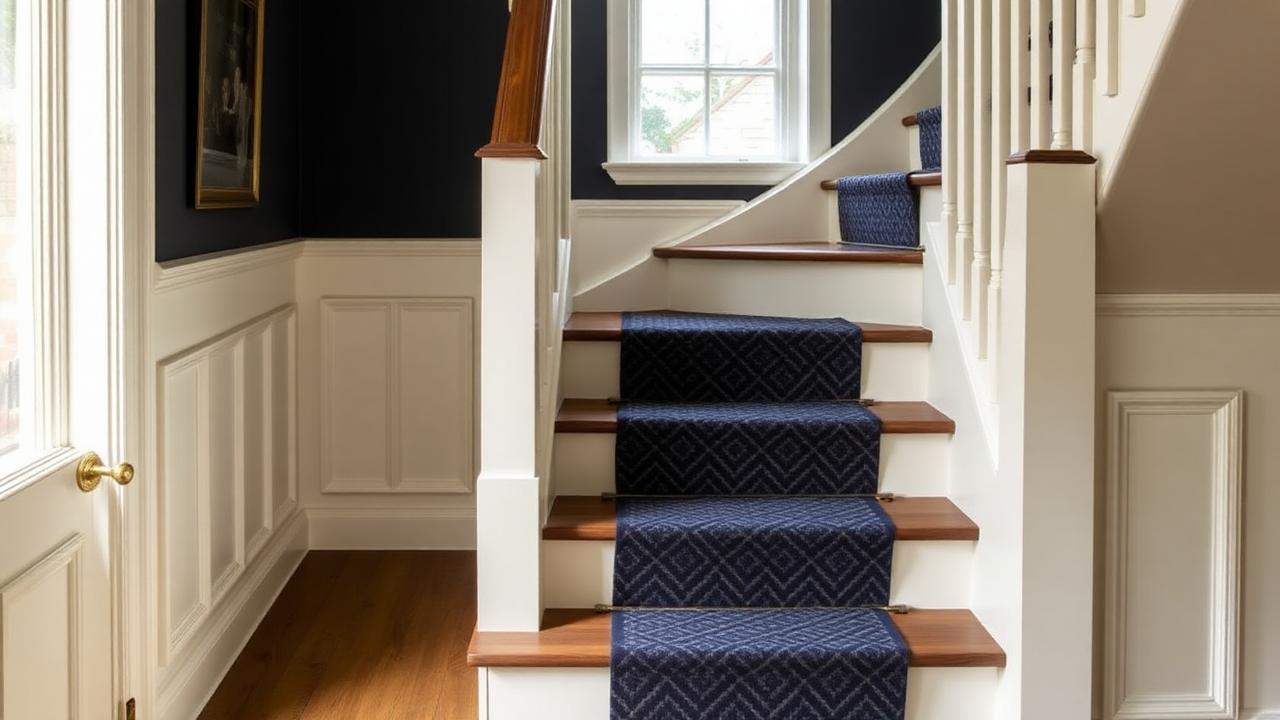
What makes fawn such a versatile colour
Fawn sits in the warm neutral family, close to a soft tan or light camel, with enough depth to avoid looking washed out but enough warmth to feel inviting rather than cold. It is one of the most flexible stair runner colours available because it pairs naturally with wood tones across the spectrum, from pale oak to rich walnut, and works equally well against white, cream or deeper painted stairwell walls.
This versatility makes fawn a popular choice for homeowners who anticipate changing other elements of their decor over time, such as wall colour or furniture, without wanting to replace the stair runner every time. Because it reads as a neutral rather than a strong colour statement, fawn tends to have excellent longevity in terms of style, avoiding the dated look that can affect more fashion-forward colour choices after a few years.
Practical performance of fawn tones
In terms of everyday practicality, fawn sits in a useful middle ground. It is darker than cream or ivory, so it hides dirt and light staining noticeably better, but it remains light enough that it does not show dust and lint the way a very dark charcoal or black runner would. This balance makes it a sensible choice for busy family homes where you want low-maintenance flooring without going to a very dark, heavy-looking colour.
Calculating your runner length
As with any colour, the length calculation depends purely on your stair dimensions. For our 13-step flight: 10 in tread + 7.5 in riser + 0.75 in nosing wrap = 18.25 in per step. Across 13 steps, that is 237.25 in, plus a 24 in finishing allowance, giving 261.25 in, or 21.77 ft. With a 10% waste margin, order approximately 24 ft. Metric: 25 cm + 19 cm + 1.9 cm = 45.9 cm per step, totalling 596.7 cm over 13 steps, plus 60 cm finishing, giving 656.7 cm, plus 10% waste, approximately 7.3 m.
| Step | US (in/ft) | UK (cm/m) |
|---|---|---|
| Per-step total | 18.25 in | 45.9 cm |
| 13 steps | 237.25 in | 596.7 cm |
| With finishing | 261.25 in | 656.7 cm |
| With 10% waste | 24 ft | 7.3 m |
Know your numbers in 30 seconds
Enter your step count, tread depth and riser height — the stair runner calculator gives you the exact length to order, in metres and feet, with waste included.
Open the stair runner calculatorBest materials in fawn tones
Wool takes warm neutral dyes especially well, producing a rich, natural-looking fawn with subtle depth and variation that mimics the tonal shifts found in natural fibres like sisal or jute. Wool-blend runners offer a similar look with improved durability and stain resistance at a lower price point. A pure nylon runner in fawn can look flatter and more uniform, which some homeowners prefer for a cleaner, more consistent appearance, particularly in modern interiors.
Test your fawn sample in situ
Warm neutrals like fawn can shift noticeably under different lighting. Always place your sample directly on the stairs and view it at different times of day before committing to a full order.
Pairing fawn with borders, rods and walls
Fawn pairs beautifully with a contrasting darker border in chocolate brown or charcoal, adding definition without disrupting the overall warm, calm feel of the staircase. For hardware, brass and antique gold stair rods complement fawn particularly well, echoing its warm undertones, while matte black rods offer a more grounded, contemporary contrast if that suits your wider decor scheme.

- Choose wool or wool-blend for the richest, most natural fawn tone.
- Add a darker contrasting border for definition.
- Pair with brass or antique gold hardware for a warm, cohesive look.
- Always sample the colour on your actual stairs before ordering.
- Confirm your exact runner length before placing an order.
Why fawn stands the test of time
Because fawn functions as a genuine neutral rather than a passing trend colour, it remains one of the safer long-term investments for a stair runner. It complements a wide range of wood tones and wall colours, hides everyday wear reasonably well, and rarely looks out of place even as the rest of a home's decor evolves over the years.
Cost bands for fawn runners
As a standard neutral, fawn is typically priced in line with other solid-colour options rather than carrying any premium. Budget fawn synthetics in the US run $3-6 per linear ft, mid-range wool-blends $8-14 per linear ft, and premium wool $16-26 per linear ft. UK pricing runs roughly £8-15 per linear metre for budget, £20-35 per linear metre for mid-range, and £40-68 per linear metre for premium wool. For our 24 ft (7.3 m) example flight, total material cost ranges from about $72-624 in the US or £58-496 in the UK depending on tier, before fitting labour.
| Band | US (24 ft flight) | UK (7.3 m flight) |
|---|---|---|
| Budget synthetic | $72-144 | £58-110 |
| Mid-range wool-blend | $192-336 | £146-256 |
| Premium wool | $384-624 | £292-496 |
Fitting notes for warm neutral tones
Fawn shows very little contrast against natural jute or sisal underlay fibres that occasionally shed through a loosely woven backing, so a fitter working with fawn should check for any stray fibre bleed-through before final fixing, particularly with lighter-weight wool-blend runners. Because fawn's warmth can shift depending on the surrounding wall colour and lighting temperature, it is also worth having the fitter do a final daylight check once the runner is installed, before any final finishing touches like rods or binding are added, in case a slightly different shade would suit the space better.
- Check for underlay fibre bleed-through before final fixing on lighter-weight runners.
- Do a daylight check once fitted, before adding rods or binding.
- Expect fawn pricing in line with other standard solid colours, no premium.
- Pair with brass or antique gold hardware for a warmer overall finish.
- Confirm your total length against the calculator before ordering any tier.
Whatever you decide, get the numbers first: the stair runner calculator doubles as a stair runner length calculator, adding nosing wrap, landings, winders, pattern repeat and waste so you order the right length the first time.
Still deciding on material, width or pattern? Our hub on stair runners compares weaves, widths, backings and fitting styles side by side, then hands the numbers straight to the calculator.
Frequently asked questions
What colour family is fawn?
It's a warm neutral, sitting between beige and light brown, often described as a soft tan or light camel tone.
Does fawn hide dirt well?
Reasonably well. It's darker than cream but lighter than charcoal, offering a practical middle ground for busy households.
What material gives the richest fawn colour?
Wool and wool-blend runners typically produce the deepest, most natural-looking fawn tones.
Does fawn suit both light and dark wood stairs?
Yes, its warm neutral tone works well against most wood finishes, from pale oak to dark walnut.
What border colour works with fawn?
A darker chocolate brown or charcoal border adds contrast and definition without disrupting the warm palette.
Will fawn go out of style?
It's unlikely, since neutral tones tend to age far better stylistically than bold or trend-driven colours.
How much fawn runner do I need for a 13-step flight?
Roughly 23-24 ft (7-7.3 m) with standard 10 in (25 cm) treads and 7.5 in (19 cm) risers, including waste allowance.
Should I test fawn samples before ordering?
Yes, always test on the actual stairs under your real lighting conditions before committing to a full order.
Know your numbers in 30 seconds
Enter your step count, tread depth and riser height — the stair runner calculator gives you the exact length to order, in metres and feet, with waste included.
Calculate your length with the stair runner calculatorReady for real prices?
Get quotes from vetted stair runner suppliers and fitters near you. Free, no account, no obligation.
Every guide is written from hands-on measuring and fitting experience, checked against the calculator’s own maths, and re-reviewed whenever prices or methods change. Read our editorial standards.