

The Core Elements of Traditional Runner Design
Traditional runners are defined by their complexity. Unlike modern minimalist styles, traditional designs embrace detail. This often includes a central 'field' pattern—such as a repetitive floral sprig or a medallion—framed by one or more decorative borders. The inspiration usually comes from Persian, Turkish, or Afghan rug-making traditions. In a grand Victorian or Georgian hallway, a traditional runner acts as a formal welcome, guiding the eye up the staircase and adding a layer of warmth to often cold, drafty entrances.
From a technical perspective, traditional runners are often 'Wilton' or 'Axminster' woven. These are manufacturing processes that allow for high density and intricate color work. A Wilton weave is known for its durability and dense pile, while Axminster allows for almost unlimited color combinations and complex patterns. Because the pattern is so dense, these runners are exceptionally durable and excellent at hiding wear and tear. When installing in a home that follows UK Building Regs Part K or US IRC standards, the thickness of a high-quality traditional runner (often 10mm-12mm) must be accounted for to ensure the top step doesn't create a trip hazard due to an uneven height relative to the landing floor.
The History and Prestige of Woven Runners
Historically, a woven runner was a status symbol. The complexity of the loom and the quality of the dyes used meant that only the wealthiest households could afford these intricate designs. Today, modern machinery allows for these looks to be recreated at a fraction of the cost, but the 'prestige' remains. A traditional runner instantly gives a house a 'settled' and 'luxurious' feel. It suggests a respect for the past and a commitment to quality. If you live in a period home, a traditional runner is often the most appropriate choice to maintain the home's historic integrity.
Classic Color Palettes and Patterns
The traditional palette is rich and deep. Think of colors that were historically expensive to produce, symbolizing luxury and status. The use of 'natural' dyes originally meant that these colors had a depth and variety that synthetic dyes now strive to replicate.
- Deep Reds and Crimsons: Often paired with cream or gold for a royal feel. These colors hide dirt remarkably well.
- Navy Blue and Ivory: A sophisticated, slightly more cool-toned traditional look that pairs beautifully with white-painted spindles.
- Sage Green and Terracotta: Common in Arts and Crafts or Edwardian-inspired interiors, providing a more grounded, earthy feel.
- Black and Gold: For a high-drama, formal entrance. Best used on dark wood or black-painted stairs.
The patterns themselves often include 'Acanthus' leaves, 'Paisley' motifs, or geometric 'Heriz' designs. The 'border' is perhaps the most important part of a traditional runner. It provides a crisp edge that defines the staircase, making even a narrow flight look more substantial. If you are using a runner with a border, the centering of the runner becomes the most critical part of the installation.
Pattern Match and the 'Stair Runner Length Calculator' Rule
The most significant challenge with traditional runners is the border. Unlike a plain runner where you just cut to length, a traditional runner must be carefully positioned so the border remains parallel to the stringers (the sides of the stairs). If the staircase has winders or a landing, the border must be 'mitered'—cut and joined at an angle—to continue the pattern around the corner. This is a highly skilled task that involves heat-sealing the joints to ensure they don't fray.
Using a stair runner length calculator is non-negotiable here. You need to calculate the 'net' length of the stairs and then add a significant margin for pattern matching. If the runner has a 36-inch (91cm) pattern repeat, you might need to buy several extra feet just to ensure the main medallions are centered on the treads. Additionally, traditional runners are often heavier, requiring high-quality 'tackless strips' (gripper rods) and heavy-duty staples to prevent the carpet from sagging over time.
Budgeting for Traditional Quality
| Quality Level | UK Price (£ per m) | US Price ($ per ft) |
|---|---|---|
| Machine-Woven Synthetic | £30 - £55 | $10 - $20 |
| Wilton-Woven Wool Blend | £65 - £120 | $25 - $50 |
| Bespoke Axminster Wool | £130 - £280 | $55 - $110 |
| Hand-Knotted Runner | £350+ | $160+ |
Installation Secret
For traditional runners with borders, always use the Hollywood installation method. Tucking the carpet tightly into the 'crotch' of the stair ensures the border stays straight and doesn't 'waver' as it goes down the flight. This method also shows off the border design more clearly on the riser.
How to Measure and Order a Traditional Runner
Measuring for a traditional runner requires precision. You aren't just measuring for coverage; you're measuring for symmetry. Measure the width of your staircase at the top, middle, and bottom, as old wooden stairs often 'skew' or 'taper' over time. Your runner should be centered based on the average width to ensure the border looks balanced.
- Find the absolute centerline of your staircase and mark it at the top and bottom.
- Mark the position of the runner edges on each tread using painter's tape to visualize the 'reveal'.
- Measure the total length including risers, treads, and the 'nose' curvature (usually 1 inch per step).
- Check the 'Pattern Repeat' spec of the runner—this is usually found on the manufacturer's data sheet.
- Order at least one full extra repeat length for every 10 steps to allow the fitter to center the motifs.
Maintenance of Ornate Wool Runners
A high-quality traditional wool runner can last for decades if properly maintained. The dense pile of a Wilton or Axminster weave naturally resists crushing, but it will still benefit from regular vacuuming. Use a vacuum with an adjustable height so you don't 'pull' at the delicate fibers of an intricate weave. For traditional red or navy runners, be aware that dark colors can show 'lint' or pet hair more easily, so daily vacuuming might be necessary in busy households. If a thread comes loose (a 'sprout'), never pull it; instead, snip it off level with the pile using sharp scissors.
Know your numbers in 30 seconds
Enter your step count, tread depth and riser height — the stair runner calculator gives you the exact length to order, in metres and feet, with waste included.
Open the stair runner calculatorWhatever you decide, get the numbers first: the stair runner calculator doubles as a stair runner length calculator, adding nosing wrap, landings, winders, pattern repeat and waste so you order the right length the first time.
Still deciding on material, width or pattern? Our hub on stair runners compares weaves, widths, backings and fitting styles side by side, then hands the numbers straight to the calculator.
Frequently asked questions
What is a 'Wilton' weave in traditional runners?
A Wilton weave is a traditional method of carpet manufacturing where the pile and the backing are woven together in one process. This results in a very dense, durable carpet that can hold intricate patterns and multiple colors, making it the preferred choice for high-quality traditional stair runners.
How do I handle a landing with a bordered runner?
Landings require 'mitering' the border. This involves cutting the runner at a 45-degree angle where it turns and sewing or heat-seaming it back together so the border continues seamlessly around the corner. This is a complex task usually reserved for professional installers.
Are traditional runners out of style?
Not at all. While minimalist trends come and go, traditional runners are considered 'timeless'. They are particularly popular in period properties (Victorian, Georgian, Colonial) where they respect the original architecture of the home while adding modern comfort and safety.
What are the best stair rods for a traditional runner?
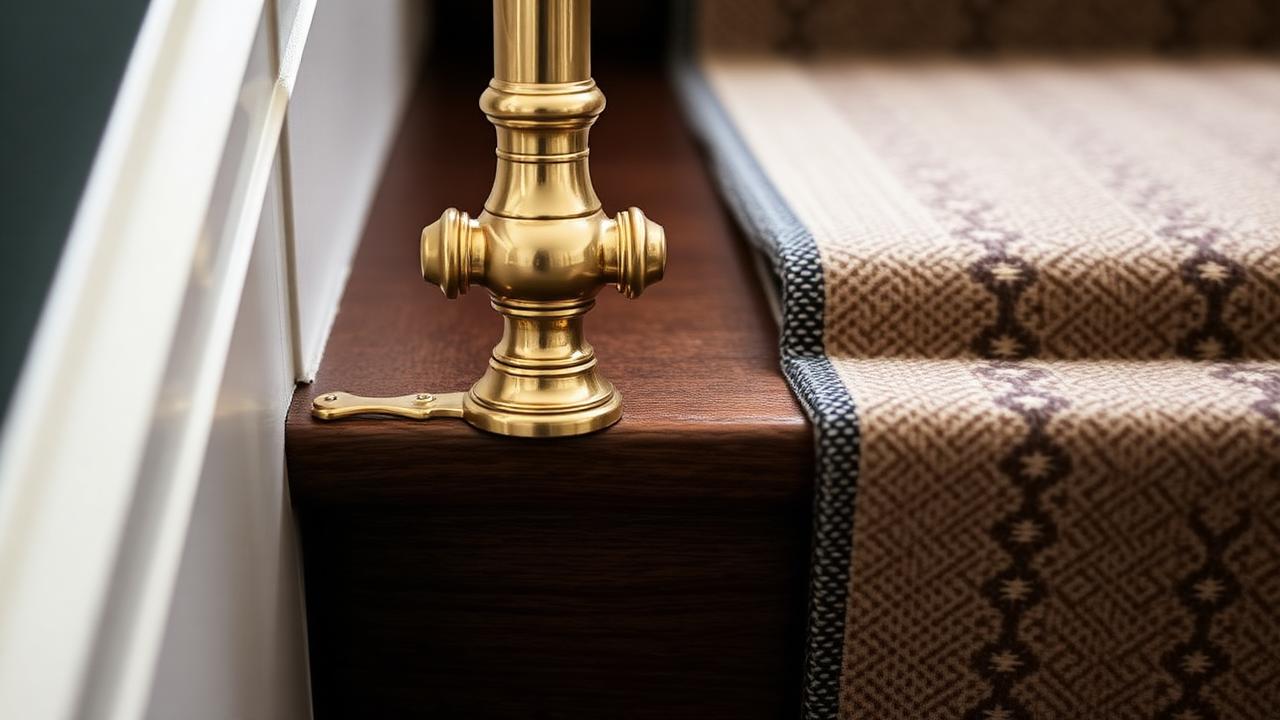
Polished or 'antiqued' brass rods are the classic choice for traditional runners. They complement the rich reds and golds often found in these designs. For a more understated look, 'satin nickel' or 'pewter' finishes can work well with blue or grey traditional patterns.
How do I prevent my traditional runner from shifting?
High-quality installation is key. This involves using 'gripper' or 'tackless' strips along the back of each tread and the bottom of each riser. For traditional runners, which are often heavy, using a premium 9mm or 11mm underlay also provides 'grab' and prevents the carpet from sliding.
Can I get a traditional runner in a modern material?
Yes, many manufacturers now produce traditional oriental and floral designs using high-quality synthetic fibers like 'heat-set polypropylene'. These offer the look of a classic wool Wilton but are much easier to clean and often significantly more affordable.
Do traditional runners work on curved stairs?
Yes, traditional runners look spectacular on curved or winder stairs, but the installation is highly technical. The pattern must be fanned carefully, and the border will often need to be 'stepped' or mitered on each winder tread to maintain a consistent look. Always hire a specialist for this.
What is the difference between Wilton and Axminster?
Wilton is woven on a loom that creates a continuous pile, which is then cut. It is limited in color but extremely dense. Axminster is woven in a way that inserts individual tufts of yarn, allowing for virtually unlimited colors and more fluid, non-repetitive patterns. Both are excellent for stairs.
Know your numbers in 30 seconds
Enter your step count, tread depth and riser height — the stair runner calculator gives you the exact length to order, in metres and feet, with waste included.
Stair Runner Length CalculatorReady for real prices?
Get quotes from vetted stair runner suppliers and fitters near you. Free, no account, no obligation.
Every guide is written from hands-on measuring and fitting experience, checked against the calculator’s own maths, and re-reviewed whenever prices or methods change. Read our editorial standards.