
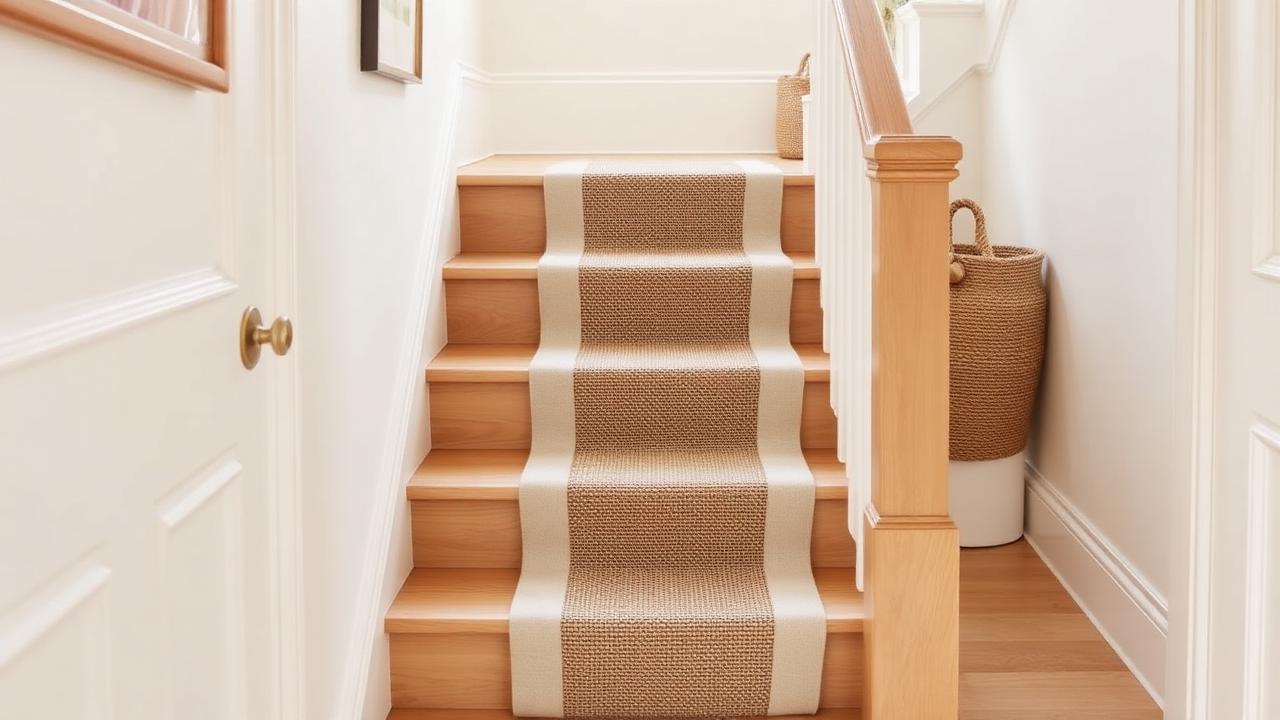
What is a leather stair runner
Unlike a woven wool or nylon runner, a leather stair runner is typically made from individual hide panels, cut and fitted to each tread and sometimes each riser, then joined visually to create the impression of a continuous runner down the staircase. Genuine leather offers a rich, tactile surface and a distinctive look that few other materials can replicate, making it popular in modern lofts, boutique hotels, and design-led renovations.
Because leather is a natural hide product, no two panels are perfectly identical—variations in grain, colour, and thickness are part of its character rather than a defect. If uniformity matters greatly to you, ask your supplier whether panels can be selected or matched from the same hide batch.
Durability and comfort
Quality leather is extremely hardwearing and resists the kind of matting and pile crush that eventually affects woven carpet. However, leather offers far less cushioning underfoot than a wool or nylon runner and can become slippery when wet or worn smooth, especially on stairs. Many installers recommend adding a textured or embossed finish, plus a non-slip backing, to reduce this risk on a staircase specifically.
- Leather resists wear and rarely mats or flattens like woven pile.
- Offers minimal cushioning; less comfortable than wool or nylon underfoot.
- Can be slippery, especially on smooth or worn leather; check for anti-slip treatment.
- Individual hide variation is normal and part of the material's character.
How much length do I need?
Even though leather is usually installed panel by panel, it helps to know your total linear requirement so you and your supplier can plan panel sizes and joins. For a 13-step flight: 10 in tread + 7.5 in riser + 0.75 in nosing allowance = 18.25 in per step. Across 13 steps this totals 237.25 in, plus 24 in finishing allowance gives 261.25 in, or 21.77 ft. With a 10% waste and cutting margin for hide panels, plan for around 24 ft. Metric: 25 cm + 19 cm + 1.9 cm = 45.9 cm per step, 13 steps totals 596.7 cm, plus 60 cm finishing equals 656.7 cm, and with waste, roughly 7.3 m.
| Step | US (in/ft) | UK (cm/m) |
|---|---|---|
| Per-step total | 18.25 in | 45.9 cm |
| 13 steps | 19.77 ft | 5.97 m |
| With finishing | 21.77 ft | 6.57 m |
| With waste margin | 24 ft | 7.3 m |
Know your numbers in 30 seconds
Enter your step count, tread depth and riser height — the stair runner calculator gives you the exact length to order, in metres and feet, with waste included.
Open the stair runner calculatorCost and fitting expectations
Leather stair treatments are typically priced significantly higher than woven runners of the same length, reflecting both material cost and specialist fitting labour. Always request quotes from installers experienced specifically in leather stair coverings, as fitting technique differs considerably from laying a soft carpet runner over a standard underlay.
Test for slip resistance
Before finalising your choice, ask for a sample panel and test it underfoot in socks and shoes, ideally with slightly damp feet, to judge real-world slip risk on your own stairs.
Maintenance
Leather stair coverings need regular conditioning to prevent cracking and drying out, along with prompt attention to spills, since leather can stain if liquid is left to soak in. With proper care, a good-quality leather stair covering can last many years and often develops an attractive patina with age.

Panel sizing and layout planning
Because leather is fitted as individual panels rather than one continuous roll, your installer needs to plan the layout in advance. A typical tread panel might measure around 10-11 in (25-28 cm) deep by your chosen runner width, with a separate riser panel around 7.5-8 in (19-20 cm) tall if risers are also covered. Confirm with your supplier whether risers will be covered in leather to match, left as painted timber, or covered in a coordinating fabric, since this changes both the total material required and the overall look.
Grain direction and hide matching
Ask your supplier to lay out panels so the grain direction and colour tone flow consistently down the flight, particularly on the most visible bottom three or four steps. Because leather is a natural material, expect your supplier to select panels from a limited number of hides for a single staircase order, and confirm this at the quoting stage if visual consistency is a priority for you.
| Panel type | Typical size (US) | Typical size (UK) |
|---|---|---|
| Tread panel | 10-11 in deep x chosen width | 25-28 cm deep x chosen width |
| Riser panel (optional) | 7.5-8 in tall x chosen width | 19-20 cm tall x chosen width |
| Total for 13 steps | 23-24 ft equivalent length | 7-7.3 m equivalent length |
Cost bands and installation labour
Genuine leather stair coverings sit well above woven wool or nylon runners in material cost per linear foot, and specialist fitting labour adds further to the total, since panel-by-panel installation takes considerably longer than laying a single continuous runner. Get quotes from at least two installers experienced specifically with leather stair treatments, and ask them to itemise material, adhesive or fixing hardware, and labour separately so you can see where the cost is concentrated.
- Confirm whether risers will also be covered in leather, fabric, or left painted.
- Ask your supplier to plan hide selection for consistent grain and tone.
- Get itemised quotes covering material, fixings, and specialist labour separately.
- Request a slip-resistance sample test before finalising your order.
When leather is not the right choice
Leather stair coverings are generally not recommended for households with young children learning to navigate stairs, elderly residents with mobility concerns, or anywhere slip risk is a significant safety consideration, unless a heavily textured, tested non-slip finish is used. In these situations, a wool-blend or nylon runner with a proper underlay typically remains the safer and more practical option.
In summary, a leather stair runner delivers a bold, durable, design-forward look, but weigh the reduced cushioning and slip considerations carefully against your household's needs before committing.
Whatever you decide, get the numbers first: the stair runner calculator doubles as a stair runner length calculator, adding nosing wrap, landings, winders, pattern repeat and waste so you order the right length the first time.
Still deciding on material, width or pattern? Our hub on stair runners compares weaves, widths, backings and fitting styles side by side, then hands the numbers straight to the calculator.
Frequently asked questions
Is leather safe for stairs?
It can be, provided it has a textured or non-slip finish; smooth leather alone can be slippery, especially on stairs.
How is leather fitted to stairs?
Usually as individual panels cut to fit each tread and sometimes each riser, rather than as one continuous rolled runner.
Does leather wear better than carpet?
Leather resists matting and crushing very well, though it offers less cushioning and can show scuffs differently than woven pile.
How much leather do I need for 13 steps?
Plan on roughly 23-24 ft (7-7.3 m) of total length, though your supplier will convert this into individual panel sizes.
Is leather more expensive than wool runners?
Generally yes, both in material cost and specialist installation labour.
Can leather stair coverings be repaired?
Individual damaged panels can often be replaced without redoing the entire staircase, which is an advantage over a continuous woven runner.
Does leather need underlay?
Typically no, as leather panels are usually adhered or mechanically fixed directly rather than floated over cushioned underlay.
How do I clean a leather stair runner?
Regular dusting and occasional leather conditioner, plus prompt blotting of spills, will keep it in good condition.
Know your numbers in 30 seconds
Enter your step count, tread depth and riser height — the stair runner calculator gives you the exact length to order, in metres and feet, with waste included.
Calculate total length with the stair runner calculatorReady for real prices?
Get quotes from vetted stair runner suppliers and fitters near you. Free, no account, no obligation.
Every guide is written from hands-on measuring and fitting experience, checked against the calculator’s own maths, and re-reviewed whenever prices or methods change. Read our editorial standards.