

Where olive green sits among stair runner greens
People often ask for sage green and mean olive, or the other way round, so it's worth being clear on the difference before you order anything. Sage leans grey and pale, closer to a herb-garden green with a soft, almost dusty quality. Olive is darker, warmer and more yellow-brown in its undertone, closer to the colour of the actual olive fruit or a military drab, and it reads as a far more grounded, earthy shade on a staircase. If you've seen a photo online and liked the deeper, richer tone rather than the paler, softer one, you're probably picturing olive rather than sage, and it's worth asking a supplier for a physical sample of both before ordering since photos rarely capture the difference accurately.
Olive's practical strength is that its darker, warmer base hides soiling, dust and light staining nearly as effectively as a mid-brown, while still giving a hallway genuine colour and character that beige or grey simply can't. I've fitted olive on farmhouse-style properties with exposed beams and stone flooring, where it sat beautifully alongside natural materials, and equally on a more contemporary townhouse where it worked as an unexpected but confident alternative to the grey everyone else on the street had chosen.
What olive green pairs well with
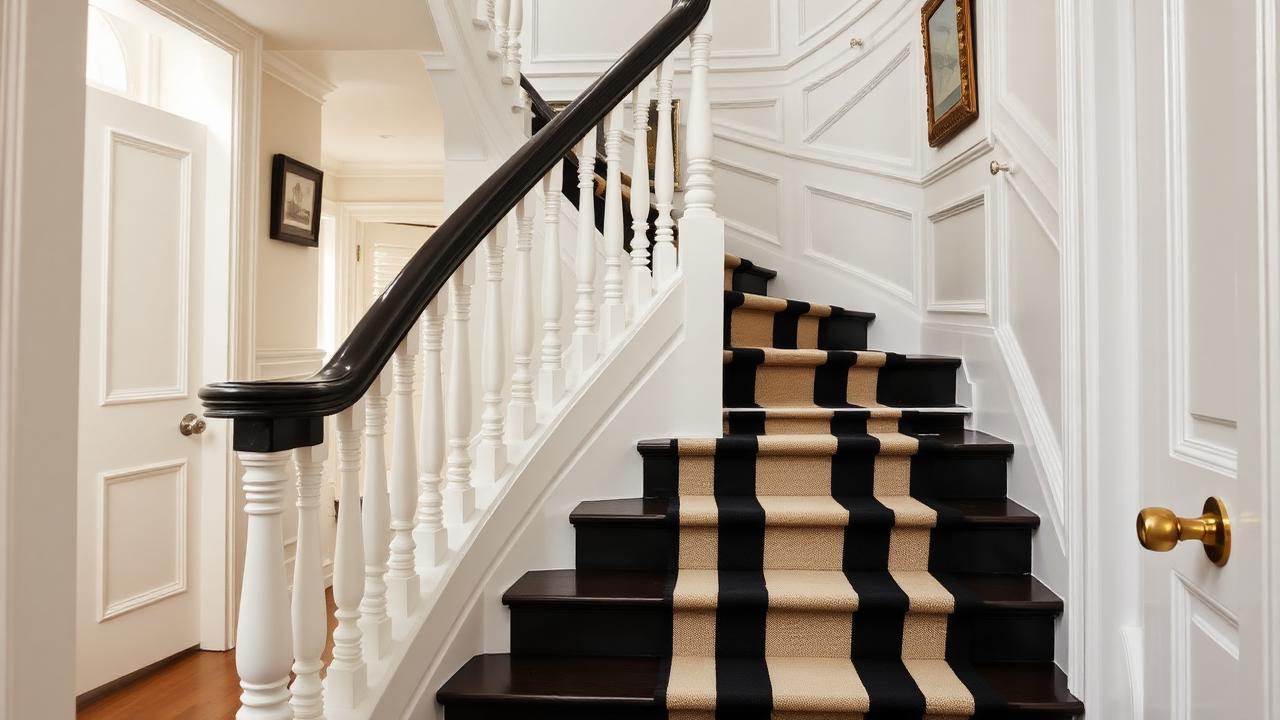
Warm wood treads, oak, pine, chestnut, all sit comfortably with olive because both share a similar earthy warmth rather than fighting for attention. Olive also works surprisingly well against black-painted stairs or dark stained treads, where the contrast is gentler and more sophisticated than a bright colour would give, producing a look that reads as considered rather than loud. On walls, cream, warm white, terracotta and other muted earth tones all complement olive naturally, while a cool, blue-grey wall paint tends to fight its warmth and is worth avoiding unless you're deliberately going for tension in the scheme.
Bring a real sample home first
Olive shifts noticeably under different light, looking more brown in warm lamp light and more true-green in daylight. Live with a physical sample on the actual staircase for a few days before committing to a full order.
How much runner do I need?
Working from a 13-step US flight with a 10 in tread run, 7.5 in riser height and a 0.75 in nosing wrap allowance, the per-step figure is 18.25 in, giving 237.25 in across 13 steps, or 19.77 ft. Add a 24 in combined finishing allowance top and bottom for 261.25 in, or 21.77 ft, then apply a 7% waste margin to reach roughly 23.3 ft. Many olive runners come in a herringbone, ribbed or subtly textured weave rather than a plain flat weave, so if yours does, push the waste margin to 9% to give the fitter enough spare material to align the pattern across any joins.
In UK metric terms: 25 cm tread run, 19 cm riser height and 1.9 cm nosing wrap gives 45.9 cm per step, or 596.7 cm across 13 steps. Add a 60 cm finishing allowance for 656.7 cm, then a 7-9% waste margin lands you between roughly 7.0-7.2 m. A shorter 12-step flight needs about 6.5 m (21.3 ft), while a longer 15-step flight needs closer to 7.9 m (25.9 ft).
| Measurement | US (in/ft) | UK (cm/m) |
|---|---|---|
| Tread run | 10 in | 25 cm |
| Riser height | 7.5 in | 19 cm |
| Nosing wrap per step | 0.75 in | 1.9 cm |
| Per-step total | 18.25 in | 45.9 cm |
| 13 steps subtotal | 19.77 ft | 5.97 m |
| With 7-9% waste margin | 23.3-23.9 ft | 7.0-7.2 m |
Know your numbers in 30 seconds
Enter your step count, tread depth and riser height — the stair runner calculator gives you the exact length to order, in metres and feet, with waste included.
Open the stair runner calculatorFibre and durability for a colour that hides wear well
Olive's dark, warm base already does a lot of the work in disguising everyday soiling, which means you have more flexibility on fibre choice than you would with a pale colour like cream or white. A wool-blend olive runner holds its depth of colour well over years, resisting the flattening and slight greying that some cheaper synthetics show after heavy use. If budget is the deciding factor, a solution-dyed nylon in olive still performs well precisely because the colour itself is already forgiving, so you're not relying on the fibre alone to hide wear the way you would with white or pale grey.
- Farmhouse or country interiors: olive pairs naturally with exposed wood, stone and wicker.
- Contemporary schemes: olive offers a confident, less common alternative to grey or beige.
- High-traffic staircases: olive's dark warm base hides soiling nearly as well as brown.
- Sunlit stairwells: check the lightfastness rating, since green dyes as a family fade faster than browns or greys under UV.
- Pet owners: a lightly textured olive weave hides shed hair more effectively than a smooth flat weave.
Getting the order right the first time
Olive green is stocked by fewer suppliers than beige, grey or navy, so an under-order that forces a reorder can mean a genuine wait, and dye lots can vary enough between batches that a mismatched top-up is noticeable on a colour this specific. Measure your actual tread run, riser height and step count rather than assuming a standard figure, and run those numbers through a stair runner length calculator to get an order length you can trust. On a flight with a turn or half-landing, measure each straight run and the landing wrap separately rather than averaging the whole staircase, since olive's texture (if woven rather than flat) needs the pattern to align cleanly across any join for the finished look to read as intentional rather than patched together.
Whatever you decide, get the numbers first: the stair runner calculator doubles as a stair runner length calculator, adding nosing wrap, landings, winders, pattern repeat and waste so you order the right length the first time.
Still deciding on material, width or pattern? Our hub on stair runners compares weaves, widths, backings and fitting styles side by side, then hands the numbers straight to the calculator.
Frequently asked questions
What's the difference between olive green and sage green stair runners?
Sage is paler and greyer, closer to a dusty herb-garden green, while olive is darker, warmer and more yellow-brown, closer to the colour of an actual olive. If you've pictured a richer, deeper tone rather than a soft pale one, you're likely thinking of olive.
How much olive green runner do I need for 13 steps?
For a typical 13-step flight with 10 in (25 cm) treads and 7.5 in (19 cm) risers, plan for roughly 23-24 ft (7-7.2 m), toward the higher end if the weave has a visible texture or pattern repeat.
Does olive green stair runner carpet hide dirt well?
Yes, its dark, warm base hides everyday soiling, dust and light staining nearly as well as a mid-brown, making it a practical choice for busy staircases despite being a bold colour choice.
What wall colour goes with an olive green stair runner?
Cream, warm white, terracotta and other muted earth tones all complement olive's warmth naturally. Cool blue-grey walls tend to fight against olive's undertone and are worth avoiding unless deliberately contrasting.
Does olive green fade in a sunny stairwell?
Green dyes as a family are more prone to UV fading than browns or greys, so check the lightfastness rating on any olive weave if your staircase gets direct sunlight, or choose a solution-dyed synthetic for better fade resistance.
Is olive green suitable for a modern interior?
Yes, it works as a confident, less common alternative to grey or beige in a contemporary scheme, and it also suits farmhouse and traditional interiors alongside natural wood and stone.
What stair rod finish suits olive green best?
Brass and antique bronze both echo olive's warm undertone well. Black rods work too for a more understated, modern look, particularly against pale walls.
Is olive green stair runner carpet easy to find?
It's stocked by fewer suppliers than standard neutrals like beige or grey, so order a slightly generous waste margin and confirm stock before committing, since a future reorder to match dye lot can take longer to source.
Know your numbers in 30 seconds
Enter your step count, tread depth and riser height — the stair runner calculator gives you the exact length to order, in metres and feet, with waste included.
Size your olive green runner with the stair runner calculatorReady for real prices?
Get quotes from vetted stair runner suppliers and fitters near you. Free, no account, no obligation.
Every guide is written from hands-on measuring and fitting experience, checked against the calculator’s own maths, and re-reviewed whenever prices or methods change. Read our editorial standards.