
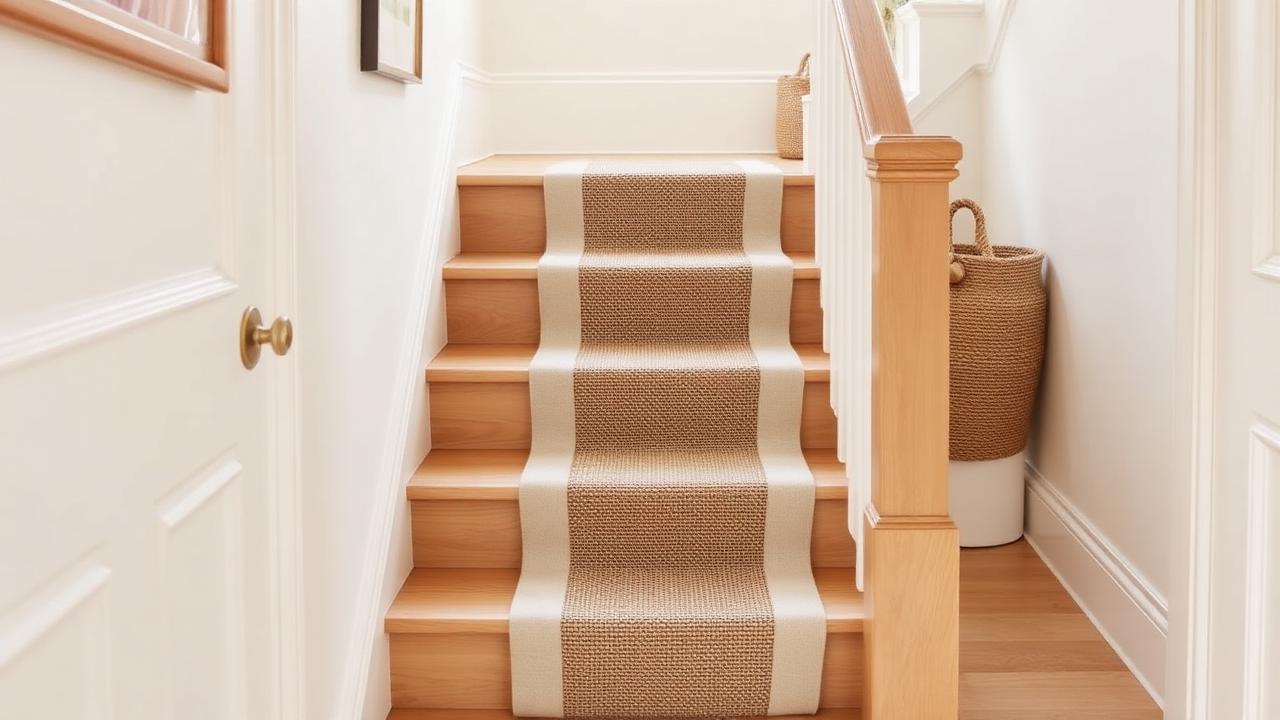
Why indoor runners fail outdoors
Standard indoor stair runners, whether wool, nylon, or another synthetic, are not built to withstand direct sun, rain, or freeze-thaw cycles. UV exposure fades and weakens fibres over time, moisture can wick into natural fibre backings and cause mould, and repeated freezing and thawing can degrade adhesives and backing materials. If you install an indoor-rated runner on an exterior staircase, expect noticeably faster deterioration, often within a single season in harsher climates.
Materials built for outdoor use
Outdoor stair runners are typically made from solution-dyed polypropylene or specially treated polyester, both of which resist fading, moisture absorption, and mildew far better than indoor fibres. Solution-dyed materials have colour incorporated throughout the fibre itself rather than just on the surface, which means the colour does not fade or wash out even with prolonged sun exposure. Look specifically for products labelled as outdoor or indoor-outdoor rated rather than assuming a durable-looking indoor product will suffice.
Backing and drainage
A key difference with outdoor runners is the backing. Indoor backings are often designed to be moisture-resistant on the surface only, while true outdoor-rated backings allow water to drain through rather than pooling on top of the tread. Pooled water on an exterior stair is both a slip hazard and a durability risk, so confirm the product's drainage capability before purchasing, especially for uncovered stairs exposed to direct rainfall.
How much do I need for a 13-step exterior flight?
The length formula is unchanged by material: 10 in tread + 7.5 in riser + 0.75 in nosing wrap = 18.25 in per step, times 13 is 237.25 in, plus 24 in finishing is 261.25 in (21.77 ft). With a 10% waste margin, order about 24 ft. Metric: 25 + 19 + 1.9 cm = 45.9 cm per step, times 13 is 596.7 cm, plus 60 cm finishing is 656.7 cm, plus 10% is approximately 7.3 m.
| Material | UV resistance | Moisture handling |
|---|---|---|
| Solution-dyed polypropylene | Excellent | Excellent, quick-drying |
| Treated polyester | Good | Good |
| Standard indoor wool/nylon | Poor outdoors | Poor, absorbs moisture |
Know your numbers in 30 seconds
Enter your step count, tread depth and riser height — the stair runner calculator gives you the exact length to order, in metres and feet, with waste included.
Open the stair runner calculatorFixing an outdoor runner securely
Outdoor stairs often use concrete, stone, or treated wood treads, none of which accept standard tackless strips the way indoor wood stairs do. Outdoor-rated adhesives, exterior-grade staples into wood treads, or specialised outdoor stair rod systems are common fixing methods. Whichever method you choose, ensure it is rated for exterior use and won't corrode or degrade with repeated moisture exposure.

Slip resistance is non-negotiable outdoors
Outdoor stairs already carry higher slip risk due to rain, frost, or leaves. Choose a runner with a textured, grippy surface and confirm the backing itself has adequate friction against your specific tread material, whether that's concrete, wood, or stone.
- Choose solution-dyed polypropylene or treated polyester for outdoor use.
- Confirm the backing allows water to drain rather than pool.
- Use outdoor-rated adhesives or fixings suited to your tread material.
- Prioritise slip resistance given increased outdoor hazards.
- Expect to replace outdoor runners more frequently than indoor ones.
Cost expectations for outdoor-grade material
Outdoor-rated runners generally cost more per linear foot or metre than a comparable indoor synthetic, reflecting the added UV stabilisers, moisture-resistant backing, and mildew treatments built into the fibre. For the same 13-step flight needing roughly 24 ft (7.3 m), budget for a noticeably higher material cost than an equivalent indoor nylon runner, and factor in the shorter realistic lifespan when weighing overall value against an indoor-only alternative such as painted or sealed treads.
| Factor | Outdoor-rated runner | Standard indoor runner used outdoors |
|---|---|---|
| Material cost per length | Higher | Lower upfront |
| Expected outdoor lifespan | 3-6 years typical | Often under 1 year |
| Fading and mildew risk | Low with proper product | High |
Covered versus exposed stairs
A porch or entryway staircase with an overhead roof faces far less direct rain and UV exposure than a fully exposed exterior stair, and this difference should influence both your material choice and your maintenance schedule. Covered stairs can often get by with a slightly lighter-duty outdoor-rated product, while fully exposed flights, especially those facing south or west in sunnier climates, benefit from the most UV-stable, quick-draining option available, along with more frequent seasonal inspection.
- Budget for a higher material cost than an equivalent indoor runner.
- Match product durability to how exposed the stair actually is to sun and rain.
- Inspect fixings more frequently on fully exposed, uncovered flights.
- Expect a shorter realistic lifespan than an indoor installation.
- Choose the most UV-stable option for south- or west-facing exterior stairs.
Maintenance expectations
Even the best outdoor stair runner will need more frequent attention than an indoor equivalent. Sweep debris regularly, rinse off dirt and salt buildup after winter weather, and inspect the edges and fixings each season for signs of lifting or wear. With the right material and routine care, an outdoor runner can still last several years, though rarely as long as a comparable indoor product.
Whatever you decide, get the numbers first: the stair runner calculator doubles as a stair runner length calculator, adding nosing wrap, landings, winders, pattern repeat and waste so you order the right length the first time.
Frequently asked questions
Can I use an indoor stair runner outside?
No, indoor runners fade, absorb moisture, and degrade quickly when exposed to sun and rain outdoors.
What material is best for outdoor stair runners?
Solution-dyed polypropylene is the top choice for UV and moisture resistance, with treated polyester as a good alternative.
How much runner do I need for 13 outdoor steps?
Around 23-24 ft (7-7.3 m), the same length formula as indoor stairs, using outdoor-rated material.
Do outdoor runners need special backing?
Yes, look for backing designed to let water drain through rather than pool on the tread surface.
How do I fix an outdoor runner to concrete stairs?
Use outdoor-rated adhesives or specialised fixing systems designed for concrete or stone, since tackless strips won't work.
How long do outdoor stair runners last?
Typically shorter than indoor runners, often a few years, depending on climate exposure and material quality.
Is slip resistance more important outdoors?
Yes, outdoor stairs face added hazards from rain, frost, and debris, so a textured, grippy surface is essential.
How often should I maintain an outdoor runner?
Sweep regularly, rinse off seasonal debris and salt, and inspect edges and fixings at least once per season.
Know your numbers in 30 seconds
Enter your step count, tread depth and riser height — the stair runner calculator gives you the exact length to order, in metres and feet, with waste included.
Calculate your outdoor stair length with the stair runner calculatorReady for real prices?
Get quotes from vetted stair runner suppliers and fitters near you. Free, no account, no obligation.
Every guide is written from hands-on measuring and fitting experience, checked against the calculator’s own maths, and re-reviewed whenever prices or methods change. Read our editorial standards.