

Why homeowners choose painted runners
Painted stair runners are a fraction of the cost of carpet and can be completed over a weekend with the right prep. They suit hard-wearing painted or sealed wood staircases and can be refreshed or repainted whenever you want to update the look, unlike carpet which requires a full replacement to change colour.
Planning the layout
Measure your staircase the same way you would for a carpet runner: note the tread depth, riser height, and total number of steps. Decide on a width, typically leaving 3-4 in (7.5-10 cm) of exposed wood on each side, and mark this out with painter's tape before you begin. Use a stair runner calculator to double check your total painted area if you are estimating paint quantities for a large flight.
How much would a carpet runner need instead?
If you later decide to upgrade to a real carpet runner, the same 13-step flight requires: 10 in tread + 7.5 in riser + 0.75 in nosing wrap = 18.25 in per step, totalling 237.25 in over 13 steps. Add roughly 24 in for finishing, giving 261.25 in (21.77 ft). With an 8% waste allowance, order about 23.5 ft. Metric: 25 cm + 19 cm + 1.9 cm = 45.9 cm per step, 596.7 cm over 13 steps, plus 60 cm finishing = 656.7 cm, plus 8% waste, roughly 7.1 m.
| Measurement | US (in/ft) | UK (cm/m) |
|---|---|---|
| Per-step total | 18.25 in | 45.9 cm |
| 13 steps | 19.77 ft | 5.97 m |
| With finishing | 21.77 ft | 6.57 m |
| With 8% waste | 23.5 ft | 7.1 m |
Know your numbers in 30 seconds
Enter your step count, tread depth and riser height — the stair runner calculator gives you the exact length to order, in metres and feet, with waste included.
Open the stair runner calculatorDesign ideas for painted runners
Popular patterns include simple stripes, ticking stripes in two tones, geometric diamonds, and even faux Persian-style motifs using stencils. A solid colour block runner with a contrasting border is one of the simplest options for beginners, while stencilled florals or trellis patterns give a more elaborate, custom look.
Prep is everything
Sand and clean the treads thoroughly before painting, and use a durable floor-rated paint or enamel finish with a protective topcoat, since stair treads see far more abrasion than a wall or furniture surface.
- Mark out your runner width with painter's tape first.
- Use floor-rated paint designed for high traffic.
- Seal the finished design with a durable topcoat.
- Consider a stencil kit for consistent, repeatable patterns.
Maintenance and durability
Painted runners will show wear faster than carpet in high-traffic homes and typically need touch-ups or a full repaint every few years. If you later want the comfort and sound dampening of real carpet, converting to a stair runner is straightforward, and you can use the same width and pattern layout as a guide for your new runner.
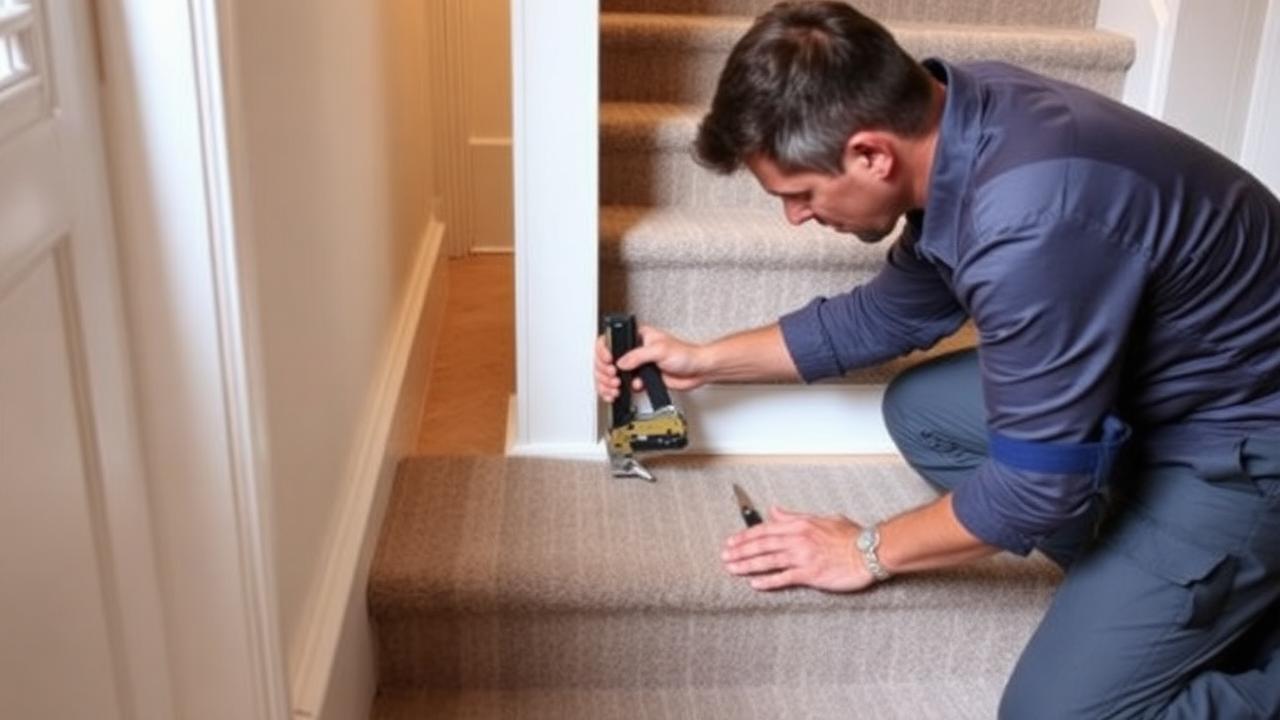
Spec checks before you paint
Confirm your treads are solid wood or a sound, well-adhered veneer before painting, since a painted finish will highlight any lifting veneer or existing damage far more than a carpet runner would. Choose a paint system rated for floors specifically, not a general-purpose interior wall paint, since floor paints are formulated with harder resins to resist the shear forces of foot traffic on a horizontal surface. A two-part epoxy or a durable floor enamel with a polyurethane topcoat are both common, reliable choices.
Measure and mark your width the same way as for a carpet runner, typically leaving 3-4 in (7.5-10 cm) of exposed wood on each side on a standard 30-36 in (76-91 cm) staircase, giving a painted width of roughly 22-30 in (56-76 cm) depending on your total stair width and preferred margin.
Cost bands for a painted runner project
A basic DIY painted runner using floor paint and painter's tape typically costs $50-120 in materials for a 13-step flight, covering primer, two paint colours, and a protective topcoat. Adding a stencilled pattern with a purchased stencil kit adds roughly $20-40. Hiring a decorator to complete the same project typically costs $300-700 depending on design complexity and local labour rates.
| Approach | US cost (13-step flight) | UK cost (13-step flight) |
|---|---|---|
| DIY solid stripe/colour block | $50-120 | £40-95 |
| DIY with stencil kit | $70-160 | £55-125 |
| Professional decorator, simple design | $300-500 | £235-395 |
| Professional decorator, stencilled/complex | $450-700 | £355-550 |
- Confirm treads are structurally sound before painting.
- Use a floor-rated paint or epoxy system, not wall paint.
- Mark your intended width with tape before you start.
- Budget for a repaint or touch-up every few years in high-traffic homes.
Step-by-step painting process
A typical painted runner project starts with a thorough clean and light sand of the treads to remove any existing wax, polish, or gloss, since paint will not adhere properly to a slick surface. Apply a bonding primer suited to your tread material, let it cure fully per the manufacturer's instructions, then mark out your runner width with painter's tape, using a level or straightedge to keep the lines consistent from step to step. Apply your base colour in thin, even coats, allowing full drying time between coats rather than rushing to a second layer, since a rushed coat is more likely to show tape lines or brush marks once cured.
Once the base colour has cured, add any stripes, borders, or stencilled details, again using painter's tape for crisp lines and working in small sections to keep the paint from dragging. Finish with at least two coats of a durable, floor-rated polyurethane or epoxy topcoat, allowing the full recommended cure time, often several days, before returning the staircase to normal foot traffic. Rushing this final stage is the most common cause of a painted runner failing prematurely, since the topcoat needs time to fully harden before it can resist scuffing.
When painted runners aren't the right choice
Painted runners work best on solid, structurally sound treads without significant existing damage, since paint highlights imperfections rather than hiding them the way a carpet runner's pile does. If your treads have splits, deep gouges, or areas of rot, address these structurally before considering a painted finish, or choose a carpet runner instead, since carpet is far more forgiving of an imperfect surface underneath. Painted runners are also a poor fit for very high-traffic staircases, such as a shared stairwell in a multi-family building, where the constant wear will outpace even a well-applied topcoat far faster than it would wear through a quality carpet runner.
If comfort underfoot, noise reduction, or safety in a household with young children or elderly residents is a priority, a real carpet runner remains the better choice, since paint offers no cushioning and can become slippery when polished or waxed, unlike a textured carpet pile which provides some grip even when worn.
Whatever you decide, get the numbers first: the stair runner calculator doubles as a stair runner length calculator, adding nosing wrap, landings, winders, pattern repeat and waste so you order the right length the first time.
Frequently asked questions
How long does a painted stair runner last?
With a durable topcoat, expect a few years before touch-ups are needed in a busy household.
Is a painted runner cheaper than carpet?
Yes, significantly, since it only requires paint, stencils, and your own time or a decorator's labour.
Can I add a painted runner on top of an existing stain?
Yes, provided the surface is properly sanded and primed to help the paint adhere.
What paint should I use for stair treads?
Use a floor-rated paint or enamel with a durable protective topcoat designed for high traffic.
Can I switch from a painted runner to a carpet runner later?
Yes, and you can use the existing painted layout as a guide for width and positioning.
How much carpet would I need if I upgrade later?
For a 13-step flight, roughly 23-24 ft (7-7.3 m), the same as any standard carpet runner installation.
What designs work best for beginners?
Simple stripes or a solid colour block with a contrasting border are the easiest starting points.
Does a stair runner calculator help with painted designs?
Yes, it helps you plan the exact width and length of your painted area, useful for estimating paint and tape.
Know your numbers in 30 seconds
Enter your step count, tread depth and riser height — the stair runner calculator gives you the exact length to order, in metres and feet, with waste included.
Plan a real carpet runner later with the stair runner calculatorReady for real prices?
Get quotes from vetted stair runner suppliers and fitters near you. Free, no account, no obligation.
Every guide is written from hands-on measuring and fitting experience, checked against the calculator’s own maths, and re-reviewed whenever prices or methods change. Read our editorial standards.