

What a plastic stair runner is for
A plastic or vinyl stair runner is a clear, ribbed or textured sheet that sits directly on top of existing carpet to protect it from dirt, spills, and abrasion. It is most commonly used during home renovations, when contractors are moving materials up and down stairs repeatedly, or in rental properties and high-traffic commercial settings where the underlying carpet needs to last significantly longer than normal wear would allow.
Unlike a permanent fabric stair runner, a plastic runner is intended to be temporary, or at least easily replaceable, and is usually held in place with double-sided carpet tape, small track clips, or its own adhesive backing rather than gripper rods or stair rods. It should never be treated as a long-term aesthetic solution, since the material yellows and becomes brittle with prolonged UV exposure and foot traffic.
Measuring for a plastic stair runner
The measurement principle is identical to measuring for a fabric runner: you need enough material to cover the tread, wrap over the nosing, and cover the riser on every step. For our 13-step example flight: 10 in tread + 7.5 in riser + 0.75 in nosing wrap = 18.25 in per step. Across 13 steps, that totals 237.25 in, plus a 24 in finishing allowance at the top and bottom, giving 261.25 in, or 21.77 ft. Because plastic runners are frequently trimmed and adjusted during a renovation, add a slightly larger 15% waste margin, bringing your order to roughly 25 ft. Metric: 25 cm + 19 cm + 1.9 cm = 45.9 cm per step, 596.7 cm over 13 steps, plus 60 cm finishing, totalling 656.7 cm, plus 15% waste, giving about 7.55 m.
| Measurement | US (in/ft) | UK (cm/m) |
|---|---|---|
| Per-step total | 18.25 in | 45.9 cm |
| 13 steps + finishing | 261.25 in | 656.7 cm |
| With 15% waste | 25 ft | 7.55 m |
Know your numbers in 30 seconds
Enter your step count, tread depth and riser height — the stair runner calculator gives you the exact length to order, in metres and feet, with waste included.
Open the stair runner calculatorChoosing the right type of plastic runner
Runner protection film comes in several grades. Lightweight self-adhesive film is fine for short-term protection during a quick job like painting, but it can leave residue if left on carpet fibres too long. Heavier ribbed vinyl runners without adhesive are better for longer renovation projects, since they can be lifted and vacuumed underneath periodically, preventing dirt from becoming trapped against the carpet fibres.
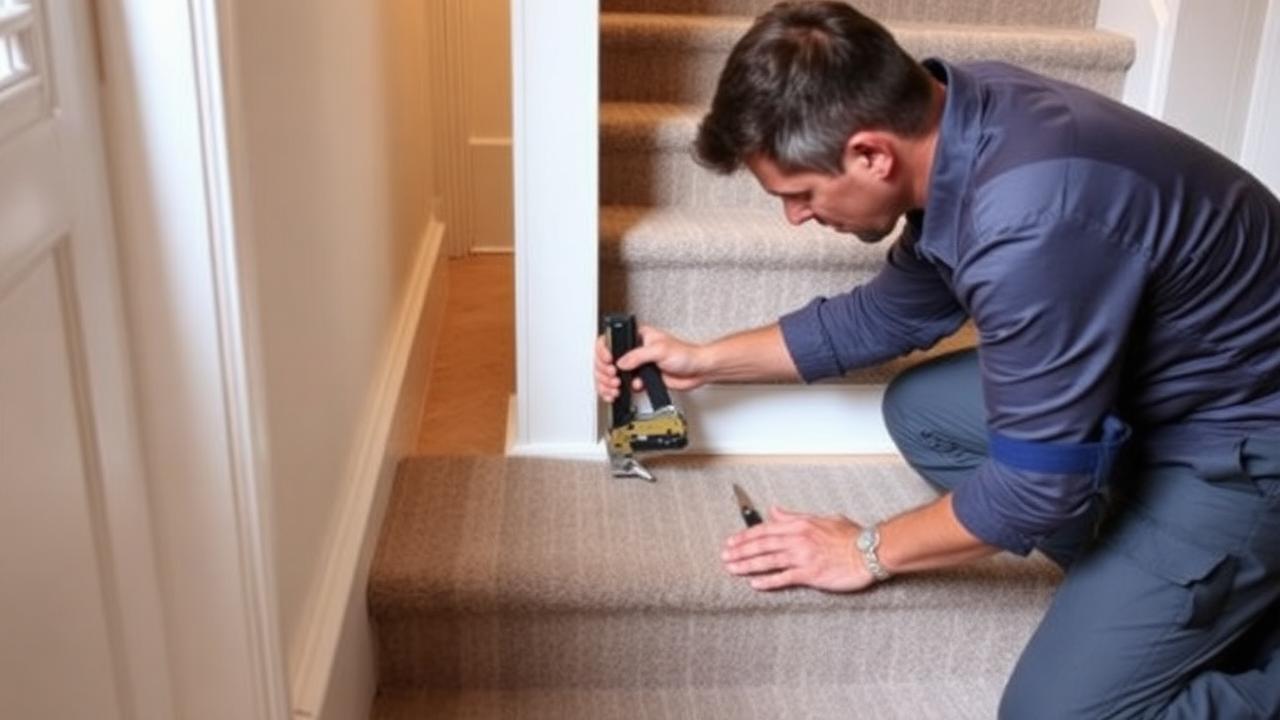
Don't leave protective film on too long
Trapped moisture under adhesive plastic film can encourage mould growth in the carpet pile. For any job lasting more than a couple of weeks, choose a non-adhesive, breathable protective runner instead.
Fitting without damaging the carpet underneath
Before laying a plastic runner, vacuum the existing carpet thoroughly to remove grit that could grind into the fibres under foot traffic once covered. Lay the plastic runner loosely rather than stretched tight, since stretching can cause it to lift and become a trip hazard, and secure it at the top and bottom of the flight with low-tack tape rather than a strong adhesive that might pull up carpet fibres when removed.
On stairs with a turn or landing, cut the plastic runner into separate sections at the transition points rather than trying to force one continuous piece around a corner, since the material does not fold as cleanly as fabric and can crack at sharp bends.
- Vacuum the existing carpet thoroughly before laying protection.
- Use non-adhesive ribbed vinyl for jobs longer than a couple of weeks.
- Secure ends with low-tack tape rather than strong adhesive.
- Cut separate sections at any landing or turn.
- Lift and check underneath periodically on long jobs.
When to remove and inspect
Once the renovation or high-traffic period is over, remove the plastic runner promptly and inspect the carpet underneath for any trapped dirt or moisture. A thorough vacuum, and a spot clean if needed, will restore the carpet before you return the stairs to normal use or consider fitting a permanent decorative runner over the top.
Whatever you decide, get the numbers first: the stair runner calculator doubles as a stair runner length calculator, adding nosing wrap, landings, winders, pattern repeat and waste so you order the right length the first time.
Still deciding on material, width or pattern? Our hub on stair runners compares weaves, widths, backings and fitting styles side by side, then hands the numbers straight to the calculator.
Frequently asked questions
What is a plastic stair runner used for?
Temporary protection of existing carpet during renovations, moves, or periods of heavy foot traffic.
How long can I leave a plastic runner on my carpet?
Short-term adhesive film should come off within a couple of weeks; non-adhesive vinyl runners can stay longer if lifted and checked periodically.
Will a plastic runner damage my carpet?
Not if fitted correctly, though adhesive types left on too long can trap moisture and encourage mould.
How much plastic runner do I need for my stairs?
Use the same per-step formula as a fabric runner, then add a slightly larger waste margin for trimming and adjustments.
Can I use a plastic runner over a landing or turn?
Yes, but cut it into separate sections at the transition rather than forcing one piece around the corner.
Should I vacuum before laying a plastic runner?
Yes, always vacuum thoroughly first to prevent grit grinding into the carpet fibres under the protective layer.
Is a plastic stair runner suitable as a permanent solution?
No, it is designed for temporary protection and will yellow and become brittle with prolonged use.
What's the best way to secure a plastic runner without damaging carpet?
Use low-tack tape at the ends rather than a strong adhesive that could pull up carpet fibres on removal.
Know your numbers in 30 seconds
Enter your step count, tread depth and riser height — the stair runner calculator gives you the exact length to order, in metres and feet, with waste included.
Measure the length you need with the stair runner calculatorReady for real prices?
Get quotes from vetted stair runner suppliers and fitters near you. Free, no account, no obligation.
Every guide is written from hands-on measuring and fitting experience, checked against the calculator’s own maths, and re-reviewed whenever prices or methods change. Read our editorial standards.