

The short answer
Laying a stair runner directly on top of existing fitted stair carpet is technically possible but is not recommended by carpet fitters, flooring associations or building safety guidance, because it stacks two pile layers and changes the geometry of every nosing on the flight. The extra thickness at the front edge of each tread reduces the effective depth of a safe foot placement and can create a soft, spongy edge that is harder to judge underfoot, particularly when descending. This is different from laying a runner over bare timber with underlay, which is the standard and safe method; the issue here is specifically stacking carpet on carpet.
Why fitters say no
Four separate problems compound when a runner sits on top of an existing fitted carpet rather than on the bare tread. First, the nosing profile changes: the tread's front edge becomes rounder and less defined, which is exactly the part of a step your foot and eye rely on most to judge where one tread ends and the next drop begins. Second, the combined pile depth at the nosing — often 15-25mm of existing carpet plus another 8-15mm of runner pile and backing — creates a soft compressible zone that behaves unpredictably under a descending heel, unlike a firm, single-layer nosing.
Third, fixing becomes unreliable. Gripper strip and staples are designed to bite into timber or into a single layer of carpet backing pressed against timber; driven through an existing fitted carpet, staples have far less to grip and the whole assembly can shift, ruck or lift at the edges over time, exactly the kind of loose edge that causes trips. Fourth, any existing wear, lumps or uneven patches in the old carpet telegraph straight through the new runner, so problems you were trying to cover up often become more visible, not less, once compressed under a second layer.
| Problem | Why it matters | Typical result after 6-12 months |
|---|---|---|
| Raised, rounded nosing | Harder to judge tread edge underfoot | Increased trip and slip risk, especially descending |
| Unreliable fixing | Staples/gripper cannot bite two carpet layers well | Runner rucks, lifts or slides at the edges |
| Combined pile too deep | Foot sinks further before finding a firm edge | Unstable footing, particularly for children and older adults |
| Old wear telegraphs through | Lumps and thin patches are compressed but not hidden | Visible ridging and uneven wear on the new runner |
Regulatory position
Neither UK Building Regulations Approved Document K nor the US IRC R311.7 explicitly bans carpet-on-carpet, but both require stair coverings to be securely fixed, non-slip and free of trip hazards at the nosing — conditions that stacked carpet on stairs routinely fails to meet in practice, which is why fitters treat it as a de facto no.
The rare genuine exceptions
There are a small number of situations where a light covering over existing stair carpet is reasonable rather than reckless. A thin, well-adhered, non-slip clear plastic stair protector, designed specifically to sit over existing carpet during a house move, renovation or period of heavy pet or child traffic, is a legitimate short-term product precisely because it is thin, fully adhered along its whole length, and intended to be temporary. This is a distinct product category from a decorative carpet runner and should not be confused with it.
The other partial exception is a very thin, tightly woven flatweave runner laid over a very low, tightly fitted loop-pile carpet where the combined pile height stays under roughly 10-12mm and the runner is fully bonded rather than gripper-fixed — for example with a strong double-sided stair tape along the full width of every tread and riser. Even then, most fitters will only do this as a temporary or budget-constrained measure and will recommend removing the old carpet at the next opportunity.
What to do instead
- Lift and remove the existing fitted stair carpet completely — this is usually a half-day job and often costs less than people expect.
- Check and repair the treads: punch down proud tacks, screw down squeaky treads, and fill any gouges left by the old gripper.
- Fit new gripper strip and 8-11mm underlay directly to the bare timber.
- Lay the new stair runner using a waterfall or Hollywood fit as appropriate, following the standard method rather than stacking on old carpet.
- If budget is the real constraint, consider individual stair treads or a narrower, cheaper runner rather than compromising on safety by layering carpets.
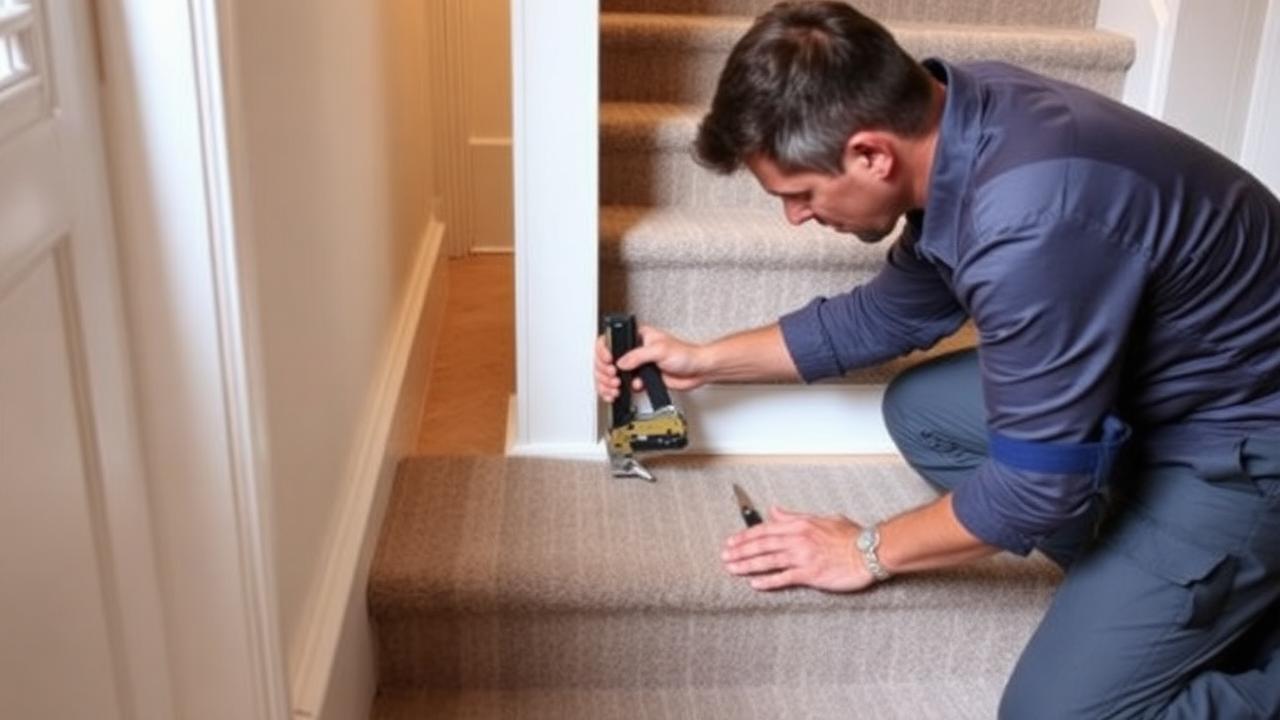
Cost comparison: strip and refit vs stacking
Stripping old carpet and fitting a new runner properly typically costs £150-£400 in the UK or $200-$500 in the US for labour on a standard straight flight, including removal, tread repair, gripper and underlay. Simply laying a new runner over the old carpet saves that removal labour, roughly £50-£100 / $60-$130, but the saving is small relative to the whole project and does not offset the ongoing safety risk or the shorter effective lifespan of a runner fixed unreliably into an unstable base.
| Approach | Typical UK cost (labour) | Typical US cost (labour) | Safety rating |
|---|---|---|---|
| Strip old carpet, fit properly | £150-£400 | $200-$500 | Compliant, stable |
| Runner stacked on old carpet | £100-£300 | $150-$400 | Not recommended, unstable nosing |
| Thin non-slip protector over carpet (temporary) | £20-£60 | $25-$80 | Acceptable short-term only |
Once you have decided to strip and refit, measure the bare flight and run the numbers through a stair runner calculator so the new runner order accounts for the true tread and riser depths once the old carpet and underlay are gone — those figures often change slightly once the old bulk is removed and the bare timber profile is exposed.
Signs an existing runner is already sitting on old carpet
- The nosing feels unusually soft or spongy compared with a normal firm edge.
- The runner edges have started to lift, ruck or slide within the first year.
- You can see or feel a second, older carpet pattern or texture pressing through the new runner.
- Staples or tacks have not held and the runner moves slightly when you press on a tread.
If any of these apply, treat it as a maintenance priority rather than a cosmetic issue — lift the runner, remove the old carpet underneath, and refit properly with gripper and underlay directly onto the timber.
Whatever you decide, get the numbers first: the stair runner calculator doubles as a stair runner length calculator, adding nosing wrap, landings, winders, pattern repeat and waste so you order the right length the first time.
Still deciding on material, width or pattern? Our hub on stair runners compares weaves, widths, backings and fitting styles side by side, then hands the numbers straight to the calculator.
Frequently asked questions
Can you put a stair runner on top of carpet?
Physically yes, but it is not recommended. Stacking a runner over existing fitted stair carpet raises and softens the nosing edge on every step, makes fixing with gripper or staples unreliable, and increases the risk of a slip or trip. Fitters advise removing the old carpet first in almost all cases.
Why is a runner on top of carpet a safety issue?
The combined pile depth of two carpet layers creates a soft, compressible nosing that is harder to judge underfoot, particularly when descending. Fixings also grip poorly through an existing carpet layer, so the runner can shift, ruck or lift at the edges over time, which is a direct trip hazard.
Are there any safe exceptions to this rule?
A thin, fully adhered, non-slip clear plastic stair protector designed as a temporary cover is a legitimate short-term exception, since it is thin and bonded along its whole length rather than gripper-fixed. A genuine decorative runner should not be treated the same way.
How much does it cost to remove old stair carpet before fitting a runner?
Removing old stair carpet and preparing the treads typically adds £50-£150 in the UK or $60-$180 in the US on top of the runner fitting cost, though it is often bundled into a single quote. This is usually far cheaper than the ongoing risk and shorter lifespan of stacking a runner on old carpet.
Does building regulation ban carpet-on-carpet on stairs?
Neither UK Approved Document K nor US IRC R311.7 names carpet-on-carpet specifically, but both require stair coverings to be securely fixed and free of trip hazards at the nosing, conditions that stacked carpet routinely fails, which is why the practice is discouraged rather than formally outlawed.
What should I do if I already have a runner sitting on old carpet?
Check for a spongy nosing, lifting edges or visible movement underfoot. If any of these are present, lift the runner, remove the old carpet beneath it, repair the treads, and refit the runner properly onto gripper and underlay on the bare timber as soon as possible.
Know your numbers in 30 seconds
Enter your step count, tread depth and riser height — the stair runner calculator gives you the exact length to order, in metres and feet, with waste included.
Check my runner lengthReady for real prices?
Get quotes from vetted stair runner suppliers and fitters near you. Free, no account, no obligation.
Every guide is written from hands-on measuring and fitting experience, checked against the calculator’s own maths, and re-reviewed whenever prices or methods change. Read our editorial standards.