

What drives the cost of stair carpet
Stair carpet cost is really made up of three separate line items: material (the carpet or runner itself, priced per linear foot, per linear metre, or per step), labour (fitting, which is charged per step or as a flat job rate), and extras (gripper rods, underlay or padding, rods and stair clips if you're using a hollywood or waterfall fitting style, and any old carpet removal). Quotes bundle these differently, so when comparing two prices, check whether padding, gripper and removal of old carpet are included or billed separately, since that alone can shift a headline number by 20-30%.
Fibre is the single biggest swing factor in material cost. Polypropylene and synthetic-blend carpets sit at the budget end, wool-blends in the middle, and pure wool or wool-rich Axminster and Wilton weaves at the top. Within any fibre category, pile height, density and pattern complexity (a plain solid colour versus a jacquard pattern) also move the price, typically by 15-25% between a basic and a premium weave of the same fibre.
Typical cost ranges
| Fibre / grade | Typical US cost per step installed | Typical UK cost per step installed |
|---|---|---|
| Budget synthetic (polypropylene) | $25-40 | £18-30 |
| Mid-range wool-blend | $35-60 | £28-48 |
| Premium wool (plain weave) | $55-85 | £42-65 |
| Premium wool (patterned Axminster/Wilton) | $70-110 | £55-85 |
These are typical ranges for standard 27-32 in (68-81 cm) wide residential runners on a straight flight, including basic fitting labour but not necessarily padding, rods or old carpet removal. Get itemised quotes from at least two or three suppliers before committing, since regional labour rates and individual supplier markups vary more than the material cost alone.
Always label estimates as ranges
Any figure quoted before a fitter has measured your actual stairs, including every number on this page, is a typical planning range, not a fixed price. Winders, turns, unusual tread widths and old carpet removal can all move a final quote above a generic per-step estimate.
How much runner do I need?
Cost estimates are only as good as the length figure behind them, so it helps to work the sizing alongside the pricing. Take a 14-step straight flight with a 10 in (25 cm) tread and 7.75 in (19.7 cm) riser. Per step: 10 in + 7.75 in + 1 in nosing wrap = 18.75 in. Across 14 steps that's 262.5 in, or 21.9 ft. Add a 22 in (56 cm) finishing allowance top and bottom and you're at roughly 23.7 ft. With an 8% waste allowance for cutting, order about 25.6 ft (7.8 m). In metric, 25 cm + 19.7 cm + 2.5 cm = 47.2 cm per step, times 14 is 6.6 m, plus 56 cm finishing is 7.16 m, plus 8% waste is about 7.7 m - consistent with the imperial figure. This length feeds directly into a per-linear-foot or per-linear-metre material quote, and a stair runner calculator will produce this figure automatically for your own measurements rather than a generic 14-step assumption.
Getting an accurate quote
- Measure or calculate your total length first using a stair runner calculator, so you're comparing suppliers on the same quantity.
- Ask whether the quote includes padding, gripper rods, rods/clips, and old carpet removal.
- Confirm whether the price is per step, per linear foot/metre, or a flat job total.
- Get the fibre content and weave type in writing, not just a colour name.
- Ask about waste allowance included in the quoted length so you're not short once fitting starts.
Know your numbers in 30 seconds
Enter your step count, tread depth and riser height — the stair runner calculator gives you the exact length to order, in metres and feet, with waste included.
Open the stair runner calculatorInstallation method changes the price
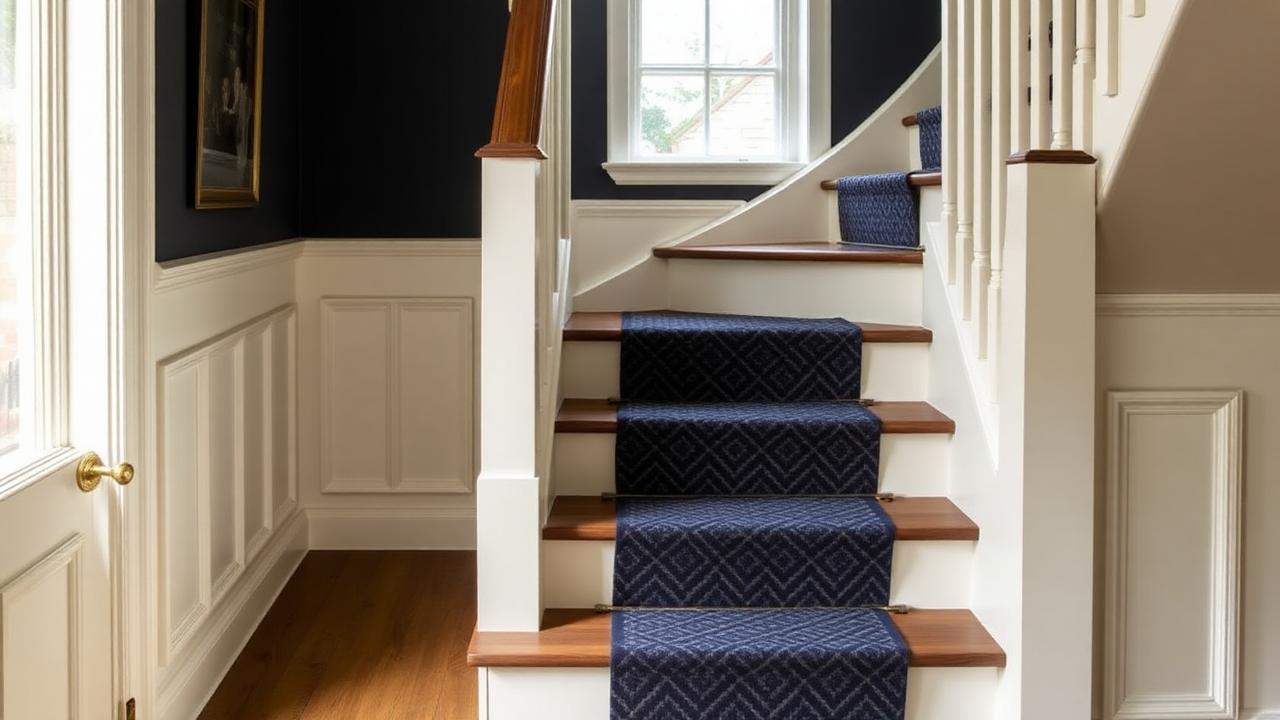
Full-width fitted stair carpet, which covers the whole tread edge to edge, generally costs more per step than a runner because it uses considerably more material and typically needs a tackless gripper installation on every tread and riser. A hollywood or waterfall runner fitting, by contrast, uses less material and can be a faster fit, though the visual softness of a waterfall style versus the crisper waterfall-vs-hollywood distinction is a separate design decision from the cost one. Stair rods, if used instead of or alongside a hidden gripper fixing, add their own separate hardware cost, typically $15-40 (£12-30) per rod depending on finish, on top of the base carpet and fitting price.
Padding and underlay
Underlay or padding beneath a stair runner extends its life and improves how it feels underfoot, and most fitters recommend it even though it's sometimes sold as an optional extra. Typical padding cost adds roughly $3-8 (£2-6) per step on top of the carpet and labour figures above. Skipping padding to save money on a heavily used staircase often costs more in the long run through faster wear and an earlier replacement.
DIY versus professional fitting
Fitting your own stair runner can cut the labour portion of the cost significantly, since labour is typically 30-45% of a professional quote, but stair carpet fitting is one of the trickier DIY carpet jobs because of the compound angles at each tread-to-riser junction and the need for consistent tension down the whole flight. If you're comfortable with basic tools and patient tacking, a straight flight without winders is a realistic DIY project; a flight with turns or winders is usually worth paying a professional for, since a poorly tensioned runner on a turn can become a trip hazard rather than just a cosmetic issue.
Budgeting sensibly
When budgeting, work from a typical per-step range for your chosen fibre, multiply by your actual step count, then add roughly 10-15% as a contingency for extras like padding, rods, or unexpected old-carpet removal. This gives a realistic upper-bound figure to plan against rather than being surprised by a final invoice that includes items the headline per-step price didn't cover.
Whatever you decide, get the numbers first: the stair runner calculator doubles as a stair runner length calculator, adding nosing wrap, landings, winders, pattern repeat and waste so you order the right length the first time.
Still deciding on material, width or pattern? Our hub on stair runners compares weaves, widths, backings and fitting styles side by side, then hands the numbers straight to the calculator.
Frequently asked questions
How much does stair carpet cost per step?
Typical ranges run from about $25-40 (£18-30) per step for budget synthetic carpet up to $70-110 (£55-85) per step for premium patterned wool, including basic fitting. These are planning ranges - get an itemised quote for your actual stairs before budgeting a final figure.
Does the cost include padding and gripper rods?
Not always. Some quotes bundle padding, gripper rods and old carpet removal into the headline price; others bill them separately, adding roughly $3-8 (£2-6) per step for padding alone. Always ask what's included before comparing quotes between suppliers.
Is a runner cheaper than full stair carpet?
Generally yes, because a runner uses less material width than full-width fitted carpet covering the entire tread edge to edge. The exact saving depends on fibre and runner width chosen relative to the full stair width.
How much does DIY stair carpet fitting save?
Labour is typically 30-45% of a professional quote, so fitting it yourself can meaningfully cut cost on a straight flight without winders. Turning flights are trickier to fit accurately and are usually worth paying a professional for.
Do stair rods add much to the cost?
Yes, rods are a separate hardware cost, typically $15-40 (£12-30) per rod depending on finish and material, on top of the base carpet and fitting price, since they're an additional decorative and functional element rather than part of the carpet itself.
Why do two quotes for the same stairs differ so much?
Differences usually come down to what's included (padding, gripper, removal), fibre quality, regional labour rates and whether waste allowance is built into the quoted length. Always compare itemised quotes rather than headline totals.
How do I calculate the total cost before getting a quote?
Work out your total runner length with a stair runner calculator, multiply by a typical per-linear-foot or per-linear-metre price for your chosen fibre, then add labour and extras separately so you have a realistic ballpark before a fitter measures in person.
Does a patterned carpet cost more to fit than a plain one?
Yes, typically 15-25% more within the same fibre grade, because pattern matching down the flight and around any turn takes more fitter time and usually requires extra material to keep the design aligned at each tread.
Know your numbers in 30 seconds
Enter your step count, tread depth and riser height — the stair runner calculator gives you the exact length to order, in metres and feet, with waste included.
Estimate your own stair carpet costReady for real prices?
Get quotes from vetted stair runner suppliers and fitters near you. Free, no account, no obligation.
Every guide is written from hands-on measuring and fitting experience, checked against the calculator’s own maths, and re-reviewed whenever prices or methods change. Read our editorial standards.