

What a wood stair cost actually covers
A wood stair cost estimate usually bundles several separate components: the stringers (the structural sides supporting each step), the treads (the flat, walked-on surface), the risers (the vertical faces, if closed rather than open), the handrail and balustrade, and finishing (sanding, staining or painting, and sealing). Full replacement or new-build pricing includes all of this; a refresh project, like recladding existing treads and risers over an old staircase, is usually cheaper because the structural stringers are reused.
Timber species is the biggest single driver of material cost. Softwoods like pine are the most affordable and take paint well but dent more easily underfoot. Oak is the most common mid-to-premium hardwood choice for stairs, prized for durability and grain. Walnut, maple and other specialty hardwoods sit at the top of the range, chosen mainly for appearance in open-plan or feature staircases.
Typical cost ranges by timber and scope
| Scope / timber | Typical US cost | Typical UK cost |
|---|---|---|
| Pine tread and riser recladding (per step) | $60-120 | £45-95 |
| Oak tread and riser recladding (per step) | $100-220 | £80-170 |
| Walnut/specialty hardwood recladding (per step) | $180-350 | £140-270 |
| Full new pine staircase (12-14 step straight flight) | $2,000-4,500 | £1,800-3,600 |
| Full new oak staircase (12-14 step straight flight) | $4,500-9,000 | £3,600-7,200 |
These figures are typical planning ranges for a standard straight flight and assume closed risers with a moderate finish quality; open-riser designs, winders, curved stringers, and premium balustrade materials like glass or steel push costs well above these ranges. Always get a site-measured quote before finalising a budget, since flight length, tread width and any structural remedial work all change the total significantly.
Open risers change the runner too
If you're planning a runner over open-riser wood stairs, sizing and fitting differ from a closed-riser flight because there's no riser face to wrap the carpet around - worth checking before assuming a standard per-step yardage figure applies.
How much runner do I need?
Once the wood stair itself is priced, most homeowners still want a runner down the centre for grip, noise reduction and to protect the tread finish. Take a 12-step oak flight with a 9.5 in (24 cm) tread and 8 in (20 cm) riser, on the steeper side, which is common in older or space-saving builds. Per step: 9.5 in + 8 in + 1 in nosing wrap = 18.5 in. Across 12 steps that's 222 in, or 18.5 ft. Add a 20 in (50 cm) finishing allowance and you reach roughly 20.2 ft. With a 7% waste allowance, order about 21.6 ft (6.6 m). In metric: 24 cm + 20 cm + 2.5 cm = 46.5 cm per step, times 12 is 5.58 m, plus 50 cm finishing is 6.08 m, plus 7% waste is about 6.5 m, in line with the imperial figure. Run your own tread and riser numbers through a stair runner calculator once the wood stair dimensions are finalised, since the exact tread and riser sizes on a new or rebuilt staircase are chosen during design and can differ from these example figures.
Budgeting a wood stair plus runner together
- Confirm timber species and finish first, since this sets the largest cost variable.
- Get a site-measured quote for the wood stair scope, including whether stringers are being reused or replaced.
- Decide riser style (open or closed) before ordering a runner, since it affects sizing and fitting method.
- Calculate runner length using a stair runner calculator once final tread and riser dimensions are confirmed.
- Add padding, rods and fitting labour to the runner budget separately from the wood stair budget.
- Build in a 10-15% contingency across the combined project for unexpected structural or fitting issues.
Know your numbers in 30 seconds
Enter your step count, tread depth and riser height — the stair runner calculator gives you the exact length to order, in metres and feet, with waste included.
Open the stair runner calculatorFinish and stain affect both stair and runner choices
Dark stains show dust and pale carpet fibres more visibly than lighter finishes, which is worth factoring in when picking a runner colour to sit alongside a newly finished wood stair. Conversely, a very pale, whitewashed or lime-washed wood finish can make a bold or dark runner pop as a deliberate contrast rather than a mismatch. It's usually easier and cheaper to choose the runner colour after the wood finish is confirmed than the other way round, since stain colours vary more from can to can than most carpet ranges do.
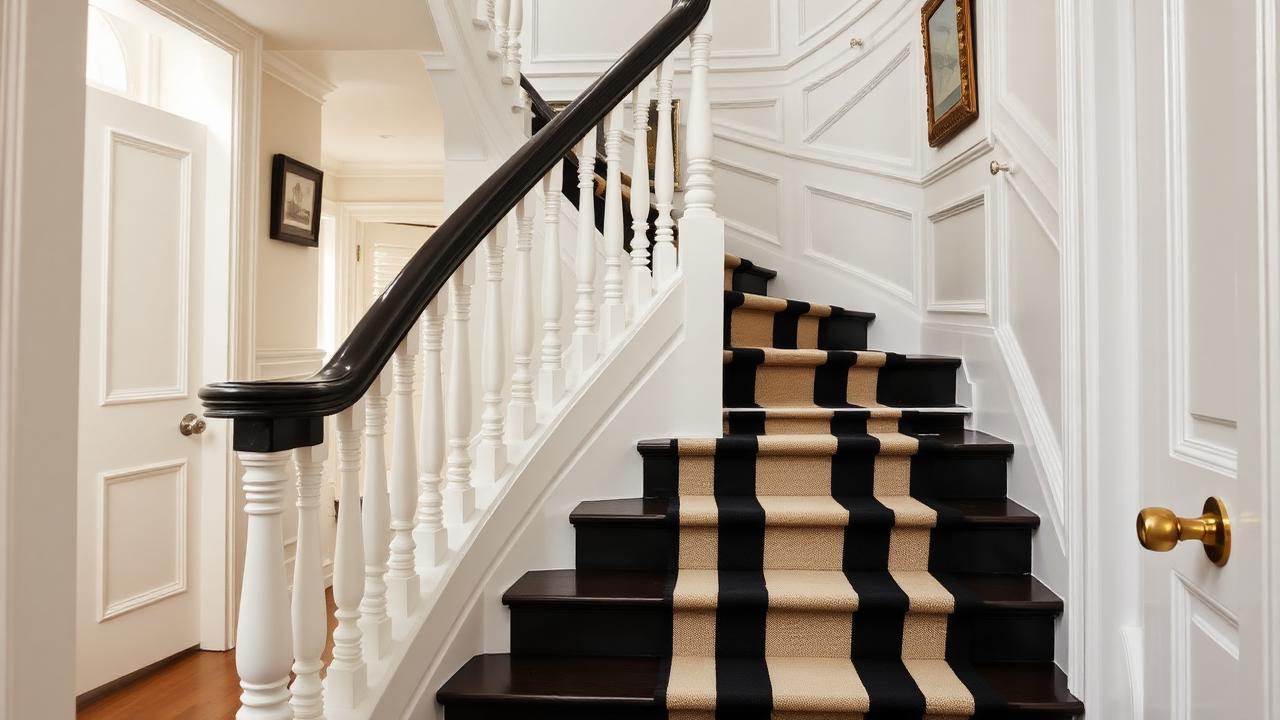
Structural work versus cosmetic work
A wood stair cost estimate can vary enormously depending on whether the underlying structure (stringers, subfloor connection points, load-bearing elements) needs work, or whether the job is purely cosmetic - new treads, risers and finish over sound stringers. Structural remedial work, common in older houses with squeaky or sagging stairs, is priced separately and can add substantially to a headline recladding estimate, so ask explicitly whether a quote assumes the existing structure is sound.
Planning the combined budget
Because wood stair work and stair runner fitting are often done together, especially during a renovation, it makes sense to sequence and budget them as one project even if they're quoted by different trades. Get the wood stair scope and cost settled first, since it determines final tread and riser dimensions, then use those confirmed measurements in a stair runner calculator to get an accurate runner length and cost, rather than guessing the runner budget before the joinery is finalised.
Whatever you decide, get the numbers first: the stair runner calculator doubles as a stair runner length calculator, adding nosing wrap, landings, winders, pattern repeat and waste so you order the right length the first time.
Still deciding on material, width or pattern? Our hub on stair runners compares weaves, widths, backings and fitting styles side by side, then hands the numbers straight to the calculator.
Frequently asked questions
How much does it cost to replace wood stair treads?
Typical costs run from about $60-120 (£45-95) per step for pine recladding up to $180-350 (£140-270) per step for specialty hardwoods like walnut, covering material and fitting. Structural repairs to stringers are priced separately and add to this range.
Is oak or pine cheaper for stairs?
Pine is typically the more affordable choice, roughly half to a third the cost of oak for the same scope, but oak is considerably more durable underfoot and holds a stain finish better over time, which is why it's the most common mid-range choice.
Does a runner cost more on open riser stairs?
Fitting can be different rather than simply more expensive, since there's no riser face to wrap the carpet around. Sizing calculations also change slightly, so check with a fitter or run the numbers through a stair runner calculator adjusted for an open-riser layout.
How much should I budget for a full new wood staircase?
For a standard 12-14 step straight flight, typical ranges are $2,000-4,500 (£1,800-3,600) for pine and $4,500-9,000 (£3,600-7,200) for oak, including structure, treads, risers and a standard finish. Open risers, winders and premium balustrades push costs higher.
Should I choose the wood finish or the runner colour first?
Choose the wood finish first where possible. Stain and paint colours vary more can to can than most carpet ranges, so it's generally easier to match a runner to a confirmed wood finish than the reverse.
Do I need to wait until the wood stairs are finished to order a runner?
It's safest to wait until final tread and riser dimensions are confirmed, since new joinery can shift these slightly from the original plan. Ordering the runner too early risks a length mismatch if the final treads differ from the design spec.
What typically adds unexpected cost to a wood stair project?
Structural remedial work on stringers or subfloor connections, discovered once old treads are removed, is the most common unexpected cost. Always ask a quote whether it assumes the existing structure is sound or includes an allowance for repair.
How much extra should I budget as contingency?
A contingency of 10-15% on top of a combined wood stair and runner budget is a sensible planning figure, covering minor structural surprises, fitting adjustments, or small material overages once work is underway.
Know your numbers in 30 seconds
Enter your step count, tread depth and riser height — the stair runner calculator gives you the exact length to order, in metres and feet, with waste included.
Plan your runner alongside your wood stair budgetReady for real prices?
Get quotes from vetted stair runner suppliers and fitters near you. Free, no account, no obligation.
Every guide is written from hands-on measuring and fitting experience, checked against the calculator’s own maths, and re-reviewed whenever prices or methods change. Read our editorial standards.