
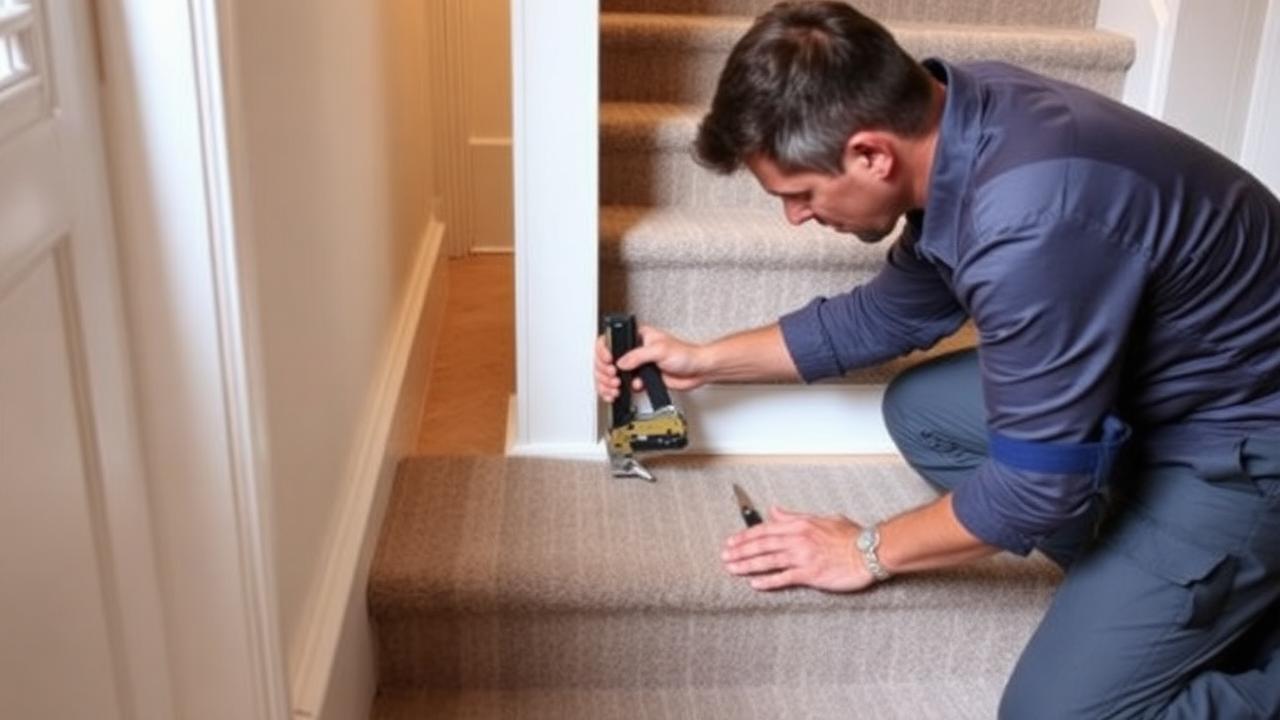
Why per-step pricing makes sense
Per-step pricing is a genuinely useful way to think about stair carpet fitting cost because most of the labour scales directly with step count rather than with total floor area, which is how flat carpet is usually priced. Each individual step needs its own cut of material, its own edge finishing, and on a patterned runner its own pattern alignment, so a 16-step flight simply takes proportionally longer to fit than a 10-step one, in a way that's much more linear than, say, carpeting a large open-plan room. On a recent 14-step Victorian flight I fitted, the straight run alone took under three hours, but tacking on a quarter-turn landing at the top added closer to ninety minutes just for those last three treads, which illustrates how unevenly the per-step time can actually fall.
That said, per-step pricing isn't perfectly uniform even on a straight flight. The first and last steps of a run often take slightly longer because they involve finishing details - tucking under a landing carpet at the top, or turning a neat edge at the bottom nosing - that the middle steps don't need. Most fitters absorb that into their flat per-step rate rather than itemising it separately, but it's worth knowing if you're trying to reverse-engineer why a quote doesn't divide perfectly evenly by step count.
How much runner do I need?
Per-step fitting cost only tells half the story - you also need to know your total runner length to budget for material. Using a US example: 14 steps, 10.5 in tread run, 7.25 in riser height, plus a 0.8 in nosing wrap, gives 18.55 in per step. Multiply by 14 for 259.7 in, add 24 in finishing allowance for 283.7 in, then apply an 8% waste margin to reach roughly 306.4 in, or about 25.5 ft of runner.
The UK metric version: 26.5 cm tread run, 18.5 cm riser height, 2 cm nosing wrap, giving 47 cm per step. Across 14 steps that's 658 cm, plus 60 cm finishing allowance for 718 cm, then an 8% waste margin brings the total to about 7.75 m. Multiply your per-step fitting rate by the step count, then add material cost based on this length calculation, and you get a genuinely comparable total project cost rather than a vague ballpark.
| Step count | Fitting cost range (GBP) | Fitting cost range (USD) |
|---|---|---|
| 10 steps | 120-300 | 150-380 |
| 13 steps | 155-390 | 195-495 |
| 16 steps | 190-480 | 240-610 |
| 20 steps | 240-600 | 300-760 |
Know your numbers in 30 seconds
Enter your step count, tread depth and riser height — the stair runner calculator gives you the exact length to order, in metres and feet, with waste included.
Open the stair runner calculatorPer-step rate hides complexity
Two quotes both priced at 20 GBP per step can still land very differently once turns or winders are involved, because most fitters quietly apply a higher effective per-step rate to irregular treads even when the headline figure looks flat.
Straight steps versus winders and turns
A straight tread is the fastest and cheapest thing to fit, because it's a simple rectangle cut to a repeating measurement. A winder tread, by contrast, is typically pie-shaped or irregular, meaning it can't be cut from a repeating template and instead needs its own individual measurement, often taken with a paper or card template pressed against the actual tread before cutting the runner material. That extra templating step alone can add ten to twenty minutes per winder tread compared with two or three minutes for a straight one, and it's the single biggest reason winder sections carry a noticeably higher effective per-step rate.
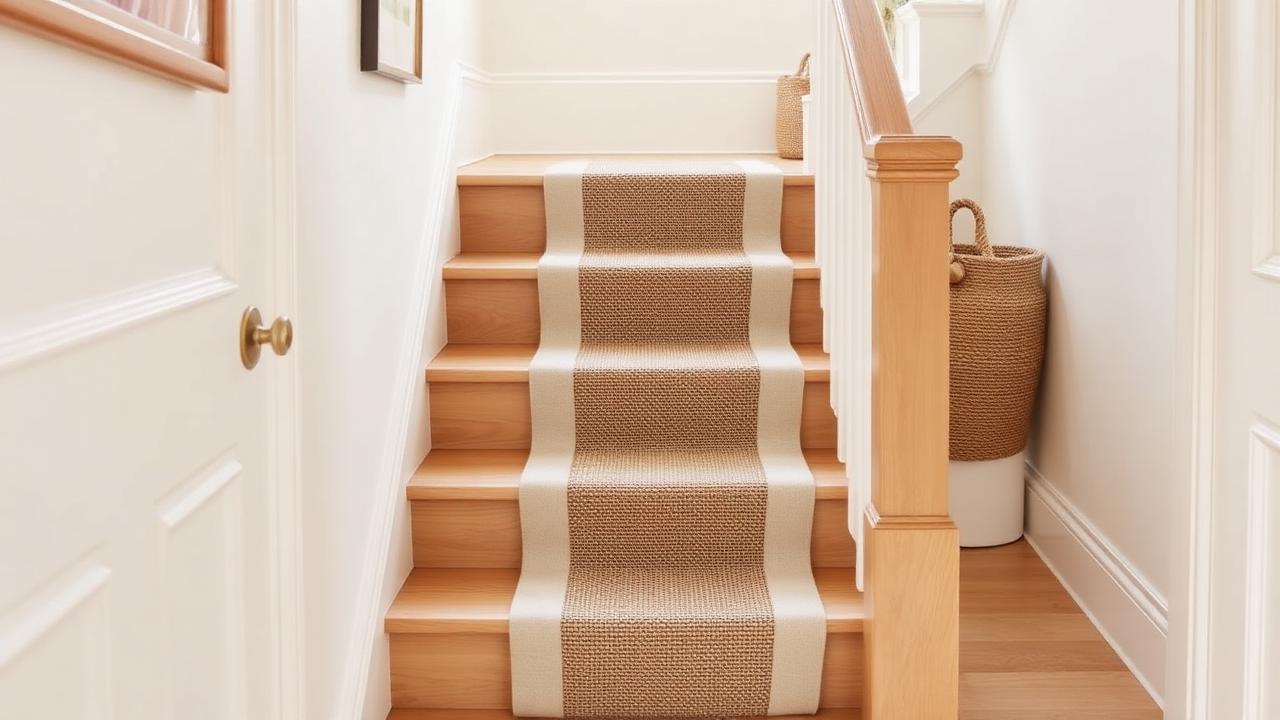
- Straight treads: fastest to fit, lowest per-step cost.
- Treads near a half landing: slightly slower due to finishing detail.
- Winder or pie-shaped treads: require individual templating, roughly double the time.
- Curved or bullnose bottom steps: often the single most time-consuming step in the flight.
What's usually included in the per-step rate
A typical per-step fitting rate covers cutting the runner or carpet to length for that step, securing it with the chosen method (gripper, staples, or rods), and dressing the edges neatly at the sides. It does not usually include underlay or padding, which is typically quoted separately either per step or as a flat sum for the whole flight, nor does it include removing old carpet, which is commonly a separate line item. When you're comparing a per-step quote from one fitter against a flat whole-flight quote from another, divide the flat quote by your step count to get a comparable per-step figure, and check both fitters are quoting on the same scope of work before assuming one is cheaper.
It's worth noting that some fitters price per linear foot or metre of runner rather than per step, which produces a very similar effective cost on a standard flight but can diverge noticeably on a staircase with unusually deep or shallow treads. If your tread run is significantly larger than the 10 in (25 cm) standard, a per-linear-length quote will tend to come out higher than a strict per-step quote for the same flight, so ask which method a fitter is using before comparing numbers directly.
Getting an accurate per-step estimate for your own stairs
To estimate your own fitting cost, start by counting your steps and noting how many are straight versus winders or landing-adjacent. Multiply the straight step count by the lower end of a typical per-step rate, and multiply any winder or complex steps by roughly double that rate, then add them together for a realistic total. This two-tier approach is far more accurate than applying one flat per-step figure across an entire flight that includes a turn, and it's the same logic most experienced fitters use internally even when they quote you a single simplified headline number. Pairing this with a length calculation from a stair runner calculator means you can budget material and labour together before a single fitter walks through your door, which puts you in a much stronger position to spot an outlier quote, whether unusually high or suspiciously low, once real quotes start coming in.
Whatever you decide, get the numbers first: the stair runner calculator doubles as a stair runner length calculator, adding nosing wrap, landings, winders, pattern repeat and waste so you order the right length the first time.
Still deciding on material, width or pattern? Our hub on stair runners compares weaves, widths, backings and fitting styles side by side, then hands the numbers straight to the calculator.
Frequently asked questions
What's a realistic per-step fitting cost?
For a straight flight, typical labour works out to 12-30 GBP (15-38 USD) per step. Winder or landing-adjacent steps often carry an effective rate closer to double that, because of the extra templating and cutting time involved.
Does per-step pricing include underlay?
Usually not. Underlay or padding is commonly quoted as a separate line item, either per step or as a flat total for the whole flight, so always ask whether it's included before comparing two per-step quotes directly.
Why do winder steps cost more per step to fit?
Winder treads are irregular, pie-shaped steps that can't be cut from a repeating template. Each one needs an individual measurement or paper template before cutting, which can add ten to twenty minutes per tread compared with a straight step.
Is it cheaper to price a job per step or per linear foot?
Neither is inherently cheaper; they're just different ways of expressing the same underlying labour. Per-linear-foot pricing tends to come out higher relative to per-step pricing on staircases with unusually deep treads, so ask which method a fitter is using.
How do I compare a flat whole-flight quote against a per-step quote?
Divide the flat quote by your total step count to get an equivalent per-step figure, then compare that against other per-step quotes, checking that both cover the same scope of work such as underlay and old carpet removal.
Do the first and last steps cost more to fit?
Often slightly, yes, because they involve extra finishing detail like tucking under a landing carpet or turning a neat bottom edge, though most fitters fold this into their standard per-step rate rather than itemising it separately.
Does a patterned runner increase the per-step cost?
Yes, typically. Matching a repeating pattern across each step takes longer than cutting a plain runner to length, so expect a modest per-step supplement, often 10-20%, on patterned material compared with a solid colour.
How many steps does a typical UK staircase have?
Most domestic UK staircases have 12-14 steps per flight, though this varies with ceiling height and building regulations. Always count your own steps rather than assuming a standard figure, since even a couple of extra steps changes the total noticeably.
Know your numbers in 30 seconds
Enter your step count, tread depth and riser height — the stair runner calculator gives you the exact length to order, in metres and feet, with waste included.
Get your exact step count and length with the stair runner calculatorReady for real prices?
Get quotes from vetted stair runner suppliers and fitters near you. Free, no account, no obligation.
Every guide is written from hands-on measuring and fitting experience, checked against the calculator’s own maths, and re-reviewed whenever prices or methods change. Read our editorial standards.