
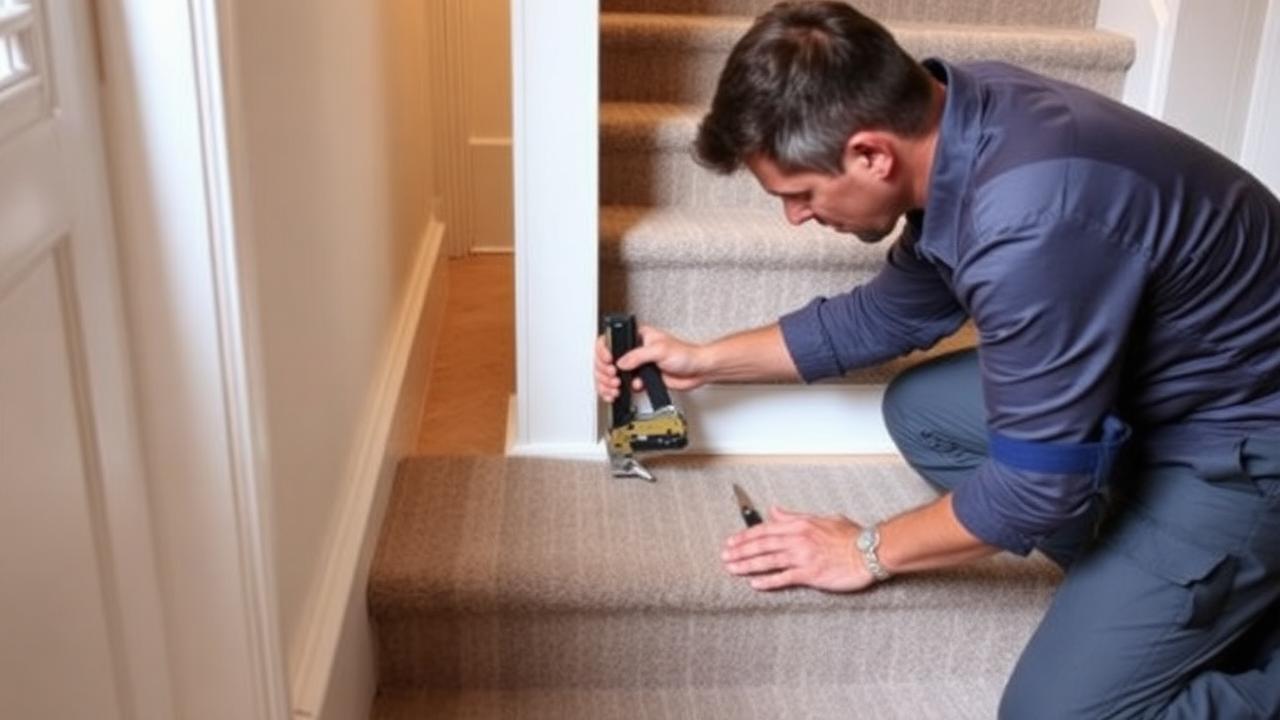
Why choose tape over staples or gripper
Adhesive tape is the go-to fixing method whenever you can't or don't want to put holes or pins into the tread - rental properties, stairs with a delicate original finish you want to protect, or stone and tile stairs where staples and gripper simply don't work at all. It's also the fastest method to fit and the easiest to remove cleanly, provided you choose a residue-free or low-tack removable tape rather than a permanent construction-grade adhesive. On a straightforward carpeted or timber staircase, I would still lean toward gripper or staples for a long-term family home fitting, but for a landlord doing a tenancy turnover, or anyone renting rather than owning, tape is often the only sensible option.
The trade-off is durability. A well-fitted gripper installation can hold for a decade; adhesive tape on a busy staircase typically needs checking and possibly re-taping every 12-24 months as the adhesive's grip weakens under repeated flexing at the nosing edge and exposure to foot traffic, temperature swings and cleaning products. That's a fair trade for a lot of tenants and short-term situations, but it's worth setting expectations correctly before you commit to tape as your only fixing.
Tape widths and where to use each
Carpet tape for stairs is most commonly sold in 2 in (5 cm) and 3 in (7.5 cm) widths, occasionally up to 4 in (10 cm) for extra-wide runners or higher-traffic commercial applications. The 2 in width suits a single strip placed centrally on a narrower tread, or as a secondary strip near the nosing alongside a wider primary strip at the back. The 3 in width is the more common general-purpose choice for a 27-32 in (68-81 cm) wide domestic runner, giving enough surface contact across the width of the tread that the runner doesn't lift or curl at the edges over time.
Two strips per tread, not one
A single strip of tape run down the centre of the tread looks like it should hold, but the edges of the runner will still lift with repeated foot traffic. Run one strip near the riser junction and a second near the nosing on every tread for a fixing that actually stays flat at both edges.
Foam-core versus film tape
Foam-core double-sided tape has a spongy central layer that compresses into small surface irregularities, which makes it the better choice on slightly textured or uneven tread surfaces, older worn timber, or treads with a light existing carpet residue that hasn't fully sanded away. Film tape, sometimes called carpet-to-carpet tape, is a thinner, denser adhesive layer without the foam core, and it performs best on smooth, flat surfaces like sealed hardwood, tile, vinyl or engineered board, where it forms a tighter, more even bond than foam tape would on the same surface.
As a rule I check the tread surface first: if I can feel any grain texture, old adhesive residue or slight unevenness under my palm, foam-core tape goes down; if the surface is glass-smooth, sealed hardwood or tile, film tape holds better and for longer. Mixing the two types on the same flight isn't a problem if different treads genuinely have different surface conditions, which does happen on staircases that have had partial refinishing work done at some point.
How much runner do I need?
Tape length needed tracks the same total runner length calculation as any other fixing method. On a US 13-step flight with a 10 in tread run, 7.5 in riser and 0.75 in nosing wrap, the per-step total is 18.25 in, giving 237.25 in (19.77 ft) across the flight, plus a 24 in finishing allowance for 261.25 in (21.77 ft), and with a 7% waste margin you'd order roughly 23-24 ft of runner. For tape, since you're running two strips per tread across a runner roughly 28 in (71 cm) wide, budget around 56 in (142 cm) of tape per tread, or about 61 ft (18.5 m) of tape total across 13 treads.
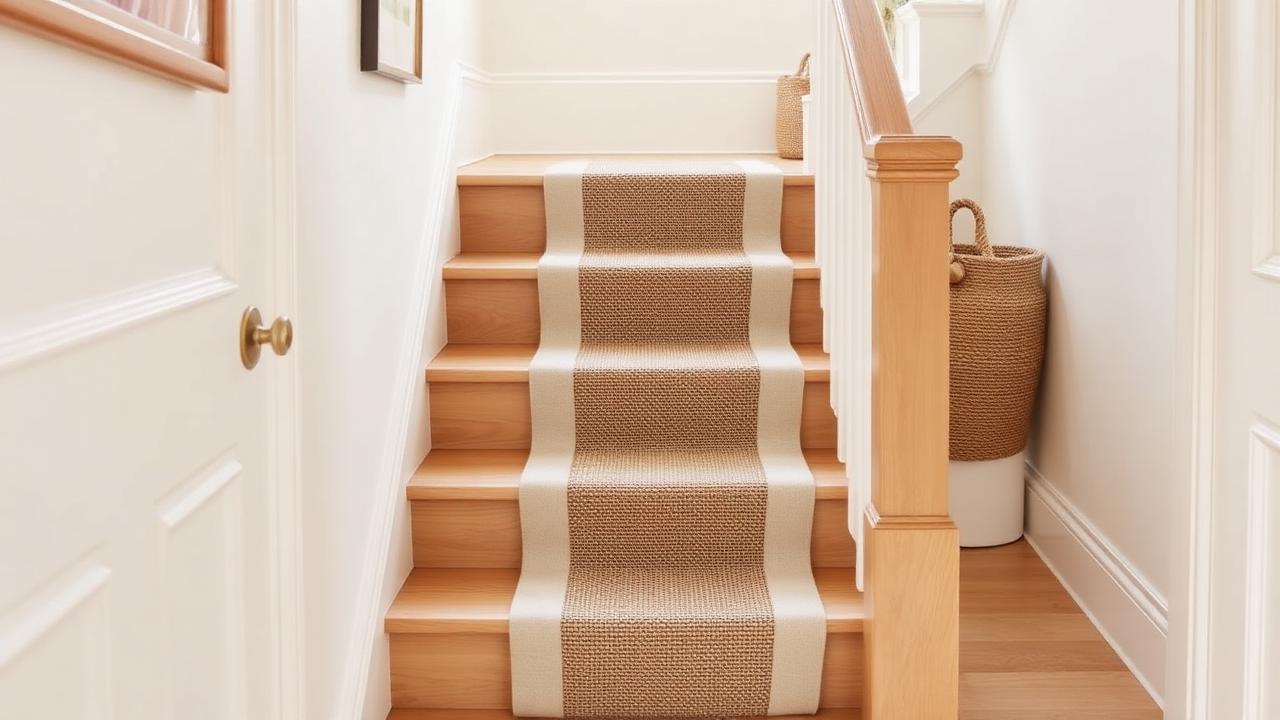
In UK metric terms, 25 cm tread run, 19 cm riser and 1.9 cm nosing wrap gives 45.9 cm per step, 596.7 cm across 13 steps, plus a 60 cm finishing allowance for 656.7 cm, then a 7% waste margin lands around 7.0-7.2 m of runner. For tape, two strips across a 71 cm wide runner works out to roughly 142 cm per tread, or about 18.5 m across the 13-tread flight. Running your measurements through a stair runner calculator first means you buy the right length of both runner and tape in one pass rather than making a second trip when you run short on strip three-quarters of the way up.
| Tape type | Best surface | Typical width | Approx. hold duration |
|---|---|---|---|
| Foam-core | Textured, worn or slightly uneven timber | 2-3 in (5-7.5 cm) | 12-18 months high traffic |
| Film / carpet-to-carpet | Smooth sealed hardwood, tile, vinyl | 2-3 in (5-7.5 cm) | 18-24 months high traffic |
| Extra-wide commercial | Wide runners, commercial stairs | 4 in (10 cm) | 24+ months moderate traffic |
Know your numbers in 30 seconds
Enter your step count, tread depth and riser height — the stair runner calculator gives you the exact length to order, in metres and feet, with waste included.
Open the stair runner calculatorFitting and removing tape correctly
Clean and fully dry the tread surface before applying any tape - dust, polish residue or old adhesive left over from a previous runner will stop the new tape from bonding properly, and this is the single most common reason tape fixings fail early. Press each strip down firmly along its full length once placed, then lay the runner over it and press down hard along the tape lines with your palm or a carpet roller, working from the centre outward, to maximise contact and squeeze out any trapped air. Leave the tape to set for the manufacturer's stated time, often a few hours, before allowing normal foot traffic if you can manage it.
When it's time to remove, peel slowly and at a low angle rather than pulling straight up, which reduces the chance of pulling up surface finish or leaving adhesive residue behind. If residue does remain, a proper adhesive remover suited to the tread finish, applied sparingly and tested on an inconspicuous spot first, usually lifts it without damaging sealed timber or tile.
- Clean and dry the tread fully before taping - residue is the top cause of early tape failure.
- Use two strips per tread, one near the riser and one near the nosing.
- Choose foam-core for textured or slightly uneven surfaces, film for smooth sealed surfaces.
- Press firmly along the full tape length before laying the runner down.
- Peel at a low angle when removing to avoid pulling up the tread finish.
Combining tape with other fixing methods
Tape doesn't have to be an all-or-nothing choice against gripper or staples. Some fitters use tape as the primary hold on the flat tread section and add gripper strip specifically at the very top and bottom of the flight where tension is highest and a slip would be most dangerous, giving a largely drill-free installation with reinforced fixing at the two critical points. This hybrid approach suits anyone who wants most of the benefits of a tape-only, low-damage fitting while still getting the extra security of a mechanical fixing where it matters most, and it's a reasonable middle ground between a fully temporary tenancy fit and a permanent gripper-and-staple installation for stair runners in a forever home.
Whatever you decide, get the numbers first: the stair runner calculator doubles as a stair runner length calculator, adding nosing wrap, landings, winders, pattern repeat and waste so you order the right length the first time.
Frequently asked questions
What width tape should I use for a stair runner?
3 in (7.5 cm) tape is the standard general-purpose width for a 27-32 in (68-81 cm) domestic runner, with 2 in (5 cm) tape suiting narrower treads or use as a secondary strip alongside a wider primary strip.
How long does adhesive tape hold a stair runner in place?
Expect to check and likely re-tape every 12-24 months on a busy household staircase, since the bond weakens gradually under repeated flexing at the nosing edge, foot traffic and temperature changes.
Is foam or film tape better for stairs?
Foam-core tape suits textured or slightly uneven tread surfaces like older worn timber, while film tape performs better on smooth, flat surfaces like sealed hardwood, tile or engineered board.
Can I use carpet tape on tile or stone stairs?
Yes, tape is one of the few fixing options that works on tile or stone stairs, since staples and gripper rod need timber to bite into. Choose a film-type tape rated for hard, smooth surfaces.
Will adhesive tape damage my stair treads when removed?
A quality removable carpet tape, peeled slowly at a low angle, should not damage a sealed timber or tile surface. Any residue left behind can usually be lifted with an adhesive remover suited to the tread finish.
How many strips of tape do I need per tread?
Use two strips per tread, one near the riser junction and one near the nosing, rather than a single central strip, so both edges of the runner stay flat under repeated foot traffic.
Can I combine tape with gripper rod or staples?
Yes, a hybrid approach using tape on most treads and gripper or staples specifically at the top and bottom of the flight gives extra security at the highest-tension points while keeping most of the install drill-free.
Does the tread need to be clean before applying carpet tape?
Yes, the tread must be clean, dry and free of dust, polish or old adhesive residue, since a dirty surface is the single most common reason a tape fixing fails to hold within the first few weeks.
Know your numbers in 30 seconds
Enter your step count, tread depth and riser height — the stair runner calculator gives you the exact length to order, in metres and feet, with waste included.
Confirm total runner length and step count with the stair runner calculator before ordering tapeReady for real prices?
Get quotes from vetted stair runner suppliers and fitters near you. Free, no account, no obligation.
Every guide is written from hands-on measuring and fitting experience, checked against the calculator’s own maths, and re-reviewed whenever prices or methods change. Read our editorial standards.