
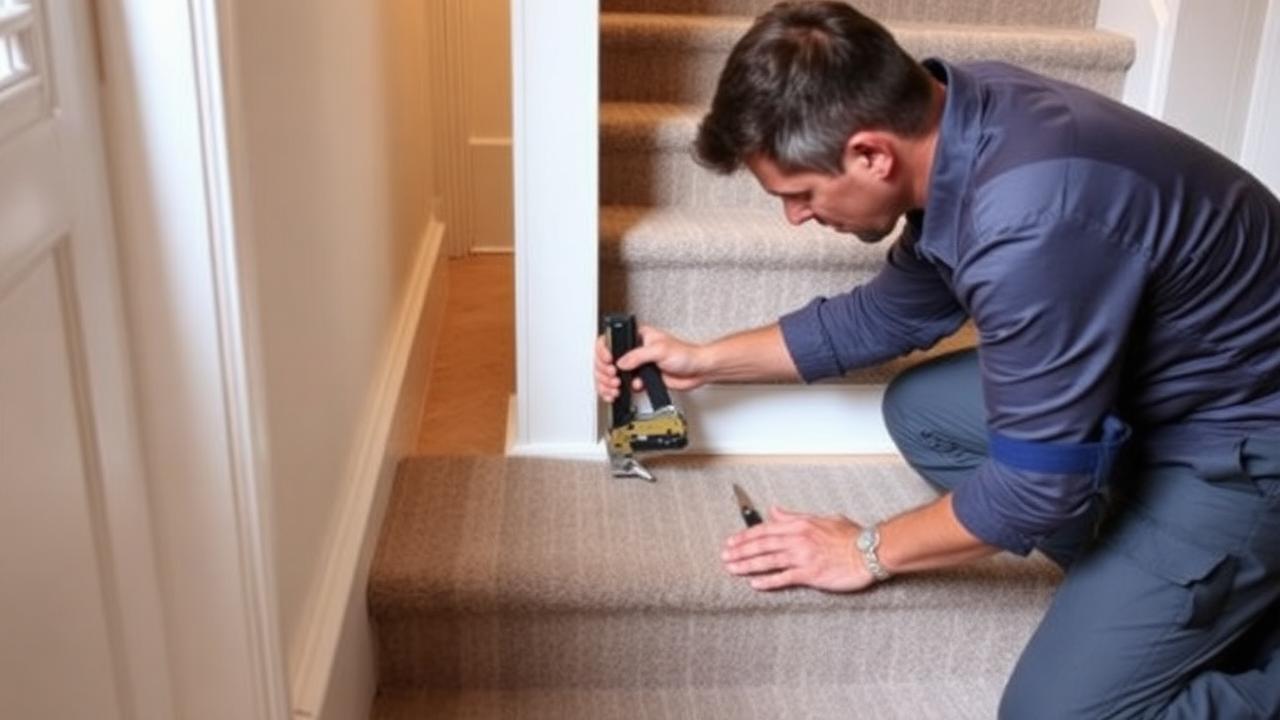
Finding a professional for your Brighton stair runner installation
If you are living in Brighton, you are likely surrounded by some of the UK’s most characteristic housing. From the narrow Victorian terraces of the suburbs to the grander Edwardian villas, the staircases here often come with their own set of challenges. Finding a local specialist who understands how to handle these specific geometries is the first step toward a successful installation. You should look for someone who doesn’t just fit carpets but specifically markets themselves as a stair runner specialist. This distinction matters because fitting a runner requires a different set of tools and a much higher degree of precision than a standard wall-to-wall carpet job. A runner needs to be perfectly centered, and the borders must remain absolutely parallel to the stringers all the way up the flight. In Brighton, many fitters will be familiar with the local architectural quirks, such as the steep pitches found in older properties, and will know which underlays provide the best grip on seasoned timber treads. Using a stair runner calculator to estimate your needs before calling a professional can help you sound informed and ensure you get an accurate initial estimate.
Vetting a fitter in the Brighton area involves more than just checking a single review site. I always recommend asking for photos of ‘winder’ steps they have completed. A winder is a step that is narrower on one side than the other, used to turn a corner. Fitting a runner around a winder is the ultimate test of a carpet layer’s skill; the pattern should ideally remain continuous, or the joins should be hidden within the crotch of the step. If a fitter cannot show you a clean winder join, they might not be the right choice for a complex Brighton staircase. You should also ask about their preferred method of fixing: do they use traditional tack strips, or do they prefer a more modern adhesive method for certain types of high-end materials? Getting this right is crucial for the longevity of your stair runners and the safety of everyone using them.
The importance of the ‘sub-floor’ or in this case, the sub-tread, cannot be overstated. In many Brighton homes, the original timber has been covered by layers of paint or old adhesive over the decades. A professional will spend time preparing the surface, perhaps even suggesting a light sanding or the application of a primer to ensure the grippers hold firmly. If the wood is particularly damaged, they might recommend a plywood ‘skin’ on the treads, though this is rare for runners as the timber edges are usually left exposed. This level of attention to detail is what separates a professional Brighton installation from a botched job that will start to wrinkle within months. Proper tensioning is the key; a runner should be ‘drum-tight’ across the tread and riser, with no visible sagging or air pockets behind the carpet. This is achieved using a knee-kicker and a bolster, tools that require significant physical effort and experience to use correctly without damaging the delicate stair nosings.
Typical price ranges and costs in Brighton
Costs for fitting a stair runner in Brighton can vary significantly based on the complexity of the flight. For a straightforward straight flight of 13 steps, you might find typical labour rates starting around £300 to £450. However, most local homes feature at least one turn or a half-landing. For a flight with a turn, expect the price to rise toward £550 or £700, reflecting the extra time needed for ‘piecing’ the carpet on the winders. These figures are typical and do not include the cost of the carpet itself, which can range from £20 per linear metre for basic polypropylene to well over £100 for premium wool or custom-bordered designs. It is also worth noting that many Brighton specialists will charge a minimum call-out fee or a fixed price for smaller jobs, so if you are only doing a short run of five or six steps, the price per step may be higher.
When choosing your material in Brighton, consider the local climate and your household's lifestyle. If you are in a part of the city prone to dampness, or if your front door opens directly onto the stairs, a synthetic fibre like polypropylene might be more practical than a delicate wool. However, most homeowners in this region still prefer the resilience and luxury of a 80/20 wool-nylon blend. Wool has a natural elasticity that allows it to recover its shape after being trodden on, making it ideal for the heavy traffic of a staircase. It also has a degree of natural soil resistance. If you choose a patterned runner, such as a traditional stripe or a modern geometric design, the skill of the fitter becomes even more critical. They must ensure the pattern remains perfectly aligned as it travels up the flight, which often involves slight adjustments at every single riser to account for the staircase's natural irregularities. This is why specialized stair runners often cost more to fit than plain carpets - the mental effort of pattern matching is intense.
| Job Type | Typical Labour Cost (City) | Estimated Duration |
|---|---|---|
| Straight 13-step flight | £300 - £450 | 3 - 5 hours |
| 13 steps with 3 winders | £500 - £650 | 5 - 8 hours |
| Landing / Turn (Per area) | £80 - £150 | 1 - 2 hours |
| Supply of underlay & grippers | £100 - £200 | N/A |
When budgeting, don’t forget the ‘hidden’ costs. Most Brighton installers will expect the old carpet to be removed and the stairs to be clean before they arrive. If you want them to do the uplift and disposal, expect to add another £50 to £100 to the bill. Also, consider the cost of stair rods if you want that traditional look. While rods are largely decorative today - the carpet is held by the grippers - they can add £15 to £50 per step to your total material cost. Always ask for a broken-down quote so you can see exactly what you are paying for, and never be afraid to ask why one quote is significantly lower than another; often, the cheaper option skips the high-quality underlay that is vital for preventing the carpet from wearing prematurely on the nosings.
How much runner do I need?
One of the most common mistakes I see on site is homeowners under-ordering material because they forgot to account for the ‘wrap’ or the waste margin. To get an accurate measurement, you must measure the ‘rise’ (the vertical part) and the ‘run’ (the horizontal part) of every single step. Even in {city} houses built to a standard, there is often a few millimetres of difference between steps that adds up over a full flight. Using a stair runner length calculator is the most reliable way to ensure you have enough carpet to finish the job without having to wait weeks for a matching dye-lot to be delivered.

Let’s look at a worked example for a typical UK flight of 13 steps. In UK metric units, a standard step might have a 25 cm tread (the ‘going’) and a 19 cm riser. You must also add about 2 cm for the ‘nosing wrap’ - the part where the carpet curves over the edge. This gives a total of 46 cm per step. For 13 steps, that is 598 cm (5.98 m). We then add a ‘finishing allowance’ of about 30 cm at the top and 30 cm at the bottom for a clean finish, bringing us to 6.58 m. Finally, we apply a 10% waste margin for cutting and alignment, resulting in a final order of approximately 7.24 metres. In US imperial units, a 10 in tread plus a 7.5 in riser plus a 0.75 in nosing wrap equals 18.25 inches per step. Multiply by 13 steps to get 237.25 inches (19.77 ft). Adding a 2 ft allowance for the top and bottom yields 21.77 ft, and a 10% waste margin brings the total to roughly 24 feet of runner.
| Measurement | US (in/ft) | UK (cm/m) |
|---|---|---|
| Tread / Going | 10 in | 25 cm |
| Riser Height | 7.5 in | 19 cm |
| Nosing Wrap | 0.75 in | 2 cm |
| Per Step Total | 18.25 in | 46 cm |
| 13 Steps Subtotal | 19.77 ft | 5.98 m |
| Top/Bottom Allowance | 2.00 ft | 0.60 m |
| With 10% Waste | 23.95 ft | 7.24 m |
Know your numbers in 30 seconds
Enter your step count, tread depth and riser height — the stair runner calculator gives you the exact length to order, in metres and feet, with waste included.
Open the stair runner calculatorLocal housing stock and fitting challenges
The architectural history of Brighton means that staircases are rarely straightforward. Regency-era townhouses and cramped Victorian worker cottages, often requiring slim runners to avoid making stairs look smaller. These properties often have stairs that have settled over a century, meaning the treads might not be perfectly level and the stringers (the sides of the stairs) might have a slight bow. A skilled fitter will know how to use ‘shims’ or careful tensioning to make the runner look straight even when the stairs themselves are not. In many local homes, the stairs are also quite narrow, which means choosing a runner that is too wide can make the hallway feel cramped. I generally recommend leaving at least 5 to 10 cm of exposed timber on either side of the runner to create a sense of space.
Another common issue in Brighton homes is the presence of ‘bullnose’ or ‘curtail’ steps at the bottom of the flight. These are rounded steps that are wider than the rest. Wrapping a runner around a bullnose requires a specialized technique where the carpet is pleated or ‘pie-cut’ to follow the curve. This is not a job for a DIYer or a general carpet fitter; it requires someone with genuine craft skills. If your Brighton home has a grand entrance with a feature bottom step, make sure your fitter has successfully tackled one before. Ask them specifically how they plan to finish the edge on a curved step - will it be bound, or will they use a clean fold?
A note on underlay for older stairs
In older {city} properties, the wood can be quite dry and prone to splitting. Ask your fitter to use high-quality, dense rubber underlay rather than cheap foam. Not only does it feel better underfoot, but it also helps to dampen the ‘creaks’ that are so common in Victorian and Edwardian timber staircases.
Questions to ask your stair runner specialist
- Are you a member of a trade body like the NICF or FITA?
- Do you provide a written guarantee for your installation work?
- How many stair runners have you fitted in the last six months?
- Do you handle the binding of the edges, or do I need to buy a pre-bound runner?
- What type of underlay do you recommend for my specific staircase type?
- Can you provide references from other clients in the {city} area?
- How do you handle the joins on winders or landings?
- Is the disposal of old carpet included in your quote?
Finally, always ask about the lead time. The best fitters in Brighton are often booked up several weeks in advance, especially during the autumn and spring. If someone can come tomorrow, it might be worth asking why they are so quiet. A little patience for a high-quality specialist is always worth it when it comes to a feature as prominent as your stair runner carpet. Once the work is done, you should have a beautiful, safe, and durable addition to your home that will stand up to years of daily use by your family and guests.
To keep your new investment looking its best, ask your fitter for local cleaning recommendations. Some Brighton areas have quite hard water, which might affect how you spot-clean certain natural fibres. Regular vacuuming with a dedicated tool for stairs is the best way to prevent dirt from becoming embedded in the pile. If you ever need to replace a section or expand the runner to a landing, having the original measurements from your stair runner calculator will make the process much smoother and ensure a consistent look throughout your home.
Frequently asked questions
How do I find a reliable stair runner fitter in Brighton?
Look for specialists who are members of trade organizations like the National Institute of Carpet and Floorlayers (NICF). Check local directories and ask for portfolios of their previous work in Brighton, specifically focusing on stairs rather than just flat rooms. Word of mouth from neighbours with similar house styles is often the best way to find a craftsman who understands local architectural quirks.
What is the average cost to fit a stair runner in Brighton?
For a standard 13-step flight, you should expect to pay between £300 and £500 for labour in the Brighton area. This typical range can increase if you have complex winders, landings, or if you require the fitter to provide premium underlay and grippers. Always get a written quote that breaks down the costs for uplift, disposal, and materials.
Do I need a specialist for my Brighton Victorian staircase?
Yes, older staircases often have settled over time, resulting in uneven treads and varying riser heights. A specialist will know how to adjust the tension and alignment of the runner to mask these imperfections. They will also be experienced in fitting around the common ‘bullnose’ bottom steps found in many local period properties.
Can I buy my own runner and just pay for fitting in Brighton?
Many fitters in {city} are happy to provide a ‘fit-only’ service, but they may charge a higher day rate than if you were buying the carpet through them. Ensure you have measured correctly using a stair runner calculator before ordering, as the fitter will not be responsible if you have under-ordered the material or chosen an inappropriate width.
How long does it take to install a stair runner?
A straightforward straight flight usually takes between 3 and 5 hours. If your staircase has turns or winders, it can easily take a full working day (6 to 8 hours). The time taken reflects the precision required to ensure the runner is perfectly centered and the pattern is correctly aligned on every single step and landing.
What type of underlay is best for stairs in Brighton homes?
A dense, high-quality rubber underlay (around 9mm to 11mm) is generally recommended for stairs. It provides excellent support for the carpet on the nosings, where wear is most concentrated, and helps to dampen the noise of footfall on older timber stairs. Avoid cheap, soft foam underlays which can allow the carpet to shift and stretch over time.
Do I need stair rods for my installation?
Stair rods are almost entirely decorative in modern installations, as the carpet is held securely by grippers and staples. However, they add a classic look that suits many of the traditional homes in {city}. If you want them, let your fitter know in advance so they can ensure the runner is fitted at a width that allows for the rod brackets.
How do I maintain my stair runner after installation?
Regular vacuuming with a handheld tool or a dedicated stair attachment is essential to prevent grit from wearing down the fibres. In Brighton, where outdoor shoes might bring in grit and moisture, a ‘shoes-off’ policy is the best way to extend the life of your runner. If spills occur, blot them immediately with a clean, dry cloth rather than rubbing.
Know your numbers in 30 seconds
Enter your step count, tread depth and riser height — the stair runner calculator gives you the exact length to order, in metres and feet, with waste included.
Calculate your Brighton stair runner lengthReady for real prices?
Get quotes from vetted stair runner suppliers and fitters near you. Free, no account, no obligation.
Every guide is written from hands-on measuring and fitting experience, checked against the calculator’s own maths, and re-reviewed whenever prices or methods change. Read our editorial standards.