

The short answer
For most homes, an 80/20 wool-nylon blend in a low-level loop or a dense short cut pile, around 45–55oz weight, is the best all-round stair runner carpet. It resists crushing, hides soil, feels good and lasts.
Fibre by fibre
| Fibre | Durability on stairs | Comfort | Stain resistance | Verdict |
|---|---|---|---|---|
| 100% wool | Very good | Excellent | Good (natural resistance) | Beautiful; best with a nylon blend for extra resilience |
| 80/20 wool-nylon | Excellent | Excellent | Good | The professional default |
| Nylon | Excellent | Good | Very good with treatment | Best synthetic for heavy traffic |
| Triexta | Very good | Good | Excellent | Great for pets and kids |
| Polypropylene | Fair to good | Fair | Excellent, bleach-cleanable | Budget-friendly; crushes sooner |
| Sisal | Very good | Firm underfoot | Poor — stains easily | Superb look, unforgiving with spills |
| Jute / seagrass | Fair | Soft (jute) | Poor | Best on low-traffic stairs |
Watch out for pure sisal on stairs
Sisal looks fantastic and wears well, but it is slippery when new, cannot be wet-cleaned, and stains permanently. A wool-sisal blend gives most of the look with far fewer regrets.
Pile construction — the bit that really decides it
- Low-level loop: outstanding on stairs. Dense, resists crushing, hides footprints. Avoid on homes with claw-prone pets.
- Short dense cut pile (twist): the safest all-rounder. Look for a high twist level, which is what stops matting.
- Saxony and long pile: avoid. Long fibres flatten and 'grin' at the nosing within months.
- Herringbone and flatweave: excellent durability and a strong look, though harder underfoot.
- Chunky loop and bouclé: fashionable, but big loops snag and crush on nosings.
Specifications to check before you buy
- Pile weight: 40oz minimum for stairs, 45–55oz ideal.
- Density: higher tuft density resists crushing; press your thumb in and see how fast it recovers.
- Twist level: for cut pile, tight twists are the single best predictor of long life.
- Durability rating: look for 'heavy domestic' or 'extra heavy domestic' / a class 33 rating.
- Backing: a flexible backing wraps a nosing cleanly; stiff backings crease and lift.
- Stairs suitability statement: many manufacturers explicitly exclude certain products from stair use — check before ordering.
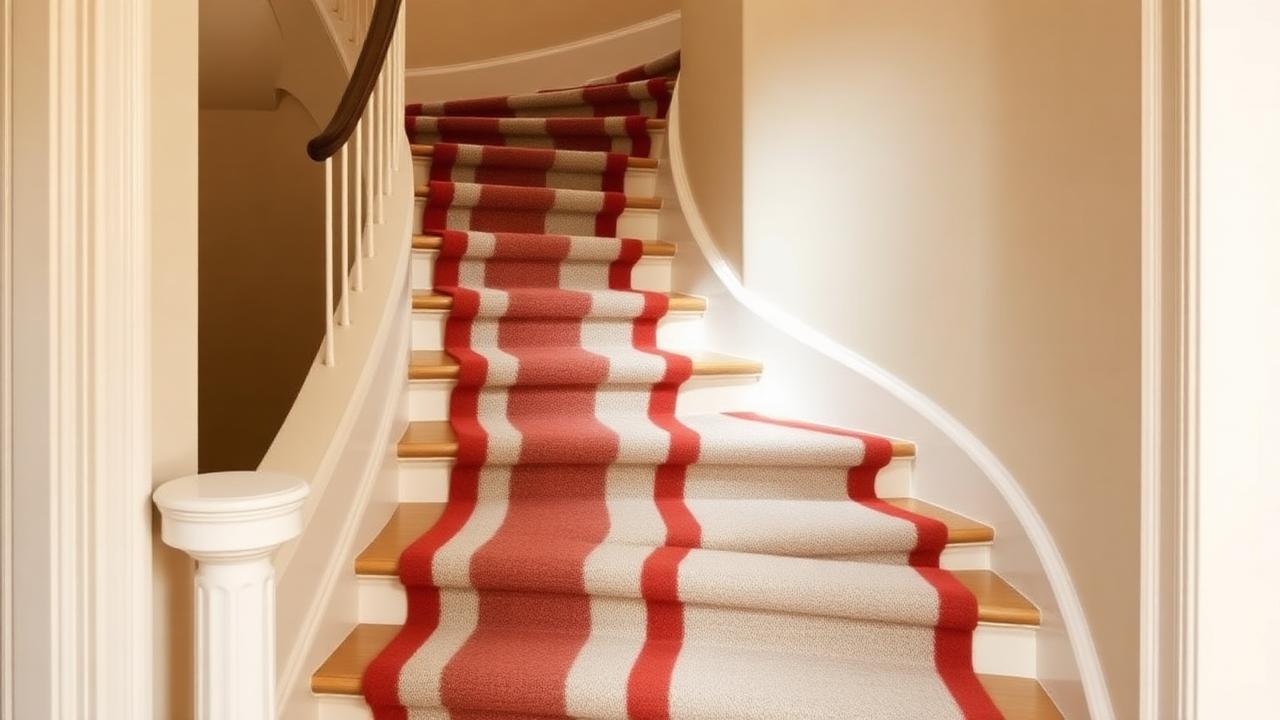
Matching carpet to household
| Household | Recommendation |
|---|---|
| Busy family, kids and pets | Triexta or nylon, mid-tone, small pattern |
| Quiet adult household | 100% wool loop or dense twist |
| Period home, design-led | Wool herringbone or a bordered wool flatweave |
| Rental or short-term | Polypropylene — cheap, cleanable, replaceable |
| Allergy sensitive | Tight loop synthetic, no long pile to trap dust |
| Holiday let / high traffic | 80/20 wool-nylon in a busy pattern that hides soil |
Colour and pattern as durability features
Mid-tones and small-scale patterns hide soil and wear better than either very pale or very dark plains — pale shows dirt, dark shows lint and dust. A subtle stripe or a fleck is the most forgiving choice on a busy staircase, and it also disguises the slight pile difference that develops along traffic lanes.
How to test a carpet sample before you commit
- Fold the sample sharply, backing outwards, over your finger — this mimics the crease at a nosing. If the pile splits or the backing cracks, it will fail on your stairs.
- Press a thumb firmly into the pile and time how long it takes to spring back. Under two or three seconds is a good sign; slow recovery means early crushing.
- Rub the pile hard with your palm for ten seconds and check for shedding, fuzzing or colour transfer onto your hand.
- Hold the sample at a stair-tread angle in both daylight and evening lamp light — colours shift more on stairs than on a flat floor because the light hits the pile at an angle.
- Ask for the technical spec sheet, not just the swatch — pile weight, density and durability class tell you far more than touch alone.
What drives the price of stair carpet
| Factor | Effect on price | Worth paying for? |
|---|---|---|
| Fibre (wool vs synthetic) | Wool costs 30–80% more | Yes, if longevity and feel matter to you |
| Pile density | Denser costs more per metre | Yes — density is the best durability predictor |
| Pattern complexity | Multi-colour jacquards cost more to weave | Only if you want the look; plain wears just as well |
| Width | Wider runners cost more per linear metre | Match to your staircase, don't over-buy width |
| Backing quality | Better backings add 10–20% | Yes on stairs specifically, less critical on flat floors |
| Brand and origin | Can double the price with no functional gain | Sometimes — check the spec, not just the label |
Ask for the stair rating in writing
Some ranges marketed as 'stair and hall' carpet are actually only tested for flat hall use. A genuine stair rating (often shown as a nosing or flexing test result) is worth asking a retailer to confirm before you order a custom cut.
Natural fibre versus synthetic: the honest trade-off
Natural fibres — wool, sisal, jute, seagrass — offer texture and depth that synthetics still cannot fully replicate, and wool in particular ages well rather than simply degrading. The cost is vulnerability to spills, slower drying and, for sisal and seagrass, a coarser feel underfoot that some households dislike on a barefoot staircase. Synthetics such as nylon, triexta and solution-dyed polypropylene close that gap fast: modern triexta in particular resists staining well enough that many designers now specify it even in high-end homes, reserving pure wool for lower-traffic areas such as bedrooms leading off the landing.
Underlay: the carpet's hidden partner
No stair carpet performs to its rating without the right underlay beneath it. Stair-specific underlay is thinner and firmer than the underlay used on flat floors — typically 6–9mm rather than 10mm plus — because a thick, soft pad allows too much movement at the nosing, which accelerates wear rather than preventing it. Felt and rubber-crumb pads are the most common choices; PU foam is cheaper but compresses faster and is best reserved for budget or short-term installations.
Cost ranges by fibre, per linear metre
| Fibre | Typical £ / linear m (bound) | Typical $ / linear ft |
|---|---|---|
| Polypropylene | £15–£30 | $6–$12 |
| Triexta | £25–£45 | $10–$18 |
| Nylon | £25–£50 | $10–$20 |
| 80/20 wool-nylon | £35–£70 | $14–$28 |
| 100% wool | £45–£100 | $18–$40 |
| Sisal / natural blends | £30–£80 | $12–$32 |
When cheaper is genuinely the right call
Not every staircase needs the best carpet on the market. A rental property, a staircase to a rarely-used loft room, or a short-term fix before a bigger renovation are all reasonable places to choose polypropylene at the lower end of the range. The mistake is choosing a cheap carpet for a heavily used main staircase and expecting it to look presentable in three years — that is exactly the situation where pile weight and twist level matter most.
Know your numbers in 30 seconds
Enter your step count, tread depth and riser height — the stair runner calculator gives you the exact length to order, in metres and feet, with waste included.
Open the stair runner calculatorWhatever you decide, get the numbers first: the stair runner calculator doubles as a stair runner length calculator, adding nosing wrap, landings, winders, pattern repeat and waste so you order the right length the first time.
Frequently asked questions
What is the best carpet for a stair runner?
An 80/20 wool-nylon blend in a low-level loop or dense short twist pile, around 45–55oz, is the best all-round choice. It resists crushing at the nosing, cleans well and lasts.
Is wool or synthetic better for a stair runner?
Wool feels better and ages more gracefully; nylon and triexta are tougher and more stain-resistant. A wool-nylon blend gets most of both, which is why fitters recommend it most often.
What pile weight should a stair runner be?
At least 40oz, ideally 45–55oz, with a heavy or extra-heavy domestic durability rating. Lighter carpets flatten at the nosing quickly.
Is loop pile or cut pile better on stairs?
Low-level loop generally wears better and shows footprints less, but it can snag with pets. A dense, tightly twisted cut pile is the safer choice in a home with cats or dogs.
Can you use a normal rug as a stair runner?
Only if it is thin, flexible and can be fixed securely into every crease. Thick rugs will not wrap a nosing cleanly and tend to lift, which is a genuine trip risk.
How do I know if a carpet is rated for stairs?
Check the manufacturer's specification sheet for an explicit stair-and-hall or nosing-flex rating, not just a general domestic durability class. Retailers can usually confirm this in writing if it is not shown on the sample.
What underlay should go under a stair runner?
A thin, firm stair-specific underlay of around 6–9mm, in felt or rubber crumb. Thick, soft underlay designed for flat floors allows too much movement at the nosing and shortens the carpet's life.
Does a denser pile always mean a better stair carpet?
Generally yes — density is one of the strongest predictors of how well a carpet resists crushing at the nosing. Weight matters too, but a lighter, denser weave often outperforms a heavier, looser one.
Know your numbers in 30 seconds
Enter your step count, tread depth and riser height — the stair runner calculator gives you the exact length to order, in metres and feet, with waste included.
Price up your chosen runnerReady for real prices?
Get quotes from vetted stair runner suppliers and fitters near you. Free, no account, no obligation.
Every guide is written from hands-on measuring and fitting experience, checked against the calculator’s own maths, and re-reviewed whenever prices or methods change. Read our editorial standards.