

Why a checklist matters more than the headline price
The single biggest reason stair runner projects end up costing more than expected isn't dishonest quoting, it's incomplete quoting. A fitter or retailer gives you a number based on the information you've provided, and if you haven't specified underlay, old carpet removal, or your exact runner length, the quote simply won't include contingency for those things, then arrives as a surprise add-on once work starts. Going through a structured checklist before you accept any quote closes that gap, and it puts you in a stronger position to compare two or three quotes fairly, since you're checking that each one covers the same scope rather than assuming they do.
I always tell people to write their own specification sheet before calling round for quotes, rather than describing the job verbally over the phone and hoping the fitter asks the right follow-up questions. A short written brief covering step count, any turns or winders, preferred fitting method and rough runner style takes ten minutes to put together and saves considerably more time later chasing down what a vague quote actually covers.
How much runner do I need?
Getting your own length figure before requesting quotes is the first item on the checklist, and it's the one most people skip, assuming the fitter will measure everything from scratch. Take a US example: 14 steps, 10 in tread run, 7 in riser height, 0.75 in nosing wrap, giving 17.75 in per step. Multiply by 14 for 248.5 in, add 24 in finishing allowance for 272.5 in, then apply an 8% waste margin to reach roughly 294.3 in, or about 24.5 ft.
In UK metric terms: 25 cm tread run, 17.8 cm riser height, 1.9 cm nosing wrap, giving 44.7 cm per step, times 14 steps for 625.8 cm, plus 60 cm finishing allowance for 685.8 cm, then an 8% waste margin gives roughly 7.4 m. Bringing this number to a fitter, rather than asking them to work it out cold over the phone, means their initial quote is already close to accurate before they even step through your door for a final check.
| Checklist item | Why it matters |
|---|---|
| Exact length and width | Prevents a mid-job material shortfall or reorder delay |
| Fitting method (rods, gripper, staple) | Changes both material cost and labour time |
| Underlay included or separate | Commonly a 30-100 GBP (40-125 USD) swing either way |
| Old carpet removal and disposal | Frequently a separate 20-40 GBP (25-50 USD) line |
| Waste margin applied | Should be 5-10% on straight flights, more with turns |
| Fixed price versus estimate | Determines whether a site survey can revise the number |
Know your numbers in 30 seconds
Enter your step count, tread depth and riser height — the stair runner calculator gives you the exact length to order, in metres and feet, with waste included.
Open the stair runner calculatorPut the checklist in writing
Email your checklist answers to the fitter and ask them to confirm each point back in writing before booking. A verbal yes over the phone is much harder to hold anyone to once the invoice arrives.
Questions to ask about material
Beyond length and width, ask specifically what fibre and construction the quoted runner is - wool, wool-blend, or synthetic - since this affects both price and durability considerably, and a quote that just says 'runner' without specifying material leaves too much room for a lower-quality substitution. Ask whether the quoted price is per linear foot/metre or a flat total for your full length, and ask what happens if your final measured length differs slightly from an initial estimate given over the phone, since a small last-minute change shouldn't trigger a large price swing on a well-structured quote.
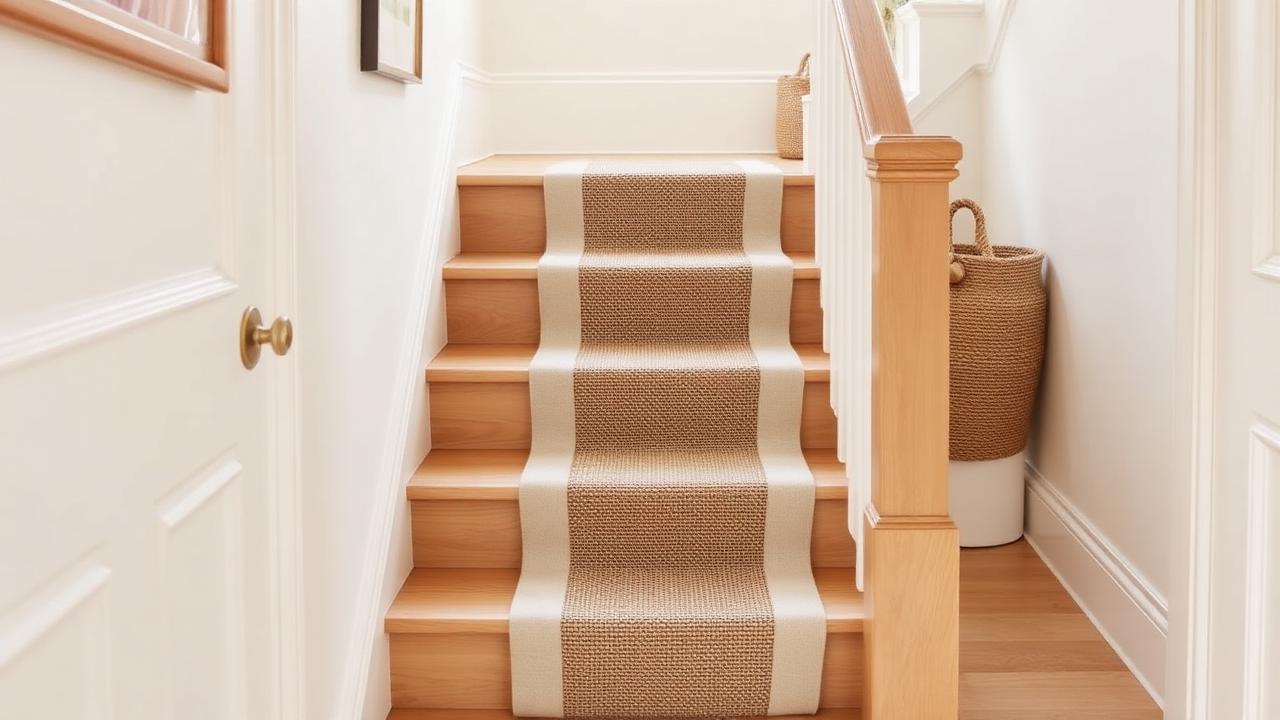
- Confirm the exact fibre and construction of the quoted runner, not just a general description.
- Ask whether pricing is per linear length or a flat total for your specific flight.
- Check whether a small final measurement adjustment changes the price significantly.
- Ask about lead time from order to delivery, especially for made-to-order widths or patterns.
- Confirm whether a sample can be provided before committing to a full order.
Questions to ask about labour and fitting
On the labour side, confirm whether the quote is hourly or flat, and if hourly, ask for an estimated total time so you can calculate an expected total cost rather than an open-ended one. Ask specifically whether underlay fitting, old carpet removal, and disposal are included, since these three items are the most commonly excluded from headline fitting prices and the most commonly assumed to be included by customers. Confirm the fitting method (rods, hidden gripper, staple and tuck) matches what you actually want, since a fitter defaulting to their usual method without asking can result in a finished look quite different from what you pictured.
Finally, ask what the fitter's policy is if they discover a problem with the subfloor or existing treads once old carpet is removed, since a rotten tread or an uneven subfloor is a genuinely common discovery that legitimately changes the scope of work. A trustworthy fitter will flag this immediately and requote for just that additional item, rather than quietly absorbing it into a vague final invoice that's hard to query after the fact.
Questions to ask about warranty and aftercare
A stair runner sees more foot traffic per square foot than almost any other carpeted surface in a home, so ask what workmanship guarantee the fitter offers, and for how long, separate from any manufacturer warranty on the runner material itself. Ask what to do if the runner starts to loosen, ripple or show a seam within the first few months, since a reputable fitter should offer a call-back visit at no extra charge within a reasonable window, commonly six to twelve months, if a fitting fault rather than normal wear is the cause.
It's also worth asking for basic care guidance specific to your chosen material and fitting method, since a wool runner fitted with rods needs slightly different vacuuming and cleaning care than a synthetic runner fitted with a hidden gripper, and getting this from the fitter directly, in the context of your specific installation, tends to be more useful than generic care advice found online. Running through this full checklist before booking, alongside your own length calculation and a clear sense of what stair runners typically cost in your area, turns what's often a stressful, opaque process into a straightforward comparison between two or three fully specified, genuinely comparable quotes.
Whatever you decide, get the numbers first: the stair runner calculator doubles as a stair runner length calculator, adding nosing wrap, landings, winders, pattern repeat and waste so you order the right length the first time.
Frequently asked questions
What's the single most important thing to confirm before booking a fitter?
Your exact runner length and width, calculated independently before you call round for quotes. This lets you spot a fitter who's quoting on a significantly different length than you actually need before any material is ordered.
Should I ask for a fixed price or an estimate?
Ask for a fixed price on a straightforward straight flight, but expect many fitters to require an in-person survey before confirming a fixed price on anything with turns, winders, or an unusually long run, since these carry more risk of a surprise once work starts.
Is underlay usually included in a stair runner quote?
Not always, and this is one of the most commonly missed items. Always ask explicitly whether underlay material and fitting are included or charged separately, since it's commonly a 30-100 GBP (40-125 USD) swing either way.
What should I ask if my staircase has a turn or winders?
Ask specifically how the fitter plans to handle the irregular treads, whether that adds to the estimated time, and whether the quote already reflects that complexity or assumes a straight flight, since assuming the latter is a common source of underquoting.
How do I know if a quote is missing something?
Compare it against a written checklist covering length, fitting method, underlay, old carpet removal, waste margin and whether it's a fixed price. Any item the quote doesn't mention should be asked about directly before booking.
Should I get quotes in writing?
Yes, always. Ask for the full quote, including material, underlay, labour and any exclusions, in writing or by email before agreeing to book, since a verbal-only quote is much harder to hold a fitter to once the final invoice arrives.
What if the fitter finds a problem once old carpet is removed?
A reputable fitter should flag it immediately and give you a separate price for the additional work, such as fixing a damaged subfloor, rather than folding an unexplained extra charge into the final invoice without discussion.
Does a warranty on the runner cover the fitting as well?
Not usually. A manufacturer warranty typically covers material defects only, so ask separately what workmanship guarantee the fitter offers on the installation itself, and for how long, before booking.
Know your numbers in 30 seconds
Enter your step count, tread depth and riser height — the stair runner calculator gives you the exact length to order, in metres and feet, with waste included.
Confirm your own measurements first with the stair runner calculatorReady for real prices?
Get quotes from vetted stair runner suppliers and fitters near you. Free, no account, no obligation.
Every guide is written from hands-on measuring and fitting experience, checked against the calculator’s own maths, and re-reviewed whenever prices or methods change. Read our editorial standards.