

The specific wear a restaurant stair takes
Restaurant staircases take a different kind of beating to almost any other commercial setting. On a two-level restaurant with a bar downstairs and dining upstairs, or a basement dining room reached from a ground-floor entrance, that staircase carries every diner, every server carrying trays, and every delivery, often several times over during a single service. Spilled wine, dropped sauce, tracked-in rain and grit from the street all land on that same run of carpet, night after night, which is a very different demand to an office stair that mainly sees dry shoe traffic during commuting hours.
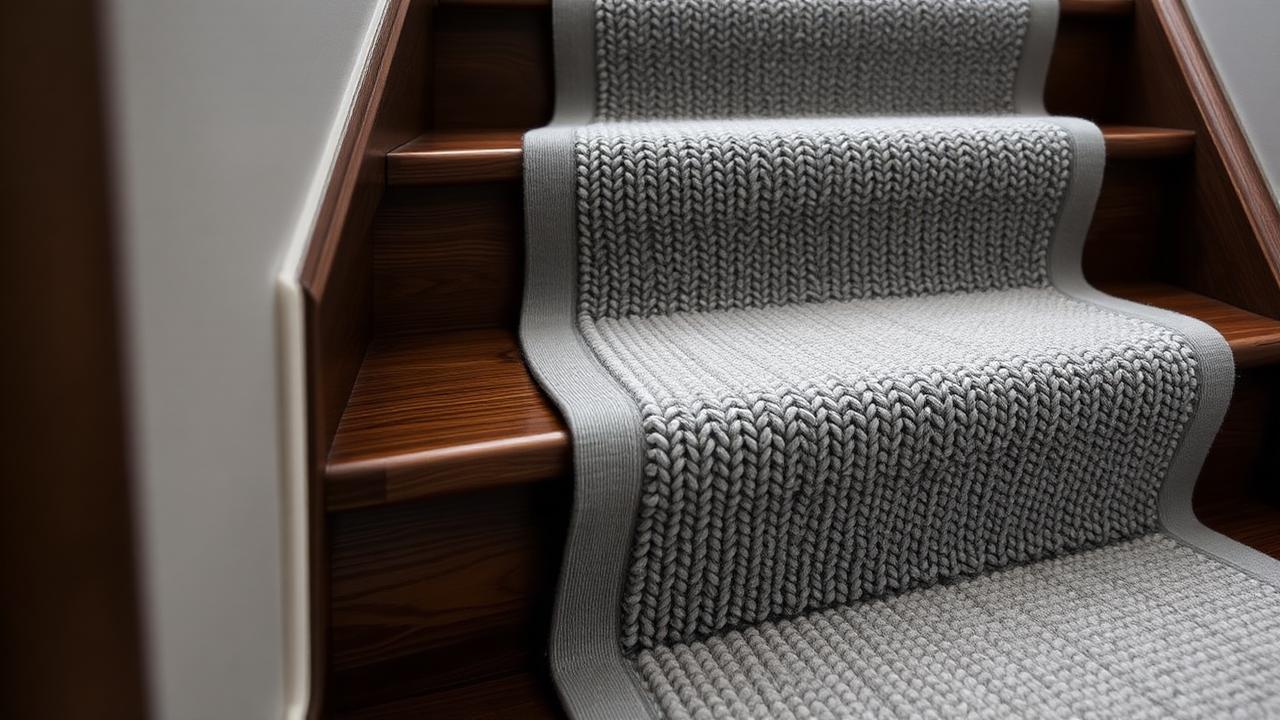
Because of this, I'd steer most restaurant clients away from a plush cut pile wool runner on a working staircase, however nice it looks in a mood board, and towards a tightly constructed loop pile with a stain-resistant treatment, or in some cases a rubber or vinyl stair runner that can be mopped down rather than only vacuumed. Save the softer, more decorative fibre for areas guests sit in rather than areas they walk through carrying drinks.
Stain resistance and cleaning practicality
Ask your supplier specifically about stain treatment, not just wear rating, when specifying a restaurant stair runner. A solution-dyed synthetic fibre, where the colour is built into the fibre itself rather than applied afterwards, resists staining and colour fade from repeated cleaning chemicals far better than a yarn-dyed wool product, even a good quality one. If the restaurant runs a nightly deep clean of front-of-house floors, check with the cleaning contractor what chemicals they use on hard floors and make sure the fibre you choose is rated to withstand contact with those same products, since overspray from mopping adjacent hard flooring is a common way a stair runner picks up chemical damage it was never actually designed to sit near.
For very high-spill areas, some restaurants skip carpet entirely on the stair treads and use a rubber stair tread system with a runner only on the risers or as a decorative border either side, which trades some warmth of look for genuinely easy cleaning. It's a legitimate option worth discussing with your designer if the staircase sits directly off a bar area.
How much runner do I need?
Working in US measurements for a 13-step flight, 10 in tread run and 7.5 in riser height, add a 0.75 in nosing wrap allowance per step, giving 18.25 in per step and 237.25 in (19.77 ft) across the flight. Add a 24 in total finishing allowance for top and bottom, reaching 21.77 ft, then apply an 8-10% commercial waste margin, landing at roughly 23.5-24 ft. If the restaurant stair has a turn or half-landing between the bar and dining level, measure that section separately and add typically 3-4 ft to wrap it cleanly.
In UK metric terms, that same flight is 25 cm tread, 19 cm riser and 1.9 cm nosing wrap, giving 45.9 cm per step and 5.97 m across 13 steps. Add 60 cm finishing allowance for 6.57 m, then apply an 8-10% waste margin for roughly 7.1-7.2 m, with an extra 0.9-1.2 m for a half-landing turn if one is present.
| Item | US (in/ft) | UK (cm/m) |
|---|---|---|
| Per-step total | 18.25 in | 45.9 cm |
| 13 steps subtotal | 19.77 ft | 5.97 m |
| Plus finishing allowance | 21.77 ft | 6.57 m |
| With waste margin | 23.5-24 ft | 7.1-7.2 m |
| Half-landing turn | +3-4 ft | +0.9-1.2 m |
Know your numbers in 30 seconds
Enter your step count, tread depth and riser height — the stair runner calculator gives you the exact length to order, in metres and feet, with waste included.
Open the stair runner calculatorColour choices that hide restaurant grime realistically
Very dark colours, deep charcoal, black, dark burgundy, are common in restaurant stairwells for a practical reason: they hide the daily reality of spilled drinks and tracked-in dirt far better than a mid-tone or pale runner ever will, buying you more days between deep cleans before wear becomes visually obvious. A busy, small-scale pattern does a similar job to a dark solid colour by breaking up the eye's ability to spot a single stain, though a very intricate pattern can look dated quickly, so a simple fleck or subtle geometric texture tends to age better over a five-to-ten-year restaurant fit-out cycle than a bold pattern chosen to match a specific interior trend.
If the restaurant's brand identity calls for a lighter or brighter colour on the stair specifically, for a design statement near the entrance for example, plan for more frequent professional cleaning as a genuine ongoing operating cost, not just a one-off nice-to-have, and factor that into the restaurant's cleaning budget from the outset rather than discovering it after the first few months of service.
Budget for professional cleaning, not just vacuuming
A restaurant stair runner in a mid or pale colour will need periodic professional deep cleaning on top of daily vacuuming, typically every 3-6 months depending on footfall. Build this into your ongoing operating costs when you're comparing colour options, not just the purchase price.
Ordering and fitting around service hours
Most restaurants can't close for a multi-day stair refit, so fitting is usually scheduled during the restaurant's closed hours, an early morning slot before prep starts, or a full closed day if the business can absorb one lost service. Confirm with your fitter how long the job realistically takes, adhesive and gripper work on stairs generally needs time to cure properly before heavy foot traffic resumes, and build in a buffer rather than scheduling guests back on the stair the same evening a fitter finishes.
Getting your total length right before ordering avoids the worst outcome on a restaurant job: running short mid-fit and having the business open with an unfinished staircase. Measure carefully with a stair runner calculator, add the commercial waste margin discussed above, and confirm the final figure with your fitter on site before the order is placed, since restaurant staircases sometimes have slightly irregular tread depths from older building alterations that a standard formula alone won't catch.
Whatever you decide, get the numbers first: the stair runner calculator doubles as a stair runner length calculator, adding nosing wrap, landings, winders, pattern repeat and waste so you order the right length the first time.
Still deciding on material, width or pattern? Our hub on stair runners compares weaves, widths, backings and fitting styles side by side, then hands the numbers straight to the calculator.
Frequently asked questions
What is the best stair runner material for a restaurant?
A stain-treated, solution-dyed commercial loop pile is the most practical choice for most restaurant stairs, since the colour resists fading from cleaning chemicals and the tight loop construction handles spills and heavy footfall better than a soft cut pile.
Should restaurant stairs use carpet at all near a bar area?
It's worth discussing rubber stair treads or a runner limited to the risers only if a staircase sits directly off a bar, since that location sees the heaviest spill risk. Many restaurants do still use carpet successfully with a stain-resistant treatment and a realistic cleaning schedule.
How often should a restaurant stair runner be professionally cleaned?
Typically every 3-6 months depending on footfall and colour choice, on top of daily or twice-daily vacuuming. Pale or mid-tone runners generally need more frequent professional cleaning than dark colours to stay looking presentable to diners.
What colour hides spills best on a restaurant staircase?
Very dark colours like charcoal, black or deep burgundy hide spilled drinks and tracked-in dirt far better than pale or mid-tone runners, which is why they're the most common practical choice for busy restaurant stairwells.
Can a restaurant stair runner be fitted without closing for a full day?
Often yes, by scheduling fitting during closed hours or an early morning slot before prep starts, though the adhesive and gripper work needs time to cure before heavy foot traffic resumes, so build in a buffer rather than reopening the same evening.
Does a restaurant stair runner need a fire rating?
If the staircase forms part of the building's means of escape, which is common in multi-level restaurants, the flooring generally needs to meet the fire classification set out in local building and fire safety regulations, so check with your local authority before ordering.
How much extra allowance should I add for a restaurant stair with a landing turn?
Add roughly 3-4 ft (0.9-1.2 m) beyond the straight-flight total to wrap a half-landing turn cleanly without an extra join, on top of the standard 8-10% commercial waste margin used for the straight sections.
Is wool a good choice for a restaurant staircase?
Wool looks and feels good but stains more readily than a solution-dyed synthetic in a spill-prone environment. Most restaurant stairs are better served by a stain-treated commercial synthetic loop pile, reserving wool for lower-traffic decorative areas rather than the working staircase.
Know your numbers in 30 seconds
Enter your step count, tread depth and riser height — the stair runner calculator gives you the exact length to order, in metres and feet, with waste included.
Size your restaurant flight with the stair runner calculatorReady for real prices?
Get quotes from vetted stair runner suppliers and fitters near you. Free, no account, no obligation.
Every guide is written from hands-on measuring and fitting experience, checked against the calculator’s own maths, and re-reviewed whenever prices or methods change. Read our editorial standards.