

Before you start
- Measure every tread depth and riser height individually, not just an average.
- Confirm total flight length, including any landing or winder section.
- Decide runner width and confirm the reveal (visible border) on each side.
- Check for pattern repeat and calculate matching allowance.
- Order 5-10% extra length for waste and pattern matching.
Tools and materials checklist
| Category | Items |
|---|---|
| Marking | Tape measure, chalk line, pencil, straightedge |
| Cutting | Sharp utility knife, spare blades, carpet shears |
| Fixing | Staple gun or gripper + knee kicker, correct staple/pin length |
| Cushioning | Stair pad/underlay cut to size per tread |
| Finishing | Seam sealer, binding tape if unbound edges, stair rods if used |
Know your numbers in 30 seconds
Enter your step count, tread depth and riser height — the stair runner calculator gives you the exact length to order, in metres and feet, with waste included.
Open the stair runner calculatorSite prep checklist
- Remove old carpet, tacks and staples down to sound timber, unless fitting deliberately over existing carpet.
- Repair or replace any damaged tread or riser edges.
- Vacuum thoroughly to remove grit and debris.
- Fit or check gripper strip if using the tackless method.
- Confirm the centre line is marked consistently at every step, not just top and bottom.
Fitting order
- Fit underlay pad to the top tread.
- Secure the runner at the top, hooked or stapled per your method.
- Work down one step at a time: pad, tension the runner over the nosing, fix the riser.
- Check for square and even tension every two to three steps.
- Finish and secure the bottom edge, trimming any excess.
- Fit stair rods last, once the runner is fully secured, if used.
Do a dry run before cutting
Lay the runner loosely down the flight before cutting or fixing anything to check pattern alignment, length and centring. It is far easier to correct on the floor than after the first staple goes in.
Post-install inspection checklist
- Run a flat hand across every tread to check for bagging or looseness before calling the job finished.
- Check the centre line reveal at the top, middle and bottom of the flight for consistency.
- Press each nosing wrap firmly to confirm it is fully seated and not just resting in place.
- Check for any exposed staples, pins or rough edges that could snag bare feet or clothing.
- Vacuum the finished runner to lift the pile and remove any fitting debris.
Timing the job around your household
A stair runner install blocks the only staircase in most homes for at least half a day, so plan around that rather than treating it as background work. Weekends work well for a DIY job since it allows a full day without needing repeated access up and down; for a professional fit, ask whether the crew can complete a straight flight in one visit so the stairs are not left partially finished overnight. Avoid scheduling a big household event for the same day as the install, since even a smooth job leaves some dust, offcuts and packaging to clear up afterwards. Set aside a bin bag and a dustpan before the fitter or your own tools arrive so clean-up does not become an afterthought at the end of a long day.
When to call a professional instead
Plenty of homeowners handle stair runner installation checklist themselves on a straightforward straight flight, but certain conditions tip the balance firmly towards hiring a fitter. Getting a second opinion before committing materials often costs nothing and can save an expensive mistake on a job that cannot easily be undone.
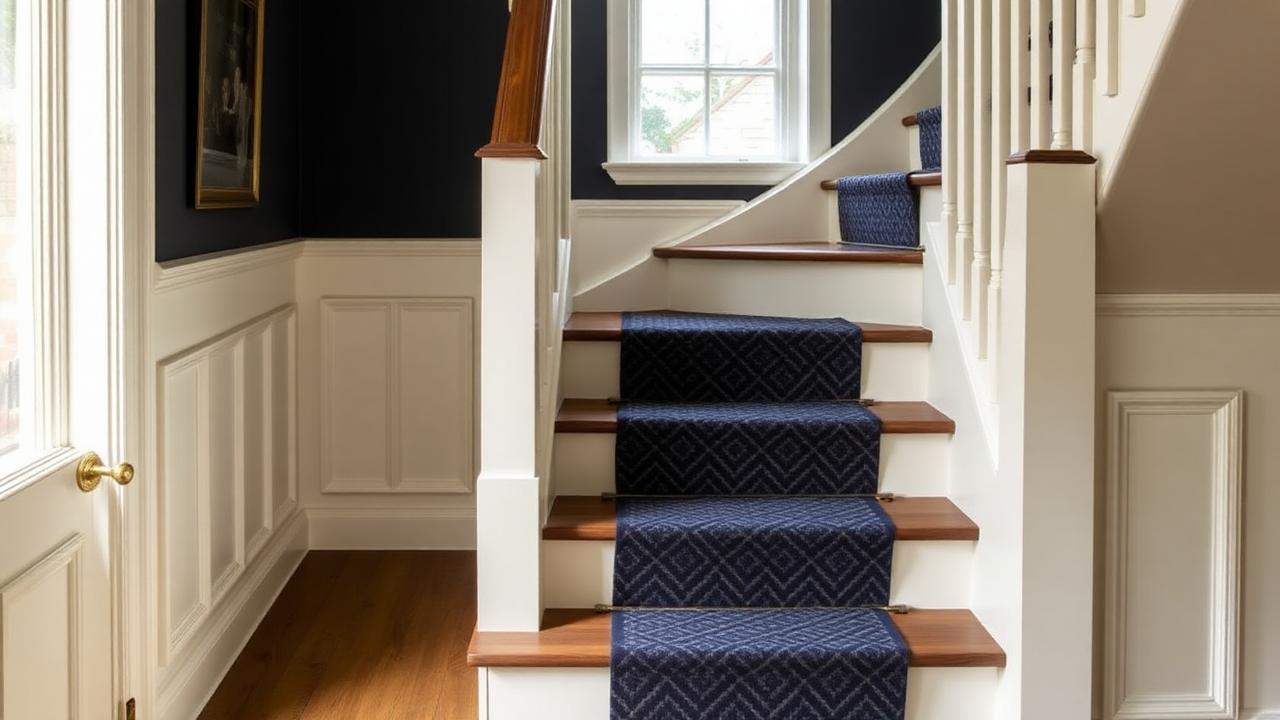
- The staircase has a turn, winders, a curve or a split level rather than one straight run.
- The existing substrate is damaged, damp, or its condition is genuinely unclear.
- The runner is an expensive natural fibre or bespoke pattern where a cutting mistake is costly.
- You have no experience with a staple gun, knee kicker or carpet seaming on stairs.
- The staircase is the main one in the home and downtime or an unfinished look is not acceptable.
Worked example with real numbers
To see how stair runner installation checklist plays out on an actual staircase, take a common 13-step flight with a 10 in (25 cm) tread depth and a 7.5 in (19 cm) riser height. That gives 17.5 in (44 cm) per step, or 227.5 in (5.78 m) of raw length before any waste allowance is added, a figure worth keeping in mind whenever this topic is discussed in isolation from the rest of the job.
| Measurement | Imperial | Metric |
|---|---|---|
| Tread depth | 10 in | 25 cm |
| Riser height | 7.5 in | 19 cm |
| Per step total | 17.5 in | 44 cm |
| 13 steps, raw length | 227.5 in | 5.78 m |
| With 8% waste allowance | 245.7 in | 6.24 m |
A printable-style quick reference
For anyone working through stair runner installation checklist on-site without a laptop handy, it helps to have the sequence condensed to a single glance rather than flipping through a full guide. Photograph or print the table below and keep it with your tools for the duration of the job.
| Stage | Key check |
|---|---|
| Before cutting | Dry-lay, confirm pattern and centring |
| Before fixing | Confirm staple/pin length matches substrate |
| Every 2-3 steps | Check tension and centre line reveal |
| After finishing | Hand-check every tread, vacuum, inspect nosing wraps |
Budgeting extra material for a landing job
Because a landing section typically needs its own template and generates more offcuts than a straight run of identical treads, budget 10-15% extra material overall for a diy stair runner installation with a landing rather than the 5-8% waste allowance that suffices on a simple straight flight. This extra buys room to recut a landing piece if the first attempt at a mitred fold or pattern match does not sit right, without running short of runner partway through the job.
A one-page checklist to print or save
- Measure every tread and riser individually, not just the top and bottom.
- Confirm total length including any landing and 5-15% waste allowance.
- Buy fixings sized for your actual substrate thickness.
- Dry-lay before cutting; check pattern direction and centring.
- Work top to bottom, checking tension and reveal every 2-3 steps.
- Finish and inspect the top and bottom steps last, since these see the most repeated stress.
After the job: a short settling-in period
A newly fitted runner can feel very slightly different underfoot for the first week or two as the pile settles and any fresh staples or gripper bed in fully. This is normal and not a sign of a problem, but it is a good window to keep an eye out for anything that does need attention — a squeak from an underlying tread, a corner of binding that catches, or a spot where the pad feels uneven — while the job is still fresh enough to correct quickly.
Whatever you decide, get the numbers first: the stair runner calculator doubles as a stair runner length calculator, adding nosing wrap, landings, winders, pattern repeat and waste so you order the right length the first time.
Still deciding on material, width or pattern? Our hub on stair runners compares weaves, widths, backings and fitting styles side by side, then hands the numbers straight to the calculator.
Frequently asked questions
What is the correct order to install a stair runner?
Prep and repair the stairs, mark the centre line, fit pad and gripper if used, then work top to bottom fitting one tread and riser at a time, checking tension and centring as you go.
What should I check before starting a stair runner install?
Individual tread and riser measurements, total flight length including any landing, pattern repeat, and that you have ordered 5-10% extra material for waste and matching.
How do I know if my stair runner installation is going wrong partway through?
Check tension and centring every two to three steps rather than waiting until the end. A drifting centre line or bagging tread is much easier to correct early.
Should I do a dry run before cutting my stair runner?
Yes, lay it loosely down the flight first to check pattern alignment and centring. Corrections are far simpler before any cutting or fixing has happened.
What is the biggest mistake people make with this?
Rushing the measuring or prep stage. Most poor outcomes with stair runner installation checklist trace back to a single measurement taken at the wrong point, or a substrate check skipped to save a few minutes, both far cheaper to fix before the runner is cut than after.
Know your numbers in 30 seconds
Enter your step count, tread depth and riser height — the stair runner calculator gives you the exact length to order, in metres and feet, with waste included.
Measure my stairsReady for real prices?
Get quotes from vetted stair runner suppliers and fitters near you. Free, no account, no obligation.
Every guide is written from hands-on measuring and fitting experience, checked against the calculator’s own maths, and re-reviewed whenever prices or methods change. Read our editorial standards.