

What US fitters are actually charging for
When a fitter quotes you a per-step or per-linear-foot rate for stair runner installation, they're pricing several distinct pieces of work bundled into one number: removing any old carpet or gripper, prepping and cleaning the treads, installing new tackless strip (gripper) if needed, laying underlay pad, cutting and fitting the runner itself with tight corners at every riser, and finishing the top and bottom ends neatly. On a straightforward straight flight with no turns, that whole process usually takes a fitter half a day to a full day depending on step count. A flight with a winder section, a half-landing, or a 90-degree turn takes noticeably longer because each of those needs the runner cut and pattern-matched individually rather than run through in one continuous strip.
Geography plays a real role too. A fitter working in a high cost-of-living metro area typically charges more per hour than one in a smaller town, purely reflecting local labour and business overheads, not the quality of work. It's reasonable to expect the same install job to cost noticeably more in a major coastal city than in a smaller inland market, so treat any single national average with some caution and get a local quote for your actual address.
How much runner do I need?
For a 13-step US flight with 10 in tread run and 7.5 in riser height, add a 0.75 in nosing wrap per step for 18.25 in per step, times 13 steps for 237.25 in (19.77 ft). Add a 24 in finishing allowance for tucking at top and bottom, reaching 21.77 ft, then apply a 7% waste margin, landing at roughly 23.3 ft of runner. Fitters typically price their labour against this finished length, so having it calculated correctly before you get quotes means you can compare a $9/ft quote against an $11/ft quote on the same basis.
In UK measurements, that same flight is 25 cm tread run, 19 cm riser height, 1.9 cm nosing wrap, giving 45.9 cm per step and 5.97 m across 13 steps. Add 60 cm finishing allowance for 6.57 m, then a 7% waste margin for around 7.03 m total. A 16-step flight with the same tread and riser dimensions scales up to roughly 28.6 ft (8.7 m), and an 11-step flight scales down to about 19.7 ft (6.0 m).
| Flight type | Typical US labour ($/linear ft) | Notes |
|---|---|---|
| Straight flight, no turns | $5-$9 | Fastest, most predictable job |
| Flight with one landing | $7-$11 | Extra cutting at the turn |
| Flight with winders | $9-$15 | Slowest, most cutting and fitting time |
| Old carpet removal add-on | $1-$3 | Per linear ft, often quoted separately |
Know your numbers in 30 seconds
Enter your step count, tread depth and riser height — the stair runner calculator gives you the exact length to order, in metres and feet, with waste included.
Open the stair runner calculatorGet the flight type into the quote request
When you call for a quote, describe whether your flight is straight, has a landing, or has winder steps, since this changes labour time significantly. A fitter who quotes without knowing this upfront may need to revise the price once they see the stairs in person.
Steps that keep installation cost down
- Measure your flight accurately before calling for quotes, so fitters price against real numbers rather than a rough guess.
- Ask whether old carpet or gripper removal is included, since it's often billed separately if not mentioned upfront.
- Choose a standard stock width (27 in, 30 in, 32 in or 36 in) rather than a custom width to avoid a cutting surcharge.
- Bundle the runner purchase and fitting with one supplier where possible, since some offer a discount for using their own installer.
- Get at least two written quotes covering the same scope, material, underlay, fitting and any old-carpet removal, before deciding.
DIY installation versus hiring a fitter
Fitting a stair runner yourself avoids the labour cost entirely, but it's a genuinely fiddly job, especially getting the runner to sit tight and square into the internal corner of each tread-to-riser junction without puckering. If you're confident with basic tools, a straight flight with no winders is a realistic DIY project over a weekend, using either a staple gun and tackless strip or a stick-down method depending on your chosen runner. A flight with winders or a tricky turn is where I'd generally recommend paying a professional, since a mismatched pattern or a loose corner on a winder step is both highly visible and a genuine trip hazard if it isn't secured properly.
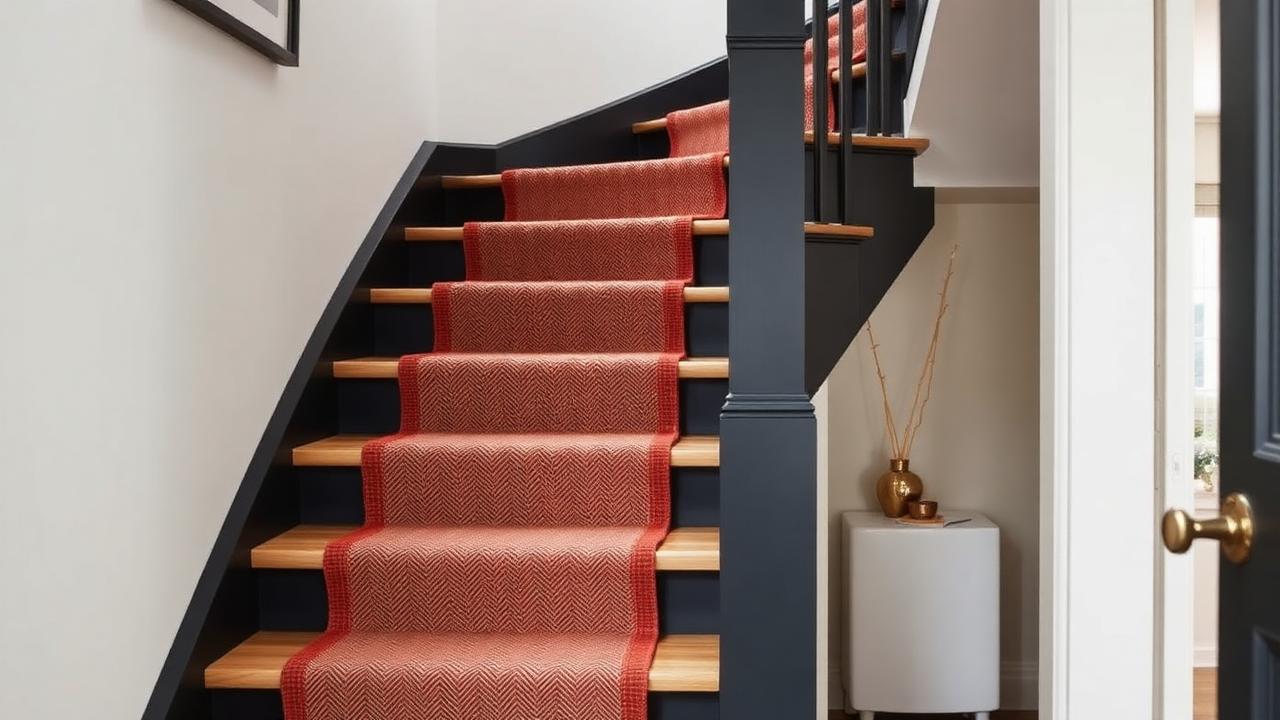
Whichever route you take, run your measurements through a stair runner calculator first so you're ordering the right length and width regardless of who does the fitting. Suppliers selling stair runners will generally ask for your total length and chosen width before cutting an order, and getting that number right the first time avoids paying for a second delivery because the first cut fell short.
What can push a quote higher than expected
A few things reliably increase an installation quote beyond the baseline figures above: uneven or out-of-square treads on an older house that need extra prep time, a runner ordered in a width wider than the fitter expected which needs re-measuring on site, hardwood treads that need protecting during the fit, and any staple or tack marks from a previous runner that need filling before the new one goes down. None of these are unusual, but mentioning them when you first describe your staircase to a fitter avoids a price jumping unexpectedly once they arrive to start work.
Whatever you decide, get the numbers first: the stair runner calculator doubles as a stair runner length calculator, adding nosing wrap, landings, winders, pattern repeat and waste so you order the right length the first time.
Frequently asked questions
How much does it cost to have a stair runner installed in the US?
Professional installation typically runs $5-$15 per linear foot, or roughly $300-$900 total labour for a standard 13-15 step flight, on top of material cost. Winders, turns and old carpet removal push toward the higher end of that range.
Is stair runner installation cost different by region?
Yes, labour rates vary by local cost of living, with major metro markets typically charging more per linear foot than smaller towns for the same scope of work. Getting a local quote is more reliable than relying on a single national average.
Does installation cost include removing my old carpet?
Not always. Old carpet and gripper removal is often quoted as a separate add-on, typically $1-$3 per linear foot, so ask specifically whether it's included before comparing two fitters' quotes.
Can I install a stair runner myself to save on labour?
Yes, on a straight flight with no winders it's a realistic weekend DIY project for someone comfortable with basic tools. Flights with winders or tricky turns are harder to get right and are usually worth paying a professional for.
Why does a flight with winders cost more to install?
Winder steps are tapered rather than rectangular, so the runner has to be cut and pattern-matched individually at each one rather than run through continuously, which takes noticeably more fitting time than a straight flight.
What should be included in a stair runner installation quote?
A complete quote should cover removal of old carpet if needed, underlay, tackless strip or gripper if required, cutting and fitting the runner, and finishing the top and bottom ends. Ask for each item broken out separately.
How long does professional installation take?
A straightforward straight flight typically takes half a day to a full day. A flight with a landing, turn or winders can take a full day or more, since each irregular section needs individual cutting and fitting.
How do I get an accurate installation quote over the phone?
Provide your total step count, tread and riser dimensions, whether the flight is straight or has turns or winders, and your chosen runner width. A stair runner calculator can give you the exact length to quote against so fitters price against real numbers.
Know your numbers in 30 seconds
Enter your step count, tread depth and riser height — the stair runner calculator gives you the exact length to order, in metres and feet, with waste included.
Size your flight first with the stair runner length calculatorReady for real prices?
Get quotes from vetted stair runner suppliers and fitters near you. Free, no account, no obligation.
Every guide is written from hands-on measuring and fitting experience, checked against the calculator’s own maths, and re-reviewed whenever prices or methods change. Read our editorial standards.