
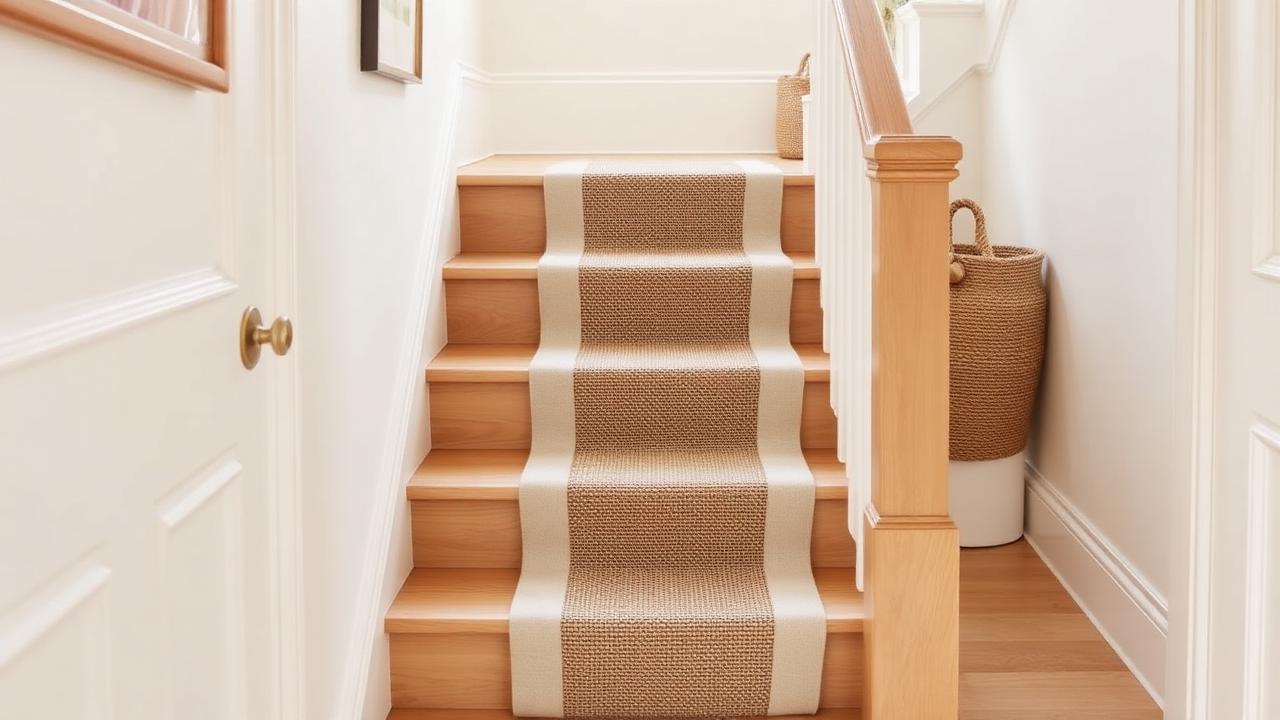
Is it actually a good idea?
Laying a stair runner over existing wall-to-wall stair carpet is done far more often than most people expect, usually because the underlying carpet is still structurally sound (no rips, no worn-through backing) but visually tired, or because it is a rental property where pulling up the original carpet is not permitted. It works well as a short-to-medium-term refresh and can look genuinely good, provided the existing carpet is low pile, in reasonable condition, and firmly fixed down with no loose edges. It works less well over a thick, plush, or already-lumpy old carpet, where adding a second layer on top makes the whole staircase feel spongy underfoot and can make the runner itself sit unevenly at the nosing.
The other consideration is longevity of the arrangement. A runner fitted over old carpet is not usually meant to be the final, permanent finish forever; it is a way to buy time, change the look, or protect a carpet that is otherwise fine from wear in the centre of the tread where feet actually land. Many homeowners use this approach for two or three years while planning a full stair carpet or hardwood replacement, then remove both layers together at that point.
What changes at the nosing
The single biggest practical difference from fitting a runner on bare wood or tile stairs is the extra thickness at each nosing (the front edge of the tread). Standard rod brackets and gripper strips are sized for a bare tread plus one layer of runner and pad; when there is already a fitted carpet underneath, that stack gets noticeably thicker, and off-the-shelf hardware can end up sitting too high or gripping too shallow. Fitters commonly deal with this in one of two ways: using longer rod brackets designed for a deeper nosing stack, or setting the tackless gripper strip slightly further back from the nosing edge than they would on bare wood, to compensate for the extra bulk.
It is worth having a fitter check this in person before committing to a rod style, because a rod that looks fine on a showroom sample tread will not necessarily seat correctly once it meets your actual carpet-plus-runner stack. A staple or track (also called a stair rod alternative) fixing avoids some of this issue since it does not rely on a bracket depth, but it also removes the decorative rod look that many people choose a runner specifically for.
Check the old carpet first
Before ordering a runner to go over existing stair carpet, press firmly on several treads and the nosing edges. Any soft, springy or crumbling feel under the existing carpet usually means the padding or backing has broken down, and a runner on top will not fix that; the old carpet should come up first.
How much runner do I need?
Measuring for a runner over existing carpet uses the same tread-by-tread method as measuring bare stairs, but you should measure over the top of the existing carpet, not from a memory of the bare stair dimensions, since carpet padding adds a small amount of extra depth to the tread-riser wrap. For a 13-step US flight where the carpeted tread run measures 10 in and the carpeted riser height measures 7.5 in, each step still needs roughly 17.5-18 in of runner including the wrap, giving a total of about 19-19.5 ft for 13 steps before rounding. Add a 5-10% waste allowance for cutting and fitting trims, and the practical order comes to roughly 20-21.5 ft.
In UK metric terms, a carpeted tread run of 25 cm and riser of 19 cm gives about 44-46 cm per step, so 13 steps use roughly 5.8-6 m before waste, and with a 5-10% allowance the practical order lands around 6.1-6.6 m. If your existing carpet is notably thick or plush, measure an extra sample tread with a tape measure pressed into the actual crease rather than estimating from a standard figure, since thicker carpet pushes the wrap measurement up by a small but real amount across 13-16 steps.
| Flight length | Steps | US length (over carpet) | UK length (over carpet) |
|---|---|---|---|
| Short flight | 9 steps | ≈13.5-15 ft | ≈4.1-4.6 m |
| Standard flight | 13 steps | ≈20-21.5 ft | ≈6.1-6.6 m |
| Long flight | 16 steps | ≈24.5-26.5 ft | ≈7.5-8.1 m |
Know your numbers in 30 seconds
Enter your step count, tread depth and riser height — the stair runner calculator gives you the exact length to order, in metres and feet, with waste included.
Open the stair runner calculatorFixing options that work over carpet
- Stair rods with deep-set brackets rated for extra nosing thickness, holding the runner and existing carpet together in the crease.
- Staple or track fixing, tucking the runner edge down into the gap between existing carpet and skirting where possible.
- Double-sided carpet tape at the top and bottom of each riser as a lighter-duty option for rental properties.
- A thin non-slip underlay strip between the runner and the existing carpet to reduce shifting on smooth, low-pile carpet.
Cost and what to budget for
Fitting cost for a runner over existing carpet is broadly similar to fitting on bare stairs, sometimes slightly higher because of the extra care needed at the nosing and the possibility of needing non-standard rod brackets. In the US, typical installed pricing runs about $12-30 per step depending on fibre and rod style; in the UK, figure on roughly £15-35 per step installed. These are typical ranges, not fixed prices, and they vary by region and by how much preparation the existing carpet needs before the runner goes down.
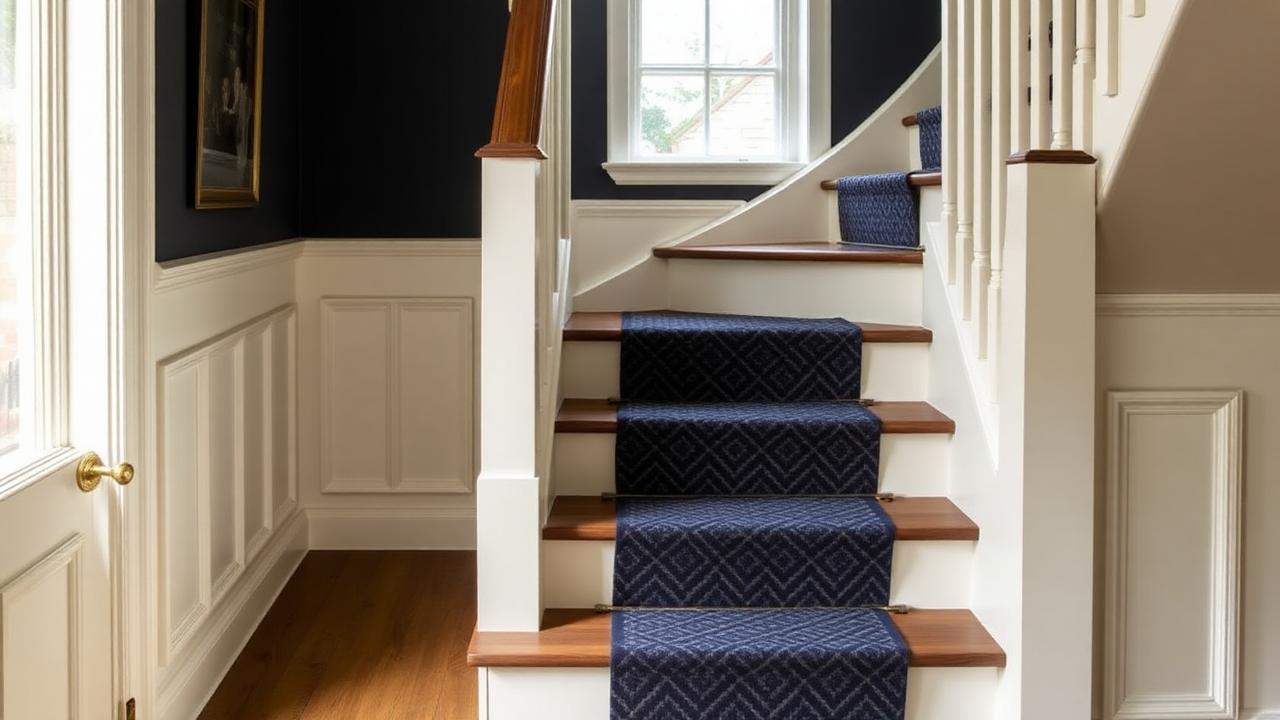
Whichever fixing method you choose, run the actual numbers through a stair runner calculator before ordering, since guessing a round figure like one length per step tends to under-order on longer flights and over-order on shorter ones. A stair runner length calculator is also useful here because it lets you compare the bare-stair estimate against the over-carpet estimate side by side, so you know exactly how much the extra thickness is adding to your total length.
When to remove the old carpet instead
If the existing stair carpet shows flattened pile down the centre of each tread, visible backing through worn patches, or any looseness at the gripper strip, it is worth removing it rather than fitting a runner on top. A runner cannot disguise structural wear underneath it forever, and fitting over a failing carpet means redoing the whole job again sooner than planned. Removing old carpet before fitting a runner also gives a cleaner, flatter base, which generally produces a neater finished result and a longer-lasting fit overall.
Whatever you decide, get the numbers first: the stair runner calculator doubles as a stair runner length calculator, adding nosing wrap, landings, winders, pattern repeat and waste so you order the right length the first time.
Still deciding on material, width or pattern? Our hub on stair runners compares weaves, widths, backings and fitting styles side by side, then hands the numbers straight to the calculator.
Frequently asked questions
Can you fit a stair runner directly over existing stair carpet?
Yes, provided the existing carpet is in reasonable condition, low pile, and firmly fixed with no loose edges or worn-through backing. It is a common short-to-medium-term refresh, though it works less well over thick, plush or already-lumpy old carpet.
Does the extra carpet layer change how much runner I need?
Only slightly. Measure the tread-riser wrap over the top of the existing carpet rather than assuming bare-stair dimensions, since padding adds a small amount of extra depth per step that adds up across a full flight.
Do stair rods still work over an existing carpet?
Usually yes, but you may need rod brackets designed for a deeper nosing stack, since standard brackets are sized for bare tread plus one runner layer. Have a fitter check the actual stack thickness before ordering rod hardware.
How long does a runner fitted over old carpet typically last?
It depends heavily on the condition of the carpet underneath, but many homeowners use this approach for two to three years as an interim refresh before a full stair carpet or flooring replacement, rather than treating it as a permanent solution.
How do I know if the old carpet is too worn to fit a runner over?
Press firmly on several treads and nosing edges. Any soft, springy or crumbling feel usually means the padding or backing has broken down, and a runner will not fix that underlying problem; the old carpet should be removed first.
Is it cheaper to fit a runner over carpet than to remove the carpet first?
Sometimes, since it skips a removal and disposal step, but the saving is often small and the extra care needed at the nosing can offset it. Typical installed cost is roughly $12-30 per step in the US or £15-35 per step in the UK either way.
What fixing method works best on an existing carpeted staircase?
Deep-set stair rods, staple or track fixing, or double-sided tape for lighter-duty rental use all work, depending on how permanent you want the fit to be. A thin non-slip underlay strip between the two layers also helps reduce shifting on smooth, low-pile carpet.
Should I remove the old carpet instead of fitting a runner over it?
If the existing carpet shows flattened pile, visible backing, or looseness at the gripper strip, yes, remove it first. Fitting a runner over failing carpet only delays a proper fix and means the whole job is likely to need redoing sooner.
Know your numbers in 30 seconds
Enter your step count, tread depth and riser height — the stair runner calculator gives you the exact length to order, in metres and feet, with waste included.
Calculate runner length over existing stair carpetReady for real prices?
Get quotes from vetted stair runner suppliers and fitters near you. Free, no account, no obligation.
Every guide is written from hands-on measuring and fitting experience, checked against the calculator’s own maths, and re-reviewed whenever prices or methods change. Read our editorial standards.