

When laying over carpet makes sense
Laying a stair runner directly over existing wall-to-wall stair carpet is a shortcut some homeowners use to refresh a staircase's appearance without the cost and disruption of removing the old carpet first. It can work reasonably well when the existing carpet is in good structural condition, low pile, and firmly fixed, essentially acting as an extra layer of cushioning underneath the new runner rather than a separate flooring surface.
It's a poor idea, however, when the existing carpet is worn, loose, or has a deep pile. A thick or unstable base carpet makes the new runner sit unevenly, increases the risk of slipping, and can shorten the life of the top runner because it flexes more with every footstep than it would over a firm, low-profile surface.
How the fixing method changes
Normally, a stair runner is fixed with gripper rods (tackless strip) screwed or glued directly to the tread and riser, with underlay in between. When installing over existing carpet, gripper rods generally can't get the same secure bite into the surface, so fitters typically switch to a combination of double-sided carpet tape, stair rods for mechanical hold, or hook-and-eye brackets that clamp the runner to the tread edge. This is one of the reasons stair runner bars are so commonly used on installations over existing carpet — they provide extra security that gripper alone would normally supply.
Check for a firm, low-pile base first
Only consider laying over carpet if the existing surface is firmly fixed, in good condition, and low pile. Thick, worn, or loose carpet underneath will compromise safety and shorten the life of your new runner.
How much runner do I need?
The core length calculation doesn't change much: for a 13-step flight, 10 in tread + 7.5 in riser + 0.75 in nosing wrap gives 18.25 in per step, 237.25 in across 13 steps, plus 24 in finishing for 261.25 in (21.77 ft), plus 8-10% waste for roughly 23.5-24 ft. In metric: 45.9 cm per step, 596.7 cm across 13 steps, plus 60 cm finishing is 656.7 cm, plus waste is around 7.1-7.3 m. The one adjustment worth making is a slightly larger nosing wrap allowance — closer to 1 in (2.5 cm) instead of 0.75 in — because the extra pile height beneath the runner adds a small amount of extra distance around each nosing.
| Step | US (in/ft) | UK (cm/m) |
|---|---|---|
| Per-step total (adjusted) | 18.5 in | 47 cm |
| 13 steps + finishing | ~22 ft | ~6.7 m |
| With waste | 23.5-24 ft | 7.1-7.4 m |
Know your numbers in 30 seconds
Enter your step count, tread depth and riser height — the stair runner calculator gives you the exact length to order, in metres and feet, with waste included.
Open the stair runner calculatorSafety considerations
The biggest concern with stair runner over carpet is slip risk. Two layers of textile flooring can compress unevenly underfoot, especially at the nosing where the runner needs to grip firmly. If you go this route, use a proper non-slip underlay between the layers or at minimum secure the runner tightly with rods at every step, and check the fixing regularly for the first few weeks, since new installations over an existing surface can bed in and loosen slightly.
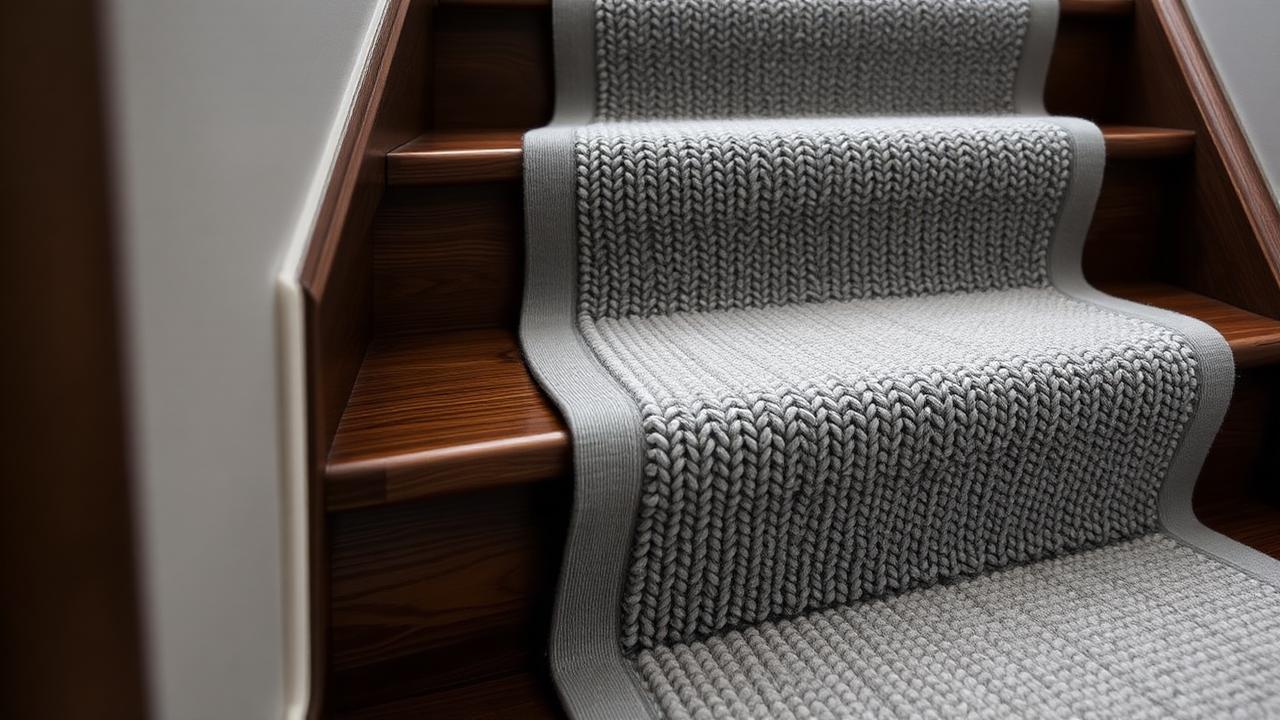
- Only install over a firm, low-pile, well-fixed base carpet.
- Use double-sided tape, brackets, or stair rods instead of standard gripper.
- Increase your nosing wrap allowance slightly to account for extra pile height.
- Check the fixing regularly during the first few weeks of use.
If the existing carpet is worn or thick, it's almost always better long-term to remove it and start with a clean surface — but for a firm, low-pile base in good condition, a runner installed over carpet with the right fixing method can be a practical, cost-effective refresh.
Fitting steps when installing over carpet
The fitter first inspects the existing carpet for firmness and pile height at every step, since a flight can have inconsistent wear even if it looks even at a glance. Any loose sections are re-secured or that step is flagged for a different fixing approach. Double-sided tape or brackets are then applied at each tread-riser junction, followed by the runner itself, tensioned and fixed the same way as a standard install, then finished with stair rods if extra mechanical hold is wanted.
When to stop and remove the old carpet instead
If more than two or three steps show looseness, fraying, or a pile depth over roughly 0.5 in (1.3 cm), it's a sign the existing carpet isn't a suitable base. At that point, removing it before fitting the new runner is safer and will likely cost less in the long run than repeated re-fixing of a runner that keeps shifting.
Cost bands for this approach
Laying over existing carpet saves the labour and disposal cost of stripping the old surface, but that saving needs to be weighed against the extra cost of brackets or tape-based fixing and, in many cases, stair rods for extra security.
| Approach | Labour cost vs. full strip-out | Extra fixing needed |
|---|---|---|
| Over firm, low-pile carpet | Lower | Tape/brackets, often stair rods |
| Full removal + standard fit | Higher | Standard gripper only |
- Inspect every step individually for firmness before deciding to lay over.
- Budget for stair rods as a common extra on over-carpet installs.
- Use a thin, non-slip underlay layer even over existing carpet.
- Re-check fixing security after the first month of regular use.
Ongoing maintenance considerations
A runner over carpet compresses slightly more than one over bare treads, so expect to check and retighten fixings a little more often, particularly in the first few months as the layers bed in. Vacuum as normal, but avoid overly aggressive beater-bar settings that could disturb tape-based fixings at the tread edges.
Whatever you decide, get the numbers first: the stair runner calculator doubles as a stair runner length calculator, adding nosing wrap, landings, winders, pattern repeat and waste so you order the right length the first time.
Still deciding on material, width or pattern? Our hub on stair runners compares weaves, widths, backings and fitting styles side by side, then hands the numbers straight to the calculator.
Frequently asked questions
Can I put a stair runner directly over old carpet?
Yes, but only if the existing carpet is firmly fixed, in good condition, and low pile.
What fixing method works over existing carpet?
Double-sided tape, hook-and-eye brackets, or stair rods are typically used instead of standard gripper rods.
How much runner do I need for 13 steps over carpet?
Around 23.5-24 ft (7.1-7.3 m), with a slightly larger nosing wrap allowance than a standard bare-tread install.
Is it safe to lay a runner over thick carpet?
No, thick or worn carpet underneath increases slip risk and shortens the runner's lifespan.
Do I still need underlay?
A thin, non-slip underlay is still recommended even over existing carpet for grip and cushioning.
Why are stair rods common on these installations?
They provide extra mechanical hold that standard gripper strip can't achieve on a soft base surface.
Is it cheaper than removing the old carpet first?
Usually yes in labour terms, but it's a compromise that can cost more in runner lifespan if the base isn't suitable.
How do I know if my existing carpet is a suitable base?
Check that it's firmly fixed, shows no fraying or loose sections, and has a low, dense pile rather than a deep plush one.
Know your numbers in 30 seconds
Enter your step count, tread depth and riser height — the stair runner calculator gives you the exact length to order, in metres and feet, with waste included.
Recalculate your length with the stair runner calculatorReady for real prices?
Get quotes from vetted stair runner suppliers and fitters near you. Free, no account, no obligation.
Every guide is written from hands-on measuring and fitting experience, checked against the calculator’s own maths, and re-reviewed whenever prices or methods change. Read our editorial standards.