
What counts as standard
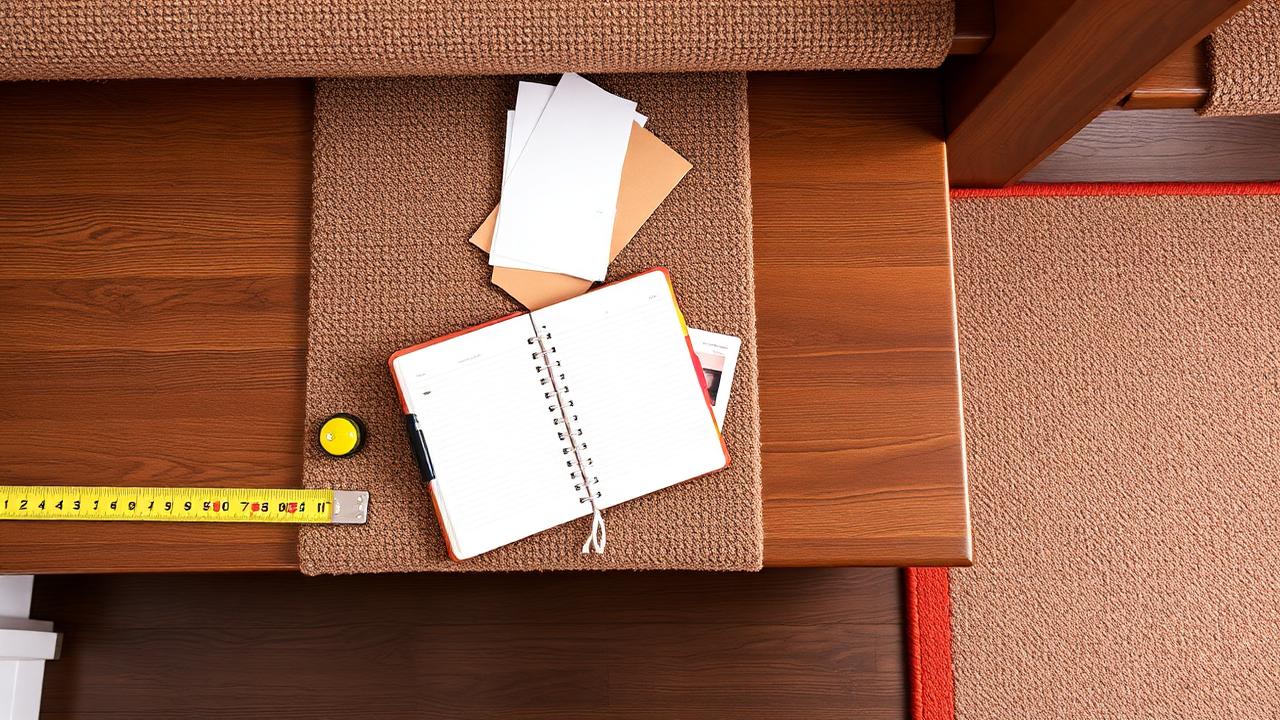
Step height — properly the rise — is the vertical distance from the top of one tread to the top of the next. In UK housing the figure clusters tightly: post-war and modern homes are almost all between 190mm and 200mm, Victorian and Edwardian flights run a little taller at 200mm to 215mm because ceilings were higher and floor space was tighter, and new-build homes trend slightly lower at 185mm to 195mm. All of those sit inside the legal 150-220mm band for a private stair.
| Property type | Typical rise | Typical going | Risers in a flight |
|---|---|---|---|
| Modern new build | 185-195mm | 245-260mm | 13 |
| Post-war semi | 190-200mm | 230-250mm | 13 |
| 1930s house | 195-205mm | 225-240mm | 13-14 |
| Victorian terrace | 200-215mm | 220-235mm | 14-15 |
| Loft conversion | 195-220mm | 220-240mm | 13-16 |
Know your numbers in 30 seconds
Enter your step count, tread depth and riser height — the stair runner calculator gives you the exact length to order, in metres and feet, with waste included.
Open the stair runner calculatorHow to calculate the rise for your own stairs
Measure the total rise first: the vertical distance from the finished floor below to the finished floor above, including both floor coverings. Divide it by 190mm to get an approximate riser count, round to the nearest whole number, then divide the total rise by that whole number to get the exact rise per step. A 2600mm total gives 13.68, which rounds to 14 risers at 185.7mm each — comfortably inside the limits.
Never round the rise itself. If you set 190mm and take whatever is left at the top, the last riser ends up different from the other thirteen, which fails the 5mm consistency rule and creates exactly the step people catch a toe on. The arithmetic always works the same way round: fix the riser count first, then let the rise come out to whatever decimal it needs to be. The stair rise and run calculator does this and flags the limits as you type.
| Floor to floor | 13 risers | 14 risers | 15 risers |
|---|---|---|---|
| 2400mm | 184.6mm | 171.4mm | 160.0mm |
| 2500mm | 192.3mm | 178.6mm | 166.7mm |
| 2600mm | 200.0mm | 185.7mm | 173.3mm |
| 2700mm | 207.7mm | 192.9mm | 180.0mm |
| 2800mm | 215.4mm | 200.0mm | 186.7mm |
Rise does not stand alone
A riser height is only comfortable in combination with a going. The UK rule is 2R+G between 550mm and 700mm, with the comfortable middle around 600-640mm. A 190mm rise with a 250mm going gives 630mm and feels effortless. The same 190mm rise on a 220mm going gives 600mm — still legal, but noticeably tighter underfoot because there is less tread to land on.
- Rise: 150-220mm on a private stair; 190-200mm is standard.
- Going: 220mm minimum; 240-260mm is comfortable.
- 2R+G: 550-700mm, ideally 600-640mm.
- Pitch: 42 degrees maximum, which a tall rise on a short going will breach.
- Consistency: all risers within 5mm of each other.
The top riser is where flights go wrong
If the flight is built off the structural deck and the upstairs floor covering is added later, the top riser ends up shorter than the rest by the thickness of that covering. Always calculate from finished floor to finished floor.
Why an odd step is such a problem
People do not look at stairs while climbing them. After two or three steps the body locks into a rhythm and predicts the height of every step that follows, which is why a single riser 15mm different from its neighbours produces a stumble even though 15mm is barely visible. Descending is worse than ascending, because the foot arrives at the expected height, finds nothing there, and the weight is already committed. This is the reasoning behind the 5mm tolerance in the regulations.
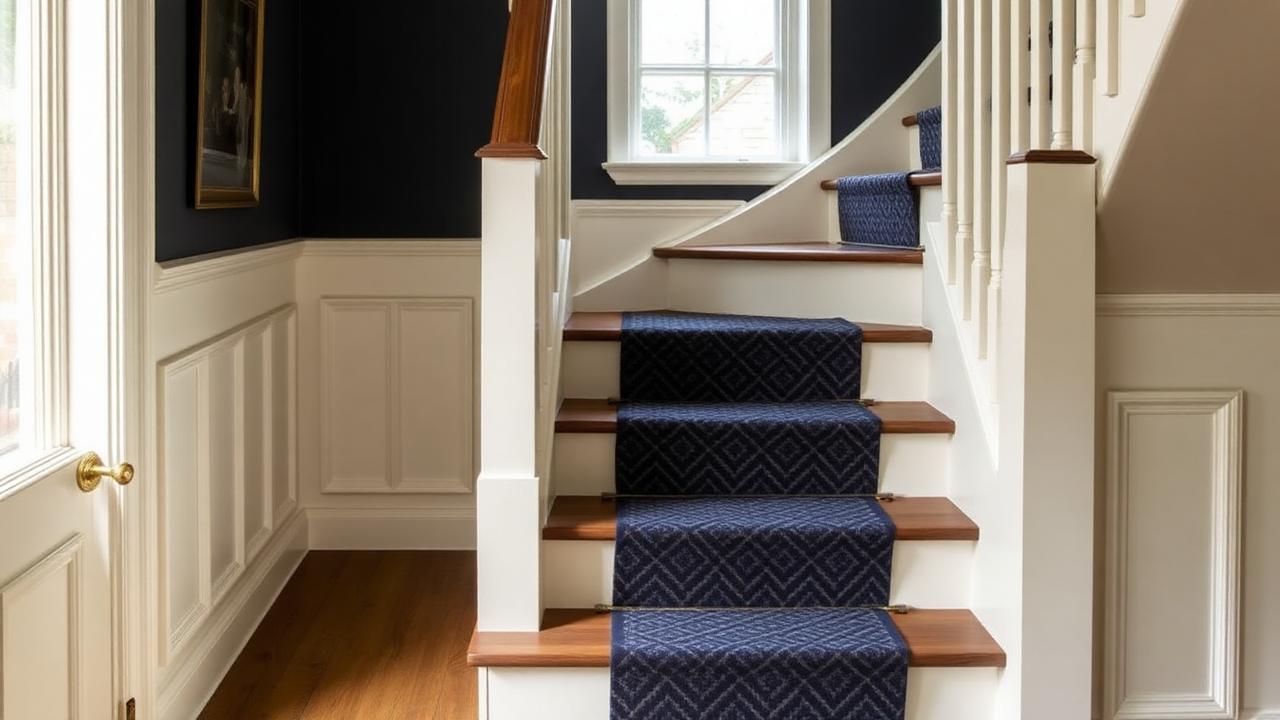
It is also why anything you put on top of the treads has to be consistent. A carpet runner adds an effective height at each nosing; if one step gets thicker underlay than the rest, or if the underlay is doubled on the bottom step to level a bad tread, the flight develops the same problem the regulations were written to prevent. Keep the covering identical from top to bottom and the geometry underneath stays honest.
Step height and a fitted runner
The rise is one of the three measurements a stair runner is ordered from — rise, going and nosing projection. Runner length per step is the rise plus the going plus the nosing wrap, so a 195mm rise with a 250mm going and a 25mm nosing needs 470mm of carpet per step, or 6.1m over 13 steps before landings and pattern repeat. Feed your own measurements into the stair runner calculator on the home page and it returns the total length, the underlay area and the gripper run together.
If you are pricing a job rather than fitting one, the stair runner length calculator gives the linear metres with waste and pattern repeat included, which is the figure a supplier actually quotes against. Either way, do it from the finished measurements of the flight rather than a standard step height — 190mm is what most UK stairs are, but the one in front of you is whatever it is, and the carpet is cut to that.
Still deciding on material, width or pattern? Our hub on stair runners compares weaves, widths, backings and fitting styles side by side, then hands the numbers straight to the calculator.
Frequently asked questions
What is the standard step height in the UK?
190mm to 200mm on a typical domestic staircase. The regulations permit 150mm to 220mm on a private stair, but most homes land in the narrower band because a standard 2.5m to 2.6m floor-to-floor divides into 13 or 14 risers at around that height.
What is the maximum step height allowed in the UK?
220mm for a private stair in a dwelling, 190mm for a utility or common stair, and 180mm for a general access stair. The 42-degree pitch limit often bites before the rise limit does, because a 220mm rise needs a going of at least 245mm to stay under it.
Can steps be different heights on the same staircase?
No. Every riser in a flight must be within 5mm of the others. An odd step is a building control failure and, more importantly, the commonest cause of falls on domestic stairs — people climb by rhythm rather than by looking.
How do I calculate the rise for my stairs?
Measure the finished floor to finished floor height, divide by 190mm, round to the nearest whole number of risers, then divide the total rise by that number. A 2600mm rise gives 14 risers at 185.7mm each. Never set the rise first and leave the remainder at the top.
Why are Victorian stairs steeper?
Higher ceilings meant more total rise, and terraces had little floor space to spend on a longer flight, so the rise went up and the going came down. Many original Victorian flights sit at 200-215mm with a going near 220mm, which would be right at the edge of what is permitted today.
Does a carpet runner change the step height?
Only fractionally, and only if it is inconsistent. Carpet and underlay add a few millimetres at each nosing, which does not matter provided the same build-up runs down the whole flight. Doubling underlay on one step to level a bad tread recreates exactly the uneven-riser problem the rules exist to prevent.
How many steps are in a standard UK staircase?
Thirteen risers is the most common answer in a modern house, which gives twelve treads plus the landing. Older properties with higher ceilings often have 14 or 15. Count risers rather than treads when ordering a runner, because the runner wraps every riser as well as every tread.
Know your numbers in 30 seconds
Enter your step count, tread depth and riser height — the stair runner calculator gives you the exact length to order, in metres and feet, with waste included.
Work out your riser height with the rise and run calculatorReady for real prices?
Get quotes from vetted stair runner suppliers and fitters near you. Free, no account, no obligation.
Every guide is written from hands-on measuring and fitting experience, checked against the calculator’s own maths, and re-reviewed whenever prices or methods change. Read our editorial standards.