

UK method step by step
- Fit gripper (tackless strip) at the base of every riser and, on many stairs, along the back of every tread, with pins angled toward the angle they need to grip.
- Cut and fit a stair pad between the gripper strips on each tread.
- Mark a centre line down the full flight using a chalk line or string.
- Starting at the top, hook the runner over the top gripper, then work down, tensioning with a stair tool or knee kicker into each gripper line.
- At the bottom, turn the raw edge under and tack or staple it neatly.
- Fit stair rods into the tread-riser angle if the design calls for them, purely decorative once the gripper is doing the holding.
Gripper placement distances
| Location | Distance from edge | Purpose |
|---|---|---|
| Riser base gripper | About 1/2 in (12mm) up from tread junction | Anchors runner into the riser-tread angle |
| Tread back gripper | About 3/8-1/2 in (10-12mm) from the back wall or stringer | Holds runner tension at the rear of the tread |
| Nosing | No gripper; runner wraps free | Allows a smooth wrap over the front edge |
Know your numbers in 30 seconds
Enter your step count, tread depth and riser height — the stair runner calculator gives you the exact length to order, in metres and feet, with waste included.
Open the stair runner calculatorUK vs US approach
| Feature | Common UK method | Common US method |
|---|---|---|
| Primary fixing | Gripper (tackless strip) | Direct staples |
| Decorative hardware | Stair rods common | Rods less common, more staple-only finishes |
| Tensioning tool | Stair tool / knee kicker | Staple gun tension by hand |
| Typical labour | £25-45 per step | $25-45 per step |
Rods are decorative, not structural
In a proper UK gripper installation, the rods hold nothing. The runner is already secured by the gripper; the rods sit in the crotch of the step purely for appearance and can be removed for cleaning without affecting the fit.
Stair rod materials and finishes
| Rod material | Typical cost per rod (UK) | Notes |
|---|---|---|
| Brass | £8-20 | Traditional choice, polishes well, can tarnish without lacquer |
| Antique/aged brass or bronze | £10-25 | Popular in period homes, hides fingermarks better than polished brass |
| Chrome or nickel | £8-18 | Suits contemporary interiors, low maintenance |
| Stainless steel | £10-22 | Very low maintenance, resists tarnish |
A typical 32 in (80cm) wide staircase needs one rod per step, so rod cost alone can add £150-400 across a 13-step flight before fitting time. Some households only rod the visible top few steps of a flight for a similar look at lower cost, though most UK fitters recommend consistency down the full run for a coherent finish. Older or lower-quality rods can also bend slightly under the weight of a knee or a dropped object, so choosing a moderate gauge rather than the very cheapest option tends to pay off over the life of the staircase.
Where this method suits
Gripper fitting gives a slightly firmer, more even tension along the whole flight and makes it easier to lift and re-lay a runner later, since it is not stapled directly into the timber at dozens of points. It costs a little more in materials and time than a staple-only fit but is the standard specified by most UK fitters on period and higher-end staircases.
Timeline and cost impact
Decisions around how to fit a stair runner: the uk method affect both how long the job takes and its final bill. As a rule, anything that adds measuring or cutting complexity adds labour hours, and labour is usually the larger share of an installed price once the carpet itself is accounted for.
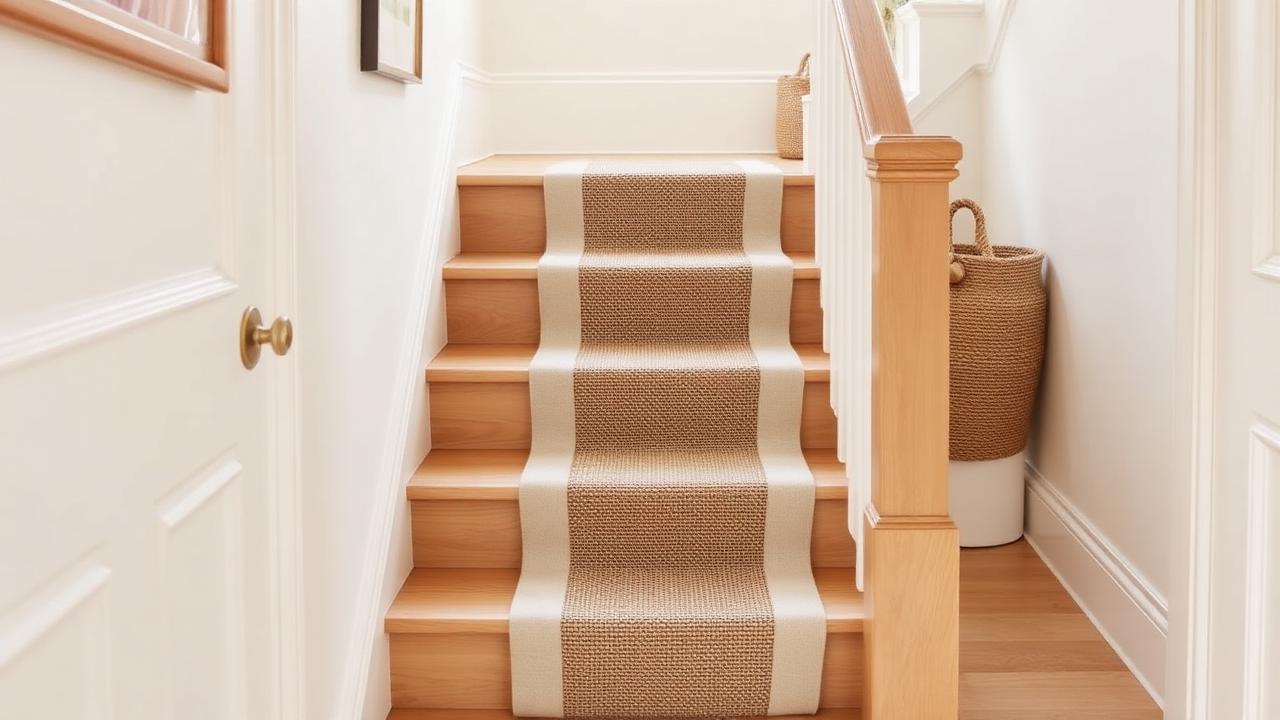
| Scenario | Typical added time | Typical added cost (US / UK) |
|---|---|---|
| Straightforward straight flight | No change | $0 |
| Extra measuring or templating step | 30-60 minutes | $40-90 / £30-70 |
| Substrate repair needed first | 1-3 hours | $75-250 / £60-200 |
| Fitter call-out for a second opinion | N/A, usually free or low cost | $0-75 / £0-60 |
Troubleshooting common problems
Even a carefully planned job related to how to fit a stair runner: the uk method can go wrong in a handful of predictable ways. Most issues trace back to a measurement taken at the wrong point, a substrate that was not properly checked before work began, or a step skipped to save time early on. Catching these early is far cheaper than correcting them after the runner is fixed in place.
| Symptom | Likely cause | Fix |
|---|---|---|
| Runner sits crooked after a few steps | Centre line not re-checked partway down the flight | Re-mark the centre line every 4-5 steps and adjust |
| Fabric bags or ripples at the nosing | Insufficient tension when fixing at the riser base | Pull taut before fixing and re-do that section |
| Edges fray within weeks | Binding not sealed or wrong backing for the fibre | Reseal edges or have a fitter re-bind |
| Runner shifts underfoot | Pad or gripper not anchored to solid timber | Check substrate and re-fix into sound wood |
Sourcing stair rods and gripper in the UK
Most UK carpet suppliers and specialist stair rod retailers stock standard rod lengths in 2 in (5cm) increments from around 24 in (60cm) up to 48 in (120cm), so measuring the exact tread width before ordering avoids a mismatched final rod. Gripper strip is sold by the metre or in pre-cut packs sized for an average flight; buying a pack rather than cutting from a long roll is usually cheaper for a single domestic staircase. Many suppliers offer a rod-and-fitting bundle that includes eyelets or sockets pre-matched to a specific rod diameter, which is worth checking before buying rods and eyelets separately, since diameters are not universally standardised across brands.
Mistakes that only show up after months of use
Not every stair runner installation mistake is visible on the day of fitting. Understrength staples or a pad that was cut slightly too small can look perfectly fine for weeks before foot traffic gradually works a section loose. Building a simple three-month check into your calendar, lifting a corner near the nosing and pressing along a couple of treads by hand, catches this category of slow-developing fault while it is still a five-minute fix rather than a full re-fit.
UK vs US fitting terminology
| UK term | US equivalent | Meaning |
|---|---|---|
| Gripper / tackless strip | Tack strip | Spiked strip anchoring the carpet edge |
| Stair rods | Stair rods | Decorative rods across the crease |
| Underlay | Padding | Cushioning layer beneath the runner |
| Fitter | Installer | Tradesperson who fits the runner |
Ask suppliers for UK-standard sizing
If ordering from a US supplier for a UK job, confirm gripper and rod dimensions are quoted in the sizes your fitter expects, since imperial and metric stock lengths do not always convert to a neat match.
Whatever you decide, get the numbers first: the stair runner calculator doubles as a stair runner length calculator, adding nosing wrap, landings, winders, pattern repeat and waste so you order the right length the first time.
Still deciding on material, width or pattern? Our hub on stair runners compares weaves, widths, backings and fitting styles side by side, then hands the numbers straight to the calculator.
Frequently asked questions
What is the UK method of fitting a stair runner?
It uses gripper (tackless strip) fitted at the riser base and tread back of each step, with the runner tensioned onto the gripper using a stair tool, often finished with decorative stair rods.
Do stair rods hold the runner in place in the UK method?
No, they are decorative. The gripper does the actual holding; the rods sit in the tread-riser angle purely for appearance and traditional style.
Is the UK method more expensive than direct stapling?
Slightly, due to the gripper strip material and extra fitting time, typically adding a modest amount to labour, around £5-10 per step more than a staple-only fit.
Can I use the UK gripper method without stair rods?
Yes, gripper and rods are independent choices. Many modern UK installs use gripper for its tensioning benefits without adding rods at all.
What is the biggest mistake people make with this?
Rushing the measuring or prep stage. Most poor outcomes with how to fit a stair runner: the uk method trace back to a single measurement taken at the wrong point, or a substrate check skipped to save a few minutes, both far cheaper to fix before the runner is cut than after.
Know your numbers in 30 seconds
Enter your step count, tread depth and riser height — the stair runner calculator gives you the exact length to order, in metres and feet, with waste included.
Measure my stairsReady for real prices?
Get quotes from vetted stair runner suppliers and fitters near you. Free, no account, no obligation.
Every guide is written from hands-on measuring and fitting experience, checked against the calculator’s own maths, and re-reviewed whenever prices or methods change. Read our editorial standards.