
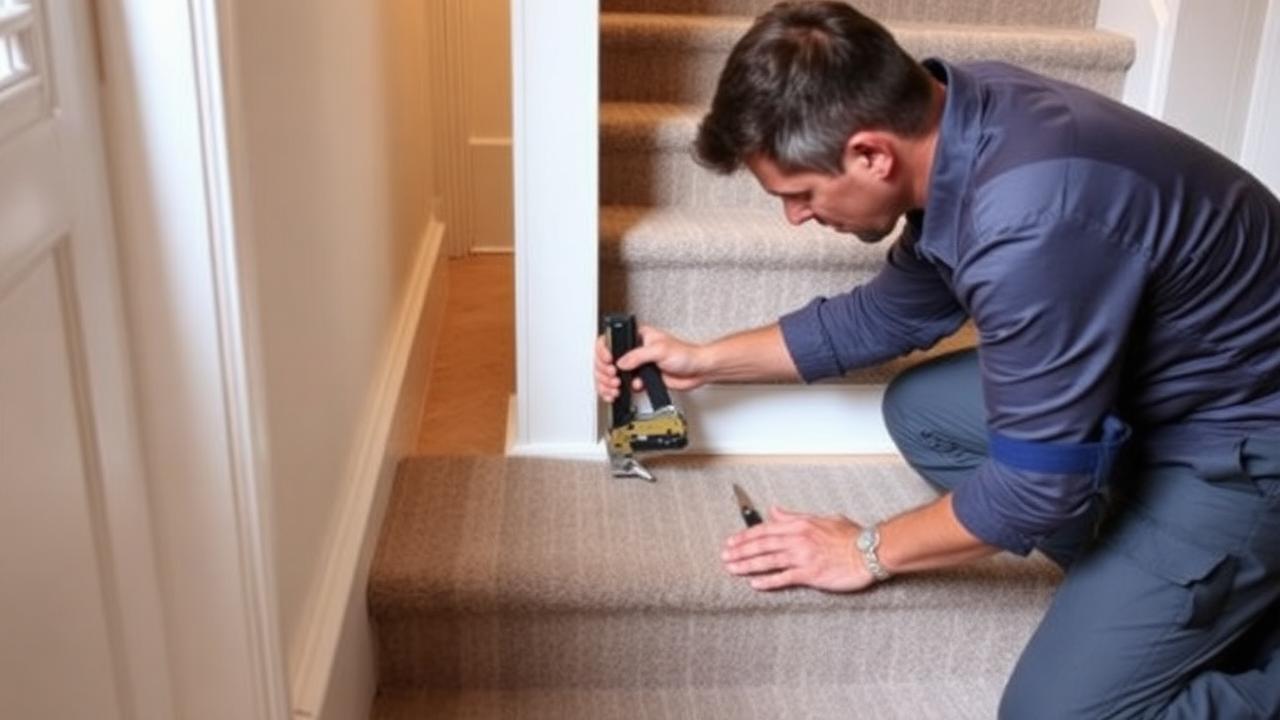
Manual vs electric vs pneumatic
| Type | Best for | Pros | Cons | Typical cost |
|---|---|---|---|---|
| Manual hammer tacker | One flight, occasional use | Cheap, no power needed | Tiring, inconsistent depth | $20-45 / £15-35 |
| Electric staple gun | DIY, occasional pro use | Consistent, no compressor | Slower than pneumatic, corded models limit reach | $40-100 / £30-80 |
| Pneumatic narrow-crown stapler | Professional installers, whole-house jobs | Fast, consistent depth, less fatigue | Needs a compressor and hose | $80-250 / £65-200 plus compressor |
Crown width and gauge
Crown width is the distance across the top of the staple, and gauge is the wire thickness. For stair runners a narrow crown of around 1/4 in to 3/8 in (6-9.5mm) is standard so the staple sits discreetly in the pile and along tight tack strip lines, in 20-22 gauge wire.
| Spec | Typical range | Notes |
|---|---|---|
| Crown width | 1/4-3/8 in (6-9.5mm) | Narrower crown, less visible fixing |
| Wire gauge | 20-22 ga | 20ga for dense wool, 22ga for lighter runners |
| Leg length, bare tread | 3/8-1/2 in (9.5-12.5mm) | Enough to bite solid timber, not punch through thin plywood |
| Leg length, over old carpet | 9/16-3/4 in (14-19mm) | Reaches through the extra layer |
Know your numbers in 30 seconds
Enter your step count, tread depth and riser height — the stair runner calculator gives you the exact length to order, in metres and feet, with waste included.
Open the stair runner calculator18ga vs 22ga in practice
18 gauge staples are thicker and used more in upholstery and heavier fabric work; they can split thin hardwood tread edges and leave a larger visible hole in delicate natural fibre weaves. 22 gauge is the fine-wire standard for most stair runner work because it disappears into the pile and is gentle on both wood and weave.
Test your depth on an offcut first
Compressor pressure and gun settings vary. Fire a few test staples into a spare tread offcut before starting the flight; a staple sitting proud will show through the pile, and one sunk too deep will cut fibres.
Keeping a staple gun in working order
- Clean the driver channel after every job; carpet fluff and pile fibres build up quickly and cause misfires.
- Oil a pneumatic gun's air inlet per the manufacturer's schedule, usually a few drops before each use.
- Store staples in a dry container; damp or rusted staples jam more often and can leave marks on light-coloured runners.
- Replace worn drivers on an electric gun once depth becomes inconsistent rather than compensating with higher power settings.
Renting a pneumatic gun and compressor
Most tool hire shops rent a compressor and narrow-crown stapler as a set for a half or full day, typically $35-70 (£28-55), which is often cheaper than buying for a single staircase. Ask the hire desk to load and test-fire a couple of staples into a spare offcut before you leave the shop, since depth varies between individual units even at the same pressure setting. A rented unit is also worth testing on the exact runner and pad combination you plan to use, since a thicker cut pile runner needs different depth settings than a thin flatweave, and getting this wrong on the first tread is the easiest way to waste an expensive fibre.
Compressor sizing for pneumatic guns
- A small 1-2 gallon pancake compressor is enough for a single staircase.
- Look for at least 90 PSI capability, though most stair staples fire well under that.
- A longer hose (25 ft / 7.5m) lets you leave the compressor at the bottom of the stairs.
Tools and materials, with typical prices
Before starting anything connected to best staple gun for a stair runner, it helps to know what the job actually costs in tools and consumables, not just carpet. Most of this list is a one-off purchase that will be reused on future stair or rug projects, so it is worth buying reasonable quality rather than the cheapest option.

- Tape measure and chalk line: $15-30 (£12-24), for marking and checking dimensions.
- Utility knife and spare blades: $10-20 (£8-16), for clean cuts through backing.
- Staple gun or tackless strip and knee kicker: $40-150 (£30-120) depending on method.
- Underlay/pad, per step: $3-6 (£2.50-5), skip only where the fibre specifies no pad.
- Seam tape or adhesive for joins: $8-15 (£6-12) per roll or tube.
Safety and building-code notes
Stairs are one of the most common places for a fall in the home, so anything touching best staple gun for a stair runner should be checked against basic safety practice as well as good looks. Codes vary by jurisdiction but the underlying principles are consistent everywhere carpet meets a staircase.
- Keep nosing build-up modest; a lip much over 3/8 in (10 mm) between the runner and a bare edge becomes a trip hazard.
- Use a slip-resistant backing or pad, particularly on the top and bottom steps where speed is highest.
- Secure every edge fully; a loose corner or lifted seam is the single most common cause of a stair fall on carpeted stairs.
- In rented or multi-occupancy buildings, check local fire and flooring regulations before installing natural fibre runners.
Matching the gun to the fibre
Best staple gun for a stair runner is not a one-size answer once you factor in fibre type. Dense wool cut pile needs a gun with enough drive force to seat a 20ga staple fully without repeated firing, while delicate sisal or seagrass weaves are more forgiving of a lighter electric gun but far less forgiving of an incorrect depth, since a staple sitting proud snags visibly against the coarse, open weave. Testing on an offcut of the actual runner, not a generic scrap, is the only reliable way to dial in a new gun before starting the flight.
| Fibre | Recommended gun type | Setting notes |
|---|---|---|
| Wool or nylon cut pile | Pneumatic or strong electric | Higher drive pressure to seat fully in dense pile |
| Wool loop pile | Pneumatic, electric or manual | Moderate pressure, avoid crushing loops |
| Sisal, seagrass, coir | Electric or manual, fine control | Lower pressure; test depth carefully on an offcut |
| Jute, flatweave | Any type | Standard pressure; watch for rust-prone steel staples |
A note on quality vs cheapest-available tools
It is tempting to buy the cheapest version of every item on a stair runner installation kit list, but a couple of items reward spending slightly more. A quality utility knife with a comfortable grip and easy blade change saves real time and frustration across a full flight of cuts, and a proper carpet chalk line holds its snap far more accurately than a generic hardware-store version after a few uses. Everything else on the list performs similarly regardless of price point, so it is worth concentrating any extra budget on the tools you will actually touch dozens of times during the job.
Whatever you decide, get the numbers first: the stair runner calculator doubles as a stair runner length calculator, adding nosing wrap, landings, winders, pattern repeat and waste so you order the right length the first time.
Frequently asked questions
What is the best staple gun for fitting a stair runner?
A pneumatic narrow-crown stapler in 20-22 gauge is the professional standard, giving consistent depth with less effort. A manual or electric staple gun is a reasonable choice for a single DIY flight.
What crown width should I use for a stair runner?
1/4 to 3/8 in (6-9.5mm) narrow crown is standard. It sits discreetly in the pile and matches the fine fixing lines used along tack strip and tread edges.
Is 18ga or 22ga better for stair runners?
22 gauge is the usual choice; it is fine enough to disappear into most pile and gentle on natural fibre weaves. 18 gauge is thicker and more suited to heavy upholstery than runner installation.
Do I need a compressor to fit a stair runner myself?
No, an electric or manual staple gun will do a single flight, just with more effort and less consistent depth. A compressor and pneumatic gun make sense if you are fitting several staircases.
What is the biggest mistake people make with this?
Rushing the measuring or prep stage. Most poor outcomes with best staple gun for a stair runner trace back to a single measurement taken at the wrong point, or a substrate check skipped to save a few minutes, both far cheaper to fix before the runner is cut than after.
Know your numbers in 30 seconds
Enter your step count, tread depth and riser height — the stair runner calculator gives you the exact length to order, in metres and feet, with waste included.
Estimate my install costReady for real prices?
Get quotes from vetted stair runner suppliers and fitters near you. Free, no account, no obligation.
Every guide is written from hands-on measuring and fitting experience, checked against the calculator’s own maths, and re-reviewed whenever prices or methods change. Read our editorial standards.