
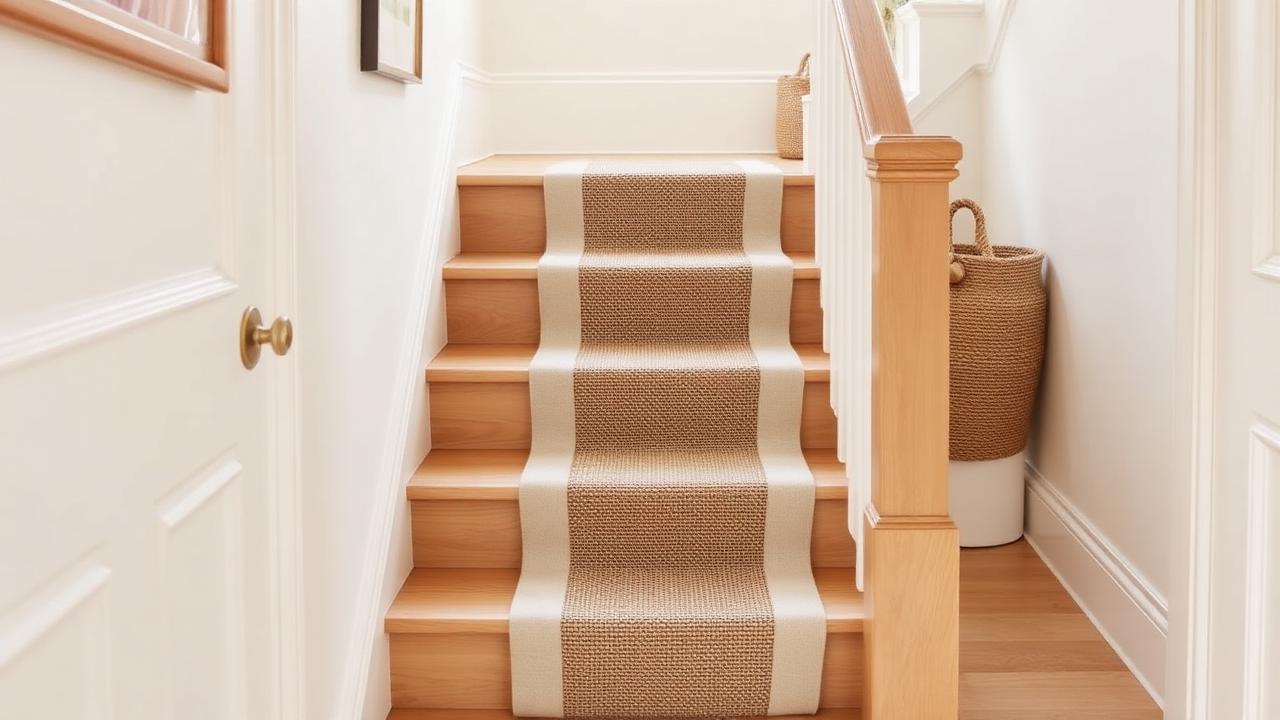
What makes a tartan stair runner different
Tartan is a woven check pattern built from bands of colour crossing at right angles in both the warp and weft, creating a grid of solid colour blocks, blended overchecks and thin pinstripes called the sett. Genuine woven tartan carpet, as opposed to a printed tartan-style pattern, is produced on Axminster or Wilton looms using multiple colour frames, which is why authentic tartan runners sit at the higher end of patterned stair carpet pricing. Printed tartan-effect runners exist at a lower price point and can look convincing from a distance, but the colour depth and pattern crispness of a woven sett are usually visibly better close up, which matters on stairs where the pattern is seen from multiple angles and distances throughout the day.
The sett itself repeats at a fixed interval just like any other pattern, but tartan setts are typically symmetrical, meaning the pattern mirrors around a central pivot line rather than repeating in one direction only. This symmetry is actually helpful for stair fitting, because it gives the fitter a clear central axis to align down the centre line of the flight, which is exactly where the runner's own centre line needs to sit for the exposed margins to be equal on both sides.
Pattern (sett) matching down a staircase
Tartan setts on stair runners commonly repeat every 150-350mm (6-14in), depending on the scale of the tartan and the width of the runner. Because the pattern is symmetrical, the critical task is not just repeat-length maths but keeping the pivot line of the sett running exactly down the centre of the runner for the full flight; if it drifts even slightly, the tartan looks subtly lopsided in a way that is more noticeable than an equivalent drift would be on a simple stripe or geometric.
| Tartan scale | Typical sett repeat | Best runner width | Extra yardage vs plain |
|---|---|---|---|
| Small/dress tartan | 150-200mm / 6-8in | 24-27in / 60-68cm | 5-10% |
| Standard tartan | 220-280mm / 9-11in | 27-30in / 68-76cm | 8-15% |
| Large/bold tartan | 300-350mm / 12-14in | 30-32in / 76-81cm | 12-20% |
Before ordering, put your real step count and tread sizes into the stair runner calculator on the homepage; the stair runner length calculator turns them into a length in metres or feet with waste included, which is the figure your supplier needs.
Know your numbers in 30 seconds
Enter your step count, tread depth and riser height — the stair runner calculator gives you the exact length to order, in metres and feet, with waste included.
Open the stair runner calculatorAs with any patterned runner, round the calculated flight length up to the next full sett repeat before ordering, and add a further repeat as a buffer. On winders, most fitters cut and rejoin the tartan at each wedge-shaped tread, keeping the pivot line centred on the walking line across the turn rather than trying to force one continuous sett through a changing tread width, exactly as with any other patterned runner.
UK mills and heritage weaving
Tartan carpet has a genuine manufacturing heritage in the UK, with several long-established Scottish and English mills producing woven wool tartan carpet on traditional Axminster looms, some using tartan setts registered with the Scottish Register of Tartans. These mills typically offer both clan and district tartans alongside modern decorative setts designed specifically for interiors rather than for kilts or textiles, since a pattern that reads well on fabric at close range does not always translate directly to a wider-scale floor covering.
Buying from a mill or specialist supplier with genuine woven tartan credentials typically costs more than a generic printed plaid runner, but delivers a noticeably deeper colour, sharper line definition between colour bands, and far better long-term colourfastness, since the colour is dyed into the wool yarn before weaving rather than printed onto the finished pile surface. For a heritage or listed property, or any restoration project aiming for historical accuracy, a woven wool tartan runner from an established mill is generally the appropriate choice over a printed alternative.
Check tartan registration if authenticity matters
If you want a specific clan or district tartan, check the pattern against the Scottish Register of Tartans before ordering, since some named setts are protected or reserved and a supplier may only offer a similar but not identical decorative alternative under a different name.
Colours and colourways
Traditional tartan runners lean towards deep, saturated colour combinations — hunting greens with navy and black, reds with dark green and a fine gold overcheck, or muted grey and heather tones for a softer, more contemporary take on the pattern. Most mills offer several colourways of the same sett, so the underlying check and scale stay identical while the palette is adjusted to suit a lighter or darker hallway, a period colour scheme, or a specific wood tone on the stairs themselves.
| Colourway style | Typical tones | Suits |
|---|---|---|
| Traditional/heritage | Hunting green, navy, black, red | Period homes, country houses, dark timber stairs |
| Dress/lighter | Cream base with colour overcheck | Lighter hallways, painted stairs |
| Modern/muted | Grey, heather, charcoal with a fine overcheck | Contemporary interiors wanting a heritage nod |
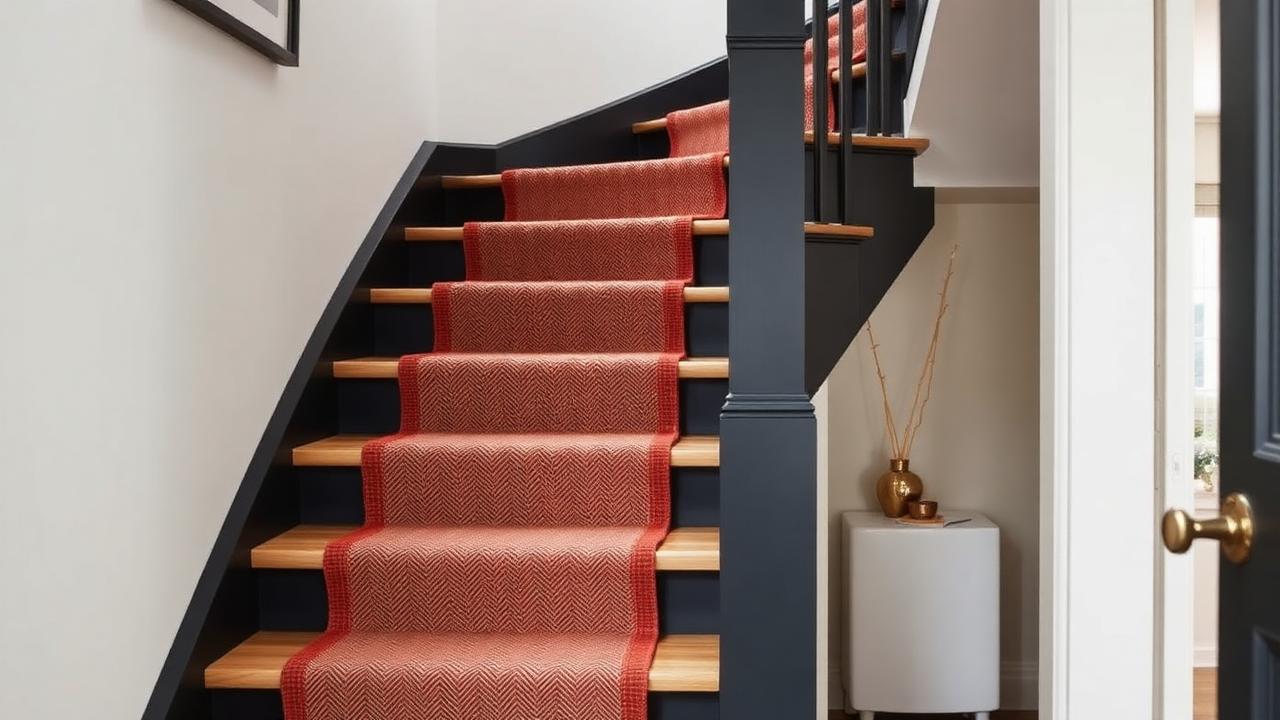
Fitting a tartan runner
Fitting method follows the same principles as any patterned runner: a Hollywood fit is generally preferred over waterfall for tartan, because the crisp crease at every nosing keeps the sett's straight lines sharp and square to the step, whereas a soft waterfall drape can slightly blur the crossing lines of the check where it curves. Set out the centre line first, confirm the tartan's pivot line sits exactly on it, and dry-lay the full length to check the sett placement on every tread before making a single cut.
- Mark the centre line of the staircase as with any runner fit.
- Dry-lay the tartan runner and identify where the sett's pivot line falls relative to your chalk line.
- Adjust the starting cut at the bottom of the flight so the pivot line runs exactly down the centre for the full flight.
- Fit gripper and underlay as standard, then lay Hollywood-style from the bottom upward.
- On winders, re-centre the pivot line on each wedge-shaped tread rather than forcing one continuous sett through the turn.
- Check the sett alignment against the centre line on every third or fourth step as you work up, correcting early rather than after the flight is finished.
Cost and where it sits in the market
Genuine woven wool tartan stair runners from an established UK mill typically cost £70-£140 per linear metre, reflecting both the wool content and the complexity of multi-frame weaving; printed tartan-effect runners in a wool-blend or synthetic base are considerably cheaper, often £35-£65 per linear metre. In the US, imported woven wool tartan runners commonly run $90-$170 per linear yard, with printed alternatives at $45-$85 per linear yard. Add the sett-matching yardage allowance calculated earlier before comparing final quotes, since tartan's symmetrical repeat typically needs slightly more overage than an equivalent simple stripe or geometric pattern.
Because tartan is inherently a formal, heritage-associated pattern, it pairs particularly well with brass or antique bronze stair rods rather than more minimal clip fixings, reinforcing the traditional character the pattern is chosen for in the first place.
Whatever you decide, get the numbers first: the stair runner calculator doubles as a stair runner length calculator, adding nosing wrap, landings, winders, pattern repeat and waste so you order the right length the first time.
Frequently asked questions
What is a tartan stair carpet runner?
A tartan stair carpet runner is a wool runner woven or printed with a tartan sett — a repeating check pattern of crossing colour bands traditionally associated with Scottish weaving. It is commonly used in period and heritage-style homes and needs the same careful pattern matching as any repeating design when fitted to a staircase.
Does a tartan runner need more yardage than a plain runner?
Yes, typically 5-20% more depending on the scale of the tartan sett, because the pattern needs to repeat in a consistent, centred position on every tread. Round your calculated flight length up to the next full sett repeat and add a further repeat as a buffer before ordering.
Is woven tartan carpet better than printed tartan-effect carpet?
Woven wool tartan, produced on Axminster or Wilton looms with dyed yarn, generally has deeper colour, sharper line definition and better long-term colourfastness than printed tartan-effect carpet, though it costs more. Printed alternatives are a reasonable lower-cost option where budget matters more than close-up authenticity.
Should a tartan stair runner be fitted waterfall or Hollywood?
Hollywood is generally preferred for tartan because the crisp crease at each nosing keeps the check's straight crossing lines sharp and square to the step. A waterfall fit's soft drape can slightly blur the pattern where it curves over the nosing.
Can I order a specific clan tartan for my stairs?
Many mills offer clan and district tartans, but some named setts are protected or reserved, so check the pattern against the Scottish Register of Tartans first. A supplier may offer a similar but differently named decorative alternative if the exact registered sett is not available for carpet production.
What does a genuine woven tartan stair runner cost?
Genuine woven wool tartan runners from an established UK mill typically cost £70-£140 per linear metre, or $90-$170 per linear yard in the US. Printed tartan-effect alternatives in wool-blend or synthetic fibre are considerably cheaper, often £35-£65 per linear metre or $45-$85 per linear yard.
Know your numbers in 30 seconds
Enter your step count, tread depth and riser height — the stair runner calculator gives you the exact length to order, in metres and feet, with waste included.
Calculate my runner lengthReady for real prices?
Get quotes from vetted stair runner suppliers and fitters near you. Free, no account, no obligation.
Every guide is written from hands-on measuring and fitting experience, checked against the calculator’s own maths, and re-reviewed whenever prices or methods change. Read our editorial standards.