

The five routes compared
| Where | Typical price / linear m | Lead time | Best for |
|---|---|---|---|
| Local carpet retailer | £30–£90 / $40–$115 incl. binding | 1–3 weeks | Advice, measuring and fitting in one place |
| Online runner specialist | £25–£120 / $32–$150 | 3–10 days | Choice and price, if you can measure yourself |
| Rug and homeware retailers | £15–£60 / $20–$75 | Immediate | Pre-bound rug-style runners, budget projects |
| Mill or brand direct | £45–£150+ / $55–$190+ | 2–6 weeks | Designer wool, bespoke widths and borders |
| Trade / to-the-trade showrooms | Varies, trade discounts | 2–8 weeks | Designers specifying for clients |
Order the length, not the staircase
Whichever route you take, the supplier prices by linear metre or foot of a given width. Turn up knowing your exact total length including nosing wrap, landings, pattern repeat and waste — otherwise you are relying on someone else's guess.
Local carpet retailer
The traditional route: they measure, supply, bind and fit, and they carry the responsibility if the length is wrong. You pay a margin for that, and range can be narrower than online. Ask whether binding is included, whether winders and landings are extra, and whether the quoted length includes waste.
Online runner specialists
- Widest choice by far, especially for patterns and natural fibres.
- Almost always sold pre-bound and cut to your specified length.
- Order samples first — screen colour is unreliable and wool photographs lighter than it looks.
- Check the cut-length returns policy: most custom cuts are non-returnable, so the measurement is entirely on you.
- Confirm the width is the finished width including binding, not the raw cut width.
Rug retailers and marketplaces
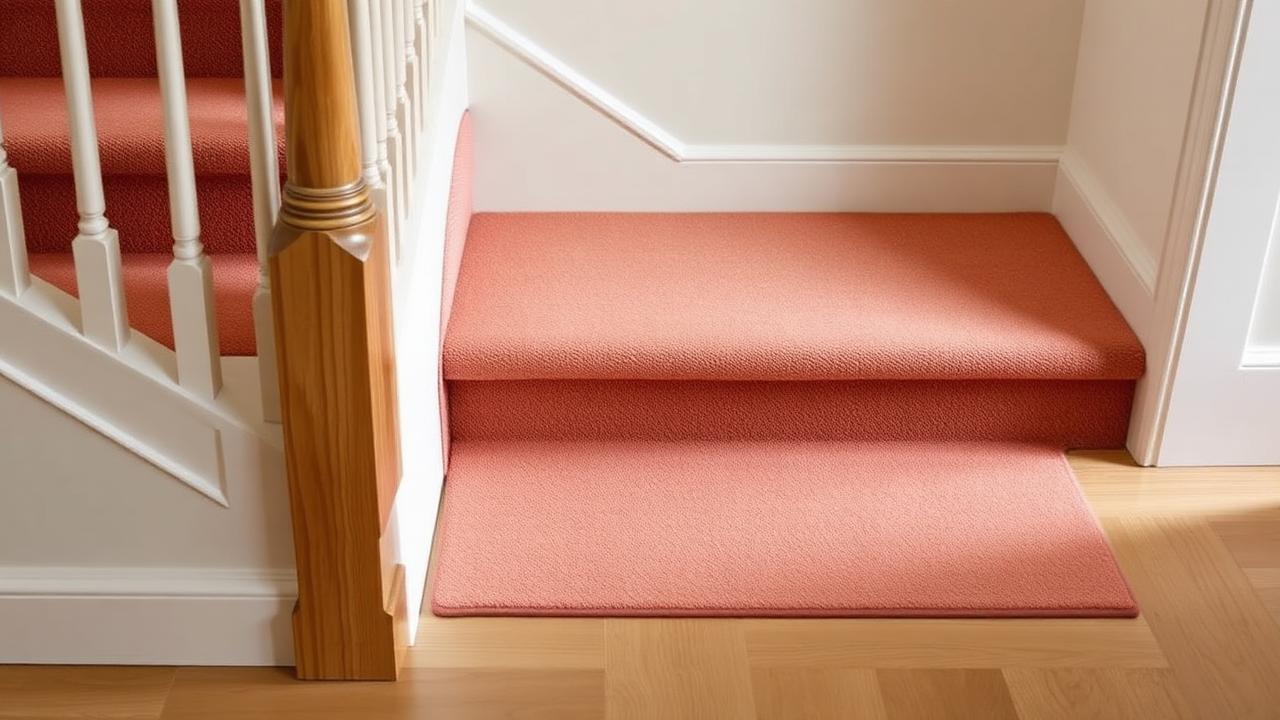
Long runner rugs sold for hallways can be joined to make a stair runner cheaply. They come pre-bound, arrive fast, and cost far less. The trade-offs: joins, batch colour variation and often a stiffer construction that does not wrap a nosing beautifully.
Mills and designer brands
If you want a bespoke width, a contrast border, leather trim or a specific colourway, you are dealing with a mill or a designer brand, usually through a retailer or designer. Expect 2–6 weeks, sample approvals and a premium — and a runner that looks like nothing else on the street.
Questions to ask any supplier
- Is the quoted width the finished width, including binding?
- Is the price per linear metre or per square metre, and does it include binding?
- Is the product rated for stair use by the manufacturer?
- What is the pattern repeat, and how much extra should I allow for matching?
- Will my order come from a single batch and a single roll?
- What is the returns policy on a custom cut length?
- Is underlay, fitting or delivery included?
Buying a runner sight unseen — what actually goes wrong
The two most common complaints from online orders are colour mismatch and width confusion. Screens render wool tones warmer and paler than they are in person, and a 'width' quoted by one seller means the raw loom width while another means the finished bound width — a 5cm difference either way changes how the runner sits on your stairs. Always request two or three physical samples before ordering a cut length, and ask explicitly whether the quoted width includes the binding.
Buying from a mill or brand versus a general retailer
| Mill / brand direct | General carpet retailer | |
|---|---|---|
| Range depth | Deep within their own collections | Broad across many brands |
| Bespoke options | Often yes — width, border, colourway | Rare |
| Price transparency | List price, sometimes negotiable via a stockist | Quote-based, room to negotiate |
| Aftercare and offcuts | Good — same source for repairs | Depends on retailer relationship with the mill |
| Minimum order | Sometimes a minimum length applies | Usually none |
Buy a metre extra from the same batch, at the same time
If you might need a repair, a stair extension or a second matching flight later, order the spare length now. Dye lots change between production runs, and a mill may not weave that exact colourway again for years.
Negotiating with a trade or showroom supplier
- Trade accounts typically get 15–35% off list price, but usually need to be opened through a designer, architect or registered fitter.
- Ask whether sample cutting, delivery and storage fees apply — trade pricing on the runner itself does not always include these.
- Showrooms will often let you take large-format samples home overnight, which is worth doing for any wool over £50 per metre.
- Lead times quoted by showrooms are often optimistic; build in two extra weeks of slack if you are working to a fixed installation date.
Red flags when buying online
- No stated pile weight, density or durability rating anywhere on the listing.
- Vague or missing returns policy on custom-cut lengths.
- Stock photos only, with no option to order a physical swatch.
- Prices dramatically below the rest of the market for an apparently identical wool blend — usually a lower pile weight or narrower loom width than advertised.
- No confirmation of which batch or dye lot a large order will be cut from.
A sensible buying sequence
- Measure your staircase fully, including nosing wrap, landings and winders — use the stair runner calculator to get an accurate total length.
- Shortlist two or three suppliers across different routes (retailer, online specialist, mill) and request physical samples from each.
- Live with the samples on the actual stairs for at least 48 hours, checking them in daylight and evening light.
- Confirm finished width, batch consistency, lead time and returns policy in writing before paying a deposit.
- Order 5–10% extra length and, ideally, a spare offcut for future repairs.
Buying internationally: shipping and duty considerations
Some of the best wool and natural-fibre ranges are woven in a small number of specialist mills and shipped internationally, particularly between the UK and North America. Freight for a rolled runner is manageable, but check whether the quoted price includes import duty and any handling fee at the border, since these can add a meaningful percentage on a premium order. Lead times for international shipments should be built out from the mill's production time, not just the courier's transit estimate, since the two are often quoted separately and the production step is usually the longer of the two.
Working with an interior designer or specifier
If you are using a designer, they typically have trade accounts with mills and showrooms that are not open to the public, giving access to ranges and colourways outside the standard retail catalogue, often at a trade discount even after their fee. This route suits a whole-house project where the stair runner is one part of a broader scheme, and it is usually not worth setting up purely to buy a single runner unless the project already involves a designer for other reasons.
Whatever you decide, get the numbers first: the stair runner calculator doubles as a stair runner length calculator, adding nosing wrap, landings, winders, pattern repeat and waste so you order the right length the first time.
Still deciding on material, width or pattern? Our hub on stair runners compares weaves, widths, backings and fitting styles side by side, then hands the numbers straight to the calculator.
Frequently asked questions
Where is the best place to buy a stair runner?
Local carpet retailers are best if you want measuring and fitting handled for you; online specialists offer far more choice and better prices if you can measure accurately yourself.
Can you buy stair runners by the metre?
Yes — most runners are sold by the linear metre or foot in a fixed finished width, cut and bound to your specified total length.
Is it cheaper to buy a runner or cut one from carpet?
Cutting your own from broadloom is usually cheaper on material, even after paying for binding, but pre-bound runners save time and remove the risk of a poor cut.
Should I order extra stair runner?
Yes. Add waste of 5–10%, plus one full pattern repeat per separate piece on patterned goods. Running short mid-fit means a new order, a new batch and a visible colour difference.
Should I buy samples before ordering a full stair runner?
Always. Screens misrepresent colour, and viewing a sample on your actual stairs in daylight and lamp light is the only reliable way to judge the true shade and pile depth.
Is it worth using a trade account to buy a stair runner?
If you are working with a designer or fitter who has one, yes — trade discounts of 15–35% are common. Opening an account yourself as a homeowner is usually not possible without a qualifying trade relationship.
What is the biggest risk of buying a stair runner online?
Ordering the wrong length or width with no return option on a custom cut. Confirm finished width, exact total length and the returns policy in writing before paying.
Know your numbers in 30 seconds
Enter your step count, tread depth and riser height — the stair runner calculator gives you the exact length to order, in metres and feet, with waste included.
Know your length before you shopReady for real prices?
Get quotes from vetted stair runner suppliers and fitters near you. Free, no account, no obligation.
Every guide is written from hands-on measuring and fitting experience, checked against the calculator’s own maths, and re-reviewed whenever prices or methods change. Read our editorial standards.