
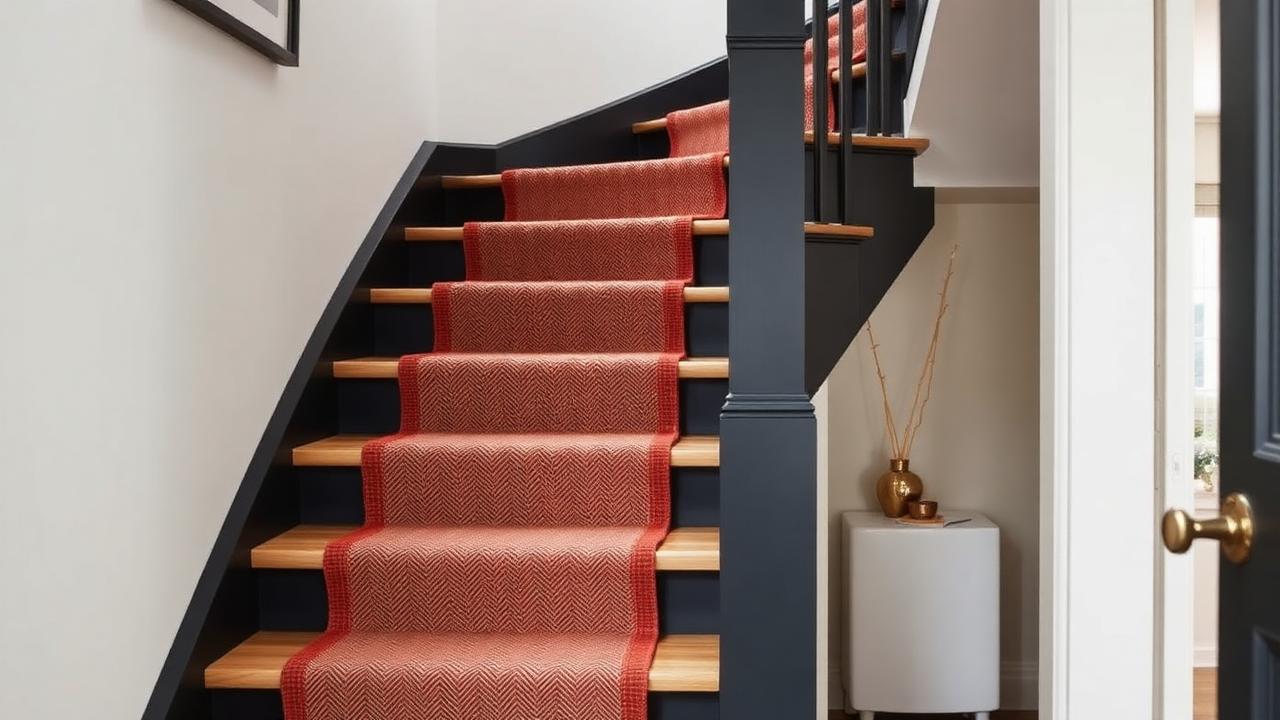
What is a whipped edge?
Whipped edges are created using a specialised machine that loops yarn over the edge of the carpet at high speed. Unlike binding, which uses a separate strip of fabric, whipping uses yarn that can be perfectly colour-matched to the carpet's own fibres. This results in an edge that is almost invisible, giving the runner a very clean and integrated look. From a fitter's perspective, whipping is often the preferred choice for wool runners because the yarn can be the exact same wool used in the weave, maintaining a consistent texture across the entire width.
The process is often called “overlocking” in the UK or “serging” in the US, though in the trade, “whipping” specifically refers to a slightly denser stitch that provides better coverage of the carpet backing. Because the yarn is looped tightly, it traps the raw edges of the primary and secondary backing, preventing the individual tufts of the carpet from falling out. It’s a classic finish that has been used for decades and remains one of the most cost-effective ways to finish a custom-cut stair runner carpet.
Yarn matching matters
When ordering a whipped edge, always ask for a sample of the whipping yarn. A slight mismatch in shade can make the edge look like a mistake rather than a design choice. Most high-end workshops will use yarn from the carpet itself if possible.
Benefits of a whipped finish on stairs
One of the primary benefits of a whipped edge is its flexibility. Because there is no rigid tape involved, the edge can easily follow the contours of the stair nosing without puckering or bubbling. This makes it particularly suitable for Hollywood-style installations where the runner is wrapped tightly around the tread and stapled under the nosing. The rounded nature of the whipped edge also means it is less likely to catch on shoes or socks compared to the slightly raised profile of a bound edge.
Furthermore, whipping is incredibly durable if done correctly. A dense whip stitch protects the edge from the vacuum cleaner's beater bar, which is the number one cause of edge damage in domestic homes. If a single loop of yarn does break, it usually doesn't cause the whole edge to unravel immediately, giving you time to have it repaired. It is a discreet, professional finish that puts the focus on the carpet pattern and the architecture of the stairs rather than the border.
How much runner do I need?
Calculating for a whipped runner is no different than a standard runner, but you must ensure your measurements are precise because whipping is difficult to alter once applied. For a UK flight of 13 steps with a 25 cm going and 19 cm rise, the total rise and fall is 572 cm. Adding 5 cm for each nosing (65 cm) and 15 cm for the landing and floor starts, we reach 652 cm. A 10% waste factor is standard to allow for mistakes or pattern alignment, bringing the total to 7.17 metres. You can use a stair runner calculator to double-check these figures for your specific staircase geometry.

For a US staircase with the same 13 steps but using 10 inch treads and 7.5 inch risers, the calculation is: (10 + 7.5) x 13 = 227.5 inches. Add 13 inches for the nosing wraps and a further 12 inches for the top and bottom extensions. This gives 252.5 inches. Including a 10% waste margin, you should order 278 inches, which is approximately 23.2 feet. Remember that whipping is done after the runner is cut to width, so specify your desired margin (the gap between the edge of the runner and the wall) before the whipping process begins.
| Aspect | Whipped Edge | Tape Bound Edge |
|---|---|---|
| Visual Profile | Soft, rounded, discreet | Flat, defined, prominent |
| Material | Wool or synthetic yarn | Cotton, linen, or leather tape |
| Flexibility | High - great for complex steps | Moderate - better for straight runs |
| Cost | Generally lower | Generally higher |
| Colour Match | Excellent - uses yarn | Good - requires matching tape |
Know your numbers in 30 seconds
Enter your step count, tread depth and riser height — the stair runner calculator gives you the exact length to order, in metres and feet, with waste included.
Open the stair runner calculatorDesign and aesthetic choices
While whipping is often used for a minimalist look, it can also be a design feature. You can choose a contrasting yarn colour to create a subtle border. For example, a light grey runner with a charcoal whipped edge looks modern and sophisticated. However, most of my clients prefer a tonal match to keep the stairs looking as wide as possible. A contrasting edge can sometimes act like a visual frame, which might make a narrow staircase feel even more enclosed.
The thickness of the yarn also plays a role. A chunky wool yarn will create a thicker, more cushioned edge that feels great underfoot but might look slightly rustic. A thin, tightly twisted synthetic yarn will create a sharper, more precise edge that suits a modern penthouse aesthetic. When I'm fitting these, I always check the tension of the whipping; if it's too tight, it can cause the carpet to curl at the edges, which is a nightmare to flatten out during installation.
- Whipped edges are also known as overlocked or serged edges in different regions.
- They offer a minimalist look that doesn't distract from the carpet pattern.
- The yarn can be perfectly colour-matched or chosen in a contrasting shade.
- Whipping is more flexible than tape binding, making it ideal for winders.
- A quality whip stitch should be dense enough to hide the carpet backing completely.
- It is generally more affordable than cotton or leather tape binding.
- Always use a stair runner length calculator to ensure you order enough material before finishing.
- Whipped edges are less prone to 'tripping' than thick bound borders.
Maintenance and longevity
Maintenance for a whipped edge is straightforward: just treat it like the rest of the carpet. Regular vacuuming is essential, but try to avoid hitting the very edge with the edge of the vacuum head, as the plastic casing can sometimes snag the yarn loops. If you notice a loose thread, don't pull it. Use a sharp pair of scissors to snip it close to the stitch line. Over time, the yarn may fuzz slightly due to friction, but this can usually be tidied up with a fabric shaver or by a professional carpet cleaner.
In terms of longevity, a whipped edge will usually last as long as the runner itself, provided it was executed with a high-quality yarn. Synthetic yarns like nylon or polypropylene are virtually indestructible in this application, whereas wool yarn will eventually wear down. If the edge does start to look tired after 10 years, it is possible to have the runner removed, the old whipping stripped off, and a fresh edge applied, which is a great way to refresh your stairs without the cost of new carpet.
Whatever you decide, get the numbers first: the stair runner calculator doubles as a stair runner length calculator, adding nosing wrap, landings, winders, pattern repeat and waste so you order the right length the first time.
Frequently asked questions
What is the difference between whipping and serging?
In most contexts, they are the same thing. However, serging is a term more commonly used in North America, while whipping is standard in the UK. Technically, serging can sometimes refer to a wider stitch, but for stair runners, they both describe a yarn-wrapped edge.
Can a whipped edge be repaired?
Yes. If a section of the whipping is damaged, a professional can often hand-whip the area to match the existing machine stitch. If the damage is extensive, the entire side can be re-whipped by a specialist workshop.
Is whipping cheaper than binding?
Generally, yes. Whipping is a faster process and requires less expensive materials (yarn vs. fabric tape). It is an excellent way to get a professional, durable finish on a budget.
Can you whip a sisal or seagrass runner?
Whipping is not recommended for natural plant fibres like sisal or seagrass. These materials are too brittle and the whipping yarn tends to slide off the fibres. For these, a cotton or linen binding is almost always used.
Does whipping prevent fraying?
Absolutely. The primary purpose of whipping is to lock the carpet fibres and the backing together, preventing the edges from unravelling under the stress of foot traffic on the stairs.
What yarn is used for whipping?
Most workshops use a heavy-duty wool-blend or nylon yarn. It needs to be strong enough to withstand the high-speed stitching process and durable enough for years of foot traffic.
Can I choose a different colour for the whipping?
Yes, you can choose any colour you like. Contrasting whipping can add a decorative touch, while matching whipping creates a seamless, minimalist look.
How wide is a whipped edge?
A standard whipped edge is usually about 10mm (3/8 inch) wide. It wraps from the top surface, around the side, and slightly onto the bottom of the carpet.
Know your numbers in 30 seconds
Enter your step count, tread depth and riser height — the stair runner calculator gives you the exact length to order, in metres and feet, with waste included.
Use the stair runner calculator for whipped edge projectsReady for real prices?
Get quotes from vetted stair runner suppliers and fitters near you. Free, no account, no obligation.
Every guide is written from hands-on measuring and fitting experience, checked against the calculator’s own maths, and re-reviewed whenever prices or methods change. Read our editorial standards.