

Genuine antique versus antique-style
There are two very different products under this heading. A genuine antique stair runner is a reclaimed or vintage textile, often a hand-knotted rug or an older Wilton weave, that is being repurposed for a staircase. An antique-style runner is a newly manufactured product designed to evoke a vintage look, using faded colourways, distressed patterns, or traditional motifs like paisley, damask, or oriental medallions. Both have their place, but they come with very different practical considerations.
Genuine antique pieces are rarely made to the exact length of a modern staircase, since they were originally woven for a different purpose or a different home. This often means joining two shorter pieces, adding a false border, or accepting a runner that only covers part of the flight. Antique-style newly made runners, on the other hand, can be ordered to your exact custom length just like any other stair runner, giving you the vintage aesthetic with modern practicality.
Measuring for an antique-style runner
If you are ordering a new antique-style runner, measure exactly as you would for any staircase: tread depth, riser height, and a nosing wrap allowance for every step, plus finishing allowances top and bottom. Use a stair runner length calculator to get your total length, and remember that many antique-style patterns have a directional design, such as a medallion or paisley motif, that needs to be centred correctly on each step rather than simply cut to length.
How much runner do I need?
For a 13-step flight: 10 in tread + 7.5 in riser + 0.75 in nosing wrap = 18.25 in per step, totalling 237.25 in across 13 steps. Add 24 in for finishing, giving 261.25 in or 21.77 ft. With a 10% allowance for pattern matching, which matters more with ornate antique-style designs, order around 24 ft. Metric: 25 cm + 19 cm + 1.9 cm = 45.9 cm per step, times 13 is 596.7 cm, plus 60 cm is 656.7 cm, and with waste roughly 7.3 m.
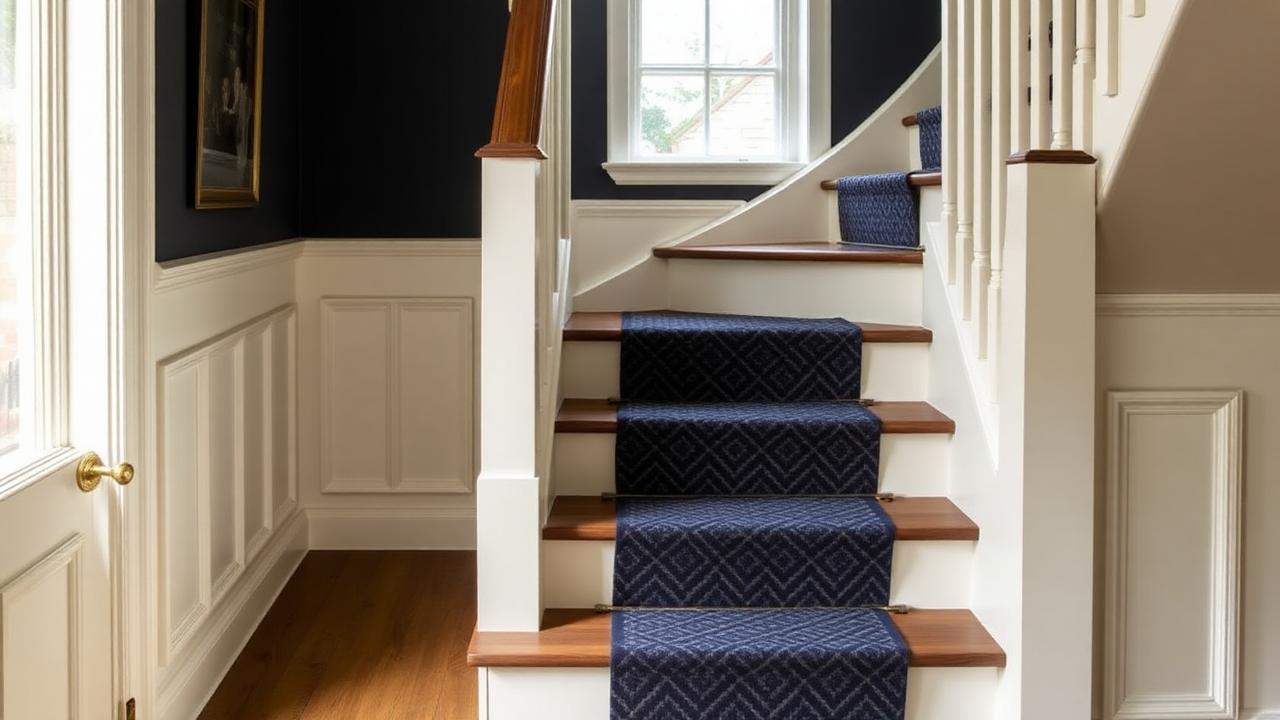
| Measurement | US (in/ft) | UK (cm/m) |
|---|---|---|
| Per-step total | 18.25 in | 45.9 cm |
| 13 steps | 19.77 ft | 5.97 m |
| With finishing allowance | 21.77 ft | 6.57 m |
| With 10% waste for pattern | 24 ft | 7.3 m |
Know your numbers in 30 seconds
Enter your step count, tread depth and riser height — the stair runner calculator gives you the exact length to order, in metres and feet, with waste included.
Open the stair runner calculatorWorking with a genuine vintage piece
If you have inherited or sourced a true antique runner that is shorter than your staircase, talk to a specialist rug restorer or carpet fabricator about your options. Some homeowners choose to run the antique piece down the most visible upper section of stairs and finish the remainder with a closely matched plain carpet, while others have the piece professionally extended by weaving in a coordinating border. Never cut or force an antique textile to fit without expert advice, as this can destroy its value.
Handle fragile antique fibres with care
Older wool and silk-blend runners can be more fragile than modern synthetics. Always have a specialist assess the backing and fibre condition before committing to a permanent stair installation.
Styling tips for an antique look
- Pair with traditional brass or black stair rods for an authentic period feel.
- Choose muted, aged colourways such as faded reds, worn blues, and warm creams.
- Look for oriental, damask, or paisley motifs that echo traditional rug design.
- Combine with natural wood treads and traditional balustrades for the most cohesive look.
Caring for an antique or antique-style runner
Genuine antique fibres should be vacuumed gently and professionally cleaned rather than treated with household spot cleaners, since old dyes and fibres can react unpredictably to modern chemicals. Antique-style new runners can generally be cared for like any wool or wool-blend product, though it is always worth checking the manufacturer's specific cleaning guidance.
In summary, decide early whether you want a genuine antique piece or a newly made antique-style runner, since the sizing process differs considerably. Whichever route you choose, a stair runner calculator will help you plan the practical details before you commit.
Still deciding on material, width or pattern? Our hub on stair runners compares weaves, widths, backings and fitting styles side by side, then hands the numbers straight to the calculator.
Frequently asked questions
Can I buy a genuine antique stair runner in a custom length?
Rarely. Genuine antique pieces are fixed lengths, so you may need to join sections or supplement with matching carpet.
Are antique-style runners as durable as new carpet?
Yes, if newly manufactured, antique-style runners use the same modern fibres and constructions as any new stair runner.
How do I clean a genuine antique runner?
Use gentle vacuuming and consult a professional rug or antique textile cleaner rather than standard carpet cleaning products.
What colours are typical of antique-style runners?
Muted, aged tones such as faded red, worn blue, warm cream, and traditional gold accents are common.
How much runner do I need for 13 steps?
Roughly 23 to 24 feet or 7 to 7.3 meters, with extra allowance if the pattern needs careful centring.
Can I match stair rods to an antique runner?
Yes, antique brass or aged black stair rods pair particularly well with vintage-style runners.
Is a genuine antique runner a good investment?
It can be, but always have it appraised and assessed for fibre condition before committing to a stair installation.
Should I use underlay under an antique runner?
Yes, a proper underlay protects a fragile antique fibre from wear and improves comfort underfoot.
Know your numbers in 30 seconds
Enter your step count, tread depth and riser height — the stair runner calculator gives you the exact length to order, in metres and feet, with waste included.
Check your length needs with the stair runner calculatorReady for real prices?
Get quotes from vetted stair runner suppliers and fitters near you. Free, no account, no obligation.
Every guide is written from hands-on measuring and fitting experience, checked against the calculator’s own maths, and re-reviewed whenever prices or methods change. Read our editorial standards.