
Buying guide
Best carpet for stairs: what lasts and what's safe
The best carpet for stairs is a dense, low-pile carpet in a resilient fiber. Nylon is the best all-round choice for busy homes, and wool is the premium option. Stairs take more concentrated wear than any other floor, especially on the nosing, so density and a tight construction matter more than softness.
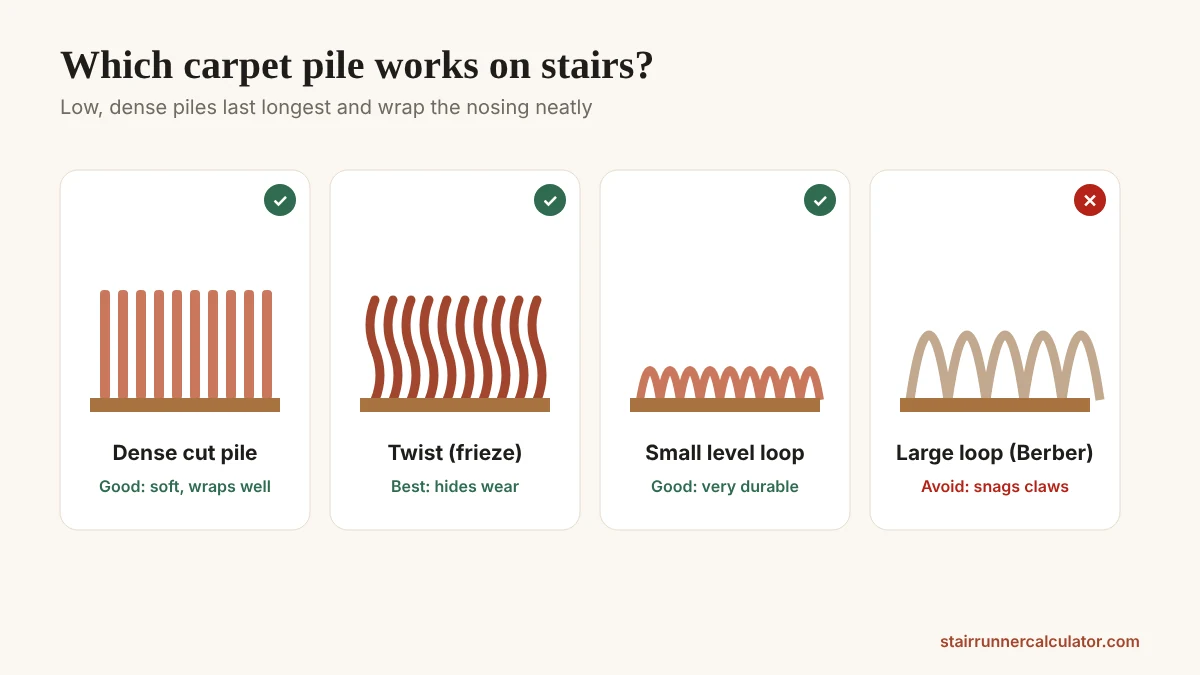
What to look for
- Low, dense pile: a short, tightly packed pile wraps the nosing neatly and is less slippery than a deep shag.
- Resilient fiber: nylon and wool bounce back from foot traffic. Polyester and polypropylene flatten faster on stairs.
- Twist or loop construction: a tight twist or level loop hides wear. Avoid long loops (big Berber loops), which can snag claws and heels.
- Good padding: a firm, thin pad (about 7/16 inch or less) gives a secure step. Thick, soft pads make treads feel unstable.
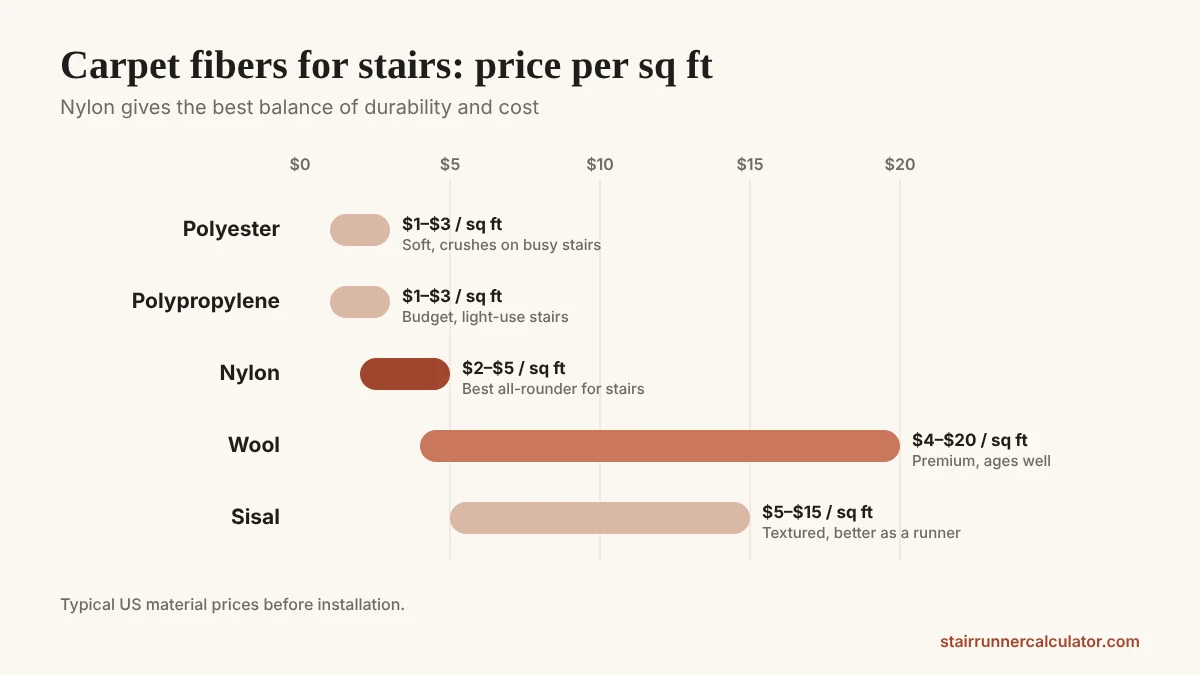
Carpet fibers compared for stairs
| Fiber | Typical price (per sq ft) | On stairs |
|---|---|---|
| Nylon | $2–$5 | Best all-rounder. Very resilient and good with kids and pets. |
| Wool | $4–$20 | Premium, naturally soil-resistant, and ages well. Costs more. |
| Polyester | $1–$3 | Soft and stain-resistant, but crushes on busy stairs. |
| Polypropylene (olefin) | $1–$3 | Budget choice. Fine for light-use stairs, but wears faster. |
| Sisal and natural fibers | $5–$15 | Textured and stylish, but can be slippery and stain easily. Better as a runner. |
Prices are typical US material ranges before installation.
Best choice by situation
- Busy family home: a nylon twist or tight level loop in a mid-tone color that hides dirt.
- Pets: a cut-pile nylon or wool, not a loop (claws catch on loops). See stair runners for cats for more ideas.
- Period or premium homes: wool, or a wool blend, in a flatweave or tight loop.
- Budget or rental: polyester or polypropylene, and accept that you'll replace it sooner.
Full carpet or a stair runner?
Full carpet covers the whole tread. A runner leaves wood showing at the sides, uses less material and is easier to replace. If you like the look of wood stairs, compare the two in best carpet for a stair runner. Then work out the length with the stair runner calculator.
How to test a carpet sample for stairs
- Bend it over a table edge, the way it will wrap a nosing. If you can see the backing ("grin-through"), it will look worn on the stairs.
- Press your thumb into the pile. Dense carpet springs back quickly.
- Check the face weight on the label. For stairs, more yarn per square yard (higher face weight) and higher density generally last longer.
- Look at the backing for a firm, tightly woven backing that won't stretch out of shape on the steps.
Carpet safety on stairs
Choose a low pile and a thin, firm pad so each step feels solid underfoot. Avoid very glossy or slippery fibers on steep stairs. Make sure the carpet is fixed tight under every nosing, because loose carpet is a common cause of falls.
How much carpet will you need?
Use the carpet for stairs calculator to work out square feet or square meters, including waste. For fitting costs, see cost to carpet stairs and landing.
Frequently asked questions
What is the most durable carpet for stairs?
Nylon is the most durable common carpet fiber for stairs because it springs back after being crushed. A dense, low-pile nylon twist or level loop lasts longest on busy stairs.
Is wool or nylon better for stairs?
Both work well. Nylon is cheaper and slightly tougher on very busy stairs. Wool is more luxurious, naturally resists soiling and ages well, but it costs more.
Is Berber carpet good for stairs?
Tight, small-loop Berber can work on stairs. Avoid large or long loops, because pet claws and heels can snag and pull them, and loops can look worn on the nosing.
Is thick carpet bad for stairs?
Very thick carpet or padding can make stairs feel unstable and less safe, because your foot sinks at the edge of the step. A low, dense pile on a firm pad is safer.
What color carpet is best for stairs?
Mid-tone colors and subtle patterns (heathered or flecked) hide dirt and wear better than very light or very dark plain colors.