
Why cats damage runners differently to dogs
Dog damage on a stair runner is mostly wear - repeated pressure flattening and dirtying the pile over time. Cat damage is different, it's targeted and mechanical: claws hooking into individual loops or strands, pulling threads out, and leaving snags that then unravel further every time a paw catches them again. I've re-fitted plenty of runners where a cat has found one loose loop near a stair rod and turned it into a six-inch ladder of pulled thread within a couple of weeks, simply because that loop was the easiest thing in the house to scratch.
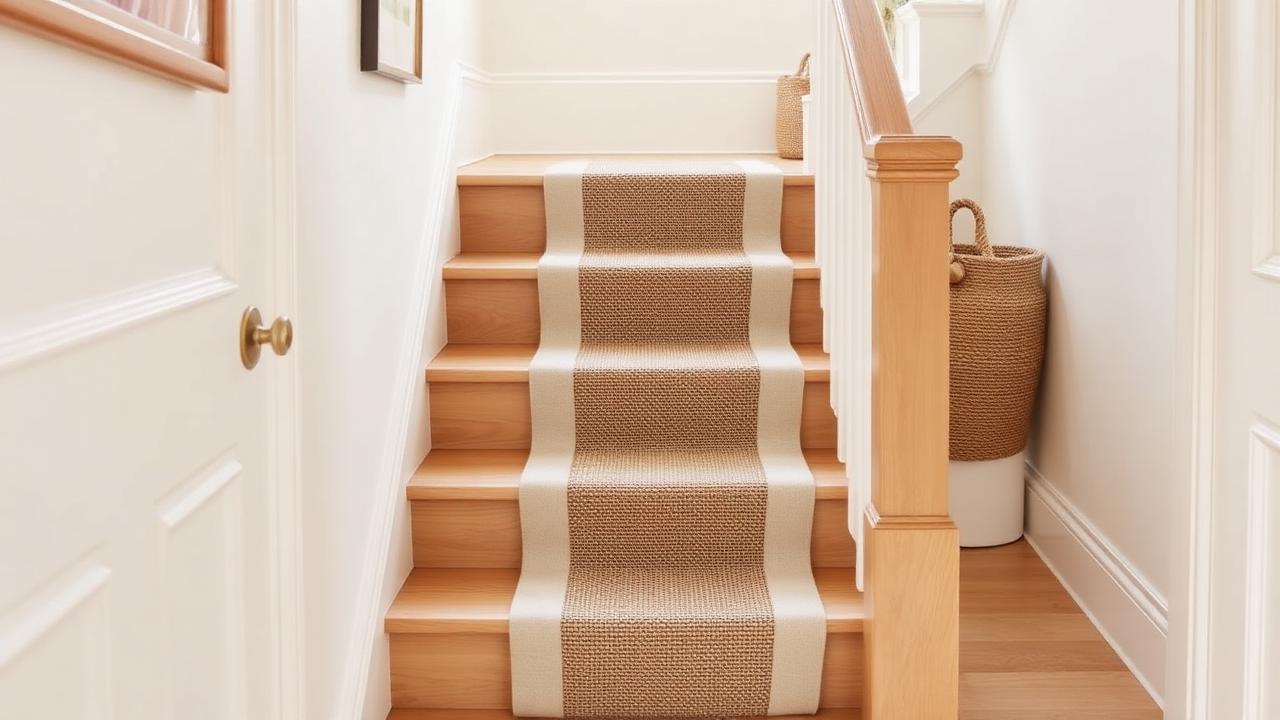
The practical upshot is that a loop-pile weave, while great for dog grip, is actually the riskiest choice for a household with cats, since a claw can hook a single loop and pull it clean out. Cut-pile weaves, where the fibre ends are trimmed rather than looped, are far more claw-resistant because there's no loop to snag - a claw might scratch the surface but there's nothing continuous to pull. A tight, dense cut-pile wool or wool-blend twist is generally the best all-round choice for cat households.
Best and worst materials for a cat stair runner
- Best: dense wool or wool-blend cut-pile twist - claw-resistant and durable.
- Good: solution-dyed nylon cut pile - similar resistance, more stain-resistant, usually cheaper.
- Risky: any loop-pile or Berber weave - loops snag and pull under repeated scratching.
- Risky: sisal and jute - natural fibres actively invite scratching behaviour and fray fast.
- Avoid: loosely woven flatweave or thin budget synthetics - low fibre density gives claws easy purchase.
Trim claws and provide an alternative scratch surface
No stair runner material is fully scratch-proof if a cat decides the stairs are the scratching post. Keeping claws trimmed and placing a dedicated scratching post near the base or top of the stairs genuinely reduces damage, alongside choosing a cut-pile weave.
How much runner do I need?
Working in US measurements: a 13-step flight with a 10 in tread run, 7.5 in riser and a 0.75 in nosing wrap comes to 18.25 in per step. Across 13 steps that's 237.25 in, or 19.77 ft. Add a top-and-bottom finishing allowance of 24 in total to reach 21.77 ft, then apply a 7% waste margin for straight cuts, landing at roughly 23.3 ft - order 23-24 ft. Because a cat runner benefits from a slightly tighter fit with no loose edges, ask your fitter to use a few extra fixing points along each edge rather than the standard minimum.
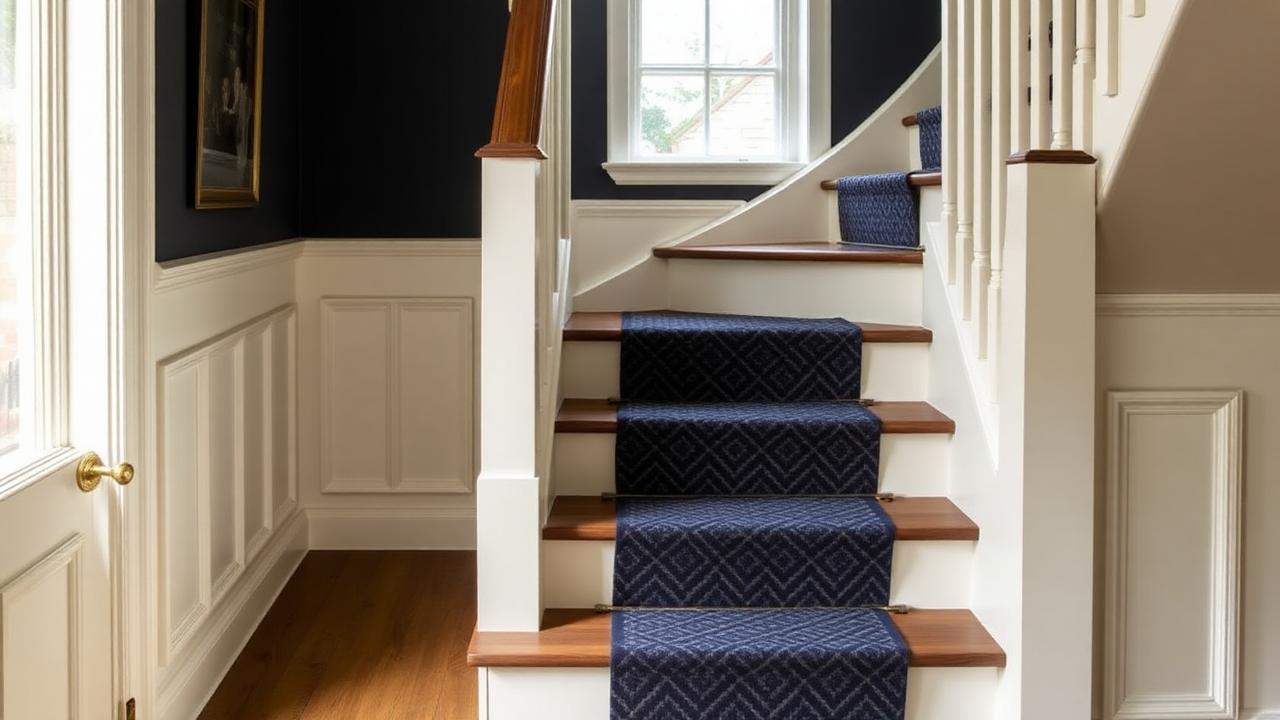
In UK metric: 25 cm tread run, 19 cm riser and 1.9 cm nosing wrap gives 45.9 cm per step, or 596.7 cm across 13 steps. Add a 60 cm finishing allowance for 656.7 cm, then apply a 7% waste margin to reach about 7.03 m. If your staircase has a tight turn or winder steps where a cat likes to sit and scratch at a bunched edge, add a touch more waste allowance there specifically, since winders are where fitters most often need extra material to keep the weave straight.
| Measurement | US (in/ft) | UK (cm/m) |
|---|---|---|
| Tread run | 10 in | 25 cm |
| Riser height | 7.5 in | 19 cm |
| Per-step total | 18.25 in | 45.9 cm |
| 13 steps subtotal | 19.77 ft | 5.97 m |
| With finishing allowance | 21.77 ft | 6.57 m |
| With 7% waste margin | 23.3 ft | 7.03 m |
Know your numbers in 30 seconds
Enter your step count, tread depth and riser height — the stair runner calculator gives you the exact length to order, in metres and feet, with waste included.
Open the stair runner calculatorFixing and edge details that resist scratching
Edges are where cats do the most damage, because a slightly proud edge or a corner that lifts even a millimetre is an invitation to scratch and worry at it. Ask for the runner to be fitted with gripper rods rather than just tacked or glued at the edges, since gripper holds the fabric taut and flush along its full length rather than only at fixing points. If you prefer stair rods for the look, make sure they're tensioned properly on each step - a loose rod that lets the runner bag slightly in the middle of a tread gives a cat's claw somewhere to dig in that a taut runner doesn't.
Binding on the runner's edges also matters. A well-bound edge with a tight overlocked or serged finish resists fraying far longer than a raw or loosely finished edge, and most reputable stair runner carpet suppliers will bind edges as standard - it's worth confirming this before you order rather than assuming.
Cleaning and living with a scratched runner
Even with the best materials, expect some light surface texture change over the years from claws, especially near the top few steps where cats often sit and watch the household. This is cosmetic rather than structural in most cases and doesn't mean the runner needs replacing - a light trim of any raised or snagged fibres with sharp scissors, done carefully and rarely, keeps the surface looking tidy without pulling more thread loose. Vacuum regularly using a brush attachment rather than a beater bar on wool runners, since a beater bar can catch and worsen any existing snags.
If you're choosing between several stair runners for a mixed household with both cats and other pets, prioritise the cut-pile, claw-resistant option even if a dog would slightly prefer more texture, since the risk of active thread-pulling damage from a cat tends to shorten a runner's life faster than a dog's flattening wear does. Get your total length and width confirmed with a stair runner length calculator before ordering, since reordering extra material to match dye lots exactly later is rarely straightforward.
Whatever you decide, get the numbers first: the stair runner calculator doubles as a stair runner length calculator, adding nosing wrap, landings, winders, pattern repeat and waste so you order the right length the first time.
Frequently asked questions
What is the best stair runner material for cats?
A dense, tightly woven cut-pile wool or wool-blend twist is best for cats, since there are no loops for claws to hook and pull. Loop-pile and Berber weaves, while good for dog grip, are actually more prone to snagging and unravelling under a cat's claws.
Will my cat destroy a stair runner?
Not necessarily. A cut-pile weave with well-bound edges and secure gripper-rod fitting resists significant damage, and providing a dedicated scratching post nearby reduces the chance a cat targets the stairs at all.
Are loop-pile stair runners bad for cats?
Yes, generally. Loop-pile and Berber weaves give a claw an easy loop to hook into and pull, which can unravel a visible ladder of thread within weeks. Cut-pile weaves are far more resistant to this specific type of damage.
How do I stop my cat scratching the stair runner?
Keep claws trimmed regularly, provide an alternative scratching post near the stairs, and choose a claw-resistant cut-pile material with securely fitted, well-bound edges. A taut fit on gripper rods also reduces loose edges a cat can worry at.
Does carpet type matter for cat scratching on stairs?
Yes, significantly. Natural fibres like sisal and jute tend to invite scratching and fray quickly, while a dense wool or synthetic cut pile resists claw damage far better and is a safer choice for stairs a cat regularly uses.
How much runner do I need for a 13-step staircase?
For a typical 13-step flight with 10 in (25 cm) treads and 7.5 in (19 cm) risers, plan for roughly 23-24 ft (7-7.3 m) once nosing wrap, finishing allowance and a 7% waste margin are included.
Can I repair a stair runner a cat has snagged?
Light snags on a cut-pile weave can often be trimmed carefully with sharp scissors without further damage. Deeper pulls on a loop-pile runner are harder to fix invisibly and may need a professional repair or a section re-fit.
Is wool or synthetic better for a stair runner with cats?
Both can work well in cut-pile form. Wool feels warmer and hides light marks slightly better, while solution-dyed synthetic fibres are typically more stain-resistant and often more budget-friendly for a household replacing a runner more frequently.
Know your numbers in 30 seconds
Enter your step count, tread depth and riser height — the stair runner calculator gives you the exact length to order, in metres and feet, with waste included.
Size your cat-friendly runner with the stair runner calculatorReady for real prices?
Get quotes from vetted stair runner suppliers and fitters near you. Free, no account, no obligation.
Every guide is written from hands-on measuring and fitting experience, checked against the calculator’s own maths, and re-reviewed whenever prices or methods change. Read our editorial standards.