
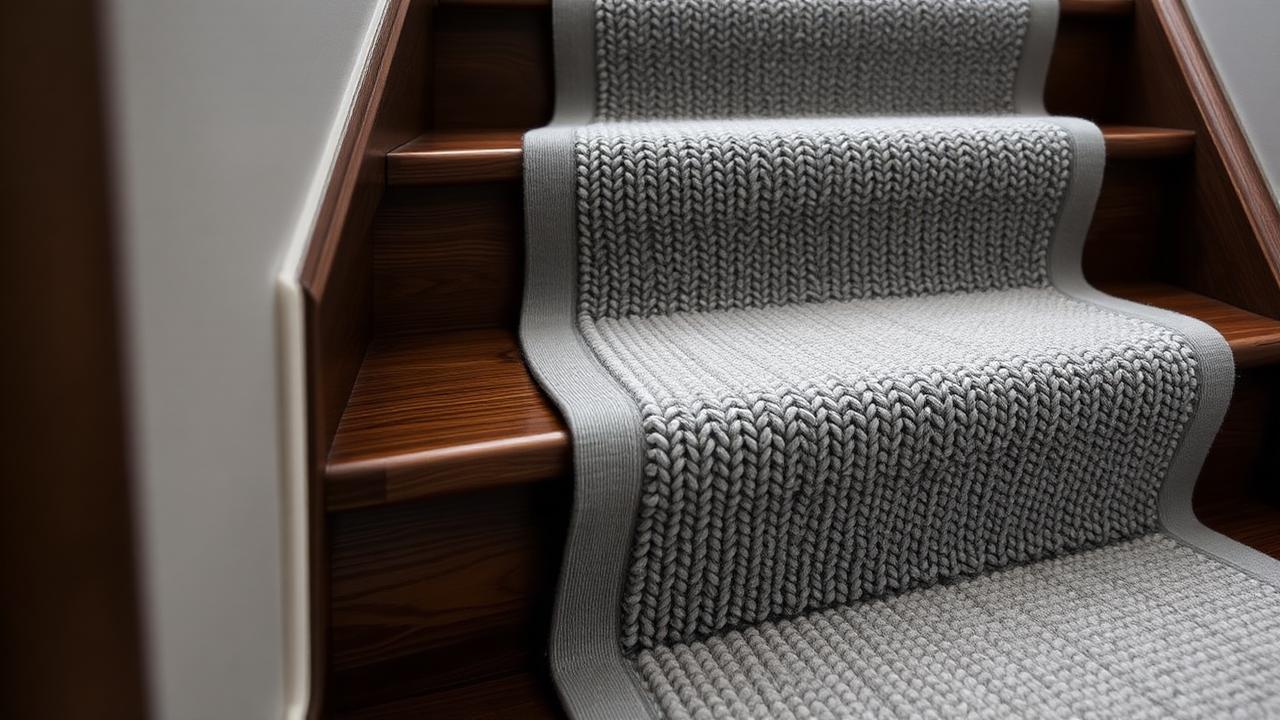
The honest trade-off, before you pick a side
I get asked this on nearly every survey where the client has stripped back an old stair carpet and found decent pine or oak treads underneath. Painted stairs look sharp in photos and cost very little to start, a few tins of floor paint and a weekend, but they're loud underfoot, they're slippery in socks, and the paint chips at the nosings within a year or two on any staircase that gets daily use. A carpet stair runner costs more up front, but it deadens sound between floors, it grips far better on the leading edge of each tread, and it hides the small imperfections in older treads that painting would only draw attention to.
Neither option is objectively correct. On a lightly used staircase to a guest loft or an office conversion, painted treads with a runner-width painted stripe down the centre can look genuinely smart and cost next to nothing to maintain. On a family staircase used by kids, dogs and anyone carrying laundry baskets multiple times a day, a proper stair runner is the safer, quieter, longer-lasting choice, and most fitters will tell you the same thing when asked directly rather than sold to.
Noise, grip and everyday comfort
Bare or painted timber transmits footfall noise through the whole staircase structure, which is a real problem in a two-storey terrace where a bedroom sits directly above or beside the stairwell. A wool or wool-blend stair runner with a felt or rubber underlay absorbs a large chunk of that impact noise, which is one of the most common reasons clients switch back to a runner after a few years of painted treads. Grip matters just as much: painted wood, even with an anti-slip additive mixed into the paint, gets noticeably slippery when damp socks or bare feet cross it, whereas a cut-pile or loop-pile runner gives real traction on the leading edge of each tread where slips actually happen.
Painted stairs and small children
If you have toddlers or older relatives visiting regularly, treat painted stairs as a style choice for a low-traffic flight only. A stair runner with a firm underlay measurably reduces slip risk on the tread nosings, which matters more than any cosmetic preference.
How much runner do I need?
Say your staircase has 13 steps, each with a 10 in tread run and a 7.5 in riser height, and you're wrapping the runner over a standard rounded nosing that adds 0.75 in per step. That's 10 + 7.5 + 0.75 = 18.25 in per step, or 237.25 in across 13 steps, which is 19.77 ft. Add 12 in at the top to tuck under landing carpet and 12 in at the bottom for a clean finish, giving 261.25 in, or 21.77 ft, then build in an 8% waste allowance for pattern matching and straight cuts, landing on roughly 23.5 ft of runner to order.

In UK measurements, the same flight is 25 cm tread run, 19 cm riser height and a 1.9 cm nosing wrap, so 45.9 cm per step. Across 13 steps that's 596.7 cm, plus a 60 cm total finishing allowance for 656.7 cm, then an 8% waste margin brings you to roughly 7.1 m. If you're comparing costs against painting the same flight, remember paint is priced per staircase, not per length, so the maths genuinely differs between the two options rather than just the materials involved.
| Factor | Painted stairs | Stair runner |
|---|---|---|
| Typical upfront cost | Low, mainly paint and primer | Moderate to high depending on fibre |
| Noise reduction | None | Significant with underlay |
| Slip grip | Poor when damp | Good on cut or loop pile |
| Maintenance cycle | Repaint every 2-4 years in heavy use | Vacuum weekly, clean spills promptly |
| Shows tread imperfections | Yes, paint highlights flaws | No, runner hides minor damage |
Know your numbers in 30 seconds
Enter your step count, tread depth and riser height — the stair runner calculator gives you the exact length to order, in metres and feet, with waste included.
Open the stair runner calculatorCombining both on the same staircase
A popular middle ground is painting the exposed tread either side of a runner in a colour that matches the skirting or the balusters, then fitting a centre runner over the main walking line. This gives you the grip and noise benefits of carpet exactly where feet actually land, while keeping the cost and visual lightness of painted wood on the margins. It also means if the runner ever needs replacing, the painted sides don't need touching up at the same time, which keeps future maintenance cheaper and simpler.
- Sand and prime the exposed tread edges before painting, using a hard-wearing floor enamel rather than wall paint.
- Measure and order your stair runner carpet before painting, so you know exactly where the painted margin will sit.
- Fit the runner with rods or a fitted underlay once the paint has fully cured, usually 5-7 days for oil-based floor paint.
- Leave a slightly wider painted margin, at least 3 in (7.5 cm) per side, so the paint reads as a deliberate design choice rather than an afterthought.
Long-term cost and resale thinking
Painted stairs are cheaper to redo but need redoing more often in a busy household; expect visible wear at the tread edges within 18-24 months without a very durable finish. A quality stair runner, particularly wool or a wool-blend, can last 10-15 years with proper care, and because most stair runners are cut narrower than the full staircase width, moving or replacing it doesn't disturb the surrounding paint or stain finish at all. From a resale perspective, buyers generally respond well to either option if it's done neatly, but a runner reads as more finished and less like an unfinished DIY project, which matters more than people expect when a house is being viewed.
One detail people miss: painted treads eventually need the old paint stripped back to bare wood if you decide to switch to natural stain instead, which is a genuinely bigger job than lifting an old carpet runner and refinishing underneath. If there's any chance you'll want a stained finish down the line, a stair runner over an unpainted, sealed tread keeps that option open far more easily than paint does.
Whatever you decide, get the numbers first: the stair runner calculator doubles as a stair runner length calculator, adding nosing wrap, landings, winders, pattern repeat and waste so you order the right length the first time.
Frequently asked questions
Is a stair runner cheaper than painting stairs?
No, painting is almost always cheaper upfront since it's just primer, floor paint and your own labour, while a stair runner involves carpet, underlay and often professional fitting. Over 10+ years the runner can work out comparable once repainting cycles are factored in.
Are painted stairs noisy?
Yes, bare or painted timber transmits footfall noise through the staircase structure far more than carpet does. A stair runner with underlay meaningfully reduces impact noise, which matters most in homes where a bedroom sits near the stairwell.
Can I paint stairs and still add a runner later?
Yes, this is a common approach. Paint the full tread first, let it cure fully, then fit a centre runner over the walking line, leaving a painted margin exposed on each side for a finished, deliberate look.
Do painted stairs get slippery?
Painted timber can get noticeably slippery when damp, especially in socks, even with an anti-slip additive mixed into the paint. A stair runner with cut or loop pile gives far better grip on the tread nosings where slips typically happen.
How often do painted stairs need redoing?
In a busy household, expect visible wear at the tread edges within 18-24 months without a very durable floor enamel, and a full repaint every 2-4 years. Low-traffic staircases can go considerably longer between coats.
What paint finish is best for stair treads?
Use a hard-wearing floor or deck enamel rather than standard wall or trim paint, ideally with a textured or anti-slip additive mixed in. Oil-based floor paints generally outlast water-based ones on high-traffic tread nosings.
Does a runner hide damage better than paint?
Yes, a stair runner covers dents, old fixing holes and uneven boards that painting would only highlight once light catches the surface. If your treads have real cosmetic damage, a runner is usually the more forgiving choice.
How much runner do I need if I only cover the centre of painted stairs?
For a 13-step flight with 10 in (25 cm) treads and 7.5 in (19 cm) risers, a centre runner still needs roughly 23-24 ft (7-7.3 m) including nosing wrap, finishing allowance and an 8% waste margin, regardless of how much painted tread you leave exposed either side.
Know your numbers in 30 seconds
Enter your step count, tread depth and riser height — the stair runner calculator gives you the exact length to order, in metres and feet, with waste included.
Work out exact runner length with the stair runner calculatorReady for real prices?
Get quotes from vetted stair runner suppliers and fitters near you. Free, no account, no obligation.
Every guide is written from hands-on measuring and fitting experience, checked against the calculator’s own maths, and re-reviewed whenever prices or methods change. Read our editorial standards.