

Painted stairs are common and mostly straightforward, with one caveat
Painted staircases, whether it's a farrow-and-ball finish on period stairs left with a runner down the middle, or a plain white gloss over softwood treads in a newer build, are actually one of the easier substrates to fit a runner on, because most paints on stair treads are applied over the same softwood or MDF that fitters staple into every day. The one genuine caveat is paint curing time. Fresh paint, even when it looks and feels dry to the touch within a day, can take two to three weeks to fully cure hard, and stapling, taping or heavy foot traffic on an under-cured painted surface will chip the edges around each staple hole or leave the tape adhesive bonded into a still-soft film that tears the paint off when removed.
On a Victorian flight I refurbished last year, the client had just had the stringers and exposed tread edges repainted in a bespoke off-white and wanted the runner down within the week. I pushed the fitting date back ten days specifically because of this - a rushed fit would have chipped every single staple point along that freshly painted edge, and repainting after the runner's down is a much bigger, fiddlier job than waiting.
Fixing method one: staples, the standard choice
Once paint is properly cured, direct stapling works well on painted treads exactly as it would on bare wood, because the staple is going through the paint film into the timber underneath, not relying on the paint itself for any grip. Use a staple gun with adjustable depth control so you're not punching so hard that the staple crown crushes and chips the paint around the entry point - on a painted surface this chipping is far more visible than on bare or stained wood, since it shows as a pale ring of exposed substrate against the painted colour.
If you want the staple line genuinely invisible, use the gripper-rod method instead, since the gripper's own small fixings sit in the internal tread-riser angle rather than on the visible painted face, and the runner itself covers that whole area once stretched into place.
Fixing method two: adhesive tape or carpet tape
Double-sided carpet tape works on painted stairs too, and it's a genuinely good no-staple option if you want to avoid any holes in the paint at all, particularly on a rental property or a staircase you're not planning to keep the runner on permanently. The trade-off is holding power - tape alone on a busy main staircase can work loose at the edges within a year or two of heavy use, especially on the leading edge of each tread where feet land hardest, so it suits lighter-traffic stairs, guest stairs, or a temporary runner better than a permanently fixed main flight.
Test tape adhesion before committing
Some paints, especially chalky or matte finishes, don't bond well with adhesive tape and the tape can peel a thin layer of paint off with it when removed. Test a small offcut of tape on an inconspicuous painted area first and leave it a full day before judging.
Protecting paint during the fit itself
- Wait for full paint cure, typically 2-3 weeks, before fitting, not just surface-dry to the touch.
- Mask the exposed tread edges either side of where the runner will sit with low-tack painter's tape before working.
- Use a staple gun with depth control set to just sink the crown flush, not crush into the paint.
- Lay felt or card under any tool bag, knee pad or equipment resting on the painted tread during the job.
- Touch up any small chips immediately after fitting with matched paint while the can or tin is still to hand.
How much runner do I need?
Sizing a runner for painted stairs uses exactly the same formula as any other substrate - the paint doesn't add or remove any length, it only affects fixing method and timing. Take a US example: 13 steps, 10 in tread run, 7.5 in riser height, and a 0.75 in nosing wrap allowance for a standard painted tread edge. That's 18.25 in per step, 237.25 in across 13 steps, or 19.77 ft. Add a 24 in top-and-bottom finishing allowance to reach 261.25 in, then apply a 7% waste margin for straight cuts, landing at roughly 279.5 in, about 23.3 ft, so order 23-24 ft.
In UK metric units that's 25 cm treads, 19 cm risers and a 1.9 cm nosing wrap for 45.9 cm per step, 596.7 cm across 13 steps, plus a 60 cm finishing allowance for 656.7 cm, and with the 7% waste margin you land at roughly 7.03 m. Run these figures through a stair runner calculator for your own exact tread and riser measurements before ordering, since even a small error compounds across a full flight of painted steps you'll then need to touch up around if you fall short and need to re-fit.
| Step count | US length | UK length |
|---|---|---|
| 11 steps | 18.5 ft | 5.6 m |
| 13 steps | 23.3 ft | 7.0 m |
| 15 steps | 25.9 ft | 7.9 m |
Know your numbers in 30 seconds
Enter your step count, tread depth and riser height — the stair runner calculator gives you the exact length to order, in metres and feet, with waste included.
Open the stair runner calculatorColour and paint pairing considerations
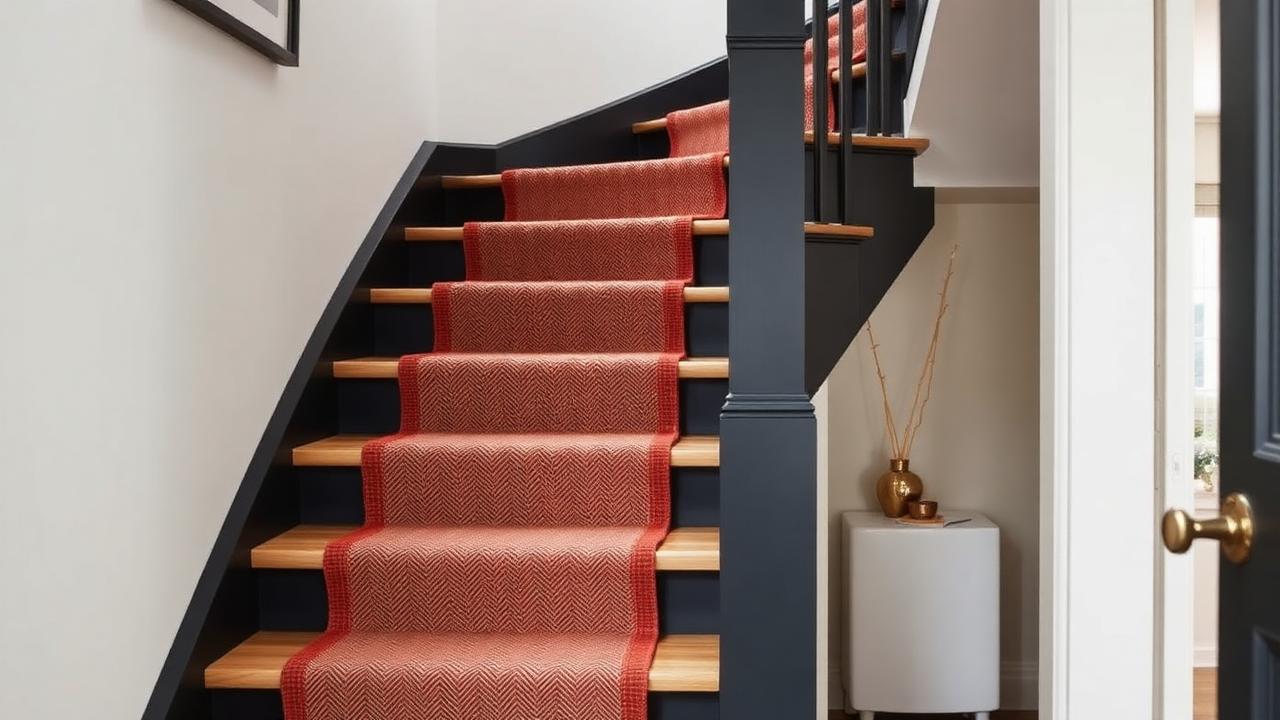
Painted stairs are usually painted precisely because the owner wants a clean, controlled colour either side of the runner, so it's worth choosing a runner colour that's tested against the paint colour in person rather than from a swatch on screen, since paint sheen (matte, eggshell, gloss) changes how a colour reads next to fabric quite noticeably. A common pairing is a pale, off-white painted stringer and riser with a deeper, patterned or striped stair runners carpet running down the centre, which keeps the painted woodwork looking crisp while the runner carries the visual weight and the wear.
What to do if the paint is already chipping before you fit
If the existing paint on your stair treads is already flaking, chipped or peeling before you've even started fitting, sort that first rather than fitting over it. A runner fitted over failing paint traps moisture and movement under the fixing points, which accelerates the paint failure right at the exact spots doing the structural work of holding your runner down. A light sand, primer and fresh top coat, given the full cure time before fitting, is worth the delay compared to re-doing the whole job within a year because the paint let go underneath the staples.
Whatever you decide, get the numbers first: the stair runner calculator doubles as a stair runner length calculator, adding nosing wrap, landings, winders, pattern repeat and waste so you order the right length the first time.
Frequently asked questions
How long should painted stairs cure before fitting a runner?
Give freshly painted stairs at least 2-3 weeks of full cure time before stapling, taping or heavy foot traffic, even if the paint feels dry to the touch within a day or two, since surface-dry and fully cured are different things.
Will staples chip painted stair treads?
They can if the staple gun is set too aggressively or the paint hasn't fully cured. Use a depth-adjustable staple gun set to sink the crown flush rather than crush it, and always wait for full paint cure first.
Can I use carpet tape instead of staples on painted stairs?
Yes, and it avoids any holes in the paint, but tape alone has less holding power than staples or a gripper rod on a busy main staircase and suits lighter-traffic or temporary installations better.
Does paint colour affect how much runner I need?
No. Paint colour and finish only affect fixing method and how a runner colour reads next to it visually - the length and width calculation is based purely on tread, riser and step count measurements, not the paint.
What if my stair paint is already chipping?
Sand, prime and repaint before fitting the runner, and give the new paint full cure time. Fitting over already-failing paint traps movement under the fixing points and accelerates further paint failure.
Is a gripper rod better than staples on painted stairs?
A gripper rod hides its fixing points in the internal tread-riser angle rather than on the visible painted face, so it's the tidier option if you want zero visible marks on the surrounding paint.
How much runner do I need for a 13-step painted staircase?
For a 13-step flight with 10 in (25 cm) treads and 7.5 in (19 cm) risers, budget roughly 23-24 ft (7.0-7.2 m) including nosing wrap, finishing allowance and waste margin, the same as any other substrate.
Should I touch up paint chips before or after fitting the runner?
Touch up any accidental chips immediately after fitting, while paint tins and colour matches are still on hand, since exposed substrate around a fixing point left unsealed can pick up moisture and swell over time.
Know your numbers in 30 seconds
Enter your step count, tread depth and riser height — the stair runner calculator gives you the exact length to order, in metres and feet, with waste included.
Size your painted staircase with the stair runner calculatorReady for real prices?
Get quotes from vetted stair runner suppliers and fitters near you. Free, no account, no obligation.
Every guide is written from hands-on measuring and fitting experience, checked against the calculator’s own maths, and re-reviewed whenever prices or methods change. Read our editorial standards.