
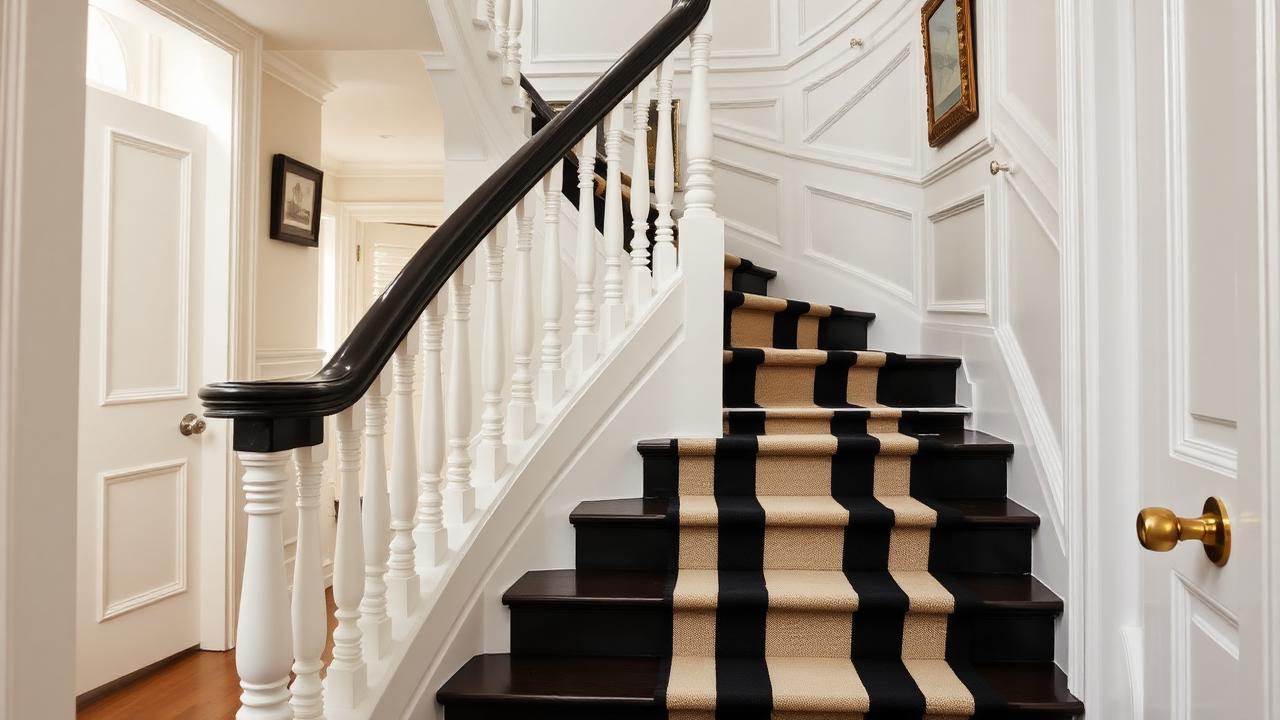
Why charcoal is the low-maintenance default
If a client tells me they want the lowest-maintenance colour full stop, charcoal is usually where the conversation ends up. It disguises muddy footprints, general soiling and the everyday scuffing of daily foot traffic better than beige, grey or cream, which is exactly why so many hallway and entrance-adjacent staircases end up charcoal regardless of the rest of the interior's colour scheme. The trade-off is that it shows the opposite kind of mess: dust, lint, tissue fluff and pale pet hair sit visibly on a dark background in a way they'd disappear into a lighter runner, so charcoal swaps one maintenance task, hiding stains, for another, more frequent vacuuming to catch surface debris.
Charcoal also does real work visually. Against a pale painted staircase or light oak treads, it creates strong definition and makes the staircase read as an intentional design feature rather than just a functional route between floors. Paired with brass or black stair rods, it has a genuinely tailored, almost hotel-lobby look that lighter neutrals struggle to match. It's not a colour that fades into the background, and it's worth being honest with yourself about whether that's the effect you want before ordering, since a dark runner does draw the eye more than a beige or taupe one.
Where charcoal works and where it doesn't
Charcoal earns its keep on staircases near a front or back door, in mudroom-adjacent hallways, and in households with dogs that track in outdoor dirt regularly, all situations where hiding soiling day to day matters more than showing off a pale, bright palette. It's less suited to a very dark, low-light stairwell with no natural light source at the top or bottom, since a dark runner in a dark stairwell can make the whole space feel enclosed rather than defined. If your staircase already gets limited daylight, pair charcoal with a well-lit stairwell (uplighters, a skylight, pale walls) rather than skipping the colour altogether, since the practical wear benefits are genuinely significant.
Check your lighting before committing to charcoal
A charcoal runner in a naturally dark stairwell with painted dark walls can feel like a tunnel. If your stairs already lack daylight, keep the walls pale and add a light fixture partway up the flight to balance the dark floor treatment.
How much runner do I need?
For a 13-step US flight, 10 in tread run, 7.5 in riser height, plus a 0.75 in nosing wrap allowance per step, the per-step total is 18.25 in, giving 237.25 in (19.77 ft) across the flight. Add a 24 in combined top and bottom finishing allowance for 261.25 in (21.77 ft), then apply a 7% waste margin for a final order length of roughly 23.3 ft. Charcoal doesn't require a different formula, though if you're pairing it with a border or a herringbone weave, which is common on charcoal runners for exactly the tailored look mentioned earlier, budget closer to 9-10% waste for pattern alignment.
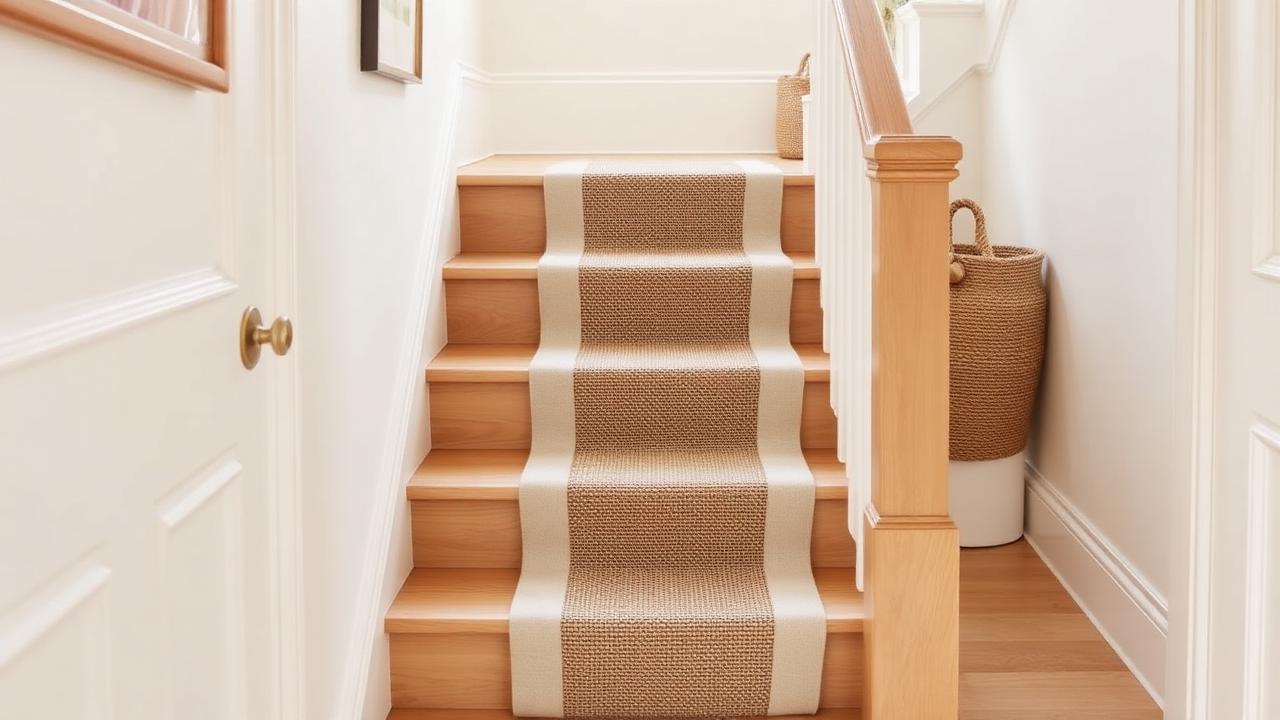
In UK metric terms: 25 cm tread run, 19 cm riser height, 1.9 cm nosing wrap gives 45.9 cm per step, or 596.7 cm across 13 steps. Add 60 cm finishing allowance for 656.7 cm, then apply a 7-9% waste margin depending on whether the weave is flat or patterned, landing between roughly 7.0-7.2 m. A shorter 11-step flight needs around 5.6 m (18.5 ft), and a longer 16-step flight needs closer to 8.1 m (26.5 ft), using the same per-step figures.
| Step count | Estimated length (US) | Estimated length (UK) |
|---|---|---|
| 11 steps | 18.5 ft | 5.6 m |
| 13 steps | 23.3-23.9 ft | 7.0-7.2 m |
| 16 steps | 26.5-27.2 ft | 8.1-8.3 m |
Know your numbers in 30 seconds
Enter your step count, tread depth and riser height — the stair runner calculator gives you the exact length to order, in metres and feet, with waste included.
Open the stair runner calculatorFibre and finish choices that suit dark colours
A tightly woven wool or wool-blend charcoal runner hides dust more effectively than a loose, open-weave synthetic, since a tighter weave gives lint and pet hair less surface area to cling to and vacuums up more completely. Look for a flecked or subtly heathered charcoal rather than a completely flat, solid dark colour if you're specifically worried about dust visibility, since a slight fleck breaks up the surface and disguises pale particles far better than a uniform block colour. Solution-dyed nylon in charcoal is a durable, budget option and resists fading from sunlight better than wool, which matters on any staircase that gets direct sun through a stairwell window for part of the day.
- Choose a flecked or heathered charcoal over a flat solid colour if dust and lint are your main worry.
- Pair a charcoal runner with brass or black stair rods for a tailored, finished look.
- Keep stairwell walls pale if the flight already has limited natural light.
- Budget a slightly higher waste margin for bordered or patterned charcoal weaves.
- Vacuum at least twice weekly on charcoal to control visible dust and lint buildup.
Living with a charcoal runner
Households that switch to charcoal from a paler colour often report the same thing: fewer visible stains, but more frequent, quicker vacuuming sessions to keep dust from becoming obvious. That trade generally suits busy families and pet owners well, since a five-minute vacuum run is a much smaller task than spot-treating a stain on a pale runner before it sets. If you're weighing charcoal against a mid-tone grey and can't decide, ask yourself honestly whether dust or stains bother you more day to day, since that single question usually settles it.
As with any colour, get your measurements right before ordering. A stair runner calculator applies the same nosing wrap, finishing allowance and waste calculation regardless of colour, but it's worth running your own tread run, riser height and step count through it rather than relying on the reference figures above, since even a small difference in riser height across a flight changes the total more than most people expect. Charcoal stair runners in particular are worth ordering with a slightly generous waste margin, since any reorder to match an existing dye lot exactly can be harder with darker, richly saturated colours than with paler neutrals.
Whatever you decide, get the numbers first: the stair runner calculator doubles as a stair runner length calculator, adding nosing wrap, landings, winders, pattern repeat and waste so you order the right length the first time.
Frequently asked questions
Does a charcoal stair runner show dust and lint?
Yes, charcoal hides stains and mud very well but shows dust, lint and pale pet hair more visibly than a mid-tone grey or beige runner, so it needs more frequent light vacuuming to stay looking sharp.
Is charcoal too dark for a small or narrow staircase?
It can make a naturally dark, low-light stairwell feel more enclosed, so pair charcoal with pale walls and good lighting on a narrow flight rather than avoiding the colour outright, since the practical wear benefits are significant.
How much charcoal runner do I need for 13 steps?
For a standard 13-step flight with 10 in (25 cm) treads and 7.5 in (19 cm) risers, plan for roughly 23-24 ft (7-7.2 m), a touch more if you've chosen a bordered or patterned charcoal weave.
Is charcoal a good choice for households with pets?
Yes, charcoal is one of the best colours for hiding muddy paw prints and general dirt, though pale pet hair shows more against it than against a lighter runner, so more frequent vacuuming is worth planning for.
What fibre hides dust best on a charcoal runner?
A tightly woven wool or wool-blend with a subtle fleck or heather effect hides dust and lint better than a flat, solid synthetic weave, since the texture disguises pale particles rather than showing them against a uniform dark surface.
Does charcoal fade in direct sunlight?
Wool can fade slightly faster than solution-dyed nylon under strong, direct sunlight through a stairwell window, so if your staircase gets several hours of direct sun daily, a solution-dyed synthetic charcoal is the more colourfast option.
What stair rod finish suits a charcoal runner?
Brass and black stair rods both work well against charcoal, giving a tailored, finished look. Brass adds warmth and contrast, while black rods create a more understated, seamless line down the flight.
Should I choose charcoal or mid-grey for a busy staircase?
If stains and mud are your main concern, charcoal hides them better. If dust and lint bother you more, a mid-tone grey is easier to keep looking clean day to day without constant vacuuming.
Know your numbers in 30 seconds
Enter your step count, tread depth and riser height — the stair runner calculator gives you the exact length to order, in metres and feet, with waste included.
Size your charcoal runner precisely with the stair runner calculatorReady for real prices?
Get quotes from vetted stair runner suppliers and fitters near you. Free, no account, no obligation.
Every guide is written from hands-on measuring and fitting experience, checked against the calculator’s own maths, and re-reviewed whenever prices or methods change. Read our editorial standards.