
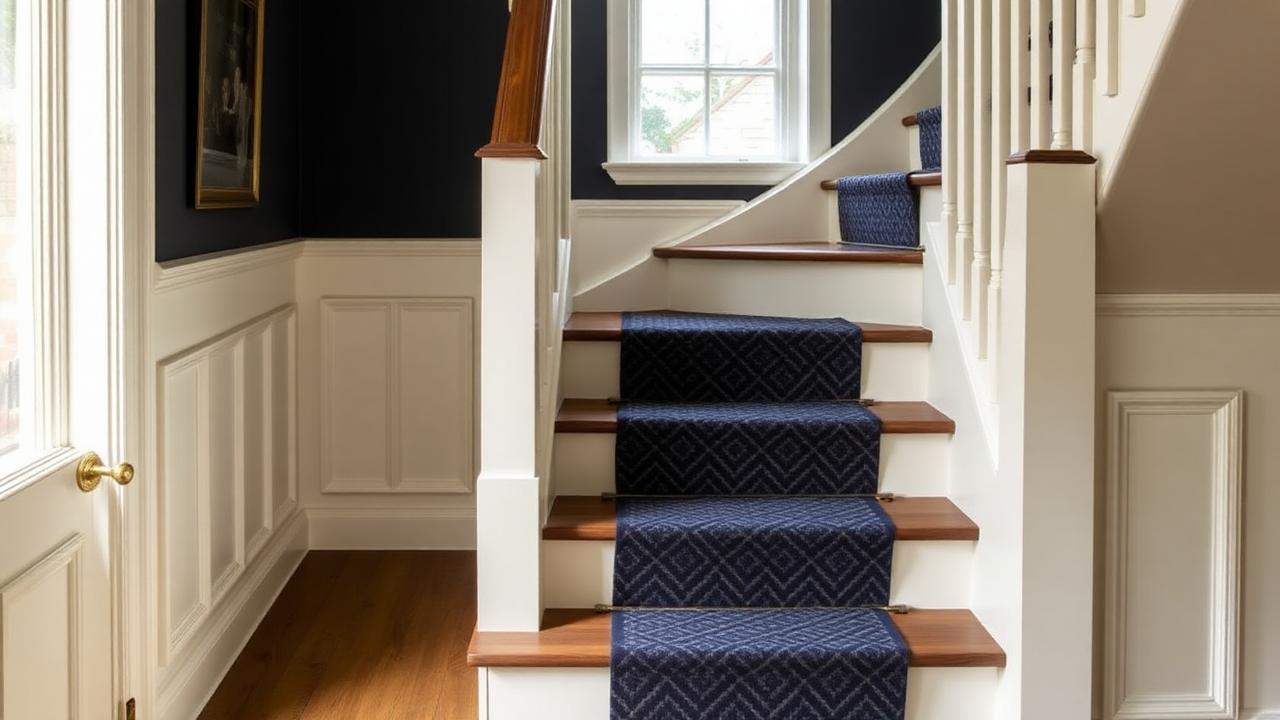
What actually hides dirt
| Colour | Hides dirt? | Notes |
|---|---|---|
| Mid-tone multi-colour | Best | Flecks and heathers disguise everything |
| Mid grey / greige | Very good | Modern and forgiving |
| Deep colour | Good | Hides marks, shows lint and pet hair |
| Pale cream / oatmeal | Poor | Beautiful and high maintenance |
| Pure black | Poor | Shows dust and every fibre |
Working with your treads
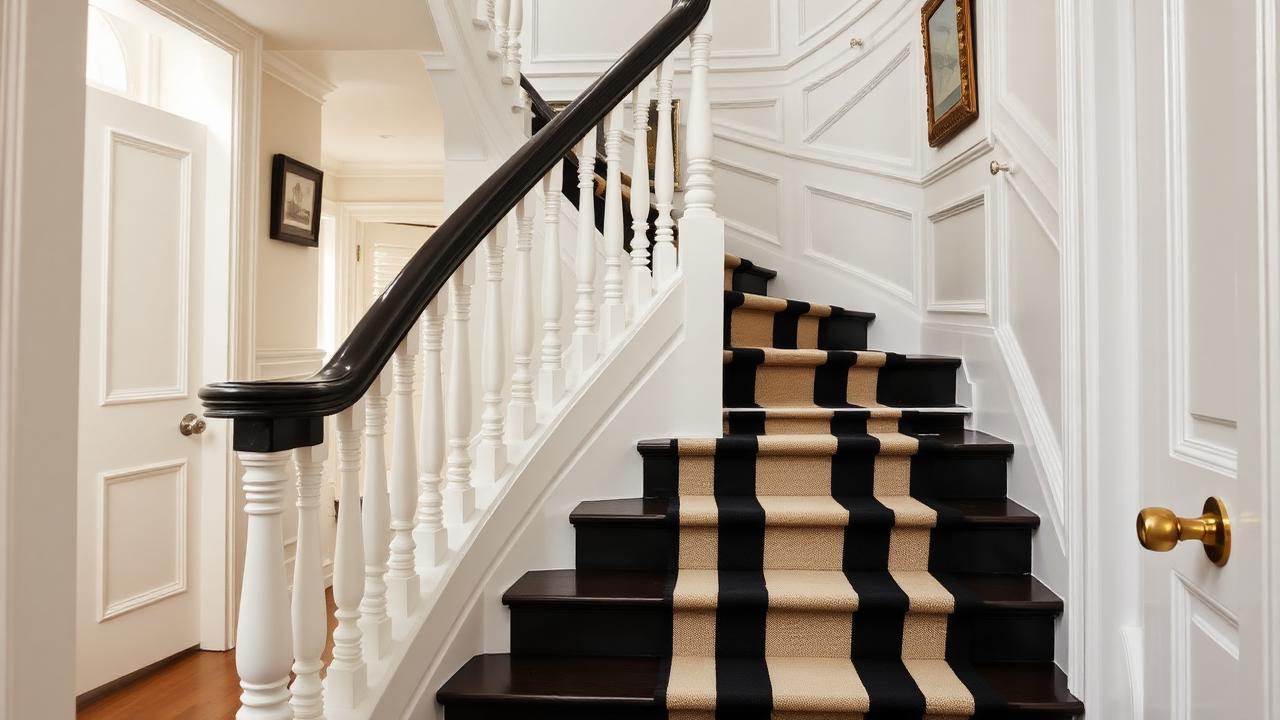
- Dark stained treads: a lighter runner lifts the staircase and makes the steps readable.
- Pale oak or painted white treads: almost anything works; deeper tones give the most drama.
- Worn or patched treads: a wider runner and a mid-tone colour hides the most.
- Painted risers: pick a runner tone that relates to the riser colour, not fights it.
Know your numbers in 30 seconds
Enter your step count, tread depth and riser height — the stair runner calculator gives you the exact length to order, in metres and feet, with waste included.
Open the stair runner calculatorColour and the feel of a hallway
A pale runner with a generous reveal makes a narrow hall feel wider and brighter. A deep, saturated runner with a narrow reveal makes a large hall feel cosier and more considered. Neither is wrong; decide which problem you are solving before you pick a swatch.
Always view samples on the stairs
Staircase light changes dramatically from top to bottom, and a colour that looks warm in the hall can look grey on the top landing. Tape samples to three steps and look at them morning and evening before deciding.
Undertones: the detail that trips people up
Every neutral has an undertone — warm (yellow, red, terracotta) or cool (blue, green, grey) — and it only becomes obvious once the runner is next to your actual walls, treads and skirting. A greige runner that looks perfectly neutral on a swatch card can suddenly read pink or green once it sits against a specific wall colour. Hold your sample against the woodwork and the wall paint together, not just the flooring, since the runner has to work with both.
Colour by household type
| Household | Best colour approach | Avoid |
|---|---|---|
| Young children and pets | Mid-tone multi-colour or fleck | Pale plain, pure black |
| Empty nesters, low traffic | Any — pale plains work well here | Nothing in particular |
| Rental property | Durable mid grey or heathered tone | Anything hard to clean or replace |
| Design-led, willing to maintain | Bold saturated colour or pale luxury tone | Nothing — go with the vision |
Testing a colour properly before ordering
- Order at least three A4-size samples, not tiny swatches, since colour perception shifts with scale.
- Tape each sample to the bottom, middle and top steps, since light varies through the flight.
- View them at three different times of day, including after dark under artificial light.
- Stand at the bottom of the stairs and at the top landing looking down, since both views matter.
- Live with the samples for at least a few days before deciding — first-impression enthusiasm often fades.
Dye lots
Order every metre you might ever need in one go, including the landing and any spare. Dye lots vary between production runs, and a replacement piece bought two years later will almost certainly read as slightly off.
Safe defaults
If you want a decision that will still look right in ten years: a mid-tone wool in a warm neutral with a subtle texture, 3–4in reveal, natural or brass hardware. It suits almost every house and it does not fight anything else in the hallway.
Mistakes worth avoiding
- Choosing a colour purely from a photograph online without ordering a physical sample.
- Picking pale cream for a main family staircase used daily by children or pets.
- Ignoring the runner's undertone against your actual wall and woodwork colours.
- Under-ordering and having to source a close match later from a different dye lot.
- Choosing colour before hardware finish, when the two should really be decided together.
How colour changes with fibre type
The same dye colour can look noticeably different depending on the fibre it is applied to. Wool tends to absorb dye more fully and reads slightly warmer and richer than the same shade on a synthetic fibre, which often has a subtle sheen that makes colours appear a touch cooler and more saturated under artificial light. Natural fibres like sisal and jute do not take dye evenly at all — colour sits closer to the surface and varies fibre to fibre, giving a naturally heathered, slightly muted look even in a single named colourway. If you are choosing between fibres as well as colours, request samples of your shortlisted colour in each fibre type side by side rather than assuming a colour name means the same thing across materials.
Colour and light direction through the day
| Time of day / light | Effect on runner colour |
|---|---|
| Morning, north-facing hallway | Cooler, flatter light; colours can look slightly grey or muted |
| Afternoon, south or west-facing window nearby | Warmer, stronger light; colours look richer and more saturated |
| Evening, artificial light only | Warm-white LEDs boost warm tones; cool-white LEDs mute them |
| Skylight or top-landing window above the stairs | Strong overhead light can wash out subtle pattern or fleck |
Because a staircase is usually lit from more than one direction and at more than one time of day, it is worth checking a sample specifically at the point in the house where it will actually sit, not just under a bright shop light or beside a sunny window elsewhere in the home. A hallway with limited natural light will make mid and pale tones look flatter than they do in a well-lit showroom, which is a common reason a runner looks slightly different once it arrives fitted compared with how it looked on the sample card.
Colour, resale and longevity of taste
Trend-led colours date faster on a staircase than almost anywhere else in a house, simply because the staircase is seen constantly and cannot be easily swapped out the way a cushion or a throw can. A strong seasonal colour that feels current now may feel dated within five to seven years, while a considered neutral with some texture or fleck tends to still look intentional a decade later. This does not mean avoiding colour altogether — it means being honest with yourself about whether you are choosing a colour you will want to live with for the long haul, or a shorter-term style statement you are prepared to replace sooner.
Whatever you decide, get the numbers first: the stair runner calculator doubles as a stair runner length calculator, adding nosing wrap, landings, winders, pattern repeat and waste so you order the right length the first time.
Still deciding on material, width or pattern? Our hub on stair runners compares weaves, widths, backings and fitting styles side by side, then hands the numbers straight to the calculator.
Frequently asked questions
What colour stair runner hides dirt best?
Mid-tone flecked or heathered colours hide dirt best, followed by mid greys and greiges. Pale creams and pure blacks are the hardest to keep looking clean.
Should the runner be lighter or darker than the stairs?
Contrast in either direction reads better than a near match. Lighter runners on dark treads lift the staircase; darker runners on pale treads look grounded and graphic.
How many samples should I order before choosing a colour?
At least three, and choose the largest sample size the supplier offers. Small swatches are notoriously unreliable for judging how a colour will read across a whole flight of stairs.
Does the colour of the walls matter more than the treads when choosing a runner colour?
Both matter, but wall colour is usually the larger surface area you are working with visually. Check the runner sample against the wall paint and the woodwork together rather than judging it against the treads alone.
Will my chosen colour look the same under LED lighting as it did in the shop?
Not necessarily. LED colour temperature varies widely and can shift how a runner reads compared with a showroom's lighting or daylight. Always check a sample under your own hallway lighting after dark before finalising the order.
Is it worth paying more for a better dye process to avoid colour variation?
Yes, particularly on natural fibres like wool, where solution-dyed or well-controlled batch-dyed yarns hold colour more consistently over time and fade less under UV than cheaper printed or lower-grade dyed alternatives.
Know your numbers in 30 seconds
Enter your step count, tread depth and riser height — the stair runner calculator gives you the exact length to order, in metres and feet, with waste included.
Cost your colour choiceReady for real prices?
Get quotes from vetted stair runner suppliers and fitters near you. Free, no account, no obligation.
Every guide is written from hands-on measuring and fitting experience, checked against the calculator’s own maths, and re-reviewed whenever prices or methods change. Read our editorial standards.