

The honest answer
A runner rarely adds a line-item amount to a valuation. What it does is remove objections — worn treads, a cold echoing hallway, a staircase that reads as unfinished — and objections are what drag offers down.
Where it genuinely helps
- Covering scuffed or mismatched timber treads without the cost of refinishing.
- Quietening a hard-surfaced hallway, which changes how a whole floor feels on a viewing.
- Signalling that a period staircase has been cared for rather than stripped and forgotten.
- Improving safety on steep or polished stairs — a real concern for buyers with children.
Neutral sells, bold delights
If you are fitting a runner to sell, choose a quiet wool in a warm neutral. If you are fitting it to live with, buy the leopard print.
Know your numbers in 30 seconds
Enter your step count, tread depth and riser height — the stair runner calculator gives you the exact length to order, in metres and feet, with waste included.
Open the stair runner calculatorWhen it is not worth it
- If the staircase structure itself is failing — fix the fabric first.
- If you are selling into a market where buyers gut everything anyway.
- If the only affordable option is a cheap polypropylene runner that will look tired in a year.
Cost against impact
| Spend | Typical outcome |
|---|---|
| $400–$700 | Removes a visible defect; neutral impact on price |
| $800–$1,500 | Reads as a considered renovation; helps first impressions |
| $2,000+ | Only pays back in higher-value homes where finish is expected |
What estate agents actually say
Agents rarely mention a runner as a selling point in the listing itself, but they consistently flag a worn or bare staircase as something to fix before photos. The staircase sits in the first three or four images of most listings because it is visible from the entrance hall, so its condition disproportionately shapes a buyer's very first impression before they have seen a single bedroom.
Comparing renovation spend by impact
| Renovation | Typical cost | Buyer impact |
|---|---|---|
| Stair runner, mid-range | $800–$1,500 | High — first thing seen, cheap relative to impact |
| Refinishing bare timber treads | $1,500–$3,500 | High but slower and messier to complete |
| Full staircase rebuild | $5,000+ | Only justified by structural need, not cosmetics |
Staging tips that make a runner work harder
- Match the runner tone to the hallway flooring rather than the wall colour, so the eye reads one continuous, considered space.
- Keep stair rods simple and consistent in finish with door handles and light fittings elsewhere in the hall.
- Fit a runner that covers the full width recommendation for the tread size — a too-narrow runner reads as cost-cutting to a buyer's eye.
- Vacuum and groom the pile immediately before every viewing; flattened, dusty pile undoes the benefit instantly.
Do not over-invest relative to the property
A $3,000 hand-loomed silk-blend runner will not move the needle on a starter home, and may look incongruous. Match the spend to the price bracket of the property, not to personal taste alone.
Estate agent staging checklist for staircases
- Clean or replace worn nosings and edging before photographing the property.
- Choose a neutral wool blend runner in a warm tone that photographs well under both natural and artificial light.
- Match stair rod finish to door handles, taps and light fittings elsewhere in the hallway.
- Vacuum and groom the pile the morning of every viewing, and re-check after wet weather when footfall brings in grit.
- Fix any creaking treads before fitting a runner — buyers notice sound as much as sight when walking a staircase during a viewing.
How runners compare with other quick pre-sale fixes
| Fix | Typical cost | Buyer-facing impact |
|---|---|---|
| Stair runner, mid-range | $800–$1,500 | High — visible from the front door |
| Fresh paint, hallway and stairs | $400–$900 | High — cheapest first-impression fix available |
| New front door | $600–$2,500 | Moderate to high — first thing seen from the street |
| Landscaping / kerb appeal | $300–$2,000 | High — sets expectations before the door even opens |
Regional and market-type differences
In competitive seller's markets, cosmetic touches like a stair runner tend to matter less because buyers are moving fast and discounting minor finish issues. In slower or buyer's markets, where a property may sit for months and buyers view multiple similar homes, small details like a tired staircase become a more meaningful point of comparison — and a well-chosen runner becomes a genuinely useful differentiator rather than a nice-to-have.
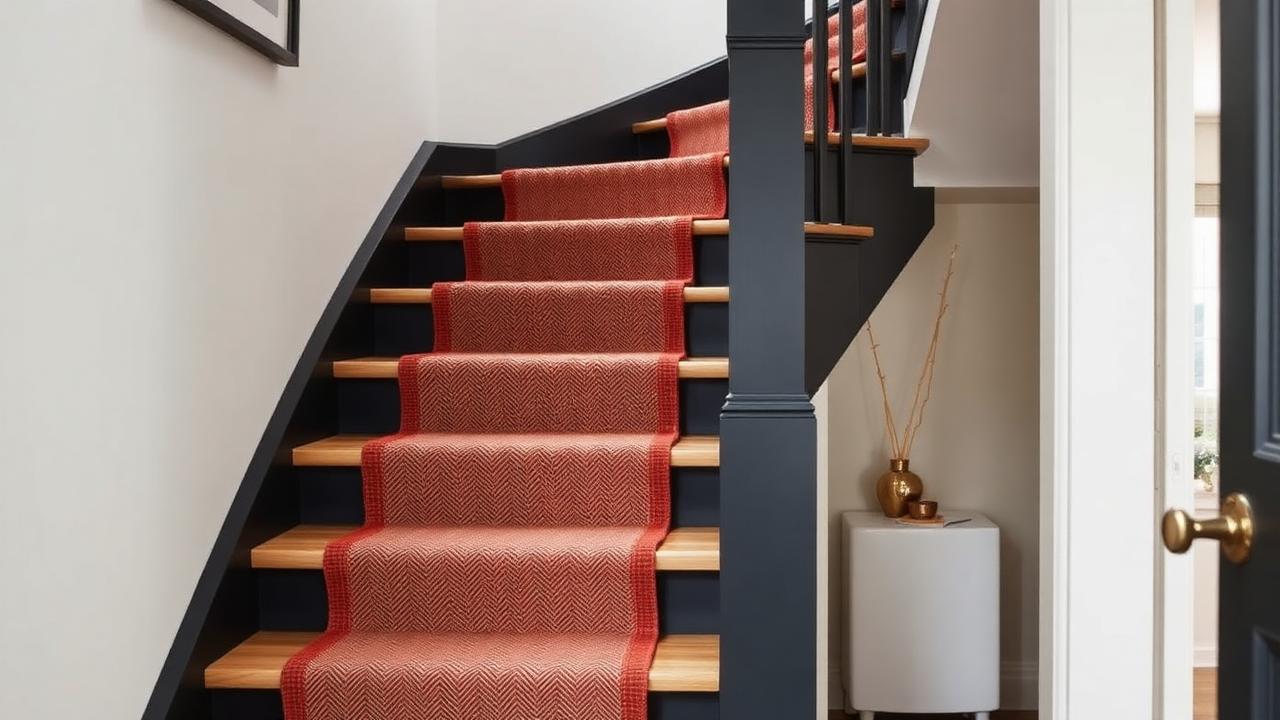
Timing the fit relative to listing your home
Fit a runner at least two to three weeks before the first professional photos are taken, not the week of listing. This allows the pile to settle from its factory-fresh, slightly stiff appearance into something that looks lived-in rather than obviously brand new, and gives you time to fix any snags — a loose edge, a squeaking tread discovered underneath — well before viewings start.
What a runner cannot fix
A stair runner is a cosmetic layer, and buyers, surveyors and their inspectors will look past it to the structure underneath during due diligence. A creaking staircase, an out-of-code balustrade gap, or a genuinely unsafe pitch will still surface in a survey regardless of how well-dressed the treads look. Spend on structural and safety issues first; a runner is the finishing touch, not a substitute for sound joinery.
How long before selling should you fit one
| Timeframe before listing | Recommendation |
|---|---|
| More than 2 months | Plenty of time — choose considered materials and a proper fitter |
| 3–8 weeks | Comfortable window for a mid-range wool blend, professionally fitted |
| Under 2 weeks | Stick to a simple, widely available synthetic runner to guarantee stock and fitting availability |
A quick cost-benefit framework
- List every visible defect on the current staircase — worn treads, noise, colour mismatch, bare patches.
- Estimate the cost to fit a modest, neutral runner that resolves all of them at once.
- Compare that figure against the cost of addressing each defect separately (refinishing, repainting, repairs).
- If the runner resolves more problems for less money than fixing them individually, it is very likely worth doing before listing.
Talking to your own agent before spending
Before ordering anything, ask your listing agent directly whether they think the staircase is holding the property back. Agents who have walked dozens of comparable homes recently can usually tell you within a minute whether a runner is a genuine priority or a distraction from a bigger issue elsewhere in the house.
Photograph before and after for your own record
Even if you never show the photos to a buyer, having a clear before-and-after of the staircase is useful if an agent or surveyor later asks what work has been done to the property, and it helps you judge whether the spend genuinely changed the first impression.
Whatever you decide, get the numbers first: the stair runner calculator doubles as a stair runner length calculator, adding nosing wrap, landings, winders, pattern repeat and waste so you order the right length the first time.
Still deciding on material, width or pattern? Our hub on stair runners compares weaves, widths, backings and fitting styles side by side, then hands the numbers straight to the calculator.
Frequently asked questions
Do stair runners increase home value?
Not as a direct valuation uplift, but they improve first impressions and remove visible defects, which supports offers in competitive markets.
Should I fit a stair runner before selling?
Worth it if the treads are worn, mismatched or noisy. Choose a neutral wool and keep the spend proportionate to the property value.
Do buyers prefer carpet or a runner on stairs?
Runners are generally favoured in period and mid-to-high-end homes; full carpet is often preferred in family homes where warmth and noise matter most.
How much should I spend on a stair runner before selling?
As a rule of thumb, keep it under 0.5% of the property's value, and lean toward a quiet neutral wool blend that appeals to the widest range of buyers.
Will a cheap runner hurt a sale more than no runner at all?
It can, if it looks tired or too narrow for the treads. A bare, well-maintained timber staircase often photographs better than a poor-quality synthetic runner that is already flattening.
Does the staircase matter as much as agents suggest?
In period and character homes, yes — it is one of the first architectural features a buyer notices. In new-build homes with less distinctive staircases, its relative impact on the sale is smaller.
Know your numbers in 30 seconds
Enter your step count, tread depth and riser height — the stair runner calculator gives you the exact length to order, in metres and feet, with waste included.
Cost it before you commitReady for real prices?
Get quotes from vetted stair runner suppliers and fitters near you. Free, no account, no obligation.
Every guide is written from hands-on measuring and fitting experience, checked against the calculator’s own maths, and re-reviewed whenever prices or methods change. Read our editorial standards.