

Gold finish options
| Finish | Look | Base material | Price per rod (27–30in) |
|---|---|---|---|
| Polished brass | Bright, formal, high shine | Solid or plated brass | $25–$60 / £20–£45 |
| Satin brass | Warm, low glare, contemporary | Solid or plated brass | $28–$65 / £22–£50 |
| Antique/aged gold | Muted, period feel | Brass with patina finish | $30–$70 / £24–£55 |
| Gold-plated steel | Bright gold look, budget | Steel with thin gold plate | $10–$22 / £8–£17 |
Matching gold rods to your hardware
Gold rods read best when they echo another warm metal already in the hallway, such as door handles, light fittings or a mirror frame. Mixing a bright polished gold rod with satin brass door furniture nearby usually looks unintentional; picking one finish family and staying consistent up the stairwell reads as a considered choice.
Know your numbers in 30 seconds
Enter your step count, tread depth and riser height — the stair runner calculator gives you the exact length to order, in metres and feet, with waste included.
Open the stair runner calculatorSolid gold-plated brass vs plated steel
True brass with a gold-toned lacquer or patina will outlast thin gold plating over steel, which is prone to wearing through on the exposed top surface within a few years of foot traffic.
Diameter and length
- 9.5mm slim rods suit narrow runners and minimal, low-key gold accents.
- 12–13mm is the standard proportion for most homes.
- 16mm reads as a statement on wide runners or grand staircases.
- Rod length should run roughly 4in longer overall than the runner width to clear the brackets.
| Runner width | Rod length needed |
|---|---|
| 24 in / 61 cm | 28 in / 71 cm |
| 27 in / 69 cm | 31 in / 79 cm |
| 32 in / 81 cm | 36 in / 91 cm |
Care and cleaning specifics
Gold-finish rods are usually brass or steel with a gold-tone plating or PVD (physical vapour deposition) coating rather than actual gold, so care depends heavily on which coating process was used. PVD-coated gold finishes are extremely hard-wearing and need only a soft cloth wipe, while cheaper gold-tone lacquer or paint finishes can wear through at contact points within a year or two of regular dusting and cleaning.
| Finish type | Durability | Care needed |
|---|---|---|
| PVD gold coating | Excellent, resists scratching and tarnish | Soft cloth dusting only |
| Gold-tone lacquer over brass/steel | Moderate, can wear at contact points | Gentle dusting, avoid abrasive cleaners |
| Gold electroplate | Good but thin layer can wear through | Avoid polish, soft cloth only |
Common specification mistakes
Buyers sometimes assume gold-finish rods will look identical across all suppliers, but the actual tone varies significantly between a warm antique gold, a bright polished gold and a cooler champagne gold, so always request a physical sample rather than relying on a product photo, which is often colour-adjusted.
- Not checking whether the finish is PVD, plated or lacquered before buying, which affects long-term durability substantially.
- Relying on online photos for exact gold tone matching to existing door and light fixture hardware.
- Assuming gold finish rods can be polished like solid brass; many gold coatings should never be polished with abrasives.
Gold rods with patterned vs plain runners
A busy patterned runner can compete visually with an ornate gold finial, so many designers pair strong pattern with a simpler ball finial and reserve elaborate urn or spear finials for plain or subtly textured runners where the hardware has room to stand out. This is worth considering before ordering finials separately from the rod.
DIY vs hiring for gold rod installation
Fitting gold-finish rods follows the same process as any stair rod and is a manageable DIY job on a straight flight. Where gold rods are chosen for a formal, highly visible staircase, however, many homeowners still hire a fitter simply to guarantee a perfectly even, professional-looking result on the most-seen part of the house.
| Approach | Typical cost, 13-step flight (US) | Typical cost (UK) |
|---|---|---|
| DIY fit, rods and brackets only | $250-$550 | £190-£420 |
| Professional fitting labour added | $450-$850 | £350-£650 |
Trade tip: order a finish sample first
Gold-tone finishes vary more between suppliers than almost any other rod colour, since gold-tone covers everything from pale champagne to deep antique brass. Always request a physical finish sample against your actual runner offcut before ordering a full set.
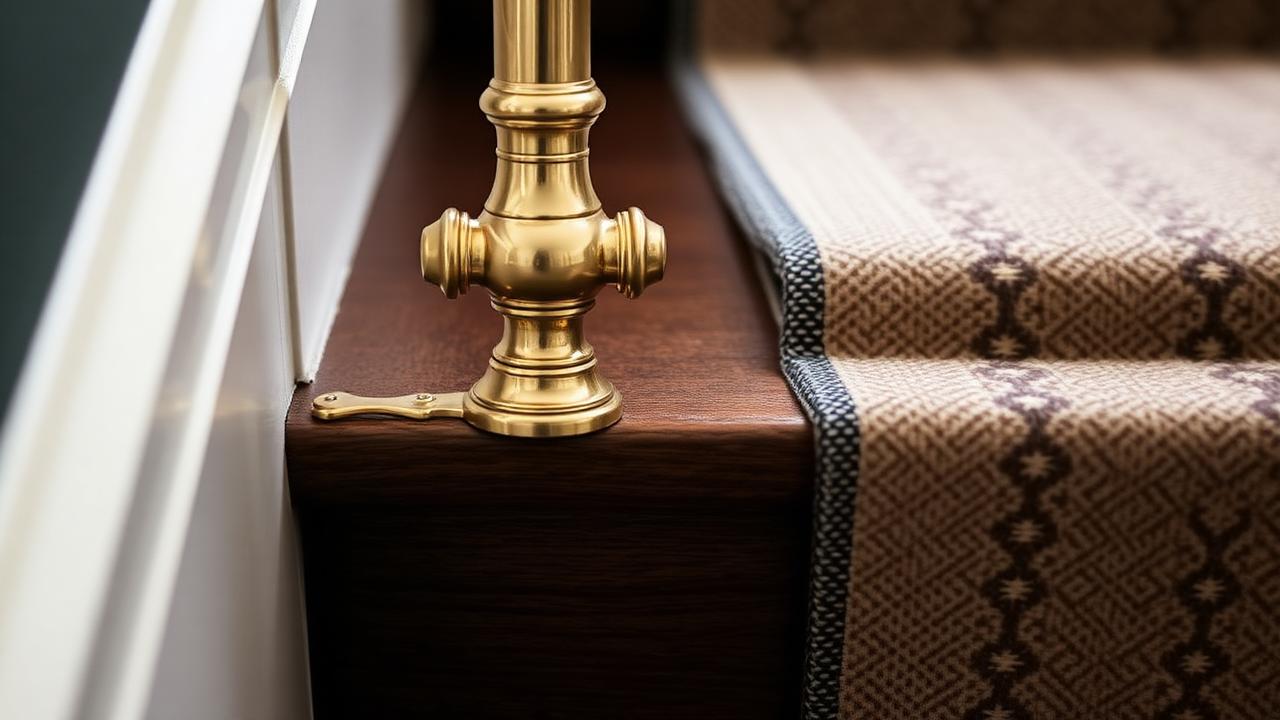
Checklist before ordering gold rods
- Confirm PVD, plated or lacquered finish and its expected durability.
- Match tone against existing door and light hardware using a physical sample.
- Choose diameter proportional to runner width and existing stair detailing.
- Budget finials as a separate cost line from the rod itself.
Gold rods in high-traffic vs low-traffic homes
In a busy family home, a genuine PVD-coated finish is worth the extra upfront cost over a cheaper lacquered gold-tone rod, since PVD resists the daily contact wear from shoes and hands far better and will not chip or dull within a few years. In a lower-traffic guest staircase or a second home used occasionally, a lacquered finish is often perfectly adequate and considerably cheaper.
Seasonal and lighting considerations
Gold tones shift noticeably under different light sources: warm incandescent or warm LED bulbs intensify a gold finish and make it look richer, while cool daylight-toned LEDs can make the same rod look slightly flat or greenish. If your stairwell lighting is cool-toned, lean toward a warmer gold finish sample to compensate, and always view samples under your actual stairwell lighting rather than daylight from a window.
Gold rods and resale or rental property considerations
In a rental or a property likely to be sold within a few years, a mid-tier satin brass or PVD gold finish is usually the safer choice over a very bold polished gold, since gold hardware trends shift and a subtler tone is less likely to look dated to a future buyer or tenant. Bright polished brass has cycled in and out of fashion repeatedly over recent decades, while satin and brushed finishes have stayed more consistently in favour.
Combining gold rods with mixed-metal staircase hardware
It is increasingly common to see gold stair rods paired deliberately with black or matte iron balusters and a chrome or nickel handrail bracket elsewhere on the same staircase, rather than insisting on a single matched metal throughout. This works when one metal is clearly dominant, usually the rod itself as the most visually repeated element, and the others are used sparingly as accents rather than in equal proportion.
Gold rods and dark hardwood floors at the base of the stairs
Where a staircase lands onto a dark hardwood or stained floor, a warm gold rod finish continues the tone naturally rather than introducing a colder metal note at the transition point. Cooler pale gold or champagne tones can look slightly disconnected against very dark wood, so lean toward a richer antique or satin brass gold when the ground floor flooring is a deep espresso or walnut tone.
Whatever you decide, get the numbers first: the stair runner calculator doubles as a stair runner length calculator, adding nosing wrap, landings, winders, pattern repeat and waste so you order the right length the first time.
Still deciding on material, width or pattern? Our hub on stair runners compares weaves, widths, backings and fitting styles side by side, then hands the numbers straight to the calculator.
Frequently asked questions
What is the difference between gold and brass stair rods?
Brass is a specific alloy and, when solid, ages and re-polishes well. 'Gold' rods can also mean gold-plated steel, which looks similar new but wears through on the top surface faster than solid or plated brass.
Do gold stair rods suit modern interiors?
Yes, particularly satin or brushed gold finishes, which read as warm and contemporary rather than formal, unlike high-shine polished brass.
How do I keep gold stair rods looking bright?
Choose a lacquered finish for zero-maintenance shine, or expect to polish unlacquered brass periodically. Gold-plated steel cannot be restored once the plating wears through.
What diameter gold rod should I choose?
12 to 13mm suits most homes and runner widths. Go slimmer for a subtle accent or up to 16mm for a bold statement on a wide or grand staircase.
Is gold stair rod finish real gold?
Almost never. Gold-finish stair rods are typically brass or steel with a gold-tone lacquer, electroplate or PVD coating rather than solid gold. PVD coatings are the most durable option and closely resemble polished brass or gold in tone.
Know your numbers in 30 seconds
Enter your step count, tread depth and riser height — the stair runner calculator gives you the exact length to order, in metres and feet, with waste included.
Work out how many rods I needReady for real prices?
Get quotes from vetted stair runner suppliers and fitters near you. Free, no account, no obligation.
Every guide is written from hands-on measuring and fitting experience, checked against the calculator’s own maths, and re-reviewed whenever prices or methods change. Read our editorial standards.