
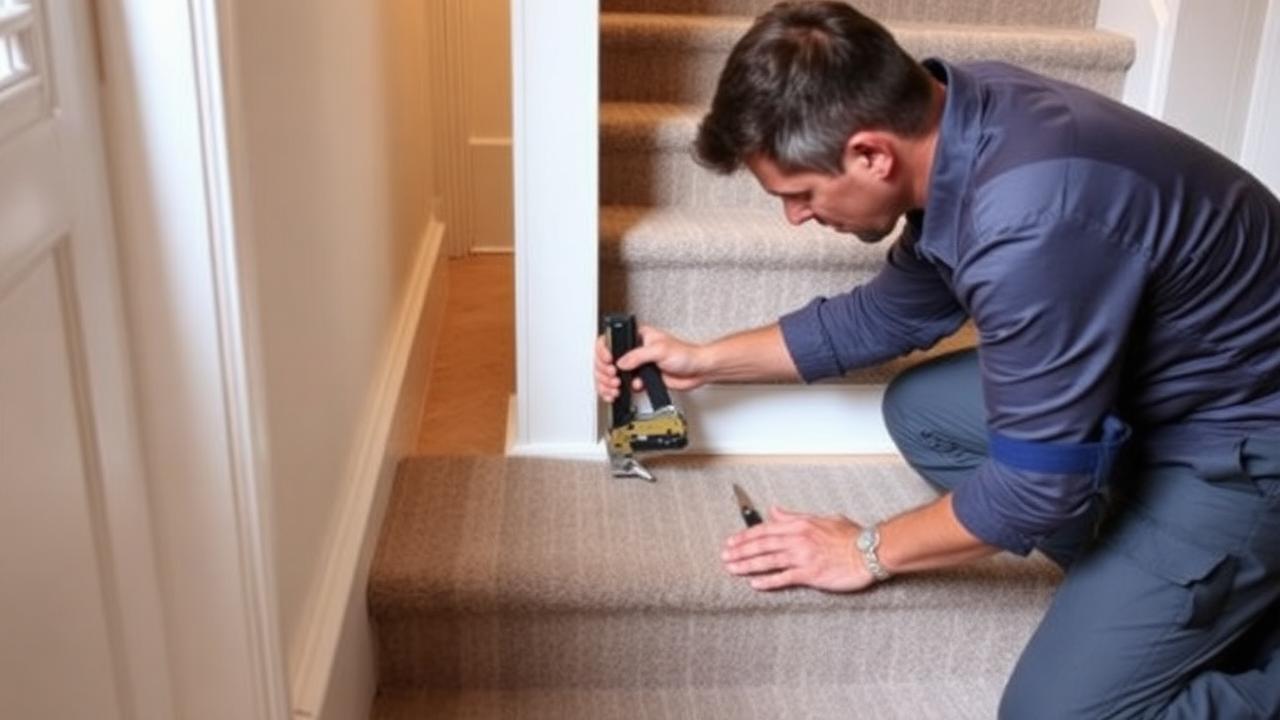
Typical timings
| Staircase | Professional fitter | Confident DIY |
|---|---|---|
| Straight flight, 12–14 steps | 2–3 hours | 5–8 hours |
| Flight with a half landing | 3–4 hours | 8–10 hours |
| Flight with 3 winders | 4–5 hours | 1.5 days |
| Two flights plus landings | 5–7 hours | 2 days |
| Curved or spiral | 6+ hours, often two fitters | Not recommended |
Add removal of an old covering — an hour or more per flight, most of it spent on staples — and preparation, which can be anything from 30 minutes to a full weekend if you are painting the margins.
Where the hours go
- Setting out and marking the centre line: 20–30 minutes, and it is the most valuable half hour of the job.
- Cutting and, if needed, binding: 30–60 minutes, or zero if you bought a pre-bound runner.
- Fixing pads or underlay: 20–40 minutes per flight.
- Fitting and tensioning: 5–10 minutes per straight step for DIY, 2–4 for a professional.
- Winders: 20–40 minutes each, whoever is doing it.
- Rods, if fitted: 5–10 minutes per step including bracket setting.
Pattern matching adds real time
A bold repeating pattern or a stripe that must line up across a landing turn can add 25–50% to the fitting time, because every cut is a decision. It also adds material — the calculator's pattern repeat field accounts for that so you order enough.
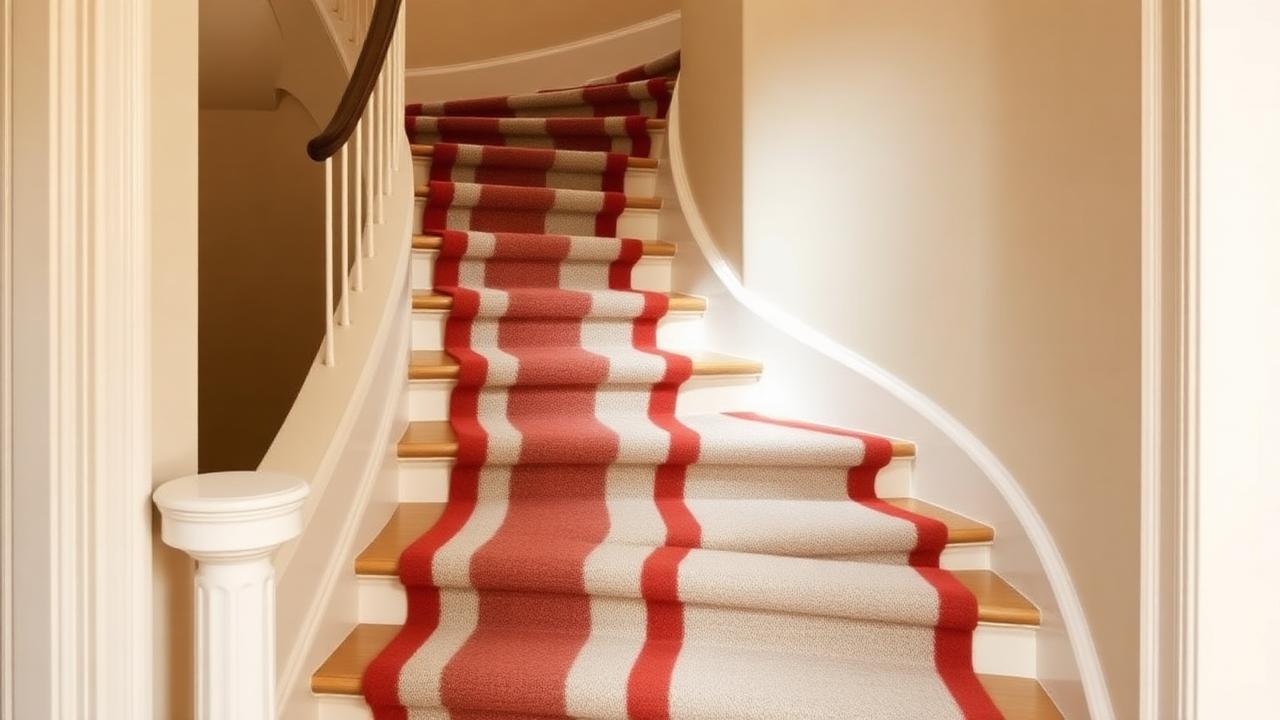
Can you use the stairs during installation?
Not really. Fitters work top-down with tools, gripper and cut carpet spread across the flight. Plan for the staircase to be unusable for the working period, and move anything you will need upstairs before the fitter arrives. In a single-staircase home with small children or pets, block the flight properly rather than relying on a warning.
Same-day or not?
- Straight flight, runner pre-bound and delivered: same day, easily.
- Flight plus landing plus winders: still same day for a professional, two visits for DIY.
- Runner needing on-site binding or a bespoke width: allow for the binder's turnaround — usually 3–10 days before fitting can even be booked.
- Curved stairs with a bespoke template: expect a template visit, then a fitting visit two to four weeks later.
Know your numbers in 30 seconds
Enter your step count, tread depth and riser height — the stair runner calculator gives you the exact length to order, in metres and feet, with waste included.
Open the stair runner calculatorBooking tips
- Have the runner, underlay, rods and fixings all on site before the fitter arrives — waiting for a delivery is the most common lost hour.
- Confirm whether removal and disposal of the old covering is included.
- Ask whether winders and landings are priced separately; most fitters charge extra per turn.
- Book the fitting after painting has cured, not before.
Factors that add hours to any job
| Factor | Extra time added | Why |
|---|---|---|
| Uneven or non-standard treads | 30–90 minutes | Every reveal has to be re-measured rather than repeated |
| Structural squeak repairs found on the day | 20–40 minutes per tread | Screws, filling and settling time before covering |
| Old adhesive or gripper residue | 30–60 minutes | Scraping is slow and cannot be rushed without marking the timber |
| Access — narrow hallway, furniture in the way | 15–30 minutes | Materials and tools have to be shuttled rather than laid out |
| Rods with ornate brackets | 10–15 minutes per step | Alignment and polish take longer than a plain clip |
Ask for a site visit on anything unusual
A phone quote based on step count alone misses winders, uneven treads and hidden squeaks. A ten-minute site visit before booking avoids a fitter arriving with the wrong hours blocked out — and avoids you paying an overtime rate to finish the job on the day.
A realistic hour-by-hour DIY day
- 8:00–9:00 — final prep check, vacuum, lay out tools and materials.
- 9:00–9:30 — mark and confirm the centre line on every tread.
- 9:30–10:30 — fit pads or underlay for the full flight.
- 10:30–1:00 — fit the runner top-down on straight steps, tensioning each one.
- 1:00–1:30 — lunch, and a good moment to check the first ten steps for drift.
- 1:30–3:00 — winders or landing, if present.
- 3:00–4:00 — rods or clips, final checks, vacuum up.
Cost per hour: is a professional worth it?
A fitter charging £150–£250 / $190–$320 for a straight flight completed in three hours works out at roughly £50–£85 / $65–$110 an hour once travel and setup are included. Doing it yourself over a full day saves that fee but costs a day of your own time plus the risk of a redo if the tension or centring goes wrong on your first attempt — a redo on a patterned runner can waste a meaningful length of expensive material.
Signs a job is taking too long
- Re-measuring the same tread more than twice — stop and recheck the centre line for the whole flight rather than patching one step.
- Fighting to seat the runner in the crease — usually a sign the pad or gripper is too thick or wrongly placed, not a fitting-technique problem.
- Losing track of which steps have been checked for reveal — mark each completed step with tape as you go.
Time breakdown by task
| Task | Typical time, straight flight of 13 steps |
|---|---|
| Removing old carpet and gripper | 45-90 minutes |
| Repairing squeaky or loose treads | 30-60 minutes |
| Marking centre line and dry-fitting | 20-30 minutes |
| Fitting underlay | 30-45 minutes |
| Stapling the runner | 1.5-3 hours |
| Finishing top and bottom steps | 20-30 minutes |
What slows a job down
- Winders or a turn — each turned step can take as long as three straight ones.
- A patterned runner needing careful alignment step to step.
- Old, out-of-square treads that need constant re-checking of the reveal.
- First-time use of a knee kicker or staple gun, which slows the learning curve on the first few steps.
Booking a fitter: how long they actually need
Most professional fitters quote a straight flight at half a day and a flight with a turn or landing at a full day, building in time for an unexpected repair. If you are booking around other trades — for example new flooring being fitted the same week — leave a buffer day between jobs rather than a tight same-day handover, since a stair job that runs long can otherwise push back everything scheduled after it.
Rushing costs more than it saves
A flight fitted in half the recommended time is the flight most likely to need a callback. Tension and centring both take patience that cannot be compressed without a visible or structural cost later.
Whatever you decide, get the numbers first: the stair runner calculator doubles as a stair runner length calculator, adding nosing wrap, landings, winders, pattern repeat and waste so you order the right length the first time.
Still deciding on material, width or pattern? Our hub on stair runners compares weaves, widths, backings and fitting styles side by side, then hands the numbers straight to the calculator.
Frequently asked questions
How long does it take to fit a stair runner professionally?
Two to three hours for a straight flight of 12–14 steps. Landings add an hour, and each winder step adds 20–40 minutes.
How long does a DIY stair runner take?
Plan a full day for a straight flight if it is your first, including preparation. Winders or landings realistically push it into a second day.
Can I use my stairs while the runner is being fitted?
No — treat the flight as closed for the duration. Move anything you need upstairs beforehand and keep children and pets away from the working area.
Does removing the old carpet add much time?
Yes, usually an hour or more per flight, most of it pulling staples. Ask whether your fitter includes removal and disposal in the quote.
What is the single biggest cause of a job overrunning?
Unmeasured tread variation and hidden squeaks found on the day. A quick site visit before booking, rather than a phone quote based on step count alone, avoids most overruns.
Is it cheaper to hire a fitter or do it myself once time is factored in?
A professional typically works out at £50–£85 / $65–$110 an hour including travel, against a full day of your own time for a first DIY attempt. For straight flights the saving from DIY is real; for winders and rods the time gap narrows considerably.
How long should I block the stairs off after fitting?
Avoid heavy traffic for the first few hours while any adhesive tape sets and fixings bed in, though the stairs are generally safe to walk normally the same day once the fitter or you have finished.
Know your numbers in 30 seconds
Enter your step count, tread depth and riser height — the stair runner calculator gives you the exact length to order, in metres and feet, with waste included.
Get your runner length in 30 secondsReady for real prices?
Get quotes from vetted stair runner suppliers and fitters near you. Free, no account, no obligation.
Every guide is written from hands-on measuring and fitting experience, checked against the calculator’s own maths, and re-reviewed whenever prices or methods change. Read our editorial standards.