
DIY guide
How to carpet stairs: step-by-step guide
To carpet stairs, you measure every tread and riser, fit tack strip and padding to each step, then stretch the carpet from the bottom step up and fix it under each nosing. A straight flight of 13 steps takes a confident DIYer about a day. Allow for 10–15% extra carpet, because stairs waste more than a flat floor.
What you need
- Carpet and padding: a dense, low-pile carpet works best on stairs (see best carpet for stairs).
- Tack strip (gripper) and 9/16-inch staples with a heavy-duty staple gun.
- A knee kicker and a stair tool (carpet tucker or bolster chisel).
- A utility knife with plenty of spare blades, a tape measure, a straightedge, tin snips and a hammer.
- Knee pads, gloves and safety glasses.
Step 1: Measure the stairs
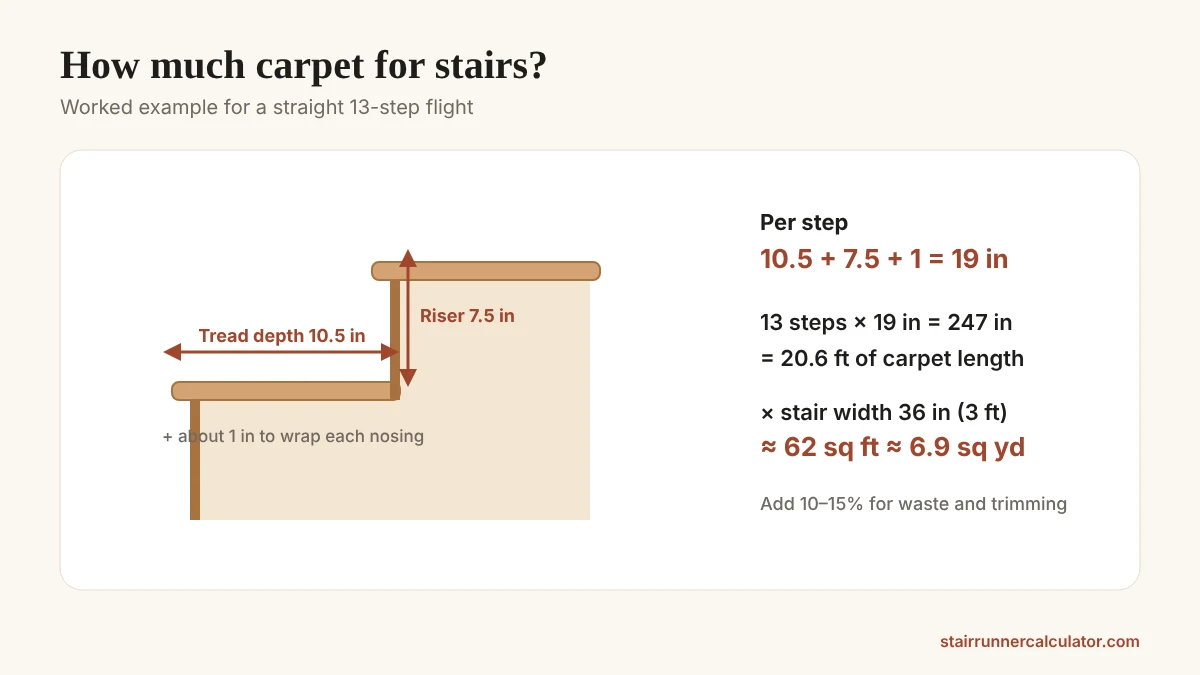
Measure the width of each step, and the depth of each tread plus the height of each riser, including the nosing. Stairs are rarely identical, so measure them all and use the largest figures. Our carpet for stairs calculator adds the figures up and includes waste. For landings and turns, see how to measure stairs for carpet.
Step 2: Prepare the stairs
Remove old carpet, padding, staples and tack strip (our guide to removing carpet from stairs covers this). Fix any creaks with screws into the stringers, sweep and vacuum, and repair split nosings before you start.
Step 3: Fit tack strip
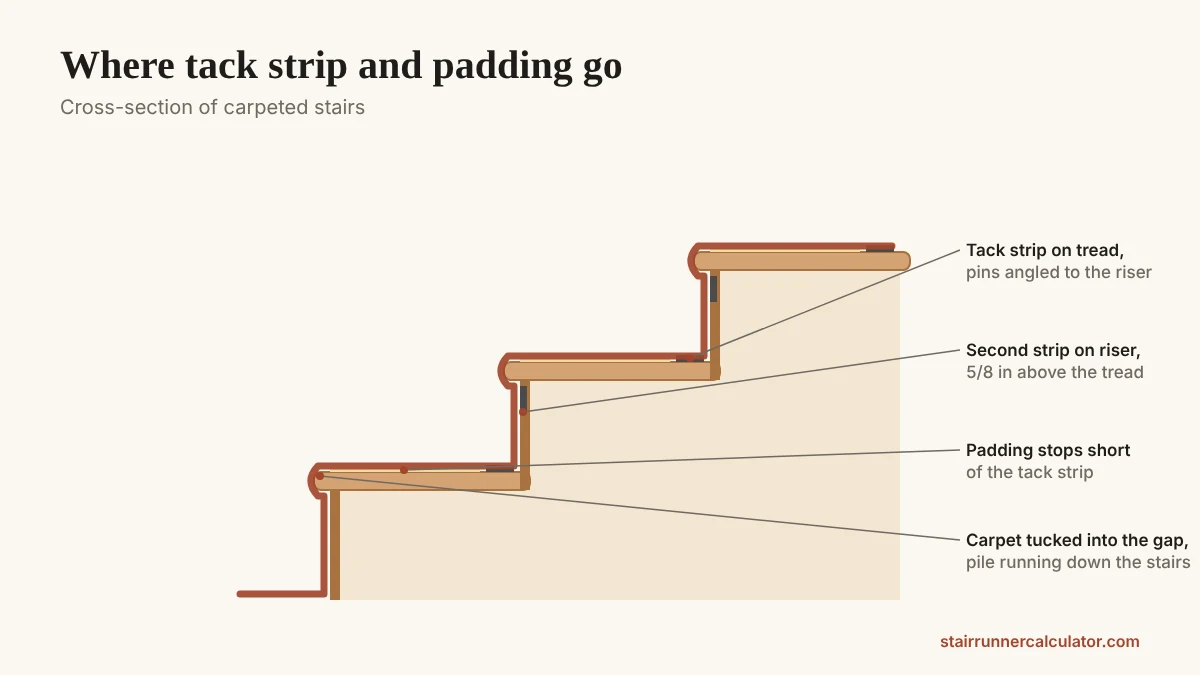
Nail tack strip to the back of each tread, about 1/2 inch from the riser, with the pins angled towards the riser. Then add a second strip at the bottom of each riser, about 5/8 inch above the tread, pins angled down. The small gap between the two strips is where the carpet gets tucked.
Step 4: Fit the padding
Cut padding to cover each tread and wrap over the nosing, stopping just short of the tack strip. Staple it every 3–4 inches, close to the strip and under the nosing. Trim off the excess with a sharp knife.
Step 5: Install the carpet
Start at the bottom step. Fix the carpet to the bottom riser, then stretch it up and over the first nosing with the knee kicker and push it into the gap between the tack strips with the stair tool. Work up the stairs one step at a time. For a clean finish, choose one of two methods:
- Waterfall: the carpet drops straight from the nosing to the next tread. It's quicker and uses less carpet.
- Hollywood (wrapped): the carpet follows the nosing and is stapled tight under it. It looks more tailored but takes longer.
Step 6: Finish the top and the edges
At the top, join the stair carpet to the landing or hallway carpet with a neat seam, or finish under the top nosing with a metal edge or stair rod. Trim the sides tight to the skirting and tuck them in.
How much does it cost to carpet stairs?
Professional installation for a typical 13–16 step flight usually costs about $400–$650 including materials, or roughly $14–$36 per step. L-shaped or curved stairs cost more. Doing it yourself saves the labour, but the tools and the extra waste on a first attempt narrow the saving. For a full breakdown, see our cost to carpet stairs and landing guide.
Common mistakes to avoid
- Skipping the second tack strip on the riser. Without it the carpet sags in the crease of each step.
- Padding over the tack strip. The pad must stop short of the strip, or the carpet won't grip.
- Running the pile up the stairs. The pile should run down the stairs, or the carpet wears unevenly and looks patchy.
- Not stretching enough. Loose stair carpet creeps and becomes a trip hazard. Use the knee kicker on every step.
- Blunt blades. Change your knife blade every few steps for clean, straight cuts.
How much carpet do you need?
For each step, add tread depth plus riser height plus about 1 inch for the nosing wrap, and multiply by the width of the stairs. A straight 13-step flight about 36 inches wide usually needs around 5–6 square yards, before waste. Enter your own measurements in the carpet for stairs calculator to get an exact figure, including a landing.
Prefer a runner instead of full carpet?
A stair runner leaves a wood border showing on each side. It's easier to fit and uses less material. Work out the length with the stair runner calculator, or find a fitter near you to do the job.
Frequently asked questions
Can I carpet stairs myself?
Yes. A straight flight is a realistic DIY job if you have a knee kicker, a stair tool and a heavy-duty staple gun. Winders, curves and patterned carpet are harder, and many people hire a fitter for those.
How long does it take to carpet stairs?
A professional usually carpets a straight 13-step flight in 3–5 hours. A first-time DIYer should allow a full day, including removing the old carpet.
Should stair carpet be one piece?
Not necessarily. Most fitters use one long piece on a straight flight. They may join pieces at a landing or turn, as long as the pile runs in the same direction and the seams sit in the crease of a step.
Which way should the pile run on stairs?
The pile should run down the stairs, from the top step towards the bottom. This makes the carpet feel smoother underfoot and helps it wear evenly.
How much extra carpet do I need for stairs?
Allow about 10–15% extra for waste and trimming, plus a full pattern repeat if the carpet is patterned.