
DIY guide
How to remove carpet from stairs
To remove carpet from stairs, cut it into sections, pull it up step by step, then remove the padding, tack strip and every staple before cleaning the treads. Most people finish a straight flight in an afternoon to a weekend. Check what's underneath before you start. Some stairs have finished hardwood, but many only have rough construction-grade treads.
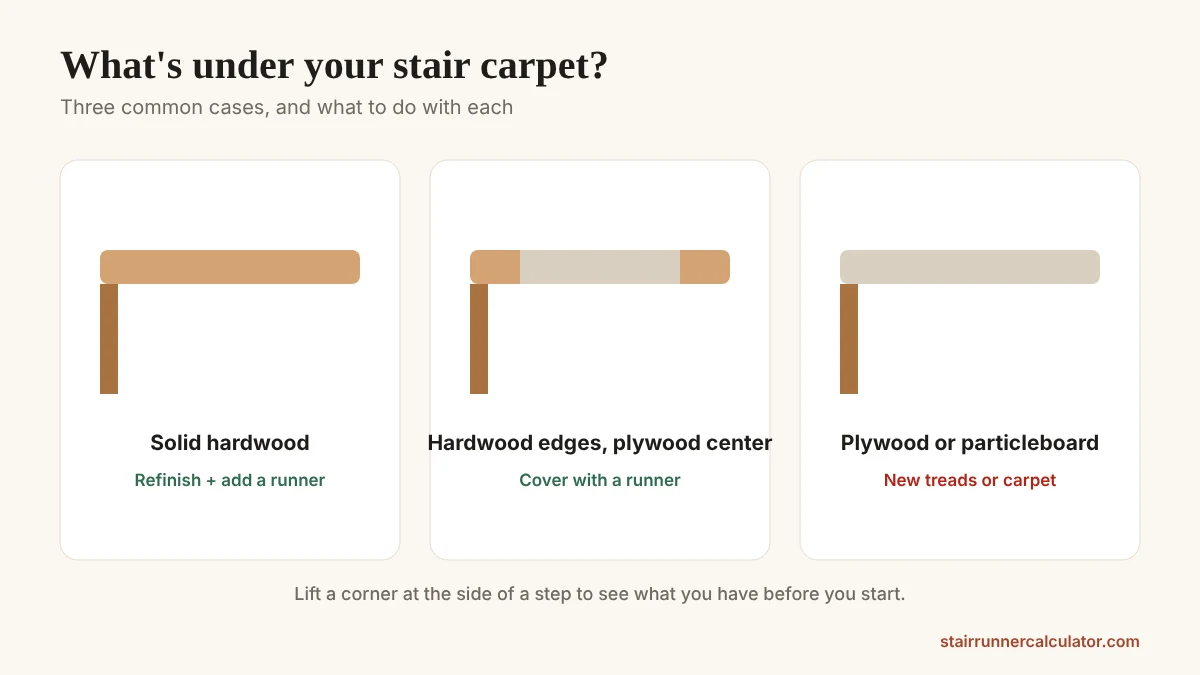
Before you start: check what's underneath
Lift a corner of the carpet at the side of a step. Look at the tread and the riser. If you find hardwood, it can usually be sanded and refinished, or used as a base for a stair runner. If you find plywood or particleboard, plan for new treads, new carpet or a runner (see our stair treads guide).
Tools you'll need
- A utility knife with spare blades, and a flat pry bar or 5-in-1 tool
- A hammer, plus large and needle-nose pliers, and a flathead screwdriver
- A putty knife or scraper, and adhesive remover if the padding was glued
- Heavy-duty gloves, safety glasses, knee pads and a dust mask
- Heavy contractor bags, and a shop vacuum
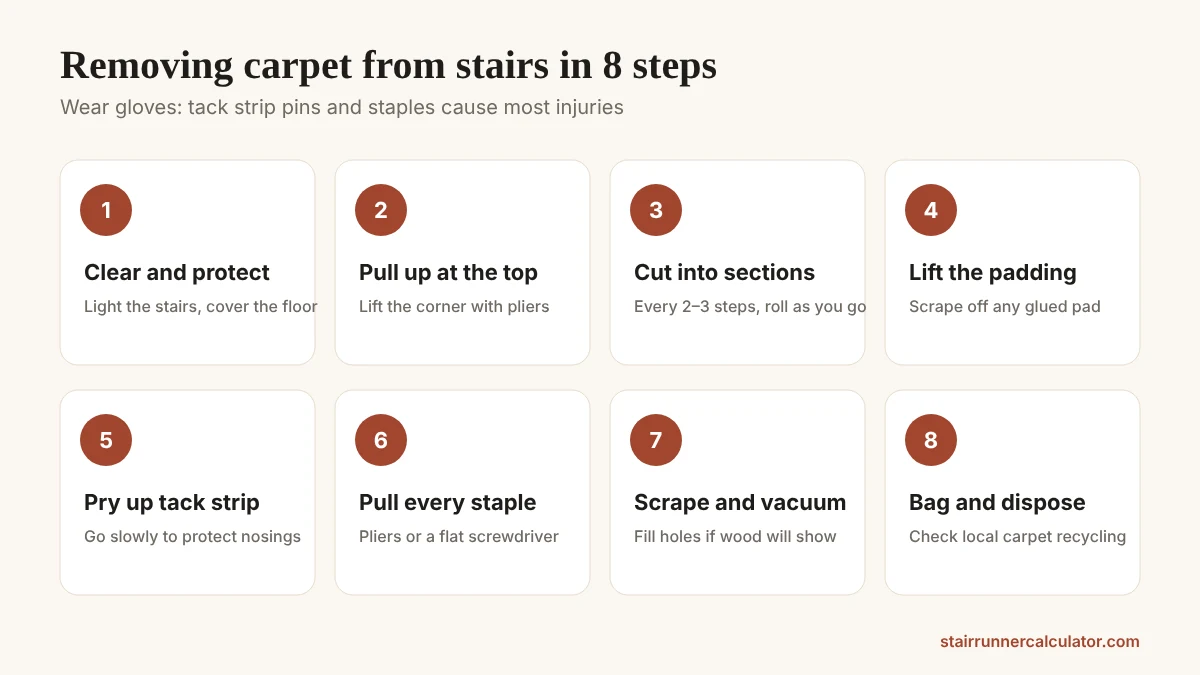
Step-by-step
- Clear and protect the area. Light the stairs well, protect the floor at the bottom, and move furniture out of the way.
- Start at the top. Use pliers to pull up a corner of the carpet at the top step, where it meets the landing.
- Cut it into sections. Cut across the carpet every two or three steps so the pieces are manageable. Roll each section as you go.
- Pull up the padding. Pull it off in pieces. Scrape off any that's glued down.
- Remove the tack strip. Pry it up with the bar and hammer, working slowly so you don't split the nosing. The pins are sharp, so wear gloves.
- Pull every staple. Use pliers or a screwdriver to lift staples from each tread and under each nosing. Tap down any broken ones flush with a hammer.
- Clean the stairs. Scrape off adhesive, vacuum thoroughly, and fill nail holes if the wood will show.
- Dispose of the carpet. Bag the rolled carpet and padding and check your local rules. Some areas recycle carpet.
Safety tips
- Wear gloves the whole time. Tack strip pins and old staples cause most injuries.
- Don't stand on loose carpet sections when working down the stairs.
- Before sanding, check whether the treads are thin veneer. Sanding through veneer ruins the tread.
How to tell if your stairs are worth refinishing
- Solid hardwood treads (oak, maple) can usually be sanded and refinished, even with staple holes.
- Hardwood edges with a plywood center ("carpet-grade" stairs) look fine at the edges but won't refinish well in the middle. A runner covers the center neatly.
- Plywood or particleboard treads need new treads, re-carpeting, or carpet tread covers.
- Painted risers can simply be repainted. Risers are often softer pine even on hardwood stairs.
What it costs to have it done
Professional carpet removal typically costs about $1–$5 per square foot, plus around $0.40–$0.50 per square foot for disposal. Doing it yourself costs little more than a pry bar, gloves and an afternoon.
What next?
Once the wood is exposed, most people either refinish it and add a runner, or re-carpet. Work out runner length with the stair runner calculator, see how to carpet stairs, or get quotes from a local fitter.
Frequently asked questions
How long does it take to remove carpet from stairs?
A straight flight of about 13 steps usually takes 2–4 hours to strip, including padding, tack strip and staples. Cleaning and sanding the wood takes longer.
Is it worth removing carpet from stairs?
It's worth it if there's good hardwood underneath, which you can refinish and pair with a runner. If the treads are plywood, you'll need new treads, new carpet or a runner.
How do you get staples out of stairs?
Lift each staple with needle-nose pliers or a flathead screwdriver and pull it straight out. Tap down any broken legs flush with a hammer so they don't catch.
Can you reuse tack strip on stairs?
You can reuse tack strip that's firmly attached and in good condition if you're re-carpeting straight away. Replace any strips that are loose, bent or rusty.
What is under carpet on stairs?
Usually padding, tack strip and staples over the treads and risers. The treads might be finished hardwood, unfinished pine, or plywood and particleboard.