
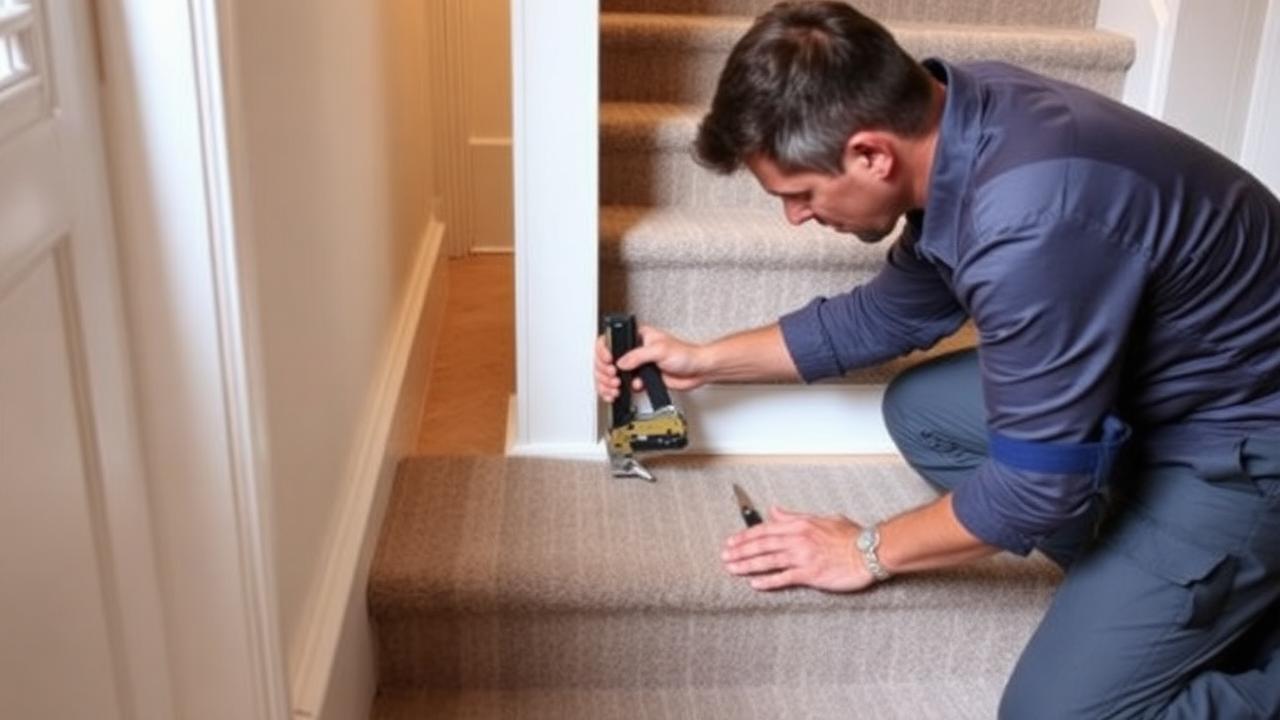
Choosing pad thickness and density
A dense felt or combination rubber-felt pad between 1/4 in and 3/8 in (6-9mm) thick is the standard for stairs; anything thicker starts to round off the nosing profile and can make a runner feel unstable underfoot. Density matters more than thickness alone, since a thin dense pad often outperforms a thick soft one at the high-wear nosing point.
| Pad type | Typical thickness | Best for |
|---|---|---|
| Firm felt | 1/4 in (6mm) | Most wool and synthetic runners |
| Rubber-felt combination | 5/16-3/8 in (8-9mm) | High traffic stairs, extra cushioning |
| Thin felt | 3/16 in (4.5mm) | Natural fibre runners, minimal build-up |
| No pad | n/a | Sisal, jute, some flatweaves by design |
Cutting pad pieces per step
Cut a separate rectangle of pad for each tread and, if using a full waterfall wrap, each riser too, sized about 1 in (2.5cm) smaller all round than the finished runner width so no pad peeks out from under the edges. Working step by step rather than trying to run one continuous length keeps each piece properly seated in the tread-riser angle.
Know your numbers in 30 seconds
Enter your step count, tread depth and riser height — the stair runner calculator gives you the exact length to order, in metres and feet, with waste included.
Open the stair runner calculatorStandard pad sizes for common runner widths
| Runner width | Pad cut width | Pad cut depth (per tread) |
|---|---|---|
| 27 in (68.5 cm) | 25 in (63.5 cm) | 9 in (23 cm) |
| 31 in (79 cm) | 29 in (73.5 cm) | 9 in (23 cm) |
| 36 in (91.5 cm) | 34 in (86.5 cm) | 9 in (23 cm) |
Fixing the pad before the runner
- Position the first pad piece on the top tread, set back slightly from the nosing edge.
- Tack or staple the pad at its rear corners and centre back, not along the front nosing.
- Repeat down the flight, keeping each piece consistent in setback from the nosing.
- Check no pad edge overhangs where the runner will later be turned or bound.
Nosing-only pads versus full tread pads
Some installers use a smaller nosing pad, a strip only 3-4 in (7.5-10cm) deep at the front edge of the tread, rather than covering the whole tread depth. This concentrates cushioning where wear is highest and is common on natural fibre runners that specify minimal padding elsewhere.
Do not let pad wrap the nosing itself
Pad should stop just short of the nosing edge so the runner's own backing, not a soft pad layer, takes the sharp fold at the front of the step. Pad wrapped over the nosing crushes quickly and creates a soft, unstable edge.
Cost of underlay for a typical flight
| Flight size | Pad cost (US) | Pad cost (UK) |
|---|---|---|
| 13 steps, felt pad | $60-110 | £45-85 |
| 13 steps, rubber-felt combination | $90-160 | £70-125 |
| 18 steps, felt pad | $85-150 | £65-115 |
Common underlay mistakes
- Cutting one continuous strip instead of individual tread pieces, which bunches at each riser angle.
- Using pad that is too thick, rounding the nosing and creating a trip hazard.
- Fixing the pad right at the nosing edge instead of setting it back.
- Skipping pad on a dense cut-pile wool runner to save cost, shortening its life significantly.
Using a stair runner calculator alongside pad planning
A stair runner calculator gives you the runner length and step count you need, and the same step count tells you exactly how many pad pieces to cut. Working out both together at the planning stage avoids a second trip to the supplier partway through the job.

Foam versus felt versus rubber-felt pad
Foam pad, common on flat flooring, is generally not recommended for stairs since it compresses unevenly at the nosing and loses resilience faster under the sharp fold at each tread edge. Felt and rubber-felt combination pads hold their shape far better under this repeated flexing and are what most stair carpet suppliers stock specifically for stair use.
| Pad material | Suitability for stairs | Notes |
|---|---|---|
| Foam | Poor | Compresses unevenly at nosing, not stair-rated |
| Firm felt | Good | Standard choice for most runners |
| Rubber-felt combination | Very good | Extra durability for high-traffic flights |
| Waffle rubber | Fair | Better suited to rugs on flat floors than stairs |
Fitting pad on open-riser or unusual staircases
On an open-riser staircase where there is no riser to fix pad against, cut pad pieces for the tread only and make sure the setback at the front nosing is slightly more generous, around 1.25 in (3.2cm), since there is no riser fold to help hold the pad's front edge in place under the runner.
Order pad from the same supplier as the runner where possible
Stair carpet suppliers often stock a pad specifically tested and warrantied for use with their runners. Using an unrelated generic pad can occasionally void a runner's wear warranty, so check the supplier's fitting instructions before substituting a cheaper pad.
Matching underlay to fibre type
Wool and nylon cut pile runners benefit most from a proper felt or rubber-felt pad because the extra cushioning both softens the fold at each nosing and slows wear on the pile fibres themselves. Natural fibre runners like sisal and jute are woven stiff enough to hold their own shape, so pad is optional or skipped entirely on those, which is a distinction worth confirming with the runner manufacturer before ordering a pad you will not use.
Underlay and warranty terms
Several major stair carpet brands specify a minimum pad density or a named compatible product as a condition of their wear warranty, since the wrong pad can accelerate wear at the nosing rather than protect it. Keep the receipt for whatever pad you buy alongside the runner receipt, in case a warranty claim is ever needed years later.
| Runner brand tier | Pad requirement | Warranty impact if ignored |
|---|---|---|
| Budget synthetic | Often none specified | Usually no impact |
| Mid-range wool blend | Named minimum density | May reduce or void wear cover |
| Premium wool | Manufacturer-approved pad often required | Can void warranty entirely |
Keep the pad and runner purchase on one invoice where possible
Buying both from the same supplier at the same time creates a single paper trail, which simplifies any future warranty query about whether the correct pad was used.
Whatever you decide, get the numbers first: the stair runner calculator doubles as a stair runner length calculator, adding nosing wrap, landings, winders, pattern repeat and waste so you order the right length the first time.
Still deciding on material, width or pattern? Our hub on stair runners compares weaves, widths, backings and fitting styles side by side, then hands the numbers straight to the calculator.
Frequently asked questions
What thickness of underlay is right for a stair runner?
Between 1/4 in and 3/8 in (6-9mm) for most runners. Thicker pad can round off the tread nosing and create an unstable, trip-prone edge.
Should underlay be one continuous piece or cut per step?
Cut per step. A continuous strip bunches at each tread-riser angle and does not sit flat, while individual pieces seat cleanly into each corner.
Do I need underlay on the riser as well as the tread?
Only if using a full waterfall wrap where the runner covers the riser too. Flat-fitted runners with a separate riser piece may only need tread pads.
Can I skip underlay entirely?
For sisal, jute and some flatweaves, yes, it is standard practice. For wool or nylon cut pile, skipping it shortens nosing life by roughly 30-50%.
How much does underlay cost for a typical staircase?
Around $60-160 (£45-125) for a 13-step flight, depending on pad type, which is a small fraction of the total installed cost.
Where should the pad be fixed to stay in place?
At the rear corners and centre back of each tread piece, never along the front nosing where a fixing point would be visible and would crush under foot traffic.
Is foam pad suitable for stairs?
Generally no. Foam compresses unevenly at the sharp nosing fold and loses resilience faster than felt or rubber-felt combination pad, which is what most stair carpet suppliers recommend instead.
How does underlay differ on an open-riser staircase?
Only the tread gets a pad piece since there is no riser to fix against, and the front setback from the nosing should be slightly more generous, around 1.25 in (3.2cm), to keep the pad's edge secure under the runner.
Does underlay affect how a stair runner sounds underfoot?
Yes, a denser felt or rubber-felt pad noticeably reduces footstep noise and creak transmission compared to fitting a runner with no pad at all, which is a worthwhile side benefit on stairs near bedrooms.
Know your numbers in 30 seconds
Enter your step count, tread depth and riser height — the stair runner calculator gives you the exact length to order, in metres and feet, with waste included.
Measure my stairsReady for real prices?
Get quotes from vetted stair runner suppliers and fitters near you. Free, no account, no obligation.
Every guide is written from hands-on measuring and fitting experience, checked against the calculator’s own maths, and re-reviewed whenever prices or methods change. Read our editorial standards.